
Enhancing lifetime battery modeling for longer-life green vehicles

Product: Simcenter
Industry: Automotriz y Transporte

The Simcenter Amesim Electric Storage library is of great help to renewable energy and automotive industries players. This allows design engineers to make the right technical and economical choices in the right time schedule.

Eric Prada, Ph.D., Electrochemical R&D Engineer, IFPEN Electrochemistry and Materials Department

Greener, more reliable and cost-efficient technologies

Reducing carbon dioxide (CO 2 ) emissions is a major challenge facing the world’s auto- makers. To address this issue, manufacturers have developed new technologies such as hybrid electric vehicles (HEV), plug-in hybrid electric vehicles (PHEV) and pure electric vehicles (EV).

The success of these technologies hinges on the efficiency of energy storage sys- tems such as batteries and ultra-capacitors. These components are expensive, and it is difficult for original equipment manufac – turers (OEMs) and battery manufacturers to master and guarantee electric storage systems for more than eight years. Today, battery durability is one of the biggest problems facing the auto industry.

The fact that there are many different battery chemical technologies and aging mechanisms makes this problem even more complex. Degradation mechanisms vary greatly according to the type of chemical technology considered. Types include lithium nickel cobalt aluminum oxide (NCA), lithium iron phosphate (LFP), lithium nickel manganese cobalt oxide (NMC) and lithium titanate (LTO).

There are two different aging modes: cycling and calendar. Cycling corresponds to the battery usage when a car is moving, while calendar corresponds to when a car is parked. This cycling and calendar distribution is not the same for a passenger car as a bus or a truck. For instance, the cycling mode percentage is much higher for trucks compared to passenger cars.

Long-standing partners, new challenge

Ten years ago, Siemens Digital Industries Software started cooperating with IFP Energies nouvelles (IFPEN), a research and innovation center with strong expertise in the fields of energy, transport and environment. As a part of its innovative transport activity, IFPEN designs and enhances technological solutions to reduce vehicle fuel consumption and environmental impact.

In 2008, IFPEN started working on electric storage systems issues. Following six years of powertrain simulation partnership, many IFPEN research and development (R&D) specialists have become proficient in using Simcenter Amesim™ software, part of the Simcenter™ portfolio. Moreover, IFPEN knew that Simcenter Amesim was becoming the standard for many industry players.

The choice of partner was evident, and the initial scope of cooperation between Siemens Digital Industries Software and IFPEN was extended to battery issues. As a result, Siemens Digital Industries Software and IFPEN codeveloped the electric storage library, now available within Simcenter Amesim software, a powerful and versatile multi-domain simulation platform.

Electric storage library

The first shared achievements included in the electric storage library are focused on Lithium-ion (Li-ion) and nickel-metal hydride (Ni-MH) batteries as well as ultra- capacitors. The library consists of either generic or validated (calibrated) electrothermal models allowing for rapid and easy simulation.To calibrate models, experimental tests were mainly performed at the IFPEN battery test bench facilities. As an alternative, users can quickly calibrate empirical equivalent circuit models with their own experimental data thanks to the battery assistant tool developed by Siemens Digital Industries Software and available in the electric storage library.

The main technical challenges for the development of the electric storage library were to choose the right level of energy storage system models for end users. “We had to design and work on different modeling approaches that allow for easy and fast simulation, while still encapsulating the details of fundamental physical phenomena to ensure reliable simulation results,” says Eric Prada, electrochemical R&D engineer, electrochemistry and materials department at IFPEN.

“Our current challenge is to gain insight into electrochemical energy storage systems behavior and develop predictive and reliable mathematical models enabling engineers to rapidly build, specify and optimize energy solutions,” Prada says. “For instance, they can be used for energy storage sizing to meet power and energy performances of a targeted application for battery management systems functional design and usages strategies optimization.

As a part of its cooperation with Siemens Digital Industries Software, the IFPEN team has recently developed different modeling approaches to simulate battery degradation phenomena. IFPEN designed a dynamic electrochemical aging model able to predict the loss of autonomy degradation for a specific Li-ion battery technology (LiFePO4/graphite). IFPEN’s advanced electrochemical and analytical testing facilities made it possible to calibrate electrochemical models by measuring the main geometrical, electrical and physicochemical cell parameters. Then those predictive models were validated on a wide database built up on the basis of in-house cell tests and test results available in the literature.

Thanks to these studies, 10 years of battery behavior can be analyzed in only a few hours. This validated model can be used to analyze the impact of usage strategies for the vehicle (monitoring the SOC for the PHEV) or for the vehicle-to-grid (V2G) technology. “The Simcenter Amesim Electric Storage library is of great help to renewable energy and automotive industries players,” says Prada. “This allows design engineers to make the right technical and economical choices in the right time schedule.

Swiss furniture maker produces innovative seating and tables following Industry 4.0 concepts

Product: Teamcenter
Industry: furniture manufacturing

We can test and optimize the wood cutting operations offline using the machine’s digital twin, saving time and unsuccessful attempts and avoiding collisions.

Alfred Schaad, Head of Project Management and Production Engineering Girsberger

Better ways of sitting

Since Girsberger AG’s development of an infinite height adjustment mechanism for stools patented in 1910, the company has been turning out novel and often groundbreaking seating solutions. Since it was established as a wood turning shop in Zurich, Switzerland, in 1889, the furniture manufacturer has been producing innovative seating and tables with outstanding ergonomics, resilience and durability for offices as well as dining rooms. To remain internationally competitive with this portfolio in a country such as Switzerland with its high infrastructure and labor costs as well as an adverse exchange rate is in itself quite a challenge.

“Combining sophisticated, original design and functionality with maximum practical benefits, we create tomorrow’s classics,” says Michael Girsberger. He is heading the Switzerland-based group with subsidiaries in the European Union and Turkey in the family’s fourth generation. “This requires an uncompromisingly honest use of materials as well as precision in manufacturing with high craftsmanship.”

A good example of this is the G 125. Released to the market for the company’s 125th anniversary, that model is meant to be a reinterpretation of the traditional wooden swivel chair and was awarded several design prizes. As a counterweight to modern swivel chairs whose functions and options are continuously extended but which appeal less and less to our senses, the chair offers only a few functions and options for adjustment. Four wooden legs or a steel star base with castors bear a rotating U-shaped seat and backrest. Without a sophisticated tilting mechanism, as a flexible torsion rod, this allows the seat and back to rock comfortably. The seat is made of either an upholstered seat board or a molded wooden ring with transparent mesh covering, while the backrest is made of steam-molded solid wood.

NX for product and project development

Girsberger engineers developed G 125 based on shapes created by industrial designer, Mathias Seiler. The company has been working with NX™ software from product lifecycle management (PLM) specialist Siemens Digital Industries Software for computer-aided design (CAD) for many years. Girsberger uses this software to design new products as well as jigs and fixtures and in the planning of custom furnishing projects. This comes with an enormous time pressure. Contrasted to original design work, this kind of planning work is frequently expected to be finished within a few days.

“We typically perform this planning work in close cooperation with architects, creating their designs using other software tools,” says Alfred Schaad, head of project management and production engineering at Girsberger. “This is where synchronous technology comes in handy as NX allows us to import geometry data regardless of their provenience and data quality.”

“Synchronous technology is also quite valuable when it comes to re-using our own designs,” adds Simon von Gunten, deputy head of wood fabrication at Girsberger. “This functionality within the CAD software substantially shortens the time needed for production-oriented modifications.”

Girsberger product development engineers use NX not only to create their designs. Using NX™ Nastran® software, employing the finite elements method (FEM), they also verify the physical properties of components. Wooden parts are not as yet verified using this software because their non-linear material properties limit their calculability.

CNC wood cutting

A highly specialized partner company manufactures the blanks for the backrest using the bentwood process to manually bend the wood using steam and custom-made molds. Other than this, Girsberger manufactures the chair almost entirely in the factory at its main location. To this date, a number of the operations are still performed purely by hand.

Since 2007, though, Girsberger has been using a computer numerical control (CNC) machining center from a leading German manufacturer. The size of the gantry machine is sufficient for work pieces – multitude of curves and freeform geometries. This suggests generation of the machine programs based on the parts’ geometry information from NX.” Controlling the machine, however, is a proprietary CNC system designed by the machine manufacturer. It is not compatible with popular control systems used in milling centers used for cutting metals or plastics. Consequently, no suitable postprocessor programs or machine room simulation are available for this specific CNC machine. For computer-aided manufacturing (CAM), the preconditions had yet to be created.

Siemens application lifecycle management solution supports gematik in the development of telematics infrastructure

Product: Siemens, Polarion ,ALM
Industry: Medical devices and pharmaceuticals

Polarion ALM enables end-to-end requirements and test management for hardware and software for Germany’s digital healthcare networkEvery change to a specification has an effect on tests and approvals and can be viewed immediately and tracked in an audit-proof manner. This automatically leads to an improvement in communication and interdisciplinary cooperation.Polarion ALM enables end-to-end requirements and test management for hardware and software for Germany’s digital healthcare network

René Weidner, Project Manager gematic

Polarion ALM enables end-to-end requirements and test management for hardware and software for Germany’s digital healthcare network

Digitalizing the healthcare sector

gematik GmbH in Berlin was founded in January 2005 as a service company by the leading organizations of the German health care system. Since May 2019, the Federal Ministry of Health has held 51 percent of the shares. Originally, the statutory mandate provided for the introduction, maintenance and further development of an electronic health card (eGK) in the field of statutory health insurance in Germany. The project included defining the infrastructure required for telecommunications and information technology, ensuring its security and the interoperability of the components involved.

With the E-Health Act of 2015, these tasks were expanded to include the introduction of an electronic patient file and an electronic patient compartment (ePF). These should enable insured persons to access their treatment data at any time and make it available electronically to their infrastructurerespective service providers. gematik does not develop its own hardware and software, but every manufacturer and service provider requires approval from gematik for the use of the telematics infrastructure (TI). Based on specifications, tests and approvals by gematik, companies developing hardware and sofware for use in the healthcare infrasructure can assure that their products are secure and interoperable, and can reliably exchange data in the healthcare system.

New, integrated software environment required

gematik’s main tasks include requirements management for the preparation of specifications and test execution and management for testing hardware and software products submitted for approval. In addition to word processing and spreadsheets, for both tasks gematic has used four different industry-standard software products with separate data storage.

In order to close process gaps, improve the flow of information between requirements and test management, and to remain fit for the future, in 2015 gematik launched a joint selection project for a new solution to support the core processes. “We wanted to replace the exchange of documents with a system-supported requirements management system that provides both divisions with all information in a common database,” says René Weidner, who as project manager has specialist responsibility for the overall system.

As early as the end of 2015, a Europe-wide tendering process was launched; in February 2016, the catalog of system requirements was completed, based on three rounds of tenders. “Polarion ALM from Siemens best meets the requirements of both groups,“ says Weidner. “The strengths of the system are balanced almost equally between requirements and test management. The web-based solution also convinces with a modern user interface, high flexibility for extensions and continuous versioning based on Subversion. As a standard solution, Polarion provides so many functions that we were able to meet our difficult requirements with little customizing and expect correspondingly low maintenance costs.”

Automated processes

In requirements management, specifications are written for connectors and other TI components as well as for the structure and security of insured master data, the electronic patient file, the electronic emergency data record or medication plan and e-prescription. Polarion can be used to automatically create the profiles that form the basis for approval by gematik. “The software enables a smooth process from document management to final publication on the internet,” says Gunnar Schopf, who, as deputy project manager, is responsible for gematik’s document management system, among other tasks.

Driving in the field with Artec Leo: An adventure and no diesel

Product: Artec Leo
Industry: Automtive

The sixth largest country in the world, Australia is spread over a whopping 2.9 million square miles. With a population of just over 25 million people, about 85% of Australia’s population lives near its long coastline, leaving plenty of open land in the center. This makes for some of Australia’s great adventures: traversing the interior of the country, or cruising along its beautiful coastline.

With all the off-road driving options available across an island so large it’s not just a country but a continent, an SUV seems like a perfect fit for the great Australian adventure; an old classic Land Rover is more comfortable here than anywhere else. But with the current fight against climate change and the push for environmentally friendly alternatives, the Land Rover has a big hurdle: the large amount of diesel it consumes and the emissions it produces.

“I’ve always loved exploring, touring and 4×4 driving, and Australia is great for getting out in the country,” says Dave Budge, General Manager of Jaunt Motors. “But I felt a bit guilty about consuming a lot of diesel in a place that has clean air and wonderful surroundings. A large part of Australia is only accessible by four-wheel drive.”

Not just to reduce carbon emissions, there are plenty of reasons to develop a new way to explore the Australian bush. “You want to listen to the birds and the wind – there’s an element that gets lost when you’re in a car because of the sound of a diesel engine,” says Budge. “I started thinking about what kind of electric vehicle I could buy.”

The start of a new company began to take shape with the following key: “Electric four wheel drive, Australians are buying almost exclusively four wheel drive, and yet there is no electric drive for 4X4s on the market.”

“Australia has some of the worst levels of transport emissions per capita in the world, and it’s not just because we drive long distances – we have very inefficient and old vehicles, and the laws don’t require regular emissions checks like they do in most of the world. countries,” Budge tells us.

But this also offers us an opportunity: “We have old cars that generate emissions. On the other hand, these old cars can be converted into electric vehicles.”

In 2018 they teamed up with Jaunt co-founder Marteen Burger and combined their knowledge and talents – Budge as designer and creative director, Burger as producer and production manager – and began to put together a plan.

“The time was right, people have been converting cars for 10 or 15 years,” says Budge. “We were at a point where it wasn’t an engineering issue – we knew it could be done – it was more of a design and user interface issue.”

“For a project like this, there is a lot of planning and multiple design phases involved, as every line, every section is taken into account…” explains Myers. “Adjusting the components, guaranteeing the separations and working on the distribution is always a challenge, which requires precise measurements and plans.”

Office furniture manufacturer uses Teamcenter to efficiently design and build competitive solutions

Product: Solid Edge, Teamcenter
Industry: Consumer Products and Retail

Office furniture that inspires

The way offices are designed and furnished has a direct impact on a company’s success, especially when it comes to innovation, motivation, and efficiency. In collaboration with universities and scientists, Lista Office Group AG (Lista Office LO) turns the latest workplace research findings into innovative solutions. The leading Swiss manufacturer designs and implements office furniture, claiming their solutions make people work enthusiastically and successfully even on Mondays.

The company’s comprehensive product portfolio manufactured in-house ranges from desks, cabinets, and shelves all the way to accessories, the little everyday helpers. They combine steel and wood in all their different varieties and in combination with textiles and other materials to best cater to their customers’ tastes and required functionality.

Through a network of nine own subsidiaries and 15 authorized sales partners across Switzerland, Lista Office LO also acts as a full-service supplier of complete custom office furnishing projects. The company claims that its intelligent solutions can reduce the amount of space required by 25 percent or more while creating a pleasurable and productive workplace experience for those working there. To verify designs, Lista Office LO in some cases offers customers a 360° 3D preview in virtual reality.

Lista Office LO’s design engineers have been using Solid Edge® software from Siemens Digital Industries Software for computer-aided design (CAD) since the early 2000s. “As most of our office furniture is made using sheet metal and wood, we are extensively using the software’s sheet metal capabilities,” says Bruno Inauen, head of engineering, Lista Office LO. “They have greatly accelerated design work.”

Rapidly growing variety

In addition to a wide variety of standard geometries, Lista Office LO furniture comes with a considerable amount of customization. “More than 20 percent of the office furniture Lista Office LO makes is customized,” Inauen confirms. “This ranges from a single extra cable feedthrough in a table to a full-custom cabinet design.” Consequently, the engineering department is split up into two teams, one for basic engineering and serial product development and one for custom design tasks.

In the past, the engineers usually created new items by copying and modifying existing designs rather than by creating part families with parameters for variable dimensions. This led to an enormous growth in the number of products, parts and assemblies. This and a variety of data sources caused an unnecessarily high complexity of the process interfaces between engineering and production.

“With 250,000 CAD files on record, where-used lists had hundreds of pages and little information value,” says Inauen. “Depending on the origin of a modification, the information could be stored in several places and was often not easy to find.” As there was no associativity between original and modified parts, changes made to standard components or assemblies needed to be carried out separately for all product variants.

Ensuring consistency of the data used to create a customized version of an existing design had become a time-consuming activity, resulting in prolonged design-to-manufacturing transition periods. Production also frequently had to make adaptations to the designs they were sent before production could commence. All this slowed down the often time-critical product creation process, making it difficult to keep the company competitive.

Streamlining product information

Lista Office LO uses a variant configurator with automatic CAD model generation that is part of the company’s enterprise resource planning (ERP) software. Although practical for sales purposes, this failed to provide consistent information on the use of parts all the way up to product level. So did Lista Office LO’s legacy product data management (PDM) software.

In an attempt to streamline internal processes, Lista Office LO management decided to concentrate all technical product-related information at a single source. Part of the company’s product lifecycle management (PLM) strategy was to create a platform for innovation providing and visualizing these structures transparently and comprehensibly to all those involved throughout the company. This was meant to be the foundation for scalable product development.

“We knew it was a necessity to optimize our product portfolio” says Inauen. “Consequently, we decided to maintain consistent product structures for standard products, custom configurations, semi-custom modifications and full custom products.” The custom solutions process was the most problematic in that it lacked quality assurance gates and the process as such was insufficient to cope with its challenges.

An integrated Teamcenter solution

The first step on the path to implementing a single source of truth was finding the right solution provider. Lista Office LO provided several candidate companies with its requirement specifications. “Following a brief evaluation phase, we invited Siemens Digital Industries Software solution partner Cytrus to implement a comprehensive PLM solution,” says Thomas Friederich, IT manager, Lista Office LO. “They offered everything from a single source, showed a profound comprehension of our challenges and demonstrated a high level of problem-solving capacity.

In a PLM maturity assessment prior to implementation, Cytrus and Lista Office LO gained a common understanding before validating all components of the solution. This involved a redesign of Lista Office LO’s process landscape and of some of the ERP software procedures.

The solution Cytrus offered uses Teamcenter® software from Siemens Digital Industries Software, an adaptable PLM system that connects people and processes across functional silos with a digital thread. To form a comprehensive, scalable solution spanning the entire company and covering all its processes, it is linked to Lista Office LO’s ERP software through the Teamcenter Gateway for SAP.

Lista Office LO implemented Teamcenter with little customization. “In a forward strategy, we also decided not to migrate existing data,” says Inauen. “Using Solid Edge and Teamcenter, we created new models of all items in our streamlined target product range instead.” Along with a greatly improved manageability and traceability, this approach reduced the number of CAD files by 90 percent.

Dramatic time savings

At several Lista Office LO locations, nearly 20 engineers are now using Teamcenter for all engineering tasks, from product ideation all the way to production. They were able to overcome separate information silos and use Teamcenter to manage all product-related information. Solid Edge is fully integrated with Teamcenter. Along with the introduction of the software, Lista Office LO implemented new procedures so they can now trace all steps in the process. “In the past, much of the knowledge we relied on was solely in the heads of individuals,” says Friederich. “Using Teamcenter as a single source of product data optimizes processes, reduces errors and eliminates rework.”

One of the consequences of using Teamcenter is that it is now much faster and easier to make modifications, assuring that global changes affect all custom versions of a product as well. To achieve this, Lista Office LO engineers are using Teamcenter’s capability to create part families. “This greatly reduces the time required to design of a wide variety of similar parts and helps avoid errors,” says Inauen. “It also comes with full associativity so that changes can automatically be applied to all parts within a family.

To illustrate the dramatic amount of time saved, the Lista Office LO engineers mention a new control unit for an adjustable-height sitting and standing desk that had to be attached with one more screw than its predecessor, so the table top needed an extra hole. “Going through each individual variant of that model to add this hole had taken two people the better of two weeks,” says Marc Esser, Teamcenter administrator and design engineer at Lista Office LO. “When we had to perform a similar modification recently, one person was able to update the entire part family within half a day, saving 95 percent of the time previously needed.”

ACS Custom Develops, Produces Custom Products in Days with Figure 4 Standalone

Product: Figure 4
Industry: Electronics and Semiconductors

UK-based digital production house Advanced Communication Solutions (ACS) Custom specializes in soft silicone custom hearing protection and in-ear monitors. Answering customer needs for audio enhancement, hearing protection, and communication, ACS Custom has built its business around a 100% digital workflow that provides customers with quick access to one-of-a-kind articles.

ACS Custom’s digital workflow is comprised of digitization, design, and additive manufacturing. Using 3D Systems Figure 4® Standalone 3D printers and production-grade Figure 4 materials, including Figure 4® PRO-BLK 10 and Figure 4® EGGSHELL-AMB 10, ACS Custom is able to produce accurate, customized products at unmatched rates of speed. Thus, when a local Formula One team approached the company for help bringing better fit and function to its headsets, ACS Custom was able to confidently promise and deliver a custom, high quality, fully 3D printed solution within just a few days – including customer design reviews.

An ideal workflow for custom products

Setting up a print on Figure 4 Standalone at ACS Custom

ACS Custom specializes in products that solve problems for its clients, and founder and managing director Andy Shiach says the digital workflow is ideally suited to its business: “When we decide we want to make a product, we can design it and print it within the space of a couple days. Then, if we realize we need to revise our design, we can do that immediately.”

This manufacturing approach and responsiveness is only possible through additive manufacturing. “If we had to tool and injection mold the products we make, the time and costs involved would be prohibitive,” Shiach adds. Instead, a digital workflow with Figure 4 Standalone makes it possible for the company to go from a design concept to a final product in as little as three to four days.

“Our digital workflow helps us quickly and accurately answer the wants and needs of our clients,” says Shiach. For instance, ACS Custom has developed several creative products for a UK Formula One team to achieve a top-level communications system. Developed and produced within a week, each product responds to the demands and environments of the target staff, from helmeted pit crews to hospitality agents touring VIP guests around the facilities. However the utility of ACS Custom’s products extends well beyond the racetrack: “Wherever there’s a noise environment, our products can offer a solution,” says Shiach. “And a lot of our products don’t exist yet. It’s really exciting to have this technology at our fingertips to be able to fill needs for our customers.”

Prototyping and production at top speeds

ACS Custom uses its digital workflow for both prototyping and production parts. The company is continually exploring new applications for its Figure 4 Standalone printers, and has had success with a variety of housings for PC boards and earphones as well as earphone jacks and adapters. The printed features ACS Custom achieves likewise demonstrate the breadth of this manufacturing technology’s capabilities, with wall thicknesses from 0.3 millimeters to 1-millimeter, smooth surfaces, knurled surfaces, and even functional, fine threading. “We’re using the printers pretty much full time and the components are fantastic,” Shiach says. “The quality, repeatability, materials – all fantastic.”

In addition to direct production applications, ACS Custom uses its 3D printers for eggshell casting. This technique takes advantage of the ability to print ultra-thin walls with Figure 4 to create molds for injecting silicone with Figure 4 EGGSHELL-AMB 10 material. Once injected, the 3D printed mold can be broken and peeled away like an eggshell to reveal a silicone part that ACS Custom post-processes, marks, and finishes.

Beyond the efficiency of the digital workflow, Dan Bennett, technical director at ACS Custom, says the technology allows the company to tackle larger and more complicated projects than it could before: “We can now print geometries inside the silicone molds, whereas before we would have to drill it all out by hand. What’s more, the dimensional accuracy of the Figure 4 printer ensures we don’t need to do as many iterations or build tolerances into the parts.” 

Speed and accuracy enable innovation

3D Systems Figure 4 Standalone uses a non-contact membrane that builds parts by projecting full design layers. In addition to delivering exceptional surface quality, this process dramatically reduces total print time for a faster time-to-part. “Speed is one of the best things about these printers,” says Bennett. “It allows me to do five or six revisions in a day if I need to, rather than waiting hours for a single print job as I’ve experienced on other systems.”

The combination of Figure 4 accuracy with the properties of 3D Systems materials makes it possible for ACS Custom to transition to final part production using the same system already in place for prototyping. For final production parts in black, ACS Custom uses Figure 4 PRO-BLK 10, a high precision, production-grade material with long-term environmental stability and thermoplastic-like behavior. 3D Systems’ plastic 3D printers also include 3D Sprint® software as part of a complete additive manufacturing solution. 3D Sprint is an all-in-one additive manufacturing software that enables file optimization, preparation, and printing with a suite of advanced features for design, file correction, analysis, and more.

“3D Sprint is very intuitive in terms of layout, and the support features are really good,” says Bennett. “When the outside surface quality is important, we can reduce the touchpoint size and position of supports really accurately.”

Using 3D Sprint to plan a production run on Figure 4 Standalone

Digital process protects life of purchase, drives innovation

ACS Custom’s use of a digital workflow gives the company and its customers the anytime assurance that lost or damaged products can be replaced precisely to original specifications. This is an advantage over traditional production alternatives for custom products such as manual methodologies. “ACS Custom offers you a custom-made product that delivers superior comfort, fit, and sound-tightness with a perfectly reproducible file,” says Shiach. “If we did this by hand and you ever needed a replacement, it would never be identical to the one you lost. With 3D printing, we can absolutely recreate the same article.”

Beyond benefiting ACS Custom customers, Bennett says the digital workflow drives business success: “Thanks to the 3D technology we’re using, we’re at the forefront of our industry. It allows us to keep ahead of the competition by innovating and creating new products.”

Asano Uses Geomagic 3D Scan Software to Drive Innovation

Product: Geomagic Design X, Control X
Industry: Automotive and Transportation

When it comes to design and quality assurance innovation, companies tend to fall into two categories: those that wait until the last moment to adopt new technologies so they won’t be left behind, and those that are always at the forefront, aiming at continuous improvement.

Asano Co., Ltd., a Japanese metal-processing manufacturer serving the automotive and motorcycle industries, is clearly the second type of company, adopting 3D scanning technologies that have had a profound effect on its design and quality assurance processes.

Design work has been transformed by reverse engineering using Geomagic Design X software, and quality assurance from the speed and accuracy of Geomagic Control X software. Both products come from 3D Systems.

A business mainstay
Un pilar empresarial

Asano designs and manufactures a wide range of prototype sheet metal parts, metal molds, jigs, machinery and other parts. The company is known for its use of leading-edge technologies for projects such as reducing automotive weight through the use of carbon fiber-reinforced thermo-plastics (CFRTP).

Mr. Norimichi Abe, Group Leader of Asano’s General Control Group for CAD Machine Processing, began experimenting with 3D capture devices and Geomagic Design X nearly 10 years ago. Mr. Abe now considers reverse engineering a mainstay of Asano’s business. He estimates that the company has completed more than 200 projects using 3D scanning and Geomagic Design X.

Geomagic Design X is designed from the ground up to convert 3D scan data into high-quality feature-based CAD models. It provides everything needed to capture geometry for objects of all sizes and create manufacturing-ready designs, including automatic and guided solid model extraction, exact surface fitting to organic 3D scans, mesh editing and point cloud processing.

“Geomagic Design X is the best reverse engineering software available, providing a great balance of features and an ability to handle huge point clouds with ease,” says Mr. Abe. “It goes beyond powerful feature-based modeling to offer the flexibility of a variety of modeling methods, including automatic surface creation. This makes it the ideal tool for a wide range of modeling challenges.”

Integrating design for greater stability

A recent project for Spoon Inc., a Japanese company that provides tuning kits and specialized parts for Honda racing and street cars, exemplifies Asano’s expert use of 3D scanning technologies.

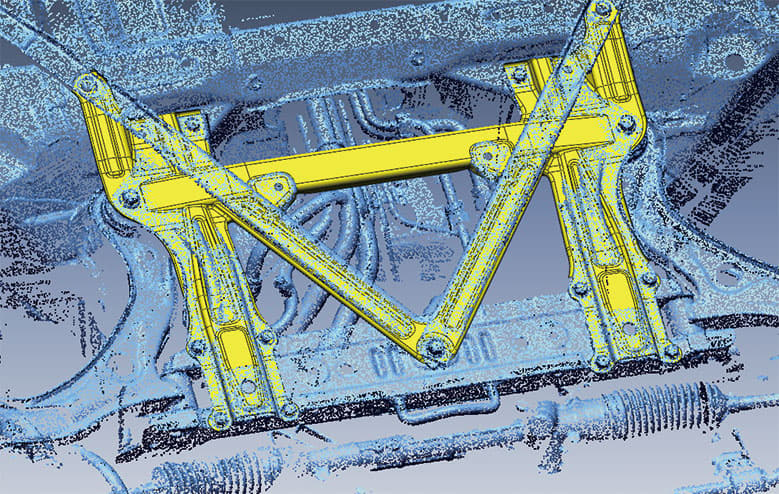
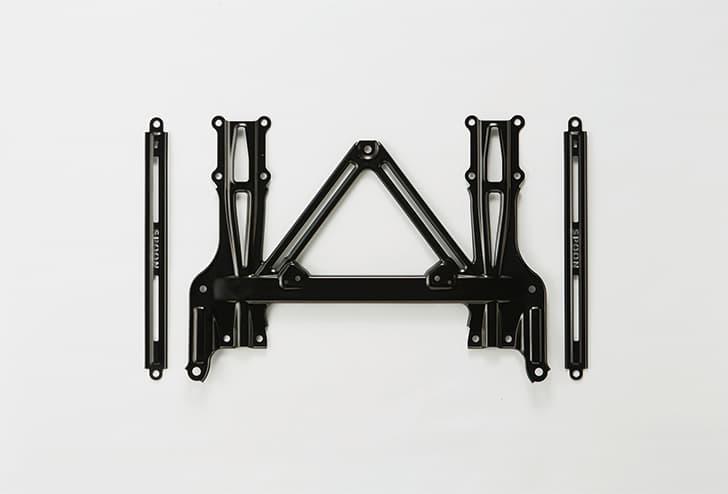
The project involved designing a new plate for the front underbody of a Honda S660 sports car. The original part suffered from torsion during hard braking and rolling. The plate was designed originally as part of the complex base assembly of the car, which would have made it very time-consuming to redesign from scratch.

Instead of going back to the drawing board, Asano scanned the front underbody surface of the S660. Geomagic Design X was then used to process the scan data and design a new precision plate that could be mounted in place of the original.

“The redesigned plate could be attached to the car simply, without any processing, and it was so precise that the undercover could be mounted without alterations,” says Mr. Abe.

The redesigned plate provided greater stability, according to Mr. Abe, based on the fact that the suspension and body were integrated into a single box like a sub-frame.

Getting it right the first time

Beyond point capture and processing, Geomagic Control X has evolved into a central tool for the efforts of  Asano’s Quality Assurance Section to reduce the number of trial sheets for its prototypes and to produce an accurate mold on the first attempt.

“We are aggressively pursuing various new testing methods that are faster and more precise than the ones we’ve used in the past,” says Mr. Hiroshi Imai, Section Chief for Quality Assurance at Asano’s Gunma Plant.

Geomagic Control X enables manufacturers to take precise measurements of parts from 3D scanners and accurately compare them to digital reference data for first-article inspection and other metrology applications. The software instantly generates 3D reports of measurements, tolerances and deviations.

Asano uses 3D scanning and Geomagic Control X to speed the parts testing process and gain more accurate data on deviations from the original design.

“During trial production it is important to grasp the entire shape and surfaces of sheet metal parts,” says Mr. Matsumoto, who is in charge of testing the Asano Quality Assurance Section. “Before we began using Geomagic Control X, if the results weren’t good enough when we pressed the prototypes and measured them with a laser, it was difficult to determine whether it was a problem with the shape or with the laser. This wasted a considerable amount of time.”

Modeling the chassis parts in Geomagic Design X

Two to three times faster

Because of the time and effort required for capturing and processing data, Asano could only do product feature testing for mass-produced products.

“Except for the mass-produced products, the only testing methods available to us were to check the surface by 3D measurement to designate and measure arbitrary points on the surface,” says Mr. Tetsuya Matsumoto. “This made it difficult to grasp the entire shape. Immense time and labor were spent on clarifying product features.”

With an accurate 3D scanning device and Geomagic Control X, Mr. Matsumoto says that Asano can now grasp the cause of deviations at a glance.

“Our testing is two to three times faster than in the past, and we can aim for much higher manufacturing efficiency.”

Adopting new technologies such as reverse engineering and 3D metrology is an ongoing process at Asano, something that is baked into the company’s DNA.

“We anticipate needs and take up any and every challenge,” says Mr. Akio Kishi, Director of Asano’s Management Promotion Office. “This stance is one of our company’s core strengths.”

Completed parts manufactured from 3D CAD data used with 3D scanning

3D Systems Builds Better 3D Printers with Geomagic Control X

Product: Geomagic Control X
Industry: Design

3D Systems has spent its 30-year history enabling its customers to optimize their designs, transform their workflows, bring innovative products to market and drive new business models. And the company benefits from the very same 3D technology solutions in its own business. Case in point: when it came time to launch the ProX® SLS 6100 3D printer, 3D Systems turned to its in-house Geomagic software group and trusted partner Hexagon Manufacturing Intelligence to ensure that the printers matched the high quality of their design.

Quality Components Make Quality Products

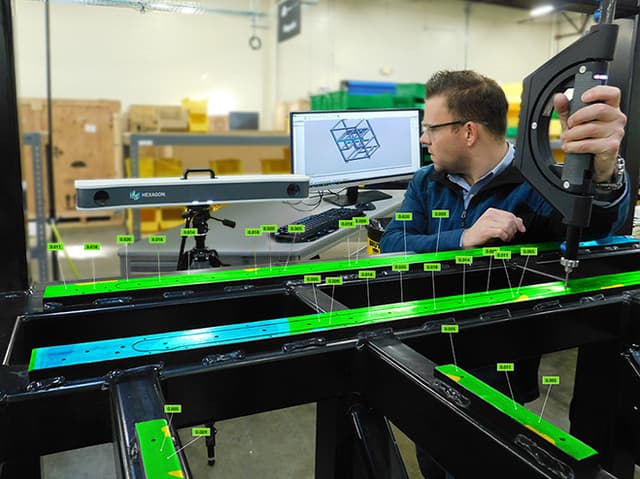
Control X LiveInspect 3D inspection of 3D Systems ProX SLS 6100

The ProX SLS 6100 is a precision industrial 3D printer that must meet exacting specifications to ensure it builds production-quality parts accurately and reliably, 24 hours a day, 7 days a week. Achieving this quality requires meeting stringent dimensional tolerances, starting from the very beginning with the welded steel frame that serves as the foundation of the 3000+ lb (1360+ kg) industrial 3D printer. The frames of the ProX SLS 6100 are manufactured by a specialty supplier based on designs provided by 3D Systems, and are then delivered to 3D Systems’ manufacturing facility in Rock Hill, South Carolina, where the printers are assembled.

To ensure all products are developed and delivered at the highest standard with continual improvement, the entire organization contributes to quality control. Bryan Rough, Manufacturing Program Manager for 3D Systems, supports the ProX SLS 6100 manufacturing process, including inspecting components like the printers’ frames. “We need to know that everything about this new product meets engineering specifications, and works exceedingly well in the field,” said Rough. “We have several critical flatness and parallelism requirements, and we need to make sure we are delivering on our commitment to quality at every turn.”

Saving Time and Money with 3D Inspection

According to Rough, if a frame is out of tolerance and the issue is not discovered prior to assembly, it could lead to manufacturing errors that cost tens of thousands of dollars to correct — not to mention delay the delivery of printers to customers. Rough’s requirements are clear: to quickly inspect the large, heavy frames of the ProX SLS 6100 directly on the factory floor with minimal time commitment. “This is a very important step, but it is also just one aspect of my job, so I don’t have time to become an expert at using complex inspection tools. I need an inspection system that I can pick up a couple times a week, get the measurements I need, generate a report, and move on to my other projects. Geomagic® Control X™ is perfect for that.”

Together with an AICON MoveInspect XR8 portable optical CMM from Hexagon Manufacturing Intelligence, Geomagic Control X allows Rough and his teammates to measure flatness, parallelism, perpendicularity, and other Geometric Dimensions & Tolerances (GD&T) right on the factory floor. Best of all, it takes less than an hour to set up, take measurements, and generate a complete inspection report for each ProX SLS 6100 frame.

“The MoveInspect XR8 is ideal for measuring these large welded frames because I can use the wireless probe anywhere in a large measurement volume. I don’t have to worry about line-of-sight issues because of the XR8’s dynamic referencing capability that lets me move the device wherever I need to without realigning it,” said Rough. The software also makes things easy, and was intuitive to learn and incorporate into the manufacturing process. “Control X is very straightforward to use,” says Rough. “I had a half day of training on Control X months before the first printer frame was ready, and when it came time to pick up the software again, I was able to start and finish my first inspection the very same day.” Rough says this is a big distinction from other metrology software he has used in the past. “Other inspection software I’ve used has been far more complicated and there’s no way I could have picked those up as quickly as I learned Control X.”

Flexible and Easy 3D Inspection with LiveInspect

Rough uses the 3D CAD files of the frame to define exactly what he needs to measure in Control X. The software then automatically plans a measurement routine and connects directly to the MoveInspect XR8. All Rough or his teammates need to do is walk up to the frame and follow the on-screen and spoken prompts from Control X to take measurements where needed using the XR8’s MI.Probe, in a process called LiveInspect. When necessary, they can take other measurements too. Unlike a script-based inspection routine, the LiveInspect process is flexible so users can measure whatever they need to and add it to the inspection report with a couple of clicks.

“We’re now able to be proactive rather than reactive when it comes to quality because we can see problems before they happen,” said Rough. “Using the MoveInspect XR8 with Control X enables us to meet 3D Systems’ elevated standards of quality for our customers every time, and it’s been extremely helpful to the introduction of the new ProX SLS 6100.”


3D Systems’ use of Control X for its own quality control is another example of how simple, intuitive inspection software helps companies ensure quality everywhere by empowering more people to measure more things in more places. Learn more about Geomagic Control X today.

Pressure equipment design specialist Ener Consulting achieves reliable results using Simcenter Femap

Product: Femap, Simcenter
Industry: Industrial Machinery and Heavy Equipment

Ener Consulting automated the finite element analysis of pressure vessels in conformity with European and international standards

Verifying designs of pressure equipment

Ener Consulting – Integrated Technical Services (Ener Consulting), founded in 2002 and with headquarters in Prato, Italy, offers engineering consulting to industrial customers. The company’s mission is to work with dedication, to stay abreast of technological developments and to provide customers with reliable results. One of the core services of Ener Consulting is the verification of pressure equipment, exchangers, piping and vessels in the oil and gas, power and chemical industries. Over the years, the business has been gradually extended to other industries, including pharmaceuticals, food, pulp and paper, waste processing and many others.

“The design of pressure equipment has evolved over time for the type and complexity of analysis, requiring high-level specialization and analysis skills,” says Stefano Milani, finite element modeling (FEM) manager at Ener Consulting. “Until the mid-1990s, finite element analysis was regulated by loose standards; there were just a few guidelines with no proven procedures. Customers did not have extensive know-how, and without clear procedures, virtually all verifications of pressure vessels were based on manual calculations.”

Automated analysis with  Simcenter Femap

In the 2000s, the pressure vessel sector made quick progress with the introduction of standards and technology tools to automate analysis tasks. In this context, Ener Consulting started to collaborate with a Siemens Digital Industries Software Solution Partner for Simcenter 3D, Simcenter Femap and Nastran solutions. After using basic FEA software that could not perform accurate analysis and deliv-ered unreliable results, Ener Consulting identified Simcenter™ Femap™ with Nastran® software from Siemens Digital Industries Software as a suitable solution for implementing engineering, analysis and design services, and keeping up with the requirements of target markets.

“Traditional FEA tools that are integrated in 3D CAD software are very simple and intuitive,” Milani says, “but they have limited capabilities and are inadequate to execute accurate analysis in conformity with the strictest standards or in-depth verification. Simcenter Femap offers clear and tangible benefits in terms of speed, ease of use and reliability of results.”

The analysis conducted by Ener Consulting begins from 3D models with relatively complex geometries that are difficult to address with general-purpose FEA software. With Simcenter Femap, Ener Consulting engineers can readily clean the geometry, eliminating unnecessary features for analysis purposes (defeatur-ing). Alternatively, the equipment to be analyzed can be modeled directly in Simcenter Femap as a mesh.

Ener Consulting, developed an add-on module for stress linearization in Simcenter Femap. “With this plug-in, engineers need only a couple of clicks on the screen to get the results they are looking for,” says Francesco Palloni

“The end customers in our reference markets need to check products with a quick and reliable method,” Milani says. “Simcenter Femap helps us deliver the desired results following either a tradi-tional approach or a more modern and advanced method.” The benefits of nonlinear analysis

For the structural verification of pressure vessels, a traditional design-by-analysis approach (stress categorization) often results in component oversizing, because the conventional linear static analysis approach, while proven and easy to apply, is conservative. Engineers must also consider that the linear analysis procedure is articulated and time-consuming when applied to complex geometry. Currently, pressure equipment regulations allow the application of more accurate analysis methods, including using tools such as Simcenter Femap with Nastran for non-linear calculations.

“The ASME boiler and pressure vessel standard, for instance, allows for checking pressure vessels using a nonlinear consti-tutive equation,” Milani explains. “On one hand, it forces the analyst to introduce a more complex constitutive equation in the mathematical model; on the other it requires a tool like Simcenter Femap with  Nastran to solve this type of analysis,” Milani explains.

“The Simcenter Femap nonlinear approach offers a wider admissibility range,” Palloni adds. “With the same geometry and materials, a component can offer higher performance than those predicted with elastic linear analysis. Another benefit is obtained in the postprocessing phase, which is faster and immediate.”

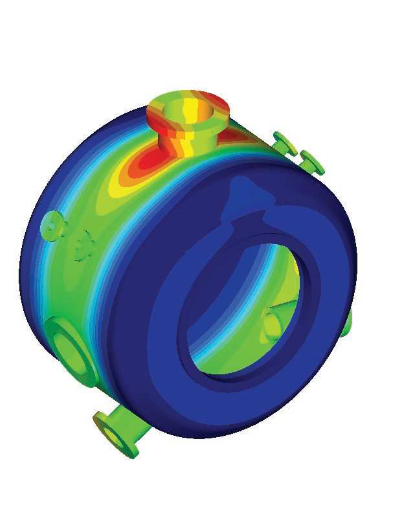
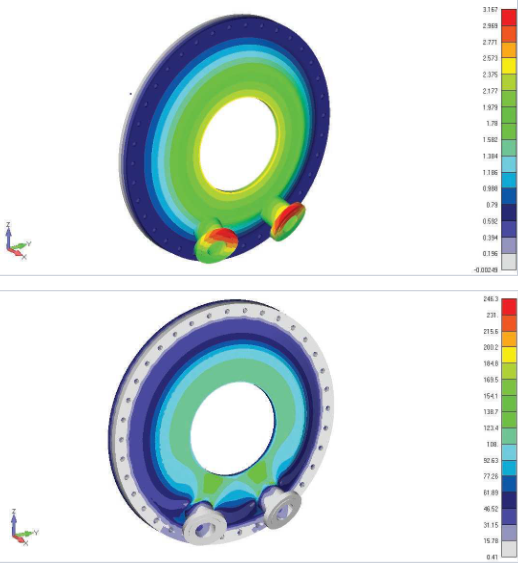
The effectiveness of the Simcenter Femap nonlinear approach was proven in the case of a vessel with a flat bottom of variable thickness. When analyzed with a conventional linear analysis procedure, the component did not pass the elastic test; however, it proved suitable and compliant with applicable standards when it was checked with a nonlinear approach.

The linear approach to pressure vessel verification is constrained by significant design loads which, combined with linear stress analysis methods, results in the noncompliance of the design.Consequently, the initial geometry has to be modified or the load values have to be reduced to fit into the admissible range. Using Simcenter Femap with a nonlinear analysis approach requires more computing power than linear calculations and greater attention to plastic collapse, but offers a more immediate verification of the structural integrity of the pressure equipment.

×