Siemens Process Preparation takes SPEA test scheduling to the next level

Product: Valor
Industry:
Manufacturing

The SPEA Leonardo programming software is highly capable, but when scaling from a single board to multiple boards, there’s always room for improvement. That’s where Siemens Process Preparation comes in—designed to optimize test programming efficiency and streamline the entire workflow.

Engent Inc.: Excellence in Microelectronics

Located in Norcross, Georgia, Engent Inc. is a contract manufacturer founded in 2003, recognized for being at the forefront of microelectronics assembly. With deep expertise in advanced surface mount technology (SMTA), they excel in low- to medium-volume, high-mix turnkey production.

Their engineering capabilities support every stage of the product lifecycle—from product and process development, proof of concept, and new technology introduction (NTI), to design for manufacturing (DFM), new product introduction (NPI), and volume production. As an ITAR-registered company with AS9100:2016 certification, Engent is committed to delivering exceptional quality and reliability.

A Key Upgrade: Efficient Programming for SPEA Machines

When evaluating the capabilities of Process Preparation for their SPEA flying probe machine, Engent identified a significant opportunity: extending assembly support and refining programming workflows to substantially improve overall efficiency.

Solving the Gerber File Challenge

One of the main challenges was that SPEA Leonardo does not support Gerber files as a basis for test program creation. Since some of Engent’s customers provided only these files, a robust solution was essential.

With Process Preparation, not only is intelligent CAD data supported—raw Gerber files (274X or 274D) can also be transformed into a digital product model. This enables the extraction of critical information such as pin connectivity, netlists, and component intelligence, bringing the starting point much closer to intelligent CAD formats like ODB++.

Key Ways Process Preparation Enhances SPEA Test Programming

When integrated with SPEA Leonardo, Process Preparation dramatically speeds up test programming through:

  • Seamless CAD Import – Ensures no loss of critical design data, including solder mask information. Missing solder mask layers? No worries—Gerber files can be used to reconstruct accurate board details.
  • Effortless BOM Integration – Rapidly and accurately links the Bill of Materials to the test program, ensuring the right components are identified and tested.
  • Intelligent Component Recognition – Automatically detects resistors, capacitors, diodes, and other components, even when CAD files lack clear designations.
  • Accurate Package Outlines – Essential for flying probe testing, as precise dimensions determine optimal probe placement. Process Preparation taps into the Valor Parts Library, with access to over 35 billion part numbers for detailed package data.
  • Automated Probe Placement – Using a complete digital twin of the PCB, Process Preparation calculates the best probe locations, reducing errors and debug time.

Less Downtime, More Productivity

Once the optimized test program is ready, Process Preparation sends all data to SPEA Leonardo in a single consolidated file, eliminating inefficiencies caused by rushed programming or manual adjustments.

Skipping steps may seem like a shortcut, but it often leads to costly delays during machine debugging. The goal is clear: minimize downtime. When the flying probe machine is running tests, it’s generating revenue. When it’s idle, it’s costing money.

Solid Edge University returns to Mexico with great success in Querétaro

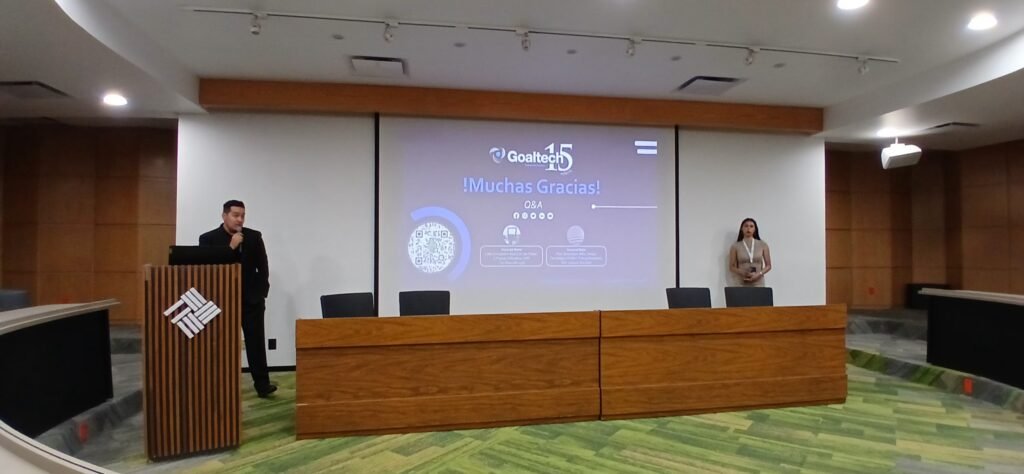
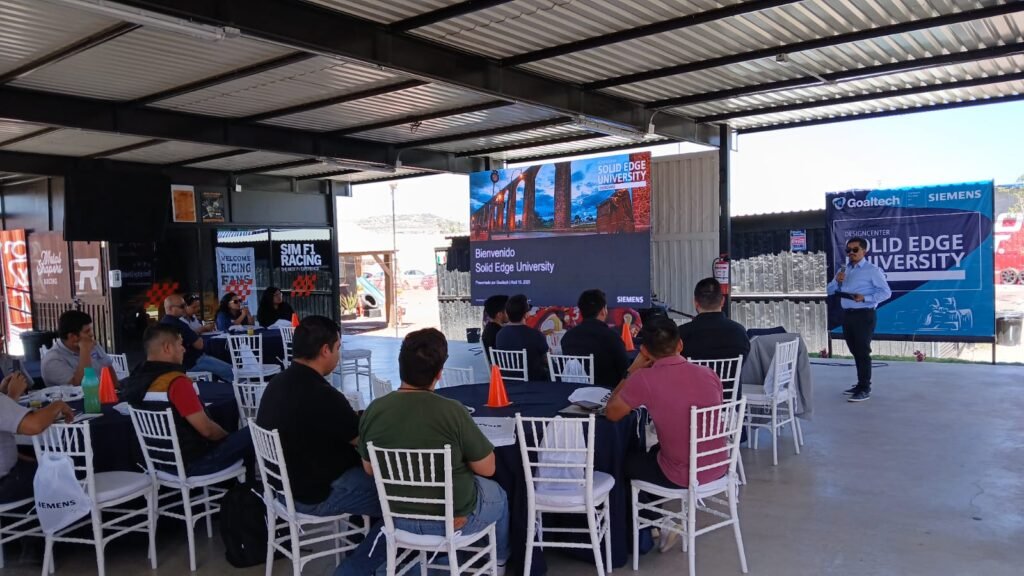
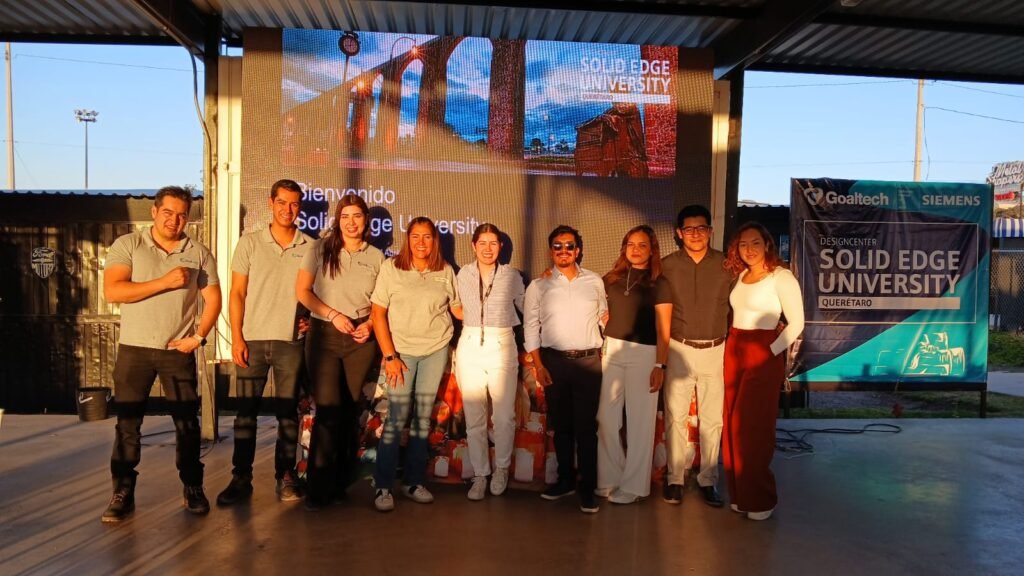
Querétaro, Qro., April 10, 2025. Solid Edge University returned to Mexican territory with Goaltech Engineering Solutions, and did so exceeding expectations. The event, which took place in the facilities of Regio Kart Queretaro, gathered professionals, academics, students and design and engineering enthusiasts to live an unforgettable experience, combining state-of-the-art technology with the excitement of the tracks.

The event stood out for its dynamic, participative atmosphere, loaded with practical knowledge. From the beginning, Solid Edge University was positioned as much more than a technical conference: it was a meeting point to share ideas, learn about the latest trends in digital design, and strengthen ties between the technology community.

Four specialized conferences

One of the pillars of the event were the four specialized conferences, where attendees could choose the one that best suited their interests or professional profile.

These talks were given by experts with extensive experience in the industry, and provided an ideal space to resolve doubts, learn about real cases and discover new functionalities that are transforming the way we design.

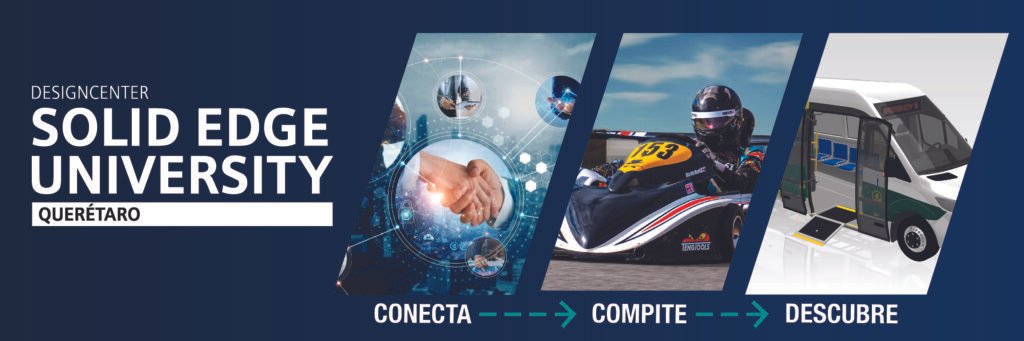
Technology + adrenaline: go-kart races

After the knowledge, it was time to release the energy on the track. Attendees participated in exciting go-kart races, where adrenaline, healthy competition and fun were the protagonists. This activity served as a perfect metaphor for the spirit of the event: innovation with speed, precision with strategy, and teamwork with passion.

The winners of each race received commemorative diplomas and were recognized for their skill, reflecting the value Goaltech places on talent and performance, both on the track and in design.

A space to connect and grow

Solid Edge University Queretaro was also an ideal platform for networking. Valuable conversations were generated around the use of Solid Edge in different industries, and many agreed on how useful it was to have direct contact with Goaltech’s technical team.

A day that sets the course

From Goaltech we sincerely thank each person who was part of this day. To the attendees, speakers, collaborators and staff, thank you for making Solid Edge University an experience that leaves a mark!

Follow all our activities and upcoming events at: https://goal-tech.com.mx/proximos-eventos/

Solid Edge University returns to Mexico with a unique experience in Querétaro

After several years of absence, Solid Edge University returns to Mexico with an exclusive event that will combine innovation in mechanical design with the adrenaline of motorsports. This Thursday, April 10th, Regio Kart Queretaro will be the stage where engineers, designers and technology enthusiasts will be able to experience first-hand the capabilities of Solid Edge, Siemens’ powerful tool for design and manufacturing.

This return of Solid Edge University will not be a traditional event, but an immersive experience that will allow attendees to learn about the latest software, participate in interactive sessions and challenge their skills on the go-kart track. It will be a unique opportunity to learn, network with industry experts and enjoy the thrill of motorsports in a dynamic and competitive environment.

What can attendees expect?

The event will offer a combination of learning and entertainment, with activities designed for participants to explore the potential of Solid Edge in a hands-on, exciting environment. Highlights of the event include:

Live demonstrations of Solid Edge’s most advanced capabilities.
Interactive sessions where design, manufacturing and simulation techniques will be addressed.
Karting competition, where attendees will be able to demonstrate their speed and skills on the track.
Networking spaces to connect with other industry professionals.

Event details

Date: Thursday, April 10, 2025
Venue: Regio Kart, Querétaro
Time: 2:00 p. m. – 6:00 p. m.

Admission is completely free, but places are limited. Those interested in being part of Solid Edge University’s long-awaited return to Mexico should register as soon as possible to ensure their attendance.

Last spots available! Register now:
Register here

With this initiative, Goaltech Engineering Solutions reaffirms its commitment to innovation and the development of the manufacturing industry in Mexico, offering a space where technology, learning and the excitement of motorsports come together to provide an unforgettable experience.

By leveraging Line Designer, battery manufacturers achieve over 40% efficiency gains

The rapid development of the new energy sector presents battery manufacturers with dual challenges: expanding production capacity while adapting to fast-evolving technology. Traditional 2D factory planning models no longer align with smart manufacturing requirements. However, Siemens Industrial Software’s innovative Line Designer solution is breaking new ground by leveraging 3D digital technology, redefining efficiency and accuracy in battery plant construction.

Line Designer 3D Super Battery Plant.png
Line Designer 3D Super Battery Plant

3D digital factory planning: A game-changer

At the core of 3D digital factory planning is its full-process visualization and dynamic optimization capabilities. Siemens’ Line Designer utilizes parametric modeling technology, allowing engineers to seamlessly complete equipment layout, logistics path planning, data analysis, and report generation—all within a virtual environment. This advanced approach improves efficiency by over 40% compared to conventional 2D methods.

Line Designer core function

The system’s extensive intelligent library contains thousands of 3D models covering industrial equipment, building structures, and other key assets. It also supports multi-format data imports, including CAD and point clouds, making it ideal for complex renovation projects where flexibility and precision are critical.

Real-world impact: A 6GW super battery plant

In a landmark 6GW battery manufacturing facility project, Siemens’ technical team harnessed Line Designer to achieve rapid, one-click conversion from 2D floor plans to 3D digital models. The software’s dynamic interference checking feature played a pivotal role in identifying and resolving spatial conflicts between production equipment and utility pipelines early in the design phase. This proactive approach significantly reduced potential rework costs, streamlining the overall construction process.

Collision checks of 3D environment in Line Designer

Moreover, Line Designer’s intelligent visualization system generates automated data dashboards that categorize information by supplier performance, equipment status, and other critical metrics. These insights empower procurement and engineering teams to make informed decisions, enhancing operational efficiency.

Report and collaboration in Line Designer

Streamlining Collaboration and Design Integrity

Engineers can rapidly complete 3D factory layouts by simply dragging pre-engineered models from the library onto 2D floor plans,” explained a project engineer using Line Designer. “The software also ensures seamless conversion of 3D models back into 2D blueprints through reference set switching, preserving full design integrity with a single click.”

A representative from Siemens Industrial Software further emphasized the transformative potential of this approach:

Our goal is to make factory planning as simple and efficient as building blocks. By integrating immersive interactive environments and kinematic simulation capabilities, customers can not only validate design plans intuitively but also pre-rehearse production processes in a virtual space, proactively mitigating potential risks.”

The future of smart manufacturing

As the new energy industry shifts toward intelligence and sustainability, 3D digital factory planning is emerging as an industry standard. Siemens Industrial Software remains at the forefront of this evolution, driving digital transformation in manufacturing through its deep expertise in industrial software solutions.

One click converting from 3D models back to 2D blueprints

With cutting-edge tools like Line Designer, Siemens continues to enable manufacturers to optimize efficiency, reduce costs, and build smarter, future-ready factories. The 6GW super battery plant is just the beginning—ushering in a new era of intelligent industrial design and execution.

6GW Super Battery Plant
6GW super battery plant in NX Line Designer

Benefits of Using Siemens NX Line Designer for Battery Plant Planning

Siemens NX Line Designer provides a transformative approach to battery plant planning through advanced 3D digital modeling. One of its key benefits is efficiency—engineers can achieve over 40% faster design completion compared to traditional 2D methods. The software’s parametric modeling capabilities enable seamless equipment layout, logistics path planning, and real-time data analysis within a virtual environment.

The tool’s intelligent library, containing thousands of pre-engineered 3D models, allows for accurate and rapid assembly of factory layouts. This feature supports multi-format data imports, including CAD and point clouds, making it particularly valuable for complex renovation projects. Additionally, the dynamic interference checking function proactively identifies and resolves spatial conflicts between equipment and infrastructure, significantly reducing costly rework during construction.

Another major advantage is enhanced collaboration. Engineers can convert 2D floor plans into fully functional 3D environments with a single click, facilitating seamless integration between different teams. The system also generates automated data dashboards, offering real-time insights into supplier performance and equipment status.

By integrating kinematic simulations and immersive virtual environments, Line Designer allows manufacturers to pre-rehearse pro

Innovation in coffee roasting with clean technology and Simcenter

Product: Simcenter
Industry:
Consumer products
Walk the Talk Ray & Jules cares about the coffee farmers. From Brilliant Ben to Spicy Sara, every bag tells a story about the region, workers and people behind the coffee beans. Ray & Jules is in direct contact with the local farmers and co-operatives and sources beans directly, whenever possible.

The Challenge: A More Sustainable Coffee
The coffee industry faces a significant challenge regarding sustainability. Traditional coffee roasting methods consume large amounts of energy, leaving a high carbon footprint. Ray & Jules, a Belgian company focused on clean energy solutions, and CEE set out to create a more efficient, sustainable roasting system using solar energy.

Their goal was clear: design a roaster that reduced energy consumption by up to three times compared to conventional methods. However, achieving this required overcoming design challenges, including thermal efficiency and precise control of the roasting process to ensure consistent coffee quality.

The Solution: Optimization with Simcenter
To bring their vision to life, Ray & Jules and CEE turned to Simcenter simulation tools by Siemens. Using Simcenter, engineers could analyze and optimize the thermal and aerodynamic design of the roaster, ensuring even and efficient heat distribution.

Simcenter enabled them to:

  • Evaluate the airflow performance within the roaster.
  • Optimize heat transfer to ensure a uniform coffee roast.
  • Identify potential energy losses and address them before manufacturing.

The use of Simcenter allowed for design adjustments in the development phase, avoiding costly mistakes and ensuring a faster and more accurate product development.

The Results: Energy Efficiency and Coffee Quality
The benefits of using Simcenter were significant:
Up to 3 times less energy consumption compared to traditional roasters.
Reduced thermal waste thanks to an optimized design.
High-quality coffee with uniform roasting and precise process control.

Ray & Jules and CEE have positioned themselves as leaders in sustainable innovation in the coffee industry, showing that combining renewable energy and simulation technology is key to transforming traditional sectors into more sustainable futures.

With Simcenter, energy efficiency and sustainability go hand-in-hand, allowing companies like Ray & Jules to redefine coffee production standards.

×