Tecnomatix, a solution from our partner Siemens, leads in digital process simulation according to G2

Ranked #1 in Digital Twin Software and a leader in process simulation, Tecnomatix continues to drive transformation in manufacturing.

In the Spring 2024 edition of the G2 Grid®, Tecnomatix, the digital manufacturing solution from our partner Siemens, has been recognized as a leader in Process Simulation Software and the #1 ranked solution in the Digital Twin category. This recognition—based on real, verified user reviews on G2, the world’s most trusted software marketplace—solidifies Tecnomatix as a critical enabler of digital transformation across industries.

At Goaltech, as a Siemens Smart Expert Partner, we’ve been actively showcasing the power of this platform through our exclusive webinar series: “Exploring Tecnomatix”, where we dive into real-world applications, expert tips, and advanced use cases to help engineers unlock its full potential.

Why is Tecnomatix setting the standard?

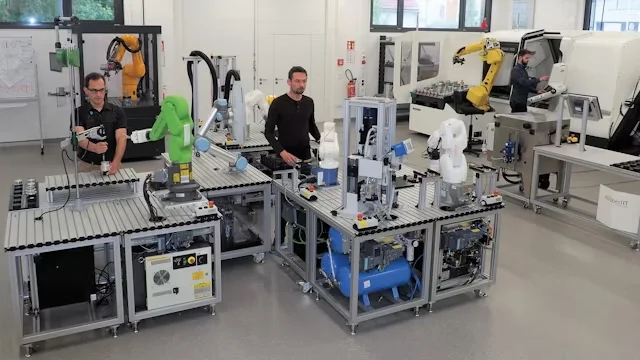
From automotive to industrial machinery, Tecnomatix empowers manufacturers to synchronize product engineering, manufacturing engineering, production execution, and service, all within a connected digital environment. With advanced simulation and virtual commissioning capabilities, users can reduce costs, save time, and eliminate errors early in the design process.

Core tools driving industry success:

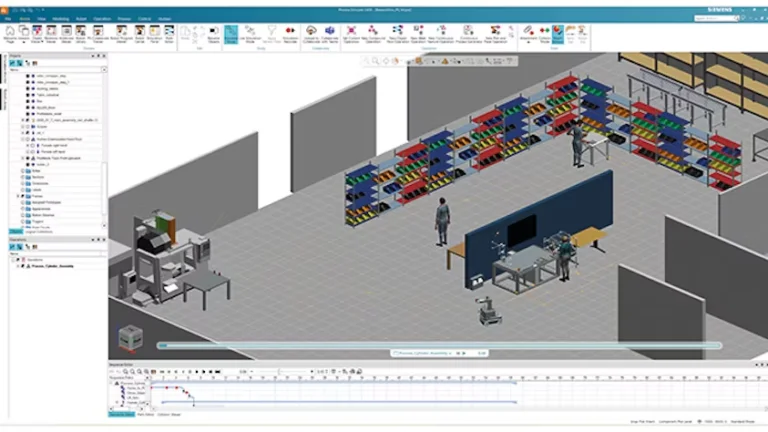
  • Process Simulate – plan, simulate, and validate human tasks, robotic processes, and automation across the entire product lifecycle.
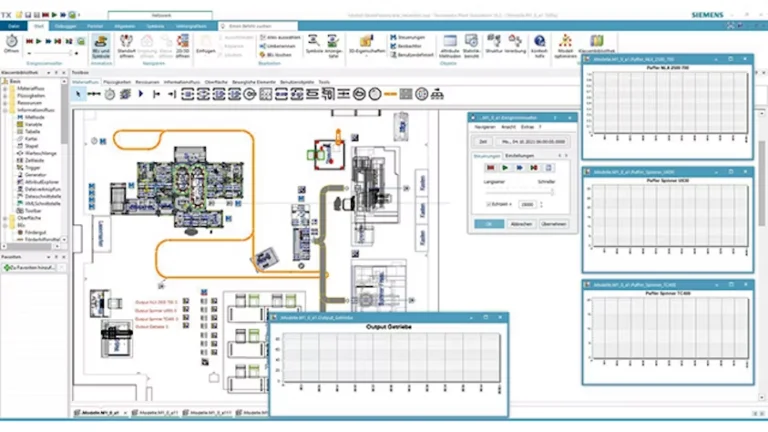
  • Plant Simulation – model, visualize, and optimize logistics and material flow to maximize efficiency at every level, from global facilities to specific production lines.

Additional G2-recognized features include:

  • Detailed model creation to digitally validate layout and equipment before physical commissioning.
  • Performance visualization with dynamic analytics on job rates, throughput, and energy consumption.
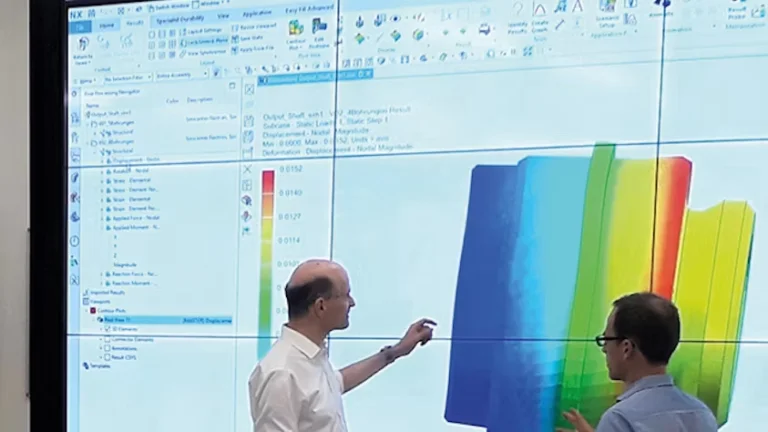
  • 3D simulation verification to observe real-time machine and robot motion in a virtual environment.
  • Parameter variation analysis to test different system inputs and optimize quality, efficiency, and control.

Hear it from the users

Engineers across industries highlight how Tecnomatix helps them accelerate time-to-market, increase process reliability, and boost plant performance. If you’re already a Tecnomatix user, we invite you to share your review on G2 and help others make informed decisions.

Check out the full list of user reviews and see how Tecnomatix is driving results in real production environments.

Read Tecnomatix reviews on G2

Want to dive deeper? Explore our webinar series “Exploring Tecnomatix” and learn directly from our experts how to leverage its full power.

Success Story: ANAND CY Myutex Automotive

Product: NX
Industry:
Automotive & transportation

How NX CAD/CAM revolutionized synchronizer ring manufacturing


The Client

ANAND CY Myutex Automotive (ACYM) is a specialized manufacturer of synchronizer rings for the automotive industry. These components are essential in synchromesh gearboxes, advanced transmission systems that enable smooth gear changes in passenger and commercial vehicles.

The Challenge

ACYM faced multiple obstacles that limited their responsiveness and competitiveness:

Technical Issues:

  • Design and production teams working in silos
  • Outdated CAD software without collaborative capabilities
  • Incompatibility with client file formats
  • Imprecise generation of complex surfaces
  • High manufacturing error risks

Business Impact:

  • Extended development cycles
  • Delayed customer deliveries
  • Risk of costly machinery collisions
  • Loss of competitiveness in an expanding market

“With original equipment manufacturers focusing on high-performance vehicles and expanding electric vehicle offerings, the demand for advanced transmission solutions is increasing”Pranav Rawal, General Manager at ACYM

The Solution: NX CAD/CAM

In collaboration with DDSPLM (Siemens Digital Industries Software partner), ACYM implemented NX™ software, part of the Siemens Xcelerator business platform.

Key Implemented Features:

  • Synchronous Technology: Parameter adjustment without historical data
  • CAD/CAM Integration: Single source of truth for the entire process
  • Advanced Automation: Customizable tools for toolpath creation
  • Universal Compatibility: Support for multiple file formats
  • Integrated Simulation: NC program verification without damage risk

Quantifiable Benefits

Operational Efficiency:

  • 40% reduction in design and production times
  • 40% reduction in concept-to-delivery time
  • 30% savings in operational costs

Technical Improvements:

  • Elimination of manual transfer errors
  • Greater precision in complex surfaces
  • Better machining process control
  • Significant reduction in material costs

Enhanced Collaboration:

  • Design and production teams working in an integrated manner
  • Smooth communication with international clients
  • Complete version control and traceability

Client Testimonial

“The synchronous technology in NX is particularly beneficial for working with imported data. It allows us to adjust hole sizes or shift surfaces on models without historical data. The same way our synchronizer rings deliver a smooth gearbox experience, using NX synchronous technology provides us the flexibility to quickly adjust parameters and implement design changes as needed.”

Pranav Rawal, General Manager, ANAND CY Myutex Automotive

Key Lessons

  1. Integration is fundamental: Eliminating silos between design and manufacturing generates exponential efficiencies
  2. Technical flexibility matters: The ability to work with diverse data is crucial in global supply chains
  3. Measurable ROI: Efficiency improvements translate directly into competitive advantages
  4. Scalability: Solutions must grow with market demands

Why this case matters

In a constantly evolving automotive market, where electrification and efficiency are priorities, ACYM demonstrated that digital transformation is not just an option, but a strategic necessity.


Is your company facing similar manufacturing challenges? At Goaltech, we help companies identify and implement the technological solutions that transform their operations.

Contact our team to explore how we can accelerate your digital transformation.

Hofer Powertrain Revolutionizes Hybrid Vehicle Efficiency with Siemens Technology

Product: Simcenter
Industry:
Automotive

The Challenge: Optimizing Next-Generation Hybrid Vehicle Performance

In an increasingly competitive and sustainability-focused automotive market, hofer powertrain faced the challenge of developing Dedicated Hybrid Transmission (DHT) systems that would maximize both fuel efficiency and vehicle performance. The complexity lies in the fact that having the best hardware is not sufficient: an intelligent energy management strategy is required to optimize the distribution between internal combustion energy and electric energy.

The Solution: Advanced Siemens Technology for Comprehensive Optimization

hofer powertrain chose the powerful tools from Siemens Digital Industries Software to address this complex challenge, implementing a comprehensive solution based on:

Simcenter Amesim: The Leading Simulation Platform

Siemens’ flagship tool for multi-physics system modeling enabled hofer powertrain to:

  • Create precise models of the dual-parallel hybrid powertrain
  • Implement the Hybrid Optimization Tool (HOT) with advanced algorithms
  • Automatically generate forward models for dynamic validation

Simcenter HEEDS: World-Class Automated Optimization

Siemens’ multidisciplinary optimization solution provided:

  • Automated exploration of 250 design configurations
  • Optimization algorithms that identified the optimal configuration
  • Parallel analysis of multiple design variables simultaneously

Optimized System Architecture

  • Dual-parallel hybrid vehicle equipped with a 1.2-liter internal combustion engine
  • Dedicated Hybrid Transmission (DHT) optimized specifically for hybrid applications
  • Advanced energy management system combining Pontryagin’s Minimum Principle for offline optimization and Equivalent Consumption Minimization Strategy for real-time optimization

Integrated Workflow with Siemens Technology

The synergy between Siemens tools created an unprecedented optimization process:

  1. Simcenter HEEDS automatically manages and varies design parameters
  2. Simcenter Amesim HOT calculates optimal control for each configuration
  3. The integrated Siemens ecosystem ensures seamless data transfer
  4. Automatic generation of the final optimized Simcenter Amesim model

“The native integration between Simcenter HEEDS and Simcenter Amesim was key to the project’s success, eliminating data transfer errors and significantly accelerating the optimization process.”

The Results: Siemens Technology Power in Action

Thanks to the computational power and advanced algorithms of Simcenter HEEDS, which automatically explored 250 different designs, and the precision of Simcenter Amesim for detailed modeling, the results were extraordinary:

Efficiency and Performance Improvements

MetricBaseline DesignOptimized DesignImprovement
Fuel consumption5.58 L/100km5.23 L/100km-6.3%
0-100 km/h acceleration8 seconds7 seconds-12.5%
Maximum speed in electric mode54 km/h140.4 km/h+160%

Component Optimization

  • 38% reduction in motor power scaling factor
  • 68% reduction in generator power scaling factor
  • 33% improvement in first gear transmission ratio

The Validation: Proven Precision of Simcenter Amesim

The project’s success was confirmed through the robust validation capabilities of Simcenter Amesim:

Integrated Dual Modeling

  • Backward model (Simcenter Amesim HOT): High-speed quasi-static optimization
  • Forward model (Simcenter Amesim): Dynamic simulation with real transient effects
  • Automatic transition between models without data loss

Validated Results

The consistency between both modeling approaches demonstrated the exceptional precision of Siemens tools:

  • Optimized consumption: 5.23 L/100km (backward model) vs 5.24 L/100km (forward model)
  • Less than 0.2% difference between simulations, confirming software reliability

The Impact: Siemens Ecosystem Transforming the Industry

This success case demonstrates how Siemens Digital Industries Software integrated solutions can:

Accelerate innovation: Drastic reduction in development time through automation
Guarantee precision: Cross-validation between multiple modeling approaches
Optimize resources: 250 designs explored automatically vs. years of physical testing
Drive sustainability: 6.3% less consumption = significant emission reduction

Competitive Advantages of the Siemens Ecosystem

  • Native integration between tools eliminates transfer errors
  • Scalability for projects of any complexity
  • World-class algorithms in multidisciplinary optimization
  • Specialized technical support from our strategic partner Siemens

Future Perspectives with Siemens

hofer powertrain continues innovating with the Siemens solutions ecosystem, exploring:

  • Simcenter Amesim for battery aging modeling
  • Simcenter HEEDS for next-generation modular architectures
  • Integration with other Siemens solutions for renewable energy

Why Choose Siemens Solutions?

Proven Precision: Less than 0.2% differences between models
Development Speed: 250 designs optimized automatically
Total Integration: Complete ecosystem without data loss
Measurable Results: 6.3% less consumption, 12.5% better acceleration


This success case demonstrates the transformative power of Siemens Digital Industries Software in hybrid vehicle optimization, validating our strategic alliance to deliver the best market solutions.

Ready to revolutionize your hybrid vehicle development? As an authorized Siemens partner, we offer complete access to these world-class tools, along with specialized technical support and certified training.

We’re Launching Our Knowledge Center!

We’re excited to announce that our Knowledge Center is now available, an educational platform designed specifically for professionals and students seeking to master the most advanced design tools in the market.

Our First Course: Solid Edge Fundamentals

We’re starting this new chapter with the “Solid Edge Fundamentals” course, where we’ll teach you from scratch how to use this powerful Siemens software. We’ve designed this program with both beginners and users who want to formalize and deepen their knowledge of this leading 3D design tool in mind.

Learn at Your Own Pace, Wherever You Want

We know your time is valuable, which is why our course is 100% online and you can progress at your own pace, without compromising your work or academic activities. The flexibility you need to grow professionally.

Special Launch Promotion

To celebrate this launch, we’re offering a special promotion:

  • Launch price: $200 USD (regular price $250 USD)
  • Discount: 20% savings
  • Available only for the first 5 enrollees

This is a unique opportunity to access high-quality specialized training at an exceptional price.

Why Solid Edge?

Mastering Solid Edge gives you an important competitive advantage in sectors such as manufacturing, mechanical engineering, industrial design, and product development. This certification can open new job opportunities and significantly improve your professional prospects.

Don’t Miss This Opportunity!

Spots are limited and we want to ensure the best learning experience for our students.

Contact us now:

  • Phone: +52 (614) 279 4851
  • Email: info@goal-tech.com.mx
  • Visit: https://goaltechcenter.com/

What’s Coming

This Knowledge Center is just the beginning. We have exciting plans to incorporate more specialized courses in other design and manufacturing tools in the coming months. Stay tuned for our updates!

Start mastering 3D design today and take your career to the next level!

Success Story: How Digital Engineering and Simulation Software Are Revolutionizing the Bicycle Industry

Product: Simcenter
Industry:
Bicicletas

Bicycles are more than just a mode of transport or a healthy hobby—they are the result of decades of innovation where technology plays a crucial role in making them faster, safer, and more comfortable. At Goaltech Engineering Solutions, proud Siemens partners, we have witnessed and actively contributed to this digital revolution in the cycling industry.

The Challenge: Bringing the Bicycle from the Past into the Digital Future

Since Karl Drais invented the Draisine in 1817, bicycles have evolved dramatically. But the deepest transformation is not only in materials or classic design—it’s in how bicycles are developed today: through the power of simulation software and digital engineering.

Leading manufacturers like Trek, Cervelo, and Ridley rely on advanced solutions to optimize every detail—from aerodynamics to rider safety.

Our Solution: Siemens Software for 100% Digital Development

At Goaltech, we implement and support cycling brands with Siemens solutions that transform the design and validation process:

  • GPU-accelerated Simcenter CFD: Enables simulation of airflow around frames and components, optimizing aerodynamics to reduce drag and increase speed. Trek, for example, uses these tools to analyze hundreds of configurations and perfect rider and accessory positioning.
  • Structural simulation and impact testing: Using Simcenter technology, we perform advanced helmet impact and rotational analysis to maximize protection without sacrificing comfort or weight.
  • Thermal and acoustic optimization: Software allows balancing ventilation and thermal comfort in helmets while reducing noise and vibrations in e-bikes for a quiet and enjoyable ride.
  • Full system simulation: From ultra-light hydraulic transmissions to electric motors, digital tools enable the design of more efficient and reliable e-bikes, encouraging millions to adopt sustainable mobility.

Tangible Results: Innovation You Can Feel in Every Pedal Stroke

Thanks to these technologies, today’s bicycles are faster, safer, and more comfortable than ever. Advanced simulation reduces development time and costs, accelerates innovation, and improves the end-user experience.

Radiate Engineering & Design AG, for instance, optimized carbon monocoque wheels with Siemens software to reduce drag by 7% and increase stability in crosswinds—a decisive advantage for professional riders.

Why Goaltech and Siemens?

As strategic partners, Goaltech and Siemens provide the tools manufacturers need to lead the digital transformation in cycling. From CFD simulation to structural and acoustic analysis, the software enables agile, reliable, and data-driven development.

In Summary

The future of cycling is digital, and software is the key to unlocking new levels of performance, safety, and comfort. At Goaltech Engineering Solutions, we’re ready to accompany you on this innovation journey with the best technologies on the market.

Tetra Pak — Sustainability and Innovation in Every Drop

Product: Simcenter (part of Siemens Xcelerator)
Industry: Food processing and packaging

Safe and Sustainable Food Packaging

Tetra Pak, a global leader in food processing and packaging solutions, is transforming the way food is packaged and consumed. In a world facing increasing challenges like climate change, resource uncertainty, food waste, and growing demand for healthy, sustainable options, the company has found in digital simulation the key to staying ahead.

With over 70 years of experience, Tetra Pak continues to evolve its paper-based aseptic cartons — packaging that allows food to remain safe and flavorful for up to a year without refrigeration or preservatives. This not only extends shelf life and reduces waste, but also improves logistics and raw material use while enabling access to nutritious products in remote locations.

A Challenge at 10 Packages per Second

The scale of Tetra Pak’s operations is impressive: in 2023 alone, more than 179 billion packages were produced using thousands of machines operating around the world. One of their fastest machines, the Tetra Pak E3/Speed Hyper, produces 10 packages per second — an enormous engineering challenge where speed, hygiene, efficiency, and sustainability must coexist in perfect balance.

To achieve this, Tetra Pak turned to Siemens Digital Industries Software and integrated Simcenter solutions from the Siemens Xcelerator platform. These multiphysics simulation tools allow them to optimize equipment design and production processes from a digital environment, reducing physical prototypes and anticipating failures.

Engineering Excellence with Digital Twin Technology

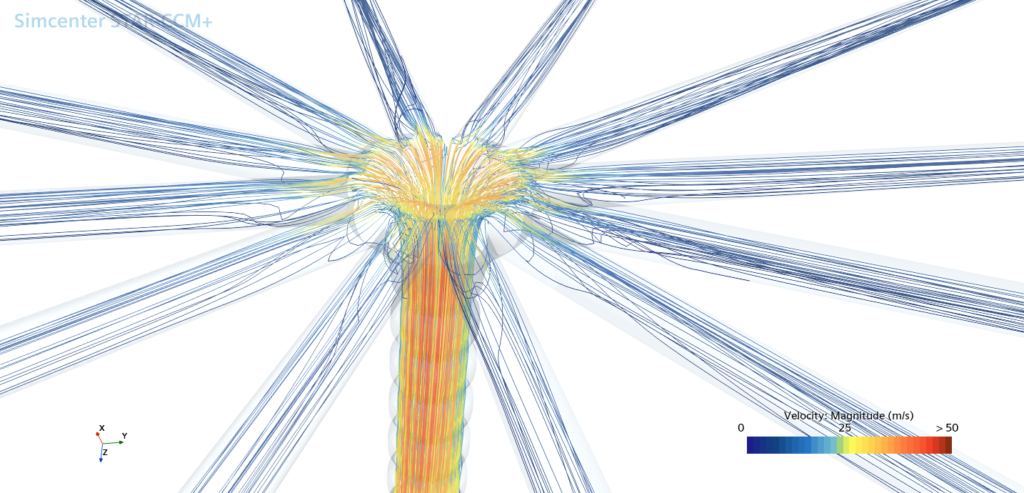
Using Simcenter Amesim and Simcenter STAR-CCM+, Tetra Pak created sophisticated digital twins of their systems — from milk processing to package sealing. This enables simulations of complex fluid-structure interactions, essential to ensure each package is formed and filled correctly, even with the huge variety of products and machine types.

With this level of detail, engineers can simulate everything from the pressure on fast-moving rollers to airflow patterns that could affect package integrity, and even confetti buildup during hole-cutting operations. All of this translates into fewer production stops, better food safety, and a smaller environmental footprint.

Sustainability from Start to Finish

Simulation also plays a crucial role in reducing emissions, optimizing energy use, and improving recyclability. For example, Tetra Pak is replacing the aluminum foil barrier in aseptic cartons with paper-based alternatives and must ensure the new designs meet both performance and regulatory standards. Thanks to multiphysics models, they can study these innovations in depth before launching them into the market.

In food safety processes like spray drying of milk, Tetra Pak uses Simcenter to track temperature histories and prevent protein breakdown, ensuring nutritional quality. In mixing processes, simulation helps calculate optimal mixing times, cutting energy costs and minimizing environmental impact.

Conclusion: Engineering for a Better Future

Thanks to Siemens technology, Tetra Pak has turned engineering complexity into competitive advantage. With the power of simulation, they not only ensure product safety and quality — they also support a global transition to safer, more sustainable food systems.

As Ulf Lindblad, Technology Specialist at Tetra Pak, puts it:
“Simulation gives us the insights we need to protect what matters most: food, people, and the planet.”

Goaltech at Siemens Assembly 2025: Sharing Vision, Technology, and Innovation

On May 13th, we had the honor of participating in Siemens Assembly 2025, one of the most important events for the manufacturing sector in Mexico and Latin America, held at Universidad Anáhuac. The event brought together over 1,000 representatives from industry, government, and academia to explore the future of manufacturing and the critical role of digital transformation and artificial intelligence in driving sustainable growth.

At Goaltech Engineering Solutions, we were proud to take an active role in the event with a masterclass by our Business Consultant, Noé Rojas, titled: “From Customer to Manufacturer: Breaking the Supply Chain Paradigm”.
In his session, Noé shared insights on how companies can shift from being dependent buyers to autonomous manufacturers by leveraging digital solutions that enhance flexibility, resilience, and competitive advantage.

The event also showcased major innovations from the Siemens Digital Industries Software portfolio, including Teamcenter, a platform that enables end-to-end product lifecycle management, and the Industrial Copilot, developed in collaboration with Microsoft—a voice-enabled AI assistant capable of helping solve technical challenges in real time.

Tony Hemmelgarn, CEO of Siemens Digital Industries Software, emphasized the importance of a connected, intelligent, and sustainable manufacturing future powered by reliable data and cutting-edge tools.

At Goaltech, we share this vision. Our mission is to support Mexican and Latin American companies in adopting digital technologies that drive innovation, efficiency, and leadership in their industries.

We thank Siemens for the opportunity and all attendees for contributing to this important conversation.

Your success, our best engineering.

Wirebot by Polygon Technologies Revolutionizes Wiring Assembly with Siemens Process Simulate

Product: Tecnomatix
Industry:
Robotic

Tackling the challenges of complex automation in wiring

Founded in 1999 and headquartered in Zur Yigal, Israel, Polygon Technologies has become a leading name in robotic engineering, specializing in advanced automation solutions for industries such as automotive, aerospace, electronics, and industrial manufacturing. Their latest innovation, Wirebot, is transforming the way wire harnesses are assembled in control cabinets — and it’s all made possible with Process Simulate from Siemens’ Tecnomatix® portfolio.

As Omer Einav, CEO of Polygon Technologies, explains:

“Using Process Simulate enables WireBot to predict potential issues in the design phase, reducing the risk of delays and improving the quality of the final product.”

A new approach to an old challenge: complex wiring automation

Handling flexible components like wires and fibers has long posed a challenge for traditional robotics. Electrical panel wiring, in particular, has typically been a manual, error-prone, and time-consuming process. Polygon set out to change that with Wirebot, a robotic system designed to outperform human precision in wiring tasks.

Thanks to Process Simulate, Polygon was able to virtually test and validate complex wiring scenarios before production, optimizing cable routes, avoiding collisions, and streamlining workflows. The result: faster production cycles, fewer errors, and up to 10% savings in copper material, significantly cutting costs and waste.

The key: digital twin, AI, and advanced simulation

Developing Wirebot required recreating human dexterity through cutting-edge technologies like haptic feedback, machine vision, dual-arm coordination, and advanced data processing. The resulting system merges robotics, artificial intelligence, and digital twin technology — made possible through Siemens’ Process Simulate.

“By integrating Process Simulate with WireBot, we provide customers with cost-effective component layouts in the design phase, enhancing wiring efficiency, saving time, and boosting productivity,” Einav says.

Results: precision, efficiency, and scalability

By simulating the process beforehand, Polygon reduced production cycle time by 30%, improved wire positioning accuracy, and minimized rework. Wirebot was also seamlessly integrated into existing manufacturing workflows, increasing overall operational efficiency.

The success of Wirebot has led Polygon to continue exploring new applications for Process Simulate, believing that virtual commissioning and digital twin technology are shaping the future of robotic automation.

Conclusion

The Wirebot success story is a testament to how advanced robotics and Siemens simulation technologies can solve complex challenges, drive productivity, and optimize resource usage. With Process Simulate, Polygon has entered a new era of automated wire harness assembly — and solidified its role as an innovation leader in smart manufacturing.

×