The rapid development of the new energy sector presents battery manufacturers with dual challenges: expanding production capacity while adapting to fast-evolving technology. Traditional 2D factory planning models no longer align with smart manufacturing requirements. However, Siemens Industrial Software’s innovative Line Designer solution is breaking new ground by leveraging 3D digital technology, redefining efficiency and accuracy in battery plant construction.
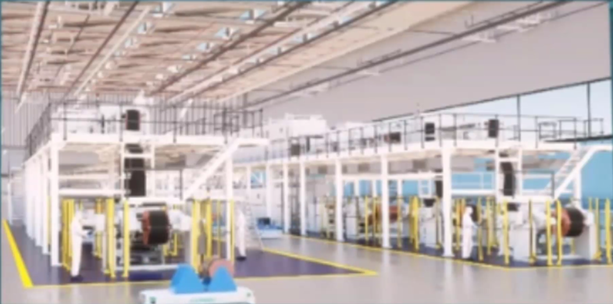
Line Designer 3D Super Battery Plant
3D digital factory planning: A game-changer
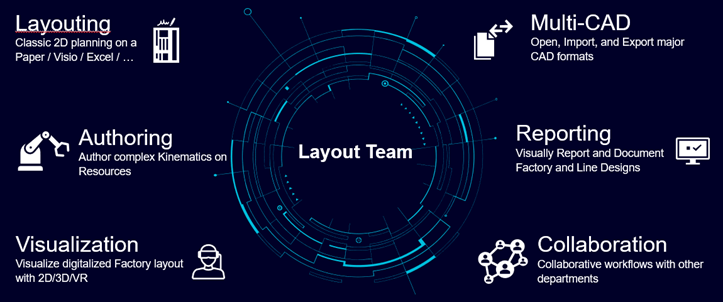
At the core of 3D digital factory planning is its full-process visualization and dynamic optimization capabilities. Siemens’ Line Designer utilizes parametric modeling technology, allowing engineers to seamlessly complete equipment layout, logistics path planning, data analysis, and report generation—all within a virtual environment. This advanced approach improves efficiency by over 40% compared to conventional 2D methods.
Line Designer core function
The system’s extensive intelligent library contains thousands of 3D models covering industrial equipment, building structures, and other key assets. It also supports multi-format data imports, including CAD and point clouds, making it ideal for complex renovation projects where flexibility and precision are critical.
Real-world impact: A 6GW super battery plant
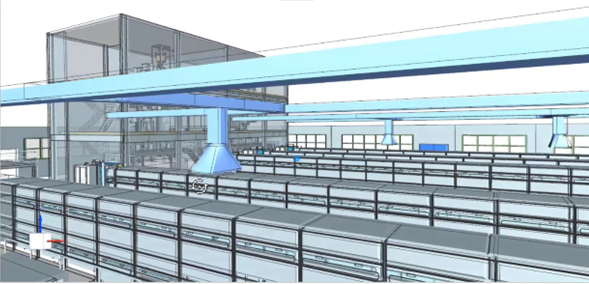
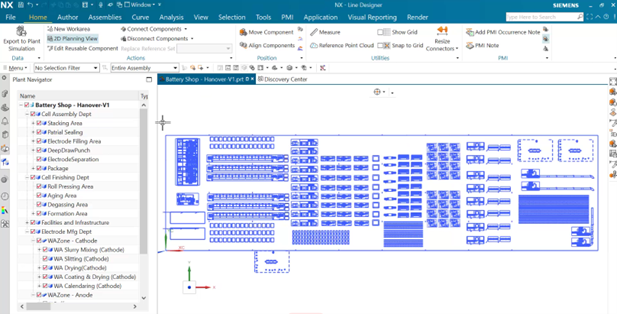
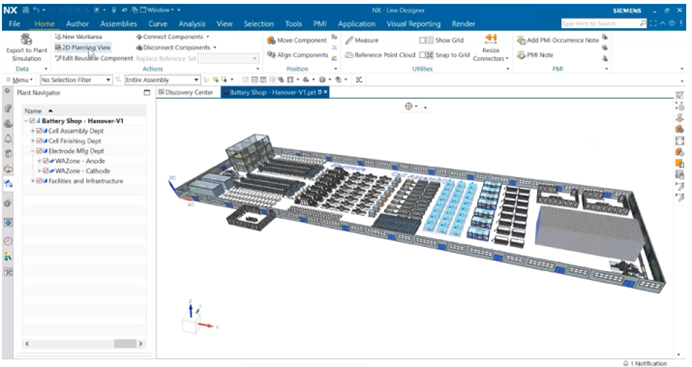
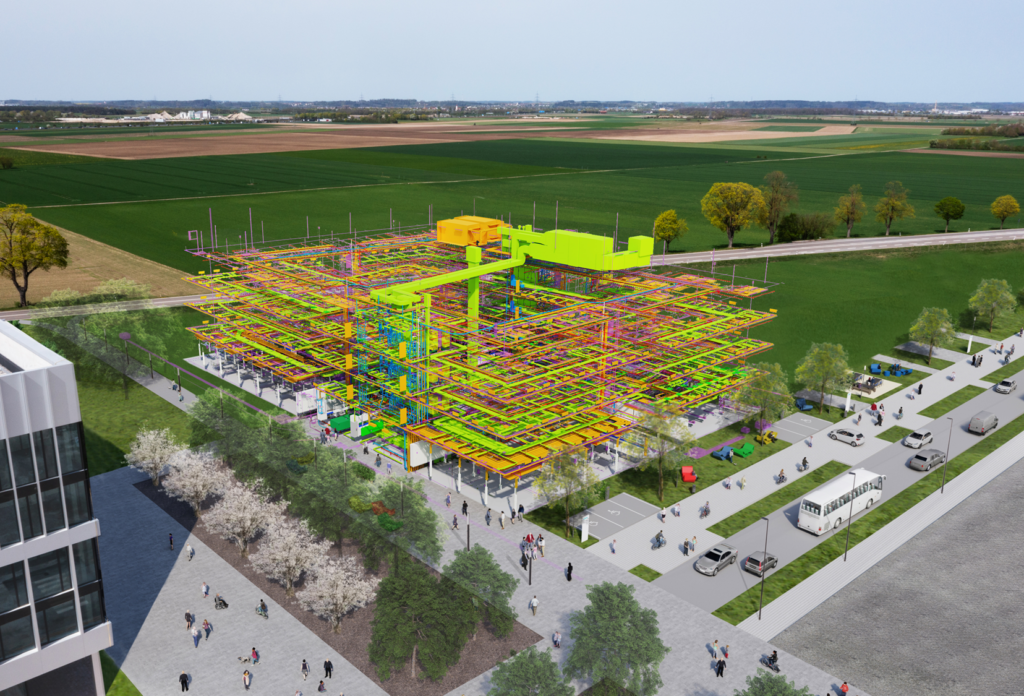
In a landmark 6GW battery manufacturing facility project, Siemens’ technical team harnessed Line Designer to achieve rapid, one-click conversion from 2D floor plans to 3D digital models. The software’s dynamic interference checking feature played a pivotal role in identifying and resolving spatial conflicts between production equipment and utility pipelines early in the design phase. This proactive approach significantly reduced potential rework costs, streamlining the overall construction process.
Collision checks of 3D environment in Line Designer
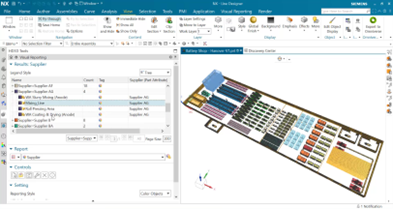
Moreover, Line Designer’s intelligent visualization system generates automated data dashboards that categorize information by supplier performance, equipment status, and other critical metrics. These insights empower procurement and engineering teams to make informed decisions, enhancing operational efficiency.
Report and collaboration in Line Designer
Streamlining Collaboration and Design Integrity
Engineers can rapidly complete 3D factory layouts by simply dragging pre-engineered models from the library onto 2D floor plans,” explained a project engineer using Line Designer. “The software also ensures seamless conversion of 3D models back into 2D blueprints through reference set switching, preserving full design integrity with a single click.”
A representative from Siemens Industrial Software further emphasized the transformative potential of this approach:
Our goal is to make factory planning as simple and efficient as building blocks. By integrating immersive interactive environments and kinematic simulation capabilities, customers can not only validate design plans intuitively but also pre-rehearse production processes in a virtual space, proactively mitigating potential risks.”
The future of smart manufacturing
As the new energy industry shifts toward intelligence and sustainability, 3D digital factory planning is emerging as an industry standard. Siemens Industrial Software remains at the forefront of this evolution, driving digital transformation in manufacturing through its deep expertise in industrial software solutions.
One click converting from 3D models back to 2D blueprints
With cutting-edge tools like Line Designer, Siemens continues to enable manufacturers to optimize efficiency, reduce costs, and build smarter, future-ready factories. The 6GW super battery plant is just the beginning—ushering in a new era of intelligent industrial design and execution.
6GW super battery plant in NX Line Designer
Benefits of Using Siemens NX Line Designer for Battery Plant Planning
Siemens NX Line Designer provides a transformative approach to battery plant planning through advanced 3D digital modeling. One of its key benefits is efficiency—engineers can achieve over 40% faster design completion compared to traditional 2D methods. The software’s parametric modeling capabilities enable seamless equipment layout, logistics path planning, and real-time data analysis within a virtual environment.
The tool’s intelligent library, containing thousands of pre-engineered 3D models, allows for accurate and rapid assembly of factory layouts. This feature supports multi-format data imports, including CAD and point clouds, making it particularly valuable for complex renovation projects. Additionally, the dynamic interference checking function proactively identifies and resolves spatial conflicts between equipment and infrastructure, significantly reducing costly rework during construction.
Another major advantage is enhanced collaboration. Engineers can convert 2D floor plans into fully functional 3D environments with a single click, facilitating seamless integration between different teams. The system also generates automated data dashboards, offering real-time insights into supplier performance and equipment status.
By integrating kinematic simulations and immersive virtual environments, Line Designer allows manufacturers to pre-rehearse pro
The Challenge: A More Sustainable Coffee The coffee industry faces a significant challenge regarding sustainability. Traditional coffee roasting methods consume large amounts of energy, leaving a high carbon footprint. Ray & Jules, a Belgian company focused on clean energy solutions, and CEE set out to create a more efficient, sustainable roasting system using solar energy.
Their goal was clear: design a roaster that reduced energy consumption by up to three times compared to conventional methods. However, achieving this required overcoming design challenges, including thermal efficiency and precise control of the roasting process to ensure consistent coffee quality.
The Solution: Optimization with Simcenter To bring their vision to life, Ray & Jules and CEE turned to Simcenter simulation tools by Siemens. Using Simcenter, engineers could analyze and optimize the thermal and aerodynamic design of the roaster, ensuring even and efficient heat distribution.
Simcenter enabled them to:
Evaluate the airflow performance within the roaster.
Optimize heat transfer to ensure a uniform coffee roast.
Identify potential energy losses and address them before manufacturing.
The use of Simcenter allowed for design adjustments in the development phase, avoiding costly mistakes and ensuring a faster and more accurate product development.
The Results: Energy Efficiency and Coffee Quality The benefits of using Simcenter were significant: Up to 3 times less energy consumption compared to traditional roasters. Reduced thermal waste thanks to an optimized design. High-quality coffee with uniform roasting and precise process control.
Ray & Jules and CEE have positioned themselves as leaders in sustainable innovation in the coffee industry, showing that combining renewable energy and simulation technology is key to transforming traditional sectors into more sustainable futures.
With Simcenter, energy efficiency and sustainability go hand-in-hand, allowing companies like Ray & Jules to redefine coffee production standards.
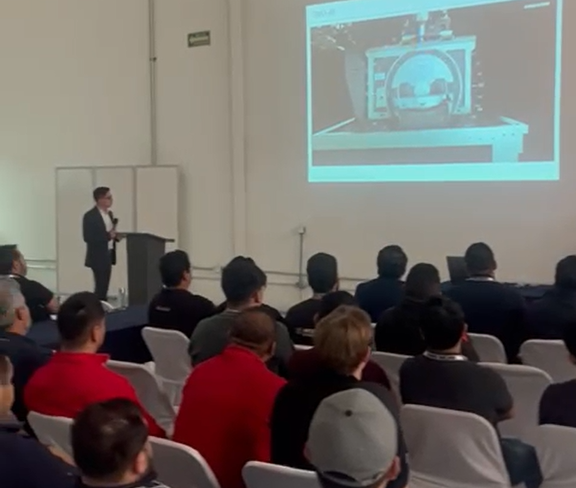
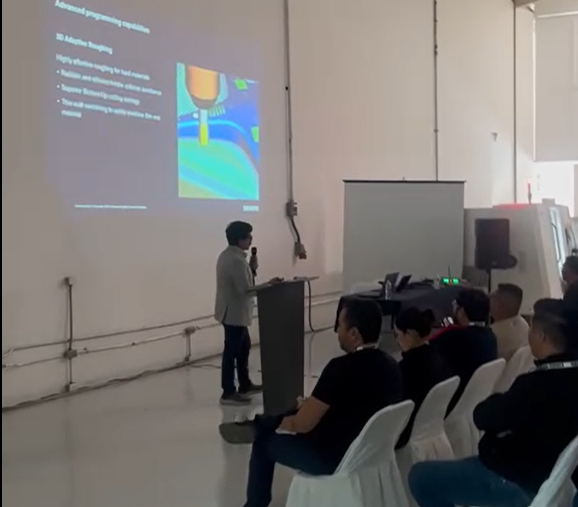
On February 26th, the DMG Mori Showroom in Querétaro was the setting for a not-to-be-missed event for the machining industry: the 5-Axis Machining Seminar. During this day, attendees witnessed a real live cut on a complex part with NX CAM and the DMU 40, demonstrating the power and precision of these technologies in advanced manufacturing.
A High-Tech Event
The seminar agenda was full of technical and practical content, beginning with a reception at DMG MORI’s Warehouse 11, where attendees enjoyed a networking environment with canapés and drinks in the showroom.
Afterwards, industry experts shared their knowledge through a series of lectures focused on the latest innovations in machinery, cutting tools and advanced manufacturing software.
One of the most anticipated moments was the showroom demonstration, where a complex part was cut using the DMU 40 and NX CAM software. This hands-on demonstration allowed participants to see first-hand the advantages of this technology in terms of precision, efficiency and flexibility in machining complex parts.
Thanks and Upcoming Events
We would like to thank our partners DMG Mori and Siemens for their collaboration and support in the realization of this event, as well as all the attendees for their participation and enthusiasm.
This seminar reaffirms our commitment to continue driving knowledge and innovation in the industry and we invite you to stay tuned for our next events, where we will continue to explore the latest in technology and advanced manufacturing!
This blog series explores key lessons from my visit to Big Metal Additive (BMA), an advanced manufacturing shop in Denver, Colorado, that integrates Siemens NX for Manufacturing software and hardware for hybrid machining. This methodology, which combines additive and subtractive processes, enables the production of parts once considered impossible. However, mastering this workflow requires a hybrid skill set, where employees must efficiently operate diverse machinery and software. In this blog, we will delve into the essential skills and key machining trends in the industry.
Big Metal Additive: Innovation in Additive Manufacturing
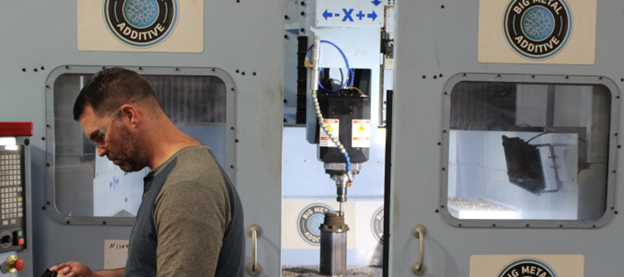
I recently visited a leading industrial additive manufacturing customer, Big Metal Additive (BMA), which uses Siemens Additive Manufacturing software. BMA is a specialized metal 3D printing shop that integrates welders with 5-axis CNC mills to explore new frontiers in manufacturing. Their work often pushes boundaries, serving both private companies and government agencies to replace traditional processes, build intricate geometries, and conduct material testing.
The Growing Need for Hybrid Skills
A few months before visiting BMA, I spoke at a technical education conference, emphasizing the need for educational institutions to adapt their training programs to modern manufacturing. I reinforced that companies should break down silos and train employees across multiple disciplines—machining, welding, and toolmaking—especially as technologies like additive manufacturing, robotics, and automation become more prevalent.
BMA exemplifies this shift. It is not just a machine shop—it is a hybrid manufacturing powerhouse that embraces cross-functional expertise.
The Power of Hybrid Machining
Hybrid machining integrates additive and subtractive processes, allowing manufacturers to reinvent production workflows. While 3D printing has advanced significantly, it still cannot fully replace traditional methods. However, combining it with milling or turning enhances efficiency and expands design possibilities.
From a workforce perspective, this requires more than just welders, machinists, and programmers—it demands multi-skilled employees who can adapt to different tools and equipment. The future belongs to versatile engineers who can operate across domains.
CNC Meets Robotics: A Powerful Combination
BMA’s shop floor is a fusion of technology, featuring both 5-axis CNC machines and articulated robots capable of welding and machining. Engineers must navigate G-code-driven CNC machines alongside six-axis robotic systems with SINUMERIK controls—each with vastly different programming languages and degrees of freedom.
One engineer at BMA was hired for his CNC background but was tasked with learning robotics from day one. He embraced the challenge and is now an expert in both fields—a testament to the adaptability required in modern manufacturing.
Software as the Driving Force
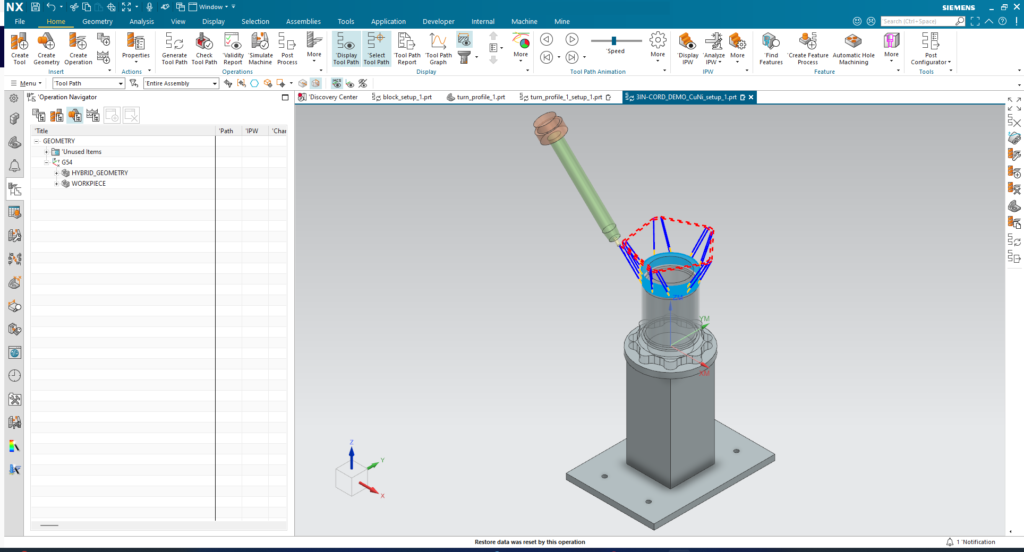
BMA’s hybrid operations rely on multi-functional CAM software. Siemens NX Multi-Axis Deposition enables programmers to create both additive and subtractive toolpaths within a single environment. This means engineers must understand both processes and synchronize them for successful builds—a critical step in creating a digital twin for hybrid machining.
At BMA, welding expertise is not limited to hands-on operations—it starts in the software. Engineers like Jordan factor in heat dynamics while programming additive toolpaths. Miscalculations in layer height can disrupt a build, but experienced engineers adjust settings in NX for Manufacturing to ensure success.
BMA does not rely on intuition alone. Engineers meticulously record process data, tracking voltage, amperage, and temperature during builds. This data is stored in a database, allowing for process optimization and repeatability. Many BMA customers seek to explore additive manufacturing’s potential—whether to create complex geometries, reduce lead times, or supplement production. Each project involves extensive testing, often requiring destructive analysis like tensile strength testing. Even tasks like wire EDM cutting—traditionally handled by specialists—are now done by multi-skilled engineers.
The rise of hybrid machining raises fundamental questions about workforce training. Should technical schools restructure their programs toward certification-based models that cover a wider range of skills? Should degree programs become more flexible, allowing students to mix and match courses across disciplines? Education must evolve sooner rather than later.
The Future of Hybrid Manufacturing
BMA’s engineers embody the versatile workforce of the future. Their ability to blend skills across machining, robotics, and data analysis creates a dynamic, resilient manufacturing environment.
As additive manufacturing continues to evolve, shops like BMA will shape the next era of production. I can’t wait to see what they achieve next. Stay tuned for my next blog, where I will continue exploring the future of hybrid manufacturing and industry trends.
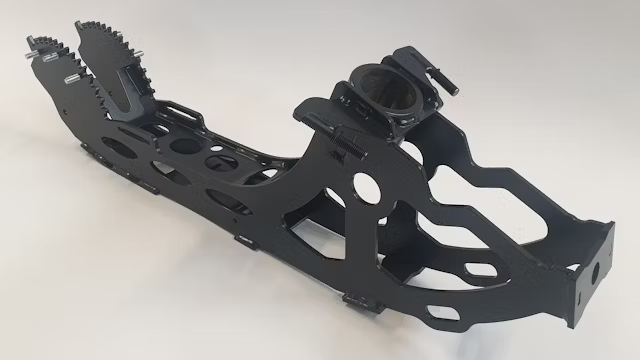
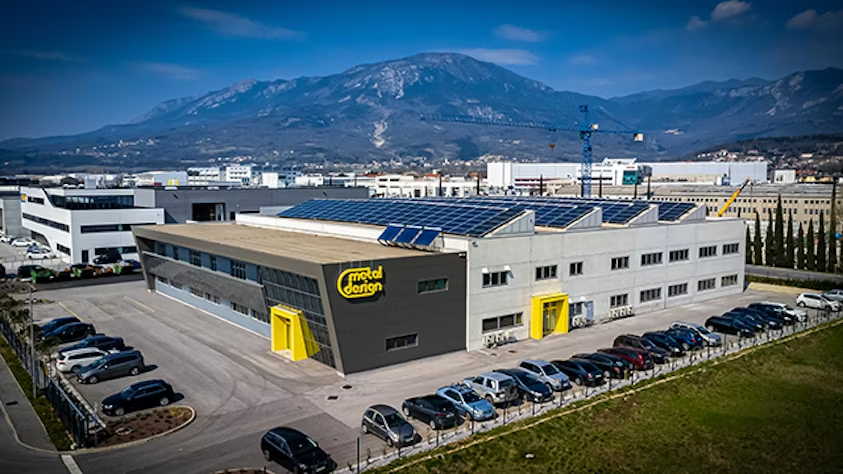
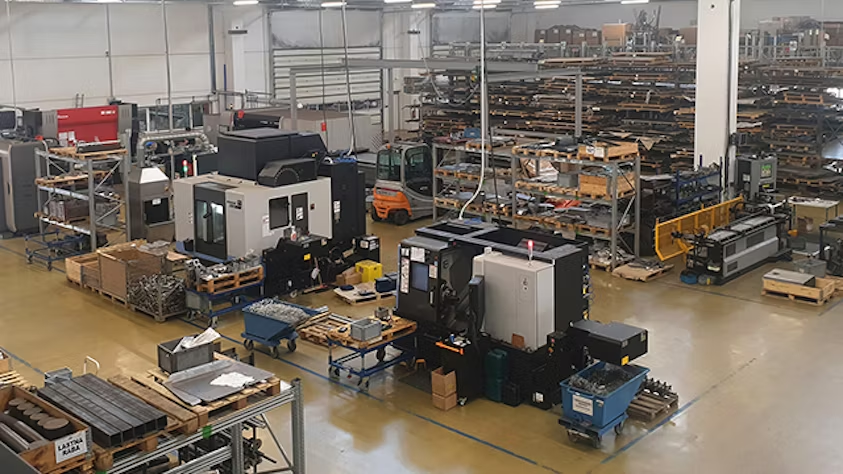
Metal Design specializes in the development, optimization, and production of technologically demanding metal products and machine components. As an international partner for various Western European companies, it has built a reputation for delivering consistent and reliable quality.
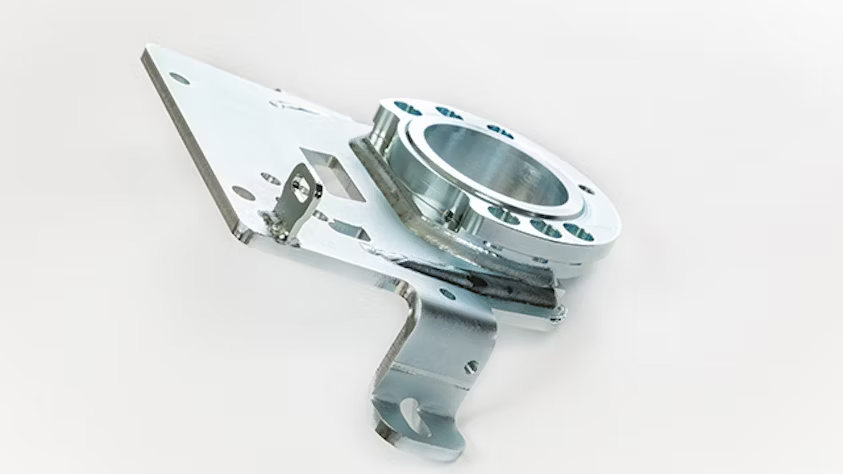
With over 30 years of experience manufacturing metal parts—including welded assemblies, sheet metal products, and machined components—Metal Design aims to become a recognized European leader in producing complex metal components for advanced industries such as green technologies, agricultural machinery, automated internal logistics vehicles, and medical applications.
As the company expanded its production capabilities and invested in new technologies, operational planning became increasingly complex. Manufacturing processes require a precisely timed sequence based on the bill of materials (BOM), ensuring optimal machine utilization, efficient workforce deployment, and strict adherence to customer delivery deadlines. As Metal Design focused more on highly technical products with multi-layered BOMs and intricate production methods, managing these challenges manually became unsustainable.
To address these issues, Metal Design partnered with INEA d.o.o. (Inea), a Siemens Digital Industries Software partner, and adopted Opcenter™ advanced planning and scheduling (APS) software—part of the Siemens Xcelerator portfolio of software, hardware, and services.
Overcoming Inefficiencies Through Digital Transformation
At the start of its digital transformation journey, Metal Design relied on a basic enterprise resource planning (ERP) system from a local IT vendor and a free version of production planning software. The company later developed in-house applications to assist with planning and scheduling, as well as tasks like item sorting, BOM verification, and tracking production times.
However, this hybrid approach was inefficient. The production manager manually adjusted monthly and weekly schedules using a combination of in-house tools and personal expertise. As a result, scheduling relied heavily on intuition and complex, manually managed tools. The IT administrator struggled to optimize production planning, and the company was not leveraging software effectively.
Recognizing these inefficiencies, Metal Design made a decisive move: replacing its ERP system and upgrading its production scheduling software simultaneously.
Selecting Opcenter to Optimize Scheduling
The production manager tested three APS software solutions in demo versions using real production data. Opcenter Scheduling stood out due to its user-friendly interface, scalability, and ability to solve scheduling challenges. Additionally, the production manager had prior experience with Opcenter from his mechanical engineering studies, underscoring the value of Siemens’ collaboration with academia.
A key moment in the decision-making process came when Metal Design received an urgent customer order that initially seemed impossible to fulfill on time. Using Opcenter Scheduling, the company simulated production scenarios, accounted for existing orders and shop floor constraints, and determined that completing the order was feasible. This capability convinced the production manager that Opcenter was the right solution.
Implementing Opcenter Scheduling
The implementation process began with a thorough analysis of all production processes, requirements, and parameters. This review allowed Metal Design to refine its data and enhance accuracy.
Once integrated, Opcenter Scheduling provided insights across multiple departments—including technology, procurement, sales, and production—helping teams resolve daily challenges more efficiently.
“Opcenter Scheduling was the best fit because it’s the most optimal for our needs and company size, providing all the necessary functionalities at an affordable price,” says Jerneja Curk, Assistant General Manager at Metal Design. “With Opcenter and the support of Inea, we have elevated our production scheduling to a higher level.”
By fine-tuning scheduling parameters, adjusting capacity settings, and fully understanding the software’s capabilities, Metal Design significantly improved its production planning standards. A crucial step was integrating the new ERP system with Opcenter Scheduling via web services, enhancing the accuracy of scheduling operations and feeding scheduled data into the company’s business intelligence (BI) system.
“In our old system, it took up to two hours to prepare and import data. With Opcenter’s ERP integration, we now just press a button and wait a few minutes,” says Karin Kodele, Production Coordinator at Metal Design.
By optimizing machine changeover times and resource allocation, Metal Design achieved record monthly production levels—tripling its usual output without increasing resources.
Enhancing Efficiency and Customer Confidence
Metal Design frequently needs to simulate potential customer orders before creating work orders in its ERP system. This process previously took up to four hours per inquiry, but with Opcenter Scheduling’s order inquiry functionality, it now takes just 15 minutes.
“Using Opcenter Scheduling, I can efficiently schedule the entire shop floor and all shifts while quickly responding to customer inquiries,” says Kodele. “Working with Inea, their support is exceptional, and their quick, efficient responses always impress me.”
“With over 700 different parts in production and long-term B2B partnerships, delivering on time is crucial to our clients’ supply chains,” says Polona Curk, Director of Business Development at Metal Design. “Our B2B customers are always impressed when they learn we use Siemens’ Opcenter Scheduling. It reassures them that we will deliver as agreed, which strengthens our business relationships.”
Looking Ahead: Future Optimizations
Following the successful implementation of Opcenter Scheduling, Metal Design’s future plans include further optimizations, such as integrating employee skill matrices into scheduling. Additionally, the company aims to transition from general schedule overviews to personalized displays for each production cell on the shop floor.
By leveraging Opcenter Scheduling, Metal Design has embraced digital transformation, streamlined production planning, and positioned itself for continued growth in the competitive metal manufacturing industry.
Product: NX Design Industry: Construction and Manufacturing
The integration of Building Information Modeling (BIM) with NX is transforming the way industrial plants and factories are designed. By combining the strengths of both tools, Siemens Real Estate and Siemens Digital Industries Software are streamlining workflows, improving collaboration, and enhancing efficiency in shop floor planning.
BIM and NX: A Powerful Collaboration
Siemens Real Estate (SRE), a global leader in corporate real estate management, is at the forefront of digitalization and innovation. With a “digital-first” approach, SRE mandates the use of BIM for all new construction projects. This methodology enables the seamless connection between the physical and digital worlds, laying the foundation for a digital twin of buildings and shop floors.
A prime example is the Digital Native Factory in Nanjing, which was fully planned and simulated using digital twin technology. By integrating factory data, shop floor layouts, and building performance data, SRE created a comprehensive digital representation of the facility. This success highlighted the need for more efficient processes to scale projects and integrate multiple teams.
Bridging the Gap Between BIM and CAD
Typically, BIM and mechanical CAD are managed by separate teams. BIM data, owned by Siemens Real Estate, is used to design buildings, while shop floor layouts are planned by engineers. The traditional workflow involves:
Creating and updating BIM models in dedicated software.
Importing BIM data into NX for shop floor planning.
Revising and exporting design changes via IFC format to ensure updates are reflected in both environments.
Since design reviews occur frequently, this process demands constant data transfers between architects and engineers, increasing complexity and the risk of errors.
Challenges in BIM and CAD Integration
The manual process of exporting and importing data presents major challenges, including:
Data Format Differences: BIM data is stored in single part files, while NX structures data as assemblies and components.
Positioning Issues: BIM relies on a consistent coordinate system, which must align with NX models.
Complexity in Data Translation: Converting large-scale BIM models into NX can be time-consuming, requiring hours of processing and generating thousands of parts.
To address these challenges, Siemens Real Estate collaborated with Siemens Digital Industries Software to develop better BIM data import solutions in NX. These solutions include preserving BIM structures, simplifying file conversions, and improving IFC translation to reduce errors and enhance usability.
The Future of BIM and NX Collaboration
Looking ahead, Siemens is working on real-time design updates between BIM and NX, reducing the need for manual transfers. The goal is to create a seamless, interconnected workflow, where engineers receive automatic alerts when changes occur.
Additionally, VR and Immersive Engineering are becoming integral to design collaboration. Siemens is exploring Sony’s XR head-mounted displays and the Industrial Metaverse to enhance shop floor planning and virtual decision-making.
Another significant advancement is the NX Translator for Revit, introduced in June 2024. This tool, available via token licensing, enables the direct recognition of identical components (e.g., doors, beams, windows), streamlining BIM data import into NX.
Ultimately, Siemens aims to develop a single source of truth for BIM and CAD data, eliminating inefficiencies and enabling fully digitalized, automated workflows. By continuing to innovate, Siemens Real Estate and Siemens Digital Industries Software are shaping the future of integrated industrial design.
Morgan and Drew from Firefly Aerospace take us behind the scenes of their design process—from whiteboard sketches to fully engineered rockets. Learn how they leverage advanced tools like Siemens’ NX and Teamcenter to iterate quickly and bring complex structures to life.
They also reveal their thoughts on the role of AI in aerospace engineering, the significance of sustainability in rocket development, and the push for reusable rockets to lower costs and minimize environmental impact. The engineers also share insights on the future of space travel, the challenges of scaling rocket designs, and how the private space sector is driving a new era of exploration.
What you’ll learn about in this episode:
What is Firefly Aerospace?
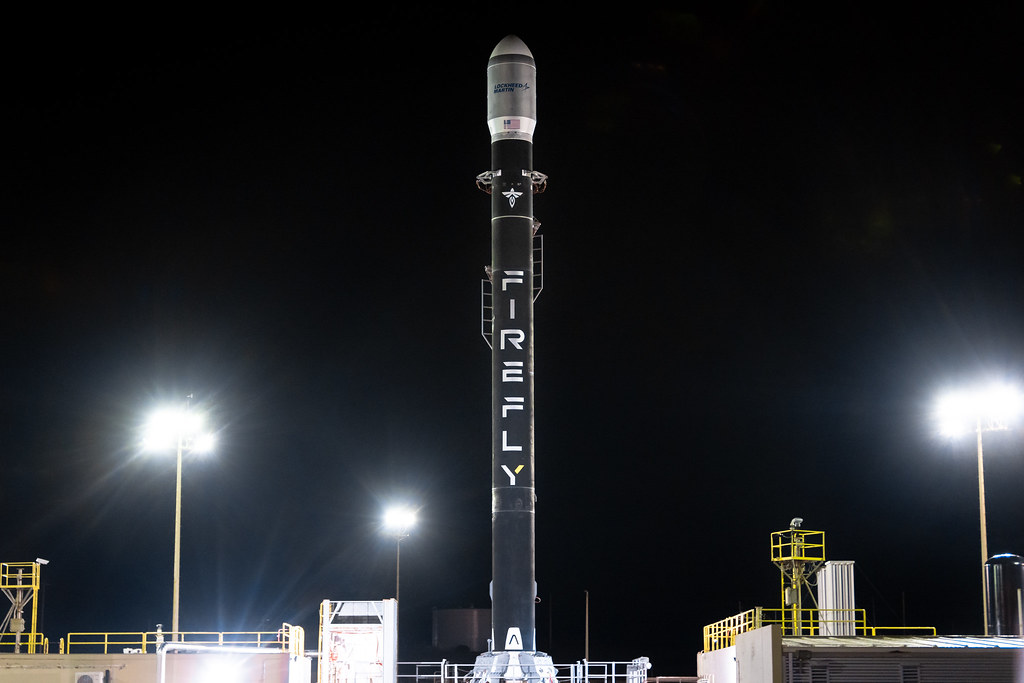
Firefly Aerospace is a Texas-based private aerospace company founded in 2017 focusing on providing end-to-end space transportation services. Firefly is on a mission to enable our world to launch, land and operate in space, anywhere, anytime. They specialize in launch vehicles and spacecraft.
The design process at Firefly Aerospace
Drew, Morgan and Greg begin discussing the design process at Firefly Aerospace and how they get from concept to launch. They start with a goal or problem statement at a whiteboard discussion and then begin making early sketches. With the necessary stakeholders, they determine boundary conditions, constraints, what materials are available and what the budget is. From then, they begin creating a preliminary CAD model. They emphasize their iterative design process, so they iterate on and refine the CAD model through discussions, meetings and design reviews.
Morgan notes that sometimes the iterative process is physical and sometimes it is digital on the CAD models, running simulations and analyses virtually. But eventually, the iterations will come into the physical world for real-life validation of the design. The design touches different teams and design trades throughout the process to ensure it is up to regulations, standards and requirements.
CAD software and Siemens’ NX in aerospace design
Greg then Morgan and Drew about the benefits they see using CAD, specifically NX CAD software from Siemens Digital Industries Software. Morgan discusses how it’s nice to be able to “fly around in 3D space” and actually look at a design on the screen. You can make updates quickly, share easily with Teamcenter to get a visual representation and fully see the entirety and fullness of a design in CAD software.
Drew mentions structures as an area where visualization is especially helpful to note clearances with other components and knowing something will work when it’s manufactured. Morgan also adds that you can “virtually cut something in half to look at a joint.”
Rockets require very complex assemblies, but with NX, that design complexity is simplified. They mention how load settings such as how loading only one part of an assembly can speed up the design or review process, as well as how NX helps with being able to create structures with a “sandwich laminate,” as their previous software didn’t allow individual parts to have dissimilar materials. “With NX, it’s fully streamlined. It’s easier to do those kind of parts,” Drew says.
Before moving on, Drew also notes how helpful and useful advanced features in NX such as Synchronous Modeling are. “To be able to just do that on the fly without fully rebuilding the model, it’s so useful,” he says.
Challenges in the design process at Firefly Aerospace
We then move on to talk about challenges in the day-to-day design process working in the aerospace industry at Firefly. Morgan first mentions how regulations and the general rapid pacing of the industry can be a challenge, “It’s incredibly competitive. It’s like running on a treadmill. You have to always be innovating, always be iterating, testing, and doing better so that you are still a competitor in the industry,” she says.
Drew then mentions that the iterative process itself is a challenge, especially if it is something they haven’t done before so they can’t apply lessons from previous experiences. There is a lot of trial and error in the design process. Morgan and Drew discuss a specific example with scaling their flight-proven 6-feet-diameter Alpha rocket to a medium-class launch vehicle that is 14 feet in diameter. Throughout the process, they are learning new lessons as they create a bigger rocket.
They mention that one thing that does help them face challenges easier though is collaboration with Teamcenter. Everyone at Firefly has access to view CAD files and drawings so can reference anything needed during a design review concurrently, whether they’re in the Cedar Park office or at the different test sites.
The future of sustainability in aerospace design and engineering
We then move on to talk about trends in the industry, beginning with sustainability. Morgan notes how important sustainability and especially reusability is in their field, as not only does it help from an environmental standpoint but it enables cost savings as they don’t need to start from the ground up every time. They save on labor costs as well as reduce lead times for materials the pain points that come along with creating something completely new. Both Morgan and Drew also add that Firefly is focused on composites and lightweighting with carbon fiber structures.
“Pioneering carbon fiber structures. That’s been Firefly’s main selling point—a fully composite rocket. So, lighter materials, better-performing rockets,” Drew says. Morgan adds, “When you have lighter structures, you can lift either more propellant or more payload.”
Morgan also discusses how designing for reusability evolves over time as a young aerospace company. When they first start out, they’re focusing on being flight-proven and less on reusability. When they are more established, they can pivot towards reusability if it’s economically viable. The three then talk about what recovery and reusability actually looks like in practice, including calculating where the rocket will splash back down.
The future role of the Industrial Metaverse and Immersive Engineering in rocket design
Continuing the talk on trends, Greg briefly explains the Industrial Metaverse and Immersive Engineering and asks if Firefly would benefit from leveraging immersive tools. Drew thinks immersive technology would be especially beneficial for integration and production planning. Morgan agrees with the benefits within manufacturing and production planning, and also thinks the integration of AR and VR into training could be incredibly valuable. Though they haven’t explored it yet, Morgan says, “We haven’t dipped our toes into that realm yet. I think it’s a technology that is very promising and has a lot of room to grow in this industry, and Firefly could absolutely make use of it in the future.”
Morgan adds how helpful immersive technology could be in manufacturing with mitigating issues that arise in non-conformance reports. For example, showing a circle where a bolt hole is meant to be if someone is a few degrees off during manufacturing.
Greg also asks if they would find value specifically in the Sony XR head-mounted display and NX Immersive Designer, with visualizing massive structures like rockets in an immersive environment. Drew says that an immersive experience would be really helpful with seeing models in real-time scale and space, visualizing sizes of parts and getting a sense of scale. With some parts being absolutely massive, they want to know if a crane would be needed, if multiple people would be needed to move it or if there is clearance to get inside the space to install a part before getting to the manufacturing stage. Morgan tells a story about discovering a part in real-life being much bigger than it’s on-screen digital counterpart, “Sometimes you do lose that sense of scale when you’re sitting behind a desk,” she says. “If I had the ability to slap on some glasses or a headset and be able to walk around the rocket at scale, that would be incredibly useful.”
How does Firefly Aerospace use AI in the design process?
Moving onto the last trend of the episode, we discuss AI and how/if Firefly is using it throughout their design process. Drew says that while they have experimented with generative design, improvements are necessary for it to be incredibly useful for their design process. He cites an example of generative design technology creating a “cool and optimized” part, but it could not take into account manufacturability, integration into the full assembly, or cost/budget into its design. However, he believes that as AI grows and gets more capable, it will be a very useful tool for engineering. “Maybe just to do a quick trade study for a particular design, where you can give it a prompt, and it can create a quick concept design that you can refine from there. Less so just a one-and-done and makes-it-for-you solution,” he says, then concluding how AI will evolve and get better and he looks forward to the improvements that will be made over time.
Though Morgan also believes that AI is powerful and has come a long way in a short amount of time, she says “I think there’s still something inherently human in a lot of the engineering that you do…there are engineering decisions and judgments that humans make. Something imperfect is purposely included because the design is, therefore, more human, more manufacturable, or more usable.” So while she doesn’t see AI doing the design work any time soon, she does think that AI could take over a lot of automation like in math, analysis processes and design edits.
Check out our previous episode recap of our AI episode, AI-Enabled CAD: Enhancing Design Efficiency with Siemens’ NX, to learn about some of the AI-enabled capabilities in NX that help engineers to be more productive and reduce inefficiencies. Similar to Drew’s wish of giving a prompt to the software, we also recently introduced NX Copilot, powered by Microsoft Azure.
What does the future of design look like to Firefly Aerospace?
Morgan says the next generation of engineers will continue to build with AI and new features and technology that come out, such as Immersive. For herself, she hopes to be like Tony Stark— seeing holograms of a rocket and updating it with a wave of a hand or voice command.