
Same-Day Silicone and PU Parts Speed Development at BWT Alpine F1® Team

Product: Figure 4
Industry: Automotive and Transportation

Speed is the name of the game in Formula One (F1) racing, both on the track and for everything behind the scenes. Using 3D Systems’ innovative eggshell molding solution, BWT Alpine F1 Team has gained the production speed, quality and flexibility it needs to innovate and accelerate development on silicone and polyurethane parts like never before.

“With the Figure 4 eggshell molding solution I’m  seeing things every day that I’ve never seen before. I can’t think of another way we could make this many different components in this many silicone and PU materials at this relentless of a pace.”

– Pat Warner, Advanced Digital Manufacturing Manager, BWT Alpine F1 Team 

RAPIDLY PRODUCE MOLDED ELASTOMERIC PARTS FOR WIND TUNNEL AND ON-CAR APPLICATIONS
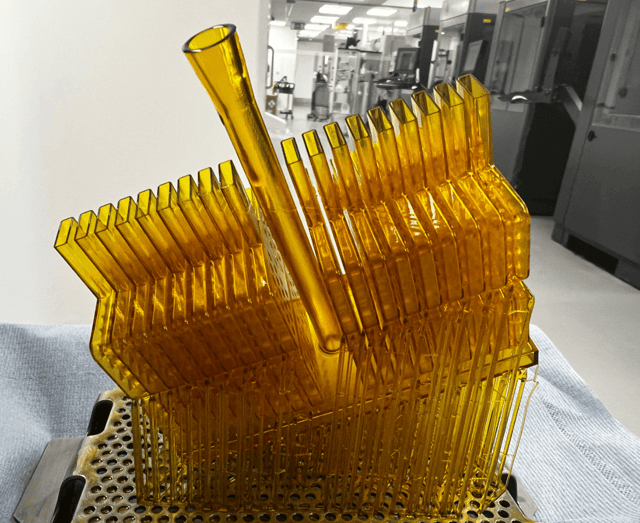
Example of a universal gasket used in wind tunnel testing, designed to print in a batch of 36 on the Figure 4 Standalone.

Example of a universal gasket used in wind tunnel testing, designed to print in a batch of 36 on the Figure 4 Modular.

Conventional tooling methods for molding silicone and polyurethane parts are time consuming, often excluding them from consideration for F1 development. With only a few months between racing seasons and a push for nonstop progress year-round, speed of production, testing and iteration is paramount. Given the grueling environment of the track and wind tunnel, there is no negotiating part performance either.

Shortening development and manufacturing time

3D Systems’ Figure 4 solution for eggshell molding enables BWT Alpine F1 Team to produce a diverse range of high-quality molded silicone and polyurethane parts in record speed, providing unprecedented access to one-off and iterative parts using conventional molding materials. The straightforward workflow keeps up with the aggressive pace of Formula One, making it a tremendous asset to the team. For example, casted grommets or seals that would take multiple days or weeks using conventional metal tooling or vacuum casting can now be delivered in a single day using Figure 4.

BWT Alpine F1 Team runs multiple builds a day on its Figure 4® Modular 3D printer for a wide range of casting tools for on-car parts and testing. Pat Warner, BWT Alpine F1 Team’s advanced digital manufacturing manager, estimates that most 3D printed eggshell molds print in just 90 minutes, with the largest builds taking up to three hours.
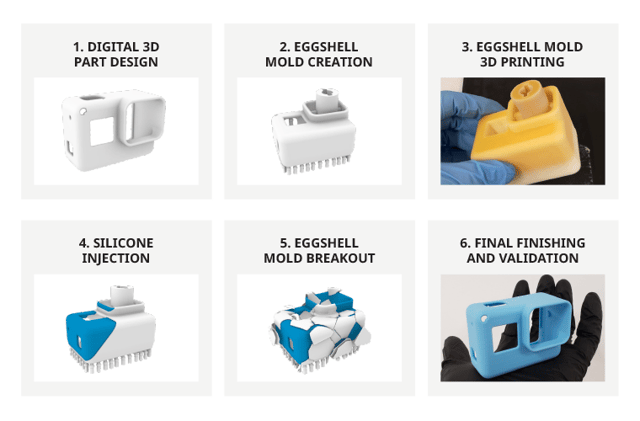
Workflow of the Eggshell Molding or Digital Silicone Tooling Process

Eggshell molding is a sacrificial manufacturing technique that uses 3D printing to produce a thin, single-use mold that is injected with the final production material and then broken away.

Flexibility across multiple applications

The team’s productivity gains extend beyond same-day parts to the ability to address a wide range of applications using the Figure 4 eggshell molding process. The process relies on 3D Systems’ Figure 4® EGGSHELL-AMB 10 material, a process-optimized material for producing sacrificial tooling with the flexibility to deliver final parts in a range of silicones, polyurethanes and other materials such as metals and ceramics. Figure 4 EGGSHELL-AMB 10 is a rigid plastic specifically engineered to withstand injection at high temperature and pressure, but which breaks away easily after casting.

According to Warner, this flexibility has been a major benefit: “We have a huge array of materials, and we can basically use all of them in the period of a day.” This allows the team to look at a broad range of applications varying in stiffness, elongation, color and other properties. “I can’t think of another way we could make this many different components,” Warner said. Most applications currently addressed using 3D Systems’ eggshell molding solution fall into the categories of grommets, seals and gaskets, which are used throughout the car.
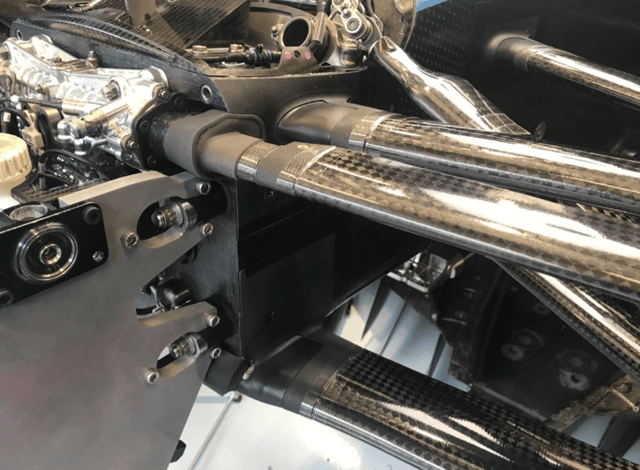
Suspension seal and frame produced using Figure 4 EGGSHELL-AMB 10 and DuraForm PA, respectively

Suspension seal and frame for testing produced with polyurethane casting using Figure 4® EGGSHELL-AMB 10 and selective laser sintering in DuraForm® PA, respectively.

03 Straightforward workflow

The straightforward CAD to casting workflow begins with sending the file to print within 3D Sprint®, an all-in-one software for polymer 3D printing. The software’s extensive toolset includes options for adding supports as well as managing the printing process. Once printed, BWT Alpine F1 Team post-processes the casting shells, which involves cleaning the parts and post-curing them in the LC-3DPrint Box post-curing unit. This process takes roughly two hours and primarily consists of a 90-minute, hands-off post-cure.

After UV post-curing, BWT Alpine F1 Team coats the 3D printed casting shell in a chemical releasing agent and the shell is ready for polyurethane or silicone pouring. Cure times vary depending on the material used and can take anywhere from 10 minutes to 24 hours.
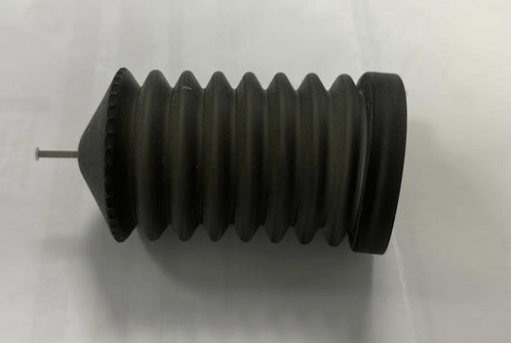
Silicone bellows for car braking system

Silicone bellows like the above are being produced at BWT Alpine F1 Team for the car’s braking system.

04 Performance in a grueling environment

The performance demands on Formula One parts are extreme. Races take up to two hours, during which the entire vehicle is subjected to wildly varying temperatures, intense vibration and brutal forces. “It’s a horrible environment to put something you haven’t seen before yesterday,” said Warner, “and we are always striving for perfection. We must ensure that all our parts perform the tasks they are given.” The parts produced using 3D Systems’ eggshell molding solution meet this high threshold for performance. Warner says the surface quality is very good, which is especially important for aerodynamic parts. The ability to rapidly produce high quality, high performance parts also makes it possible for the team to now modify parts that were previously deprioritized due to the extreme time constraints of the sport.

Bottom line, the benefits of 3D technologies along with dedicated software are direct and substantial over conventional metrology. Components were positioned in hours, rather than days. Time savings on measurements, increased accuracy, removing user error and unmatched traceability, are just some of the benefits of state-of-the-art measurement technology.

MRO: How to Choose the Best 3D Measurement Solution?

To choose the right 3D measurement solution for your maintenance, repair and engineering project, start by mapping out your current 3D measurement or inspection process, and identify the major, most recurring problems of your workflow and opportunities for improvement.

Of course, accuracy, portability and price all make great impact on decision making, but the more information you can get about the target application and the results you want to generate, the better your choice will be.

Considerations with respect to object dimensions, environment, processing speed and software compatibility will help you find the solution that best fits your needs. That way you will probably be able to start simple and scale things up along the way.

For instance, decision-makers in the aerospace MRO industry will tend to orient their choice based on the fact that the objects to scan are relatively large, that the environment greatly affects the surfaces, and that time is of the essence: the longer aircraft are grounded, the more stakeholders lose money.

Do not hesitate to reach out to various providers to ask for a demonstration and discuss your current challenges with 3D measurement specialists. Creaform offers a full suite of 3D solutions for this type of work: metrology graded, truly portable, fast and versatile. We maintain an ISO 17025 accredited in-house calibration laboratory and can provide unmatched support across the world. Creaform offers traceable solutions that will provide you measurements you can rely on.
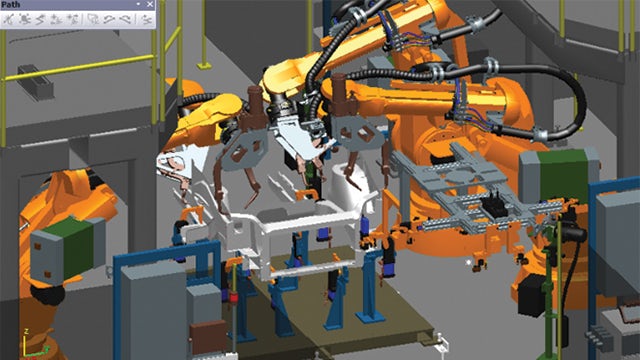
MINO saves time with Tecnomatix virtual commissioning solutions

Product: Tecnomatix
Industry: Automotive and Transportation

Tecnomatix provides a compensation alignment capability that can deliver accuracy as high as 98 percent in production line simulation, thus reducing the amount of rework on the shop floor.

He Wei, Production Director
Guangzhou MINO Auto Equipment Co., Ltd.

Accelerated growth

Guangzhou MINO Auto Equipment Co., Ltd. (MINO) is the largest and leading high-end automotive equipment supplier in South China. Since its establishment in 2008, MINO has attained significant expertise and has become one of the best automation equipment enterprises in China’s auto industry, realizing an average annual sales growth of more than 200 percent.

Since its founding, MINO has experienced dramatic success, capital investment and expansion. Between 2010 and 2012, the company secured venture capital funding of more than 60 million renminbi (RMB). In 2013, the Chinese Ministry of Industry and Information Technology awarded MINO RMB 6.5 million in special support funds for the company’s flexible conveying system, and MINO’s industrial robotic integration system was awarded RMB 3 million in support funds from the Economic and Information Commission of Guangdong Province. In 2014, the company secured additional venture capital funding of RMB 120 million and began construction of a new facility in Huadu district.Accelerated growth
Leveraging Tecnomatix for enhanced competitiveness

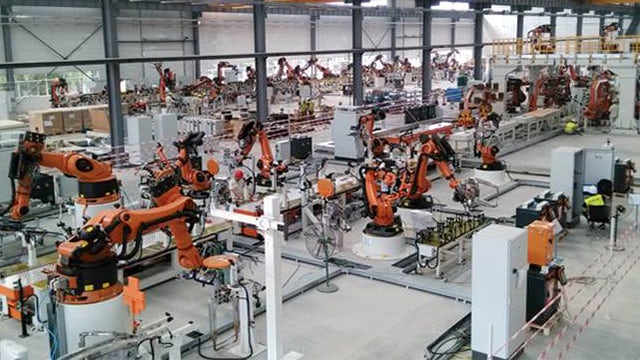
Since the automotive industry has extensively implemented mature automation applications, automakers expect the production lines in their facilities in China to be designed using 3D planning and simulation testing. Years ago, MINO adopted Robcad™ software in the Tecnomatix® portfolio for robotic simulation. MINO used Robcad, a solution from product lifecycle management specialist (PLM) Siemens Digital Industries Software, for mechanical simulation and offline robot programming in individual work cells, but the offline programs often required control engineers to debug the control systems on site to properly synchronize the robots and equipment. Using Robcad alone, the company was unable to meet the commissioning requirements of an entire complex production line with electronic controls.
After comprehensive evaluation of a broad range of criteria for design, simulation and analysis capabilities and technical support, MINO decided to adopt a comprehensive range of Tecnomatix solutions.

The Tecnomatix portfolio of digital manufacturing solutions provides design, analysis, simulation and optimization capabilities for plants, production lines and work cells, and delivers process innovation by linking all manufacturing disciplines with product engineering, including process layout planning and design, process simulation and validation and manufacturing execution.

The use of Tecnomatix helps MINO improve the quality and accuracy of production line designs. “By simulating the whole production line, we can identify defects and problems in the design to make necessary corrections before real production,” says He Wei, production director at MINO. “Tecnomatix provides a compensation alignment capability that can deliver accuracy as high as 98 percent in production line simulation, thus reducing the amount of rework on the shop floor.”

Navigating a complex project

For implementation of the Tecnomatix solution, MINO worked closely with Siemens Digital Industries Software solution partner Guangzhou Gohope Info-tech, which helped navigate the project and provided training services. Using the body-in-white (BIW) welding line for example, Guangzhou Gohope collaborated with MINO to develop independent welding process planning, design, simulation and virtual commissioning capabilities and conducted training on the software to improve the company’s efficiency and quality in body process planning. The collaboration helped shorten manufacturing preparation time on the body production line and improved the capacity of the company’s auto welding lines.

In 2015, with the help of technical teams from Guangzhou Gohope and Siemens Digital Industries Software, MINO successfully wrapped up the largest project of the year – phase three of the GAC passenger car welding project, which includes 63 KUKA robots with an 80 percent level of automation and an expected annual throughput of up to 180,000 units. It took 20 engineers just half a year to finish a range of advanced simulation tests using Tecnomatix. The accomplishment leads the industry in both project lead time and technology complexity, and was unimaginable before joining hands with Guangzhou Gohope.

“Besides the Tecnomatix solution, Guangzhou Gohope’s extensive practical experience in the automation industry, professional after-sales service and technical support teams, and a complete technical training system are among the main reasons that drove us to enter into long-term cooperation with them,” says Zhou Xiaowen, mechanical engineering manager at MINO.Navigating a complex project

By simulating the whole production line, we can identify defects and problems in the design to make necessary corrections before real production.

He Wei, Production Director
Guangzhou MINO Auto Equipment Co., Ltd.

Building a Hellcat-powered ‘57 International Metro van with Artec Leo

Product: Artec Leo
Industry: Automotive and Transportation

Background

From the time he was five, Chad Forward knew he wanted to build things. After 15 years of working in leading automotive design studios in Australia and design consulting for custom automotive shops, he started his own restoration business, Scratch Build Co, to continue doing what he always loved – building cars.

Launched in 2012 as a side project that Forward devoted himself to on weekends, Scratch Build is now a full-time design studio and collaborative space. There, Forward and his fellow subcontractors – automotive designers, technicians, and electricians – work on creating design solutions for aftermarket creators of automotive products or custom-built cars.

“I was always attracted to people who are excited about what they try to create,” said Forward. “By observing incredible craftspeople and amazing designers in Toyota, Ford, and other design studios, I really saw the opportunity to employ those people and build a space where everyone can come and create something for the benefit of the Australian auto market.”

As the name suggests, a lot of what Forward is doing entails building things from scratch, be it a part that can’t be bought anymore, or an entire process that a client is trying to reinvent. Until 2017, his typical reverse engineering workflow would take a great deal of time, without the results to show for it. “Sometimes it would take me a whole day to measure up a chassis, getting really basic measurements, and then trying to model from that information in CAD”, added Forward. “Often, because of taking everything on so quickly, I missed something that was fairly critical. And it involved going back and forth a number of times as well.”

“Artec’s cutting-edge and truly portable Leo scanner is a massive breakthrough in the 3D scanning industry.”

When Artec released its wireless handheld 3D scanner Artec Leo that year, Forward was immediately on board. “20 years ago when I had my first custom-car business, I thought this technology would never exist in my lifetime,” he said. Forward pre-ordered the scanner through Artec’s Australian reseller, Objective3D, and, according to the team, was the first lucky customer to get it at that time.

“Artec’s cutting-edge and truly portable Leo scanner is a massive breakthrough in the 3D scanning industry, and we at Objective3D are proud to bring this technology to the Australian and New Zealand market,” said Matt Minio, Managing Director of Objective3D. “It’s especially beneficial for automotive engineers who can use it to reverse engineer parts and see how they affect the performance of a vehicle.”Scratch Build

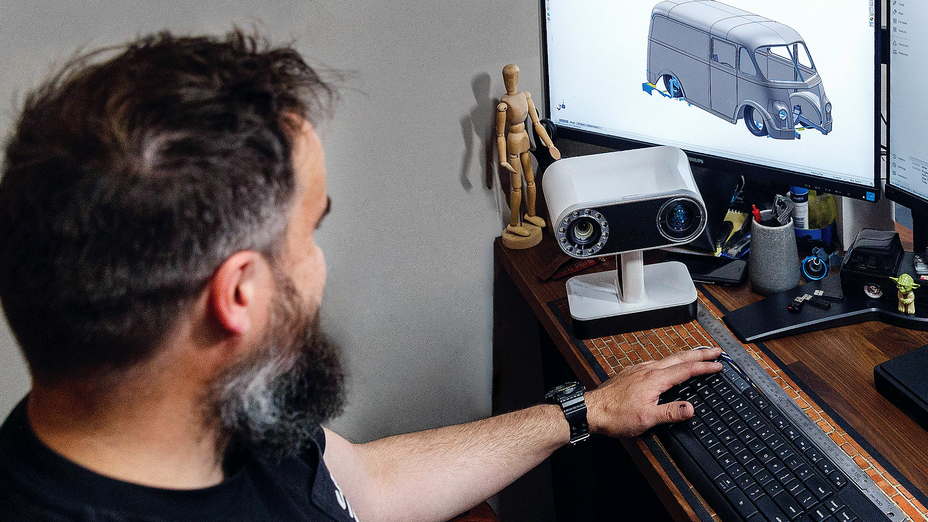
Artec Leo enables the founder of Scratch Build to measure any part simply (Image by streetmachine.com.au)

Designed with both mobility and ease of use in mind, Artec Leo is a powerful and one-of-a-kind 3D scanner that doesn’t need a PC or laptop to work with. An extensive field of view allows the scanner to easily snap both medium to large industrial parts, or entire vehicles in 3D, with quality-assured accuracy and exceptional resolution.

Powered by automatic onboard processing, wireless connectivity, inbuilt touch screen, and battery, the scanner provides full autonomy and freedom of movement wherever the user is, be it a custom car shop, a factory floor, or a far remote location with no power access.

For Forward, it was a no-brainer: “It took me four years to convince myself I needed to spend $4,000 on a 3D printer, but it took me 15 minutes to convince myself to buy a $40K scanner.”

Getting to work

Once the scanner arrived, Forward put it straight into work, and hasn’t stopped since: anything that needs to be measured car-wise now gets scanned with Leo, onsite in the shop or out in the field, saving him and his clients precious time. He now spends those free hours on CAD modeling, designing, and prototyping car parts and components, using the data he scans as a reference.

“The freedom that this single machine has offered me is unbelievable. Regardless of the location or parts’ complexity, I’m now able to capture the data simply,” Forward added.Scratch Build

Forward uses data from Leo as a reference for CAD modeling in SOLIDWORKS and Autodesk Alias (Image by streetmachine.com.au)

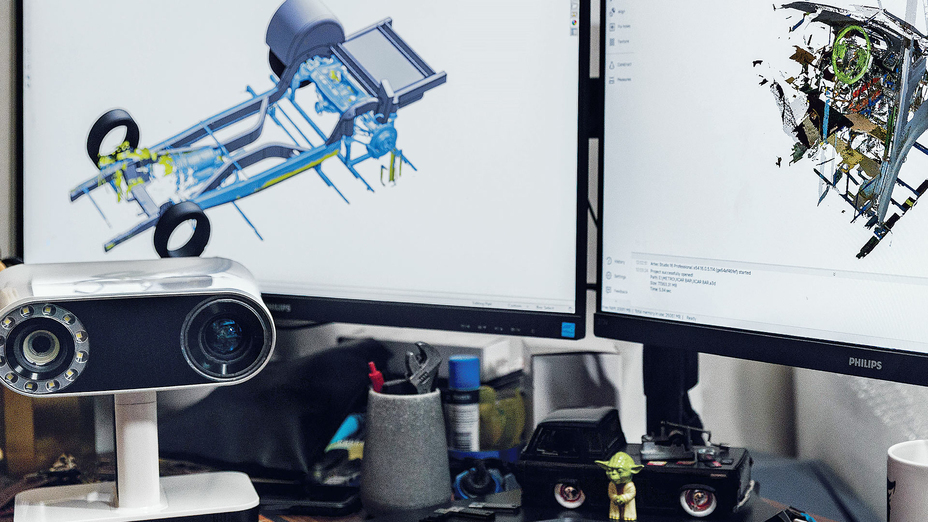
The typical workflow looks like this: Forward or one of his design colleagues drives to the client and scans whatever needs to be scanned, then all the data gets transferred to one of their desktop computers, which is set up solely for processing in Artec Studio.

“I have two desktop computers: one for processing all the scanned data and the second one for the CAD modeling. I always have things going on, so I prefer to run them in parallel,” Forward explained. Depending on the part scanned, he then loads it into either SOLIDWORKS or Autodesk Alias to create a solid CAD model.Scratch Build

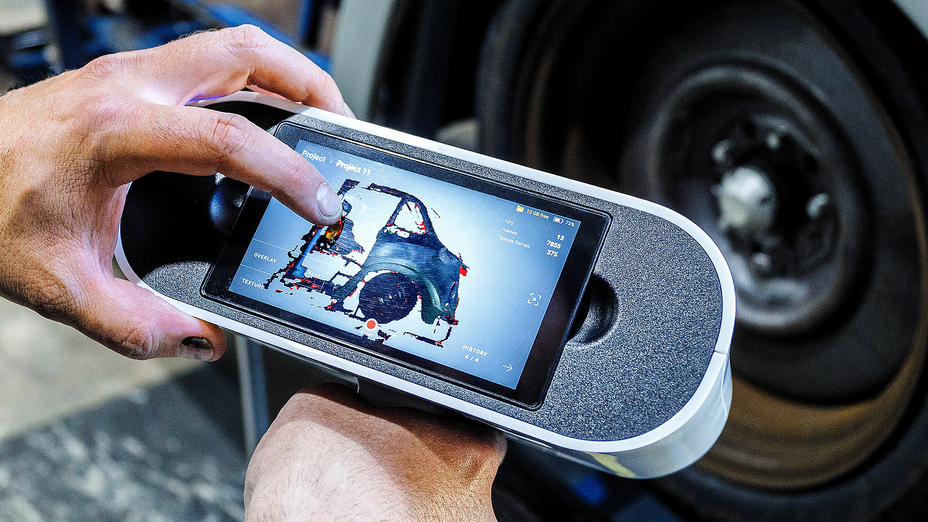
Artec Leo’s built-in display allows Forward to preview the results of his scan in real-time (Image by streetmachine.com.au)

Using a 3D scanner at the clients’ locations has also brought Forward new opportunities work-wise: “Every time I take Leo out somewhere, I am almost guaranteed to pick up another job from just visiting one place. One place will send me to another place, and so on,” he shared. While on site, he also collects more data than he needs to – building his own catalog of sorts, gathering valuable data from parts that can no longer be found.

The 1957’s International Metro Van

One of the biggest projects where Forward has been able to make full use of the scanner so far is the 1957 International Metro Step Van that he and his business partner from another automotive shop, Luke Williams, are on a mission to restore from the ground up by the end of 2023.

The owner of the van didn’t just want to renovate the vehicle as is, but pair its vintage exterior with the power of a sports car, featuring the supercharged 6.2L HEMI Hellcat V8 engine.

Coming standard on the Dodge Challenger SRT® Hellcat models, today’s most powerful modern American muscle cars, the V8 boasts more than 700 horsepower, which, unlike the van’s original engine, will allow the owner to freely drive his van all across the country. Apart from the engine, he also wanted to tune up the design, so the van looked less “puffy,” as well as retain all the factory electronics.Scratch Build

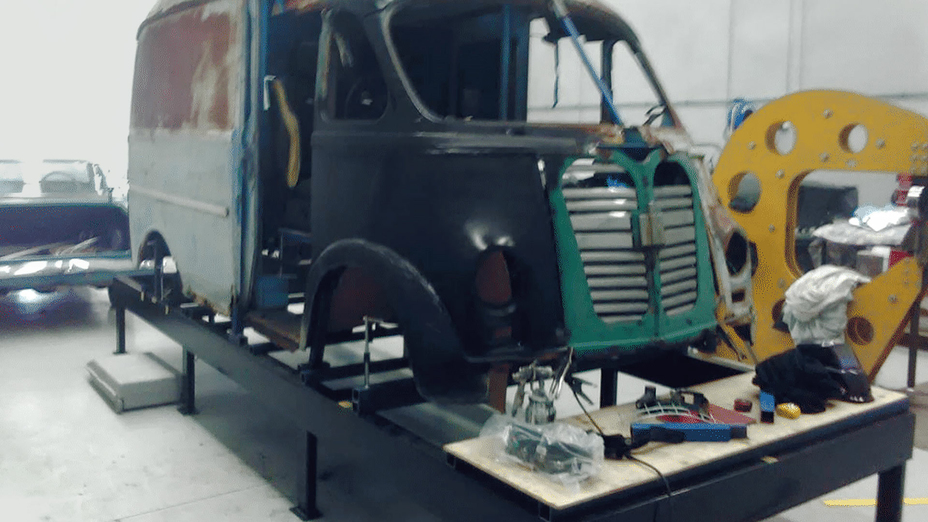
Original body of the 1957 Metro Van before the restoration (Image by Chad Forward)

After collecting the design and engineering requirements from the owner and making some preliminary sketches, Forward and Williams came up with a plan: since the van’s body was too worn out and rusty to restore, it would be faster to build the entire vehicle completely from scratch, using the scans of the older and modified parts as a base for modeling new parts in CAD.

Step 1. Sculpting the body

The first step: to cut up and sculpt the body. The plan was to modify an existing body – or one of its parts – to the desired shape, then 3D scan this part and use the data as a starting point for modeling an entire body in CAD.

In order to do that, Williams cut up a factory body with an angle grinder, welded it back in slightly different positions, and then used a lot of body filler and primer to create a matte surface that he was happy with.Scratch Build

The plan was to modify one of the body parts to the desired shape, and then 3D scan this part for modeling an entire body in CAD (Image by streetmachine.com.au)

Step 2. Building the chassis

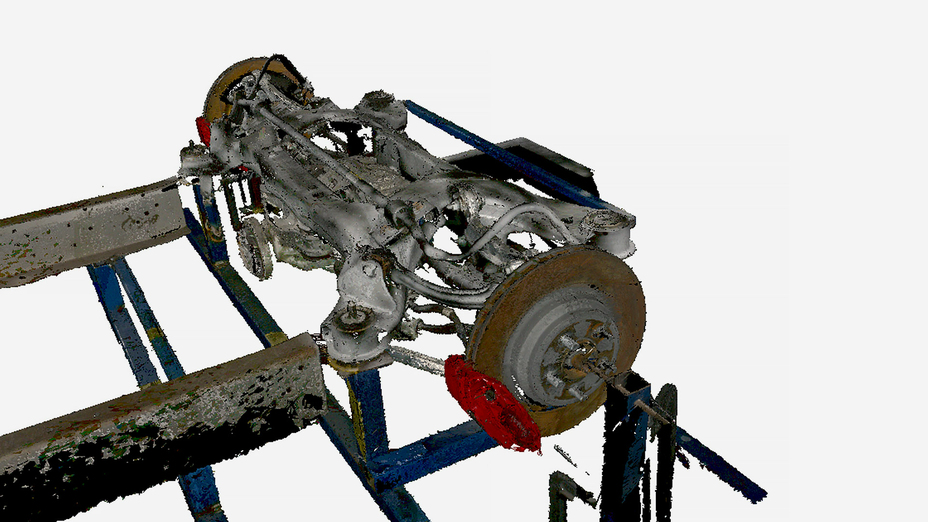
In the meantime, Forward set up all the drivetrain components of the Dodge Hellcat – the engine, all the wiring, the front and rear suspension – on a base platform that he built around the chassis. He wanted to see how all the components fit together, if they met ADR (Australian Design Rules) standards, and scan them to see which new chassis parts needed to be modeled in CAD.

Step 3. 3D scanning

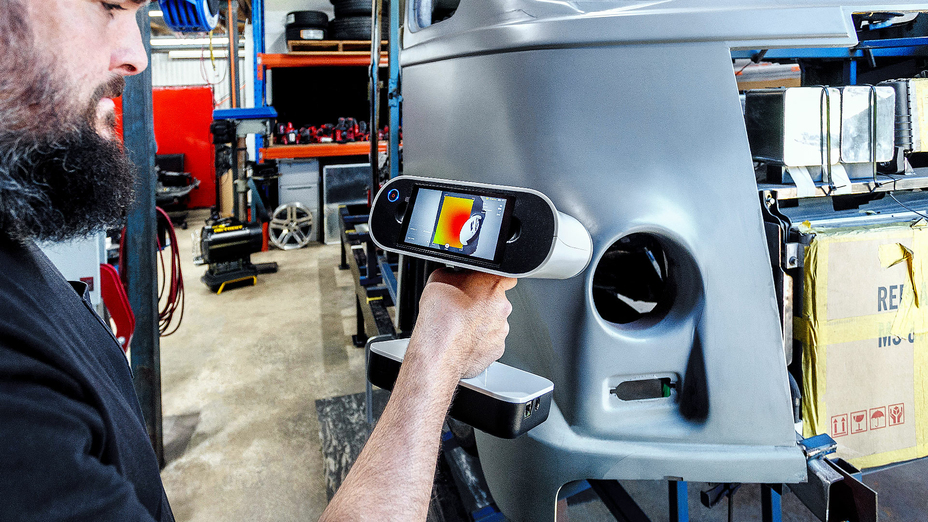
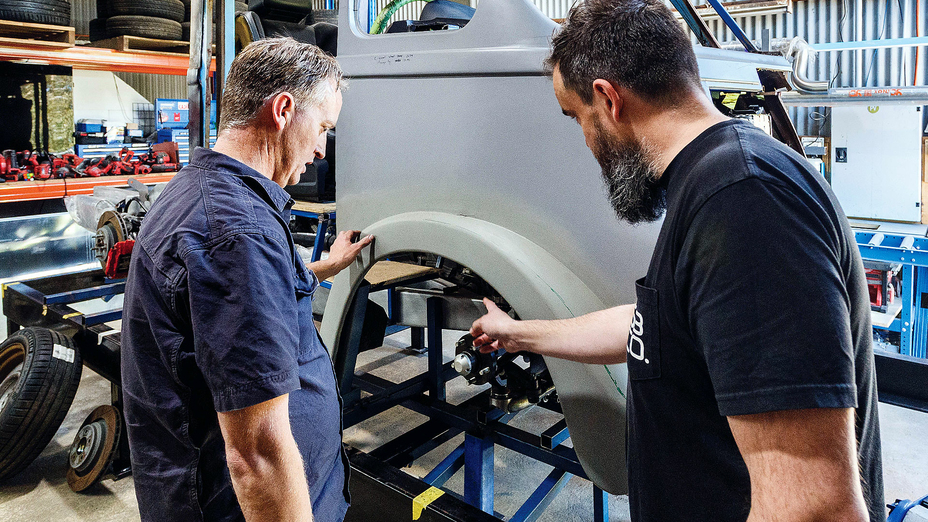
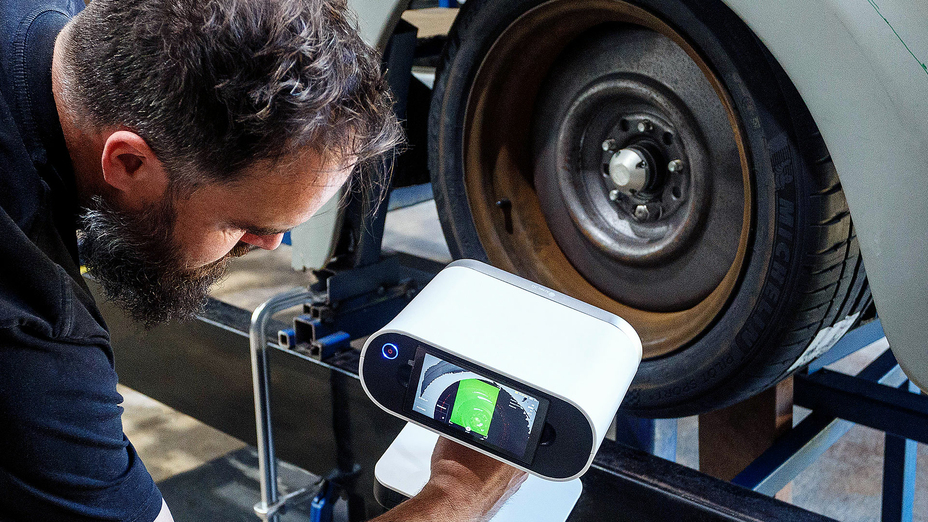
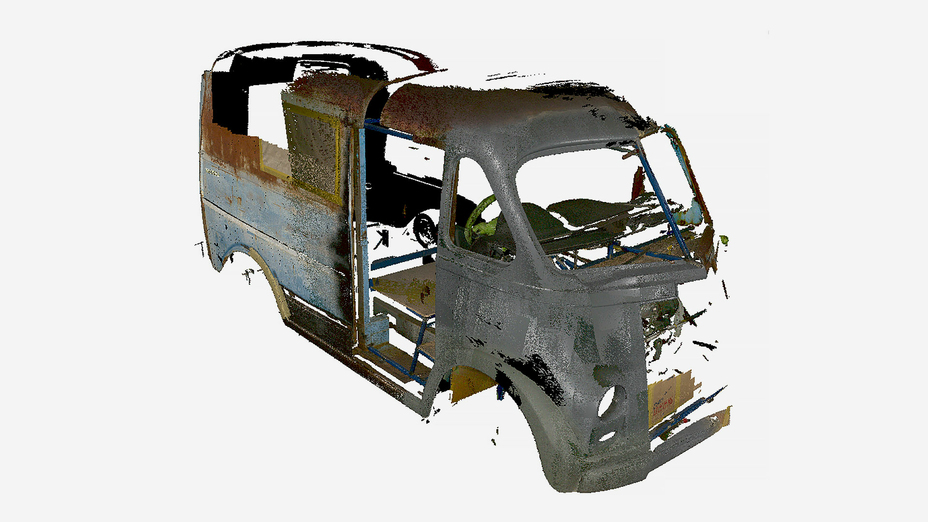
Then it was time for Forward to scan the primed front left corner of the van, as well as the chassis and other internal components, using his Artec Leo. All the scanning just took a few minutes; he then uploaded all the data to Artec Studio for processing and creating an .STL file.Scratch Build

Forward scanning the van with Artec Leo (Image by streetmachine.com.au)Scratch Build

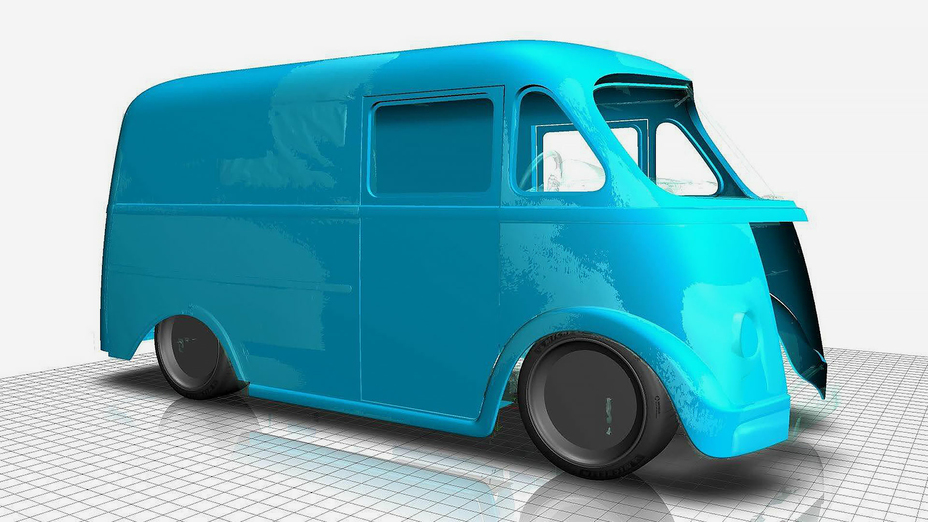
3D scan of a modified body, captured with Artec LeoScratch Build

3D scan of a rear suspension

Step 4. Modeling the van’s body

Next: To model the body surface. For that, Forward imported the scan data from Artec Studio into Autodesk Alias, computer-aided industrial design software for automotive exteriors, and used this data as the blueprint to create the sketches of a future body surface.Scratch Build

Forward uses Autodesk Alias software to create car body surfaces from the sketches that he makes over the top of the scanned data (Image by streetmachine.com.au)Scratch Build

3D scan (light blue) and CAD data (blue) in Alias software

Step 5. Modeling the chassis

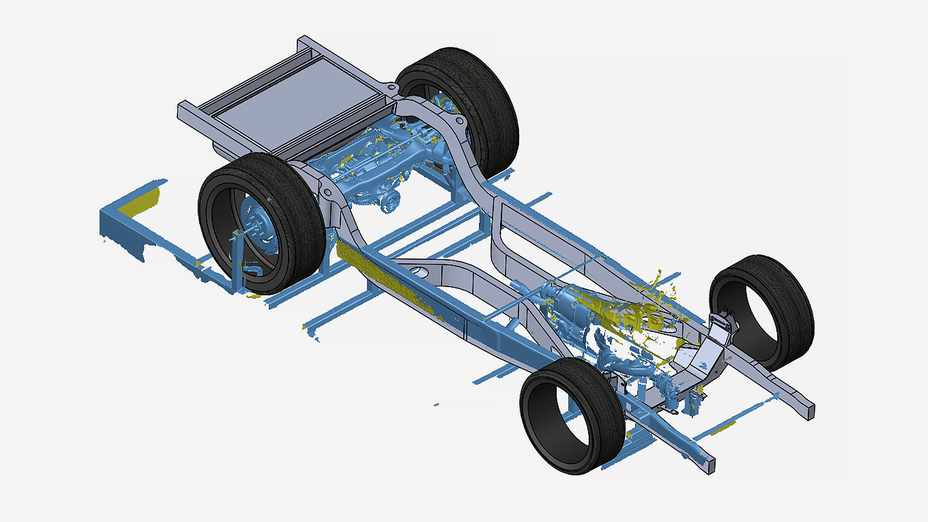
For modeling the chassis and all the other engineering parts, Forward uses SOLIDWORKS. Following the same workflow, he uploaded the scan data captured with Leo into SW and modeled the new parts around it. Having accurate 3D replicas of the internal components allows Forward to use them as precise references during his design process, and also have a clearer understanding of what issues he may run into. As he progresses through his design, he scans more components, and adds them to the software as reference models.Scratch Build

Forward uses the scan of the chassis to be modeled as a platform to create a CAD model in SOLIDWORKS

Step 6. Laser cutting & welding the new components

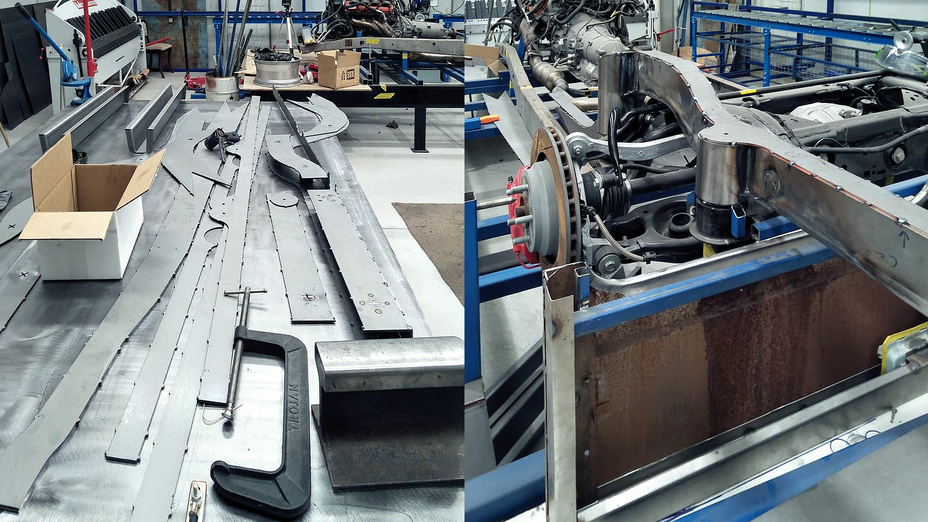
After the SOLIDWORKS stage, Forward sent all the CAD components for laser cutting, and then welding to the chassis.Scratch Build

Laser-cut flat parts loosely tapped together before final welding to the chassis (Image by streetmachine.com.au)

After welding all the chassis components, the whole internal build was sent to an auto electrician to get the chassis up and running with all the Hellcat’s original components. As this was taking place, Forward was preparing to cut up the body surface modeled from the scan data (in Step 4) to build an auto body buck that could then be used for fabricating the panels and test fitting.Scratch Build

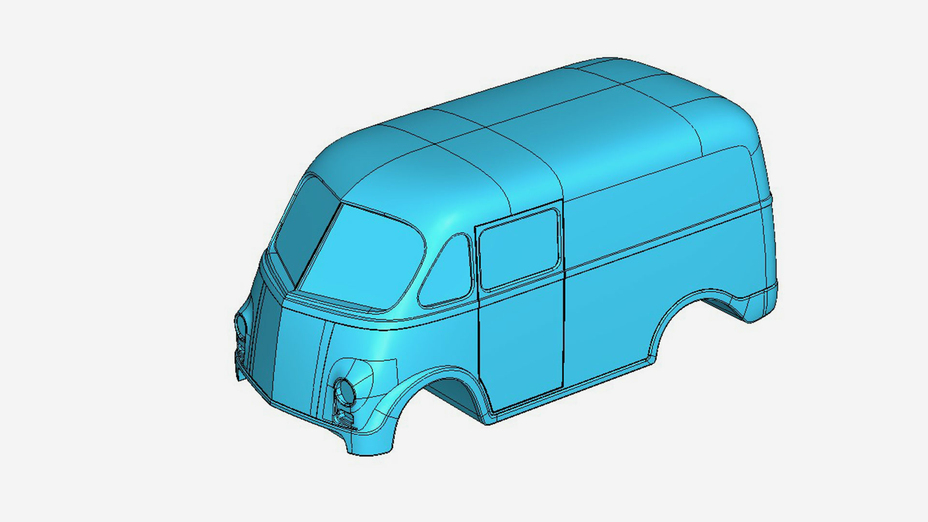
The final design of the new body style that Forward will use to create the body buck

The team expects to finish all the body work in the next 12 months, having given themselves another few months to work on the interior, painting, and other smaller tasks by the end of 2023. Once complete, Forward hopes this project will become a good platform to educate other studios and clients.

“Metro Van is a great example of how I think all cars should be recreated,” said Forward. “Although our process takes time, it will take way longer to restore the old car as is, than to build it from scratch backed by the data from a 3D scanner. Being able to capture information in 3D, reverse engineer and make components based around what I’ve captured – that is what I fundamentally set up this business for.”

“As soon as HD Mode was available, it absolutely blew my mind – it’s like I bought a new scanner.”

Since Forward has switched to 3D scanning, he has never looked back. Being able to create exact digital copies of automotive parts instead of measuring them by hand has been a massive game-changer in the way he works, the accuracy of the data he collects, and his overall productivity.

And it’s only getting better. “I have always been amazed with the workflow and the continued upgrade of everything that Artec has done to stay ahead of the curve,” he said. “Every time the product re-opens, it’s like a whole new level of excitement for me. The difference between Artec Studio 15 and 16 is absolutely massive – as soon as HD Mode was available, it absolutely blew my mind, it’s like I bought a new scanner.”

Drastically reduces costs and shortens lead times with 3d systems’ large-format pellet-extrusion 3d printing

Product: Figure 4
Industry: Automotive and Transportation

Duo Form, a leader in thermoforming for a wide variety of industries, advances its production capabilities with polymer pellet-extrusion additive manufacturing (AM). By collaborating with 3D Systems to integrate AM into its manufacturing processes and leveraging its Titan 3D printer, Duo Form is drastically decreasing costs, shortening lead times, and becoming more agile by 3D printing representative samples, production molds, and tools for thermoforming and vacuum forming processes.

“We have gained a lot of business with our Titan 3D printer. The turnaround time for parts, molds, and formed parts has put us leaps and bounds above our competition.” 

– David Rheinheimer, Duo Form Product Development Manager

Time, Cost, and Delays in the Production Process

In the competitive thermoformed plastics market, Duo Form continually works to innovate its manufacturing process, shorten lead times and reduce costs to better serve its customers and win new business. At the same time, maintaining mold quality and durability is key.

Time and cost savings are not the only challenges, thermoformers like Duo Form face. They also need to innovate quickly with design iteration and produce full-scale prototypes to avoid delays in the approval and production process.

Producing Molds with AM

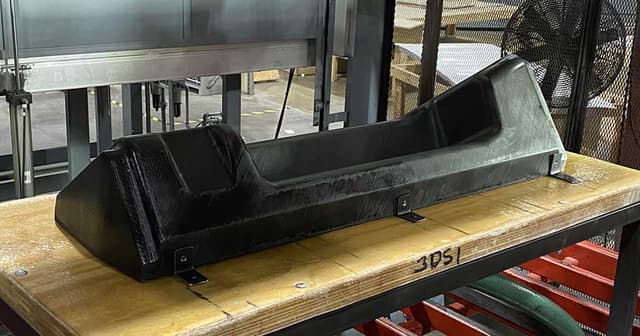
3d systems titan customer duo form thermoform mold

Duo Form now 3D prints thermoforming molds using polymer pellet-extrusion on its Titan 3D printer, replacing traditional CNC methods to create ceramic or metal molds. Large-format pellet-extrusion AM uses cost-effective thermoplastic pellets that are common to other extrusion manufacturing such as injection molding, and which cost up to 10X less than traditional FDM filaments. 3D Systems’ pellet extrusion systems also enable high-throughput printing, with print speeds up to 10X faster than filament systems. 

3D Systems and Duo Form identified a grade of glass-filled polycarbonate pellets as an ideal material for printing thermoform molds, as it is affordable, easily procured, and has proven to withstand the thermoforming process as a durable and dimensionally accurate material.

Duo Form also leverages 3D Systems’ printing experience to achieve optimal printing parameters to print molds with the right porosity to function as vacuum passages. This unique ability of additively manufactured molds eliminates the need for special tools to properly form cavities into the thermoformed component, further reducing time and labor costs for producing molds. 

Innovation and Design Iteration with AM

Incorporating AM goes beyond the mold-making process for Duo Form. As a leading innovator in its industry, Duo Form also utilizes its Titan 3D printer to quickly print sample parts of final products to present to customers ahead of making the tool. Directly printing parts for design approval before proceeding to the mold-making process has opened the door for faster design iteration and overall shorter lead times.

Significant Cost Savings and Reduction in Lead Times

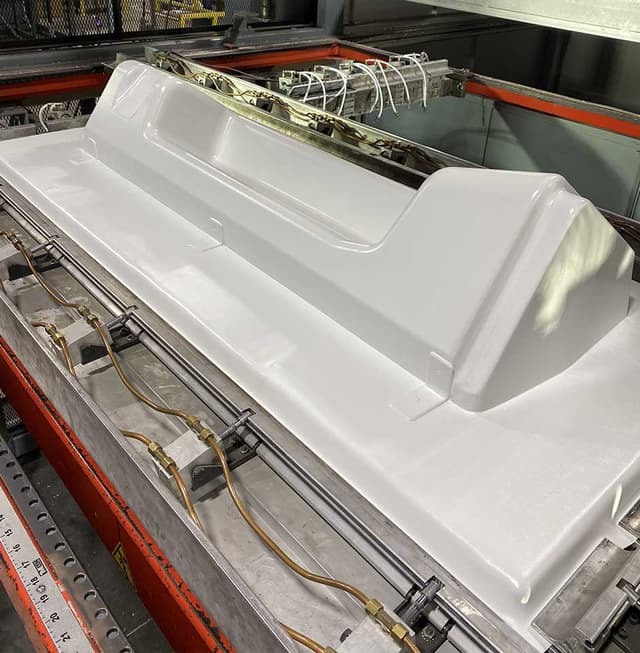
3d systems titan customer duo form thermoform part closeup

Duo Form saw immediate results with the first thermoform mold the company printed on its Titan pellet-based 3D printer, a shower pan for a recreation vehicle. 3D printing the small shower pan reduced costs by more than 50 percent and printing took less than 20 hours, resulting in a high-quality mold with similar longevity to traditionally manufactured molds. Duo Form Product Development Manager David Rheinheimer reported that this 3D printed mold went into production and has been pulled over 1,000 shots without showing any significant wear and is still producing 100% quality parts. 

Duo Form and 3D Systems also partnered on a project to produce a train interior panel using the Titan pellet extrusion system to demonstrate AM for large-format mold production. 3D printing this 1,294 mm x 410 mm x 287 mm mold shows the potential for up to 88 percent estimated cost reduction and up to 65 percent reduction in lead time compared to traditional ceramic mold methods and even greater savings when compared to traditional aluminum mold methods.

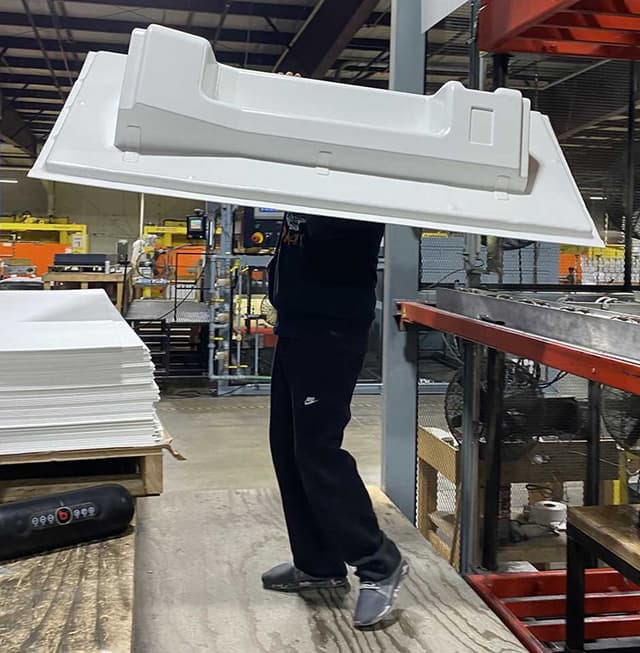
worker carrying duo form thermoform part

Since implementing AM as part of its manufacturing process, Duo Form says the company has won more business and now closes deals faster thanks to the speed and agility of pellet-extrusion 3D printing. As an example, Rheinheimer shared how Duo Form 3D printed a sample part to present to a customer along with a quote for forming the part. The customer, impressed with the speed and ability to see the final design first, awarded Duo Form the bid that same day. This is now standard practice for Duo Form and brings added value to its customers.

Rheinheimer says he can also see another value AM brings to manufacturers when it comes to storing molds, especially for products that are out of production but may need to be formed in the future for spare parts. With AM, a digital inventory means you can eliminate the need to store legacy molds, and instead quickly print a new mold whenever the need arises.

Additive manufacturing complements conventional production processes. Duo Form’s adoption of large-format pellet extrusion 3D printing exemplifies how AM and traditional methods can work together to achieve optimal manufacturing speed, cost management, and quality part production. 

Recreational vehicle manufacturer digitalizes concept of camper van

Product: Solid Edge, Teamcenter
Industry: Automotive and Transportation

Using PMI has turned deriving individual variants into configuration. It has reduced the time required by 65 percent.

Stefan Ziegler, Head of Industrialization R&D,

Freedom and comfort combined

Camping has been a popular outdoor recreational activity and a mode of accommodation for decades. In many countries, it is a substantial contributor to the tourism industry. The activity offers some of the most affordable lodging options. According to the Statista platform, about seven percent of all tourists visiting Germany in 2020 preferred camping over hotel accommodation. As the use of tents has significantly decreased over the past decades, recreational vehicles (RV) such as caravan trailers and motorhomes have become more popular. They provide campers with home-level comfort such as living areas, kitchen facilities and bathrooms.

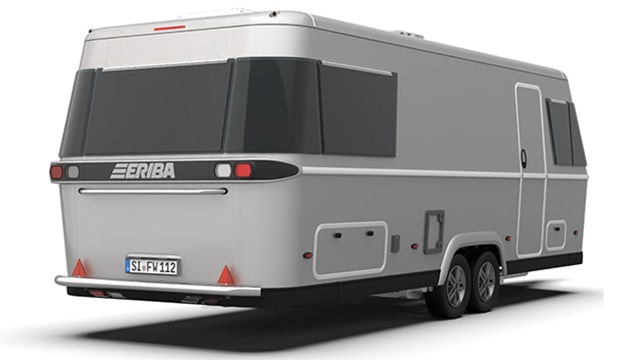
Located in the spa town of Bad Waldsee in Southern Germany, Hymer GmbH & Co KG (Hymer) is among the pioneers of RVs. The company produced its first caravan trailer in 1957, followed by the first German motorhome in 1961. Hymer has become a household name emblematic for an entire vehicle category in Europe. The company is part of the Erwin Hymer Group and also designs and manufactures trailers under the Eriba brand. The Erwin Hymer Group belongs to the Thor Industries family of companies, uniting the vast majority of European and North American RV manufacturers.

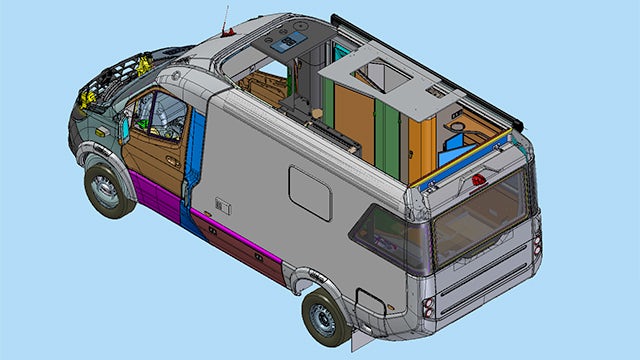
Hymer has become an innovation and technology leader in the motorhome segment, combining innovation with Swabian virtues such as attention to detail and quality and made in Germany workmanship standards. “The five centimeters (two-inch) side walls combining aluminum skins on closed-cell PU provide insulation comparable to 80 centimeters (2 feet and 7 inches) of brick wall,” states Frank Heinrichsen, marketing manager at Hymer.Hymer engineers in all European locations use Solid Edge for CAD.

Hymer engineers in all European locations use Solid Edge for CAD.

Fully digitalized product creation

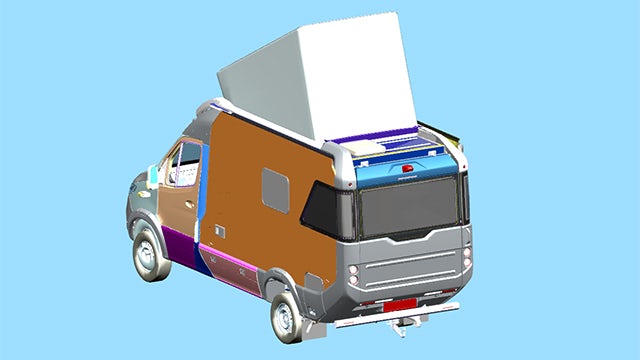
Hymer engineers designed the VisionVenture, a concept camper van, by weaving a digital thread along the entire product design process. As in all their designs, they created a comprehensive digital twin of the vehicle using software from the Siemens Xcelerator portfolio, the comprehensive and integrated portfolio of software, hardware and services.

For computer-aided design (CAD), Hymer engineers in all European locations use Solid Edge® software. For VisionVenture, they imported models that an external industrial designer had created using NX™ software. “Solid Edge has a supportive user interface, so it is easy to learn; new colleagues only require minimal training,” says Stefan Ziegler, head of industrialization research and development (R&D) at Hymer. “At the same time, this 3D CAD software has everything we need to create a comprehensive digital twin of the vehicles, including powerful tubing capabilities.” In Hymer camper vans, fluid tubing and electrical harnesses play a key role. For designing and routing those, they rely on the Solid Edge Xpress Route 3D routing application.

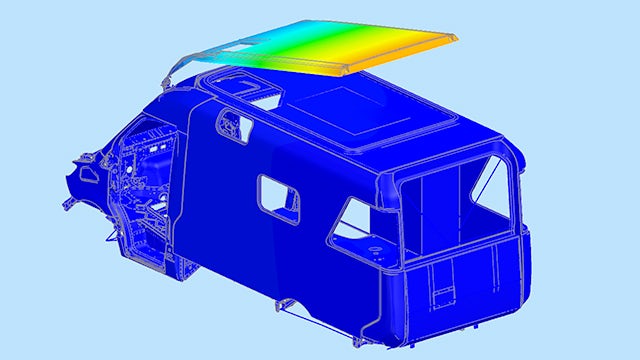
The design engineers verify the structural integrity of our designs using finite element modeling (FEM) analyses. For everyday basic verifications, they use the capabilities of Solid Edge. More in-depth stress analyses are outsourced to The Team Technology (TTT), an automotive lightweight construction department in the Erwin Hymer group. They use Simcenter™ 3D software for FEM analyses. This two-stage verification process establishes a knowledge gain during the early phases of product design, reducing the number of physical prototypes required.The design engineers use the FEM capabilities of Solid Edge to verify the structural integrity of their designs for everyday basic verifications and outsource more in-depth stress analyses to a specialized internal department in EHG (The Team Technology; TTT) using Simcenter 3D.

The design engineers use the FEM capabilities of Solid Edge to verify the structural integrity of their designs for everyday basic verifications and outsource more in-depth stress analyses to a specialized internal department in EHG (The Team Technology; TTT) using Simcenter 3D.

Virtual prototyping

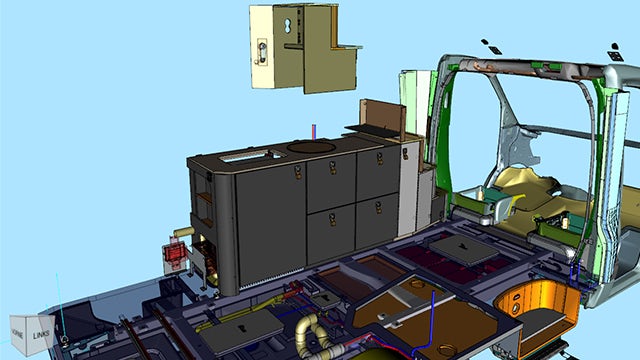
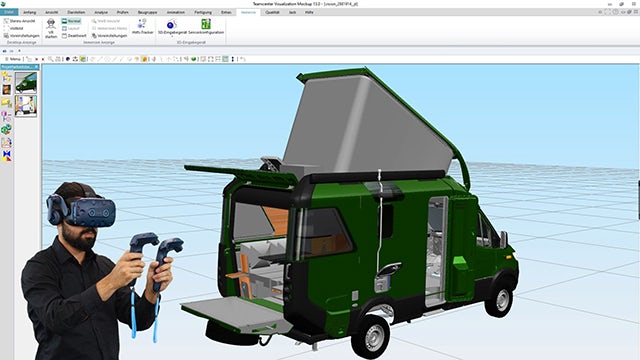
Hymer uses Teamcenter® software to build prototypes of their vehicles in virtual reality (VR). Teamcenter visualization concept capabilities are provided as an add-on to the Teamcenter lifecycle visualization suite. The caravan experts import the digital twin created using Solid Edge and build digital mockups of the entire vehicle or a part of it to detect and resolve issues.

Ergonomic design verification is vital and using VR gear is an easy way to reveal if the solutions designed are practical. “By using the digital mockup capabilities of Teamcenter visualization, we can identify and resolve issues before they become costly problems,” says Heinrichsen. “Virtual prototyping helped us reduce physical mockups and prototypes by 80 percent.”

Teamcenter VR uses the JT™ file format in viewing and analyzing 3D designs. Importing design data from Solid Edge does not require any data preparation or conversion because the geometry information is received in the JT data format.

Hymer engineers generally use the JT data format for all exchange of geometry data between different software products. For many purposes, most of the information carried in native CAD data is not required. In most cases, geometry information is all that is needed and historical data would merely be a ballast. “We do not need three days for data translation and cleansing anymore,” explains Ziegler. “Using the JT data format, we can import and consolidate geometry data in minutes versus days, even if they originate from different software systems.” This is frequently needed when bringing together Hymer’s mechanical and wire harness designs created using different software products in one model using Teamcenter Visualization.

Additionally, using JT for model data exchange does not require users to be equipped with CAD software to view 3D designs using the free JT2Go viewer. This eases collaboration with suppliers and external partners based on rich design data.Hymer engineers use Rapid Author for Teamcenter to create electronic instructions for assembly lines.

Hymer engineers use Rapid Author for Teamcenter to create electronic instructions for assembly lines.

One digital twin, many uses

Hymer engineers use Rapid Author for Teamcenter to create all documentation. They benefit from its work instruction component to create electronic instructions for assembly lines.

“Workers were enthusiastic about the dynamic assembly instructions using 3D models,” says Ziegler. “They particularly liked the ability to turn models to better see things often hidden in drawings.”

This also helped accelerate onboarding and training new employees in production. In engineering, Siemens’ solution partner ISAP AG supports Hymer with software training. For marketing and sales, Hymer engineers create life-like and often animated renderings. These are also based on 3D model data from Solid Edge in the JT data format.

These effects are even stronger if there is only one digital twin, even if a product comes in numerous variations, as Hymer caravans and motorhomes usually do. “Everything we create starts out as a 150 percent model that must be reduced to a 100 percent model to fit individual requirements,” says Heinrichsen. Hymer engineers have recently started enriching their models with product and manufacturing information (PMI). “Using PMI has turned deriving individual variants into configuration,” Ziegler confirms. “It has reduced the time required by 65 percent.”

Using the digital twin created in Solid Edge as the single source of truth for all these purposes enables all data to be bot ubiquitous and associative. This allowed Hymer to eliminate distributed information silos and some notorious sources of error associated with this data separation. Additionally, after modifications, everyone involved can immediately resume work on the basis of valid, up-to-date information.Hymer engineers create life-like and often animated renderings for sales and marketing based on 3D model data from Solid Edge.

Hymer engineers create life-like and often animated renderings for sales and marketing based on 3D model data from Solid Edge.Users that are not equipped with CAD software can view 3D designs by using the free JT2Go viewer. This eases collaboration with suppliers and external partners based on rich design data.

Users that are not equipped with CAD software can view 3D designs by using the free JT2Go viewer. This eases collaboration with suppliers and external partners based on rich design data.Hymer reduced physical mockups and prototypes by 80 percent by using the digital mockup capabilities of Teamcenter Visualization for design verification.

Hymer reduced physical mockups and prototypes by 80 percent by using the digital mockup capabilities of Teamcenter Visualization for design verification.

Virtual prototyping helped us reduce physical mockups and prototypes by 80 percent.

Frank Heinrichsen, Marketing Manager,

How 3d measurement technologies can improve quality control in the hypercar market

Product: HandySCAN
Industry: Automotive and Transportation


“The Creaform solution is highly accurate, easy to use and well-suited to a production line environment. Having the system ready at hand gives us the flexibility and response time we need to quickly investigate measurement and quality issues as they arise.”

Swedish design and visionary technical solutions: that’s the way Koenigsegg works.

The Swedish company Koenigsegg Automotive AB is the market leader within the elite hypercar market, developing and hand-building advanced artisan vehicles since 1994.

The journey of Koenigsegg, since its inception, is truly incredible. It all started on August 12, 1994 when a young man, aged 22, set out to realize his childhood dream. He was a young man fuelled by passion, ingenuity and mind-bending will. Christian von Koenigsegg had just made up his mind to live his dream and start his own car company. The odds were stacked against him. It was a now or never moment. His idea was to create a sports car that he felt did not currently exist and one which he believed would be desired—two essential necessities for success, Christian felt.

The concept: A lightweight mid-engine car with a detachable, storable hardtop. The car would also feature a wrap-around screen for good visibility and aerodynamics as well as short overhangs with two large intercooler intakes on the side of the car, located behind the mass centre to aid high-speed stability. The car would look and feel good with the top up or as a roadster—transformed in minutes with the hard top neatly tucked away inside the car. Christian envisioned a car with a timeless appearance that aged like good wine. This was a mid-engine car concept that did not exist at the time.

Every Koenigsegg created since then now includes this simple, but effective, DNA attuned to Christian’s original vision.

Five production models with as many Guinness production car records later, Koenigsegg has exploded onto the international scene and is here to stay. When Christian is asked what his greatest achievement is, he says without hesitation: “Living the dream!”

Measurement tasks and equipment

The day Koenigsegg got in touch with Creaform, the company was using rental services for measurement tasks. A four-meter Romer Arm with scan and probe heads or a Leica Tracker together with PolyWorks were employed. The measurement and scanning systems were primarily used for root cause analysis on the production line, comparing physical parts to nominal CAD as well as for fixture set-up, commissioning and reverse engineering tasks in which handmade parts were replaced by and CAD data produced using Catia V5R19 for production tooling and manufacturing.

Frequent functional downsides of the rental equipment, substantial expenses and time constraints as well as the goal to have in-house 3D measurement skills, brought Koenigsegg to start looking for alternatives on the market. Creaform’s Swedish reseller, MLT Maskin & Laserteknik AB, went to Koenigsegg for an on-site demonstration of Creaform’s 3D measurement technologies.

“After benchmarking all available measurement systems, we felt that Creaform products and solutions fitted best with our demanding requirements and environment. Being less sensitive to movements during scanning and probing, the Creaform’s solutions are better-suited to a production line environment,” explained Jon Gunner, Technical Director at Koenigsegg. “We decided to invest in the HandySCAN 3D scanner and portable optical CMM HandyPROBE from Creaform and the CAD and inspection software called PolyWorks.”

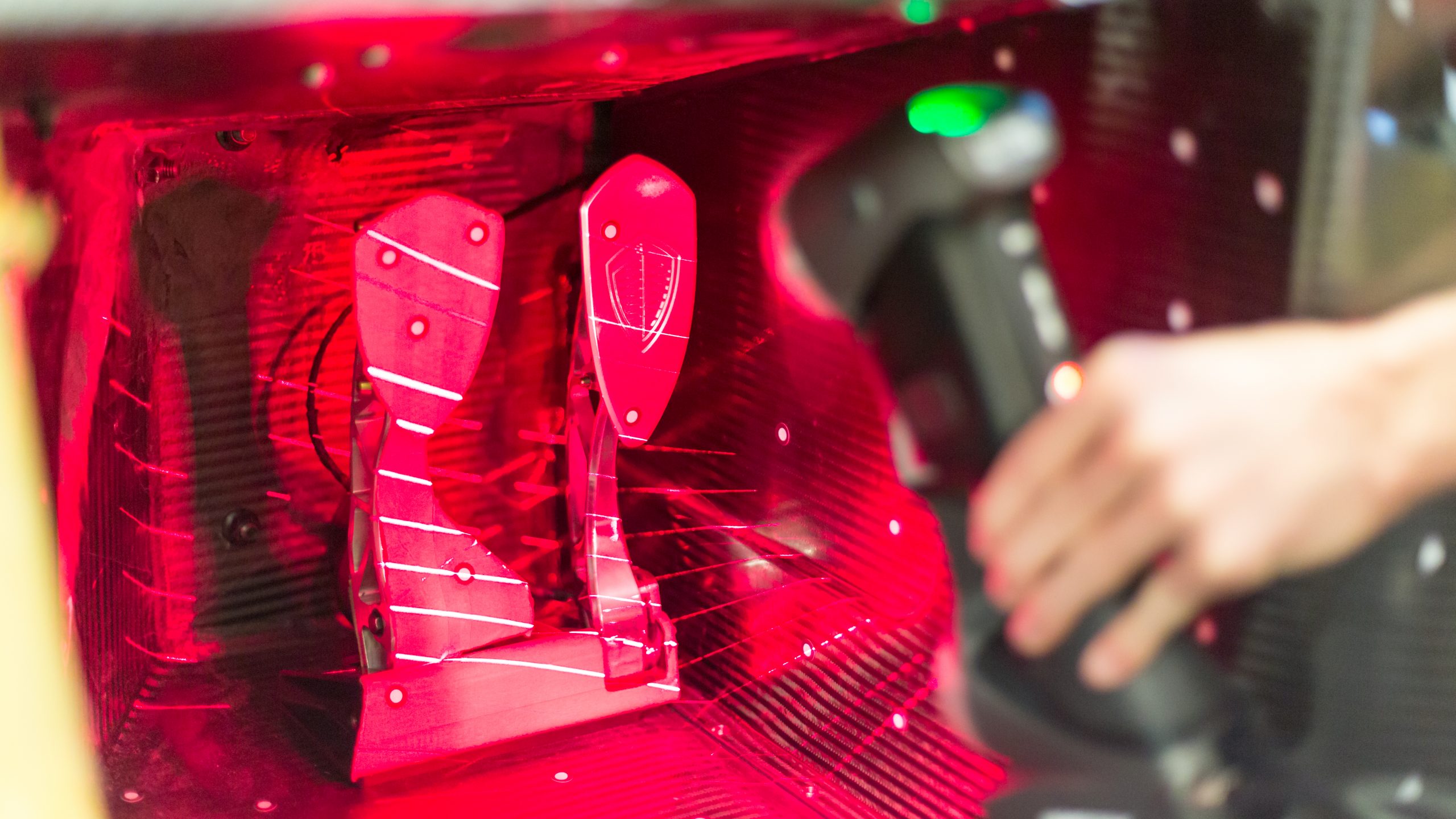
HandySCAN 3D metrology-grade scanners can capture up to 480,000 measurements/s with an accuracy of up to 0.030 mm.

The handheld HandySCAN 3D laser scanners provide breakthrough accuracy and resolution as well as significantly high measurement rates—all in a single, portable device. They can be used in all phases of the product life cycle: from conception, through design, manufacturing up to documentation, maintenance and repair purposes.

Free of any rigid measurement setup, HandyPROBE offers unmatched flexibility and a wider measurement volume than other portable CMMs.

The HandyPROBE portable CMM arm-free measurement system is the alternative to traditional measurement arms. The HandyPROBE is a wireless, triangulation–based CMM that offers complete freedom of movement and can be used for single or repeated measurements of various parts. The CMM is tracked by C-Track optical tracker. C-Track sensors also ensure the exact position of the HandyPROBE, perform continuous image acquisition and transmission, provide lighting of reflectors, manage exchanges with the computer, and store sensor parameters.

Both systems benefit from the integrated TRUaccuracy technology, which ensures highly accurate measurements when operating under real working conditions—regardless of vibrations, instabilities or thermal differences in the work environment.

How Creaform technologies intervene

The HandySCAN 3D scanner and the portable CMM HandyPROBE are now primarily used at the Swedish company for automotive quality control, measuring assemblies and components, and validating them to CAD as well as for root cause problem solving, reverse engineering and jig calibration. For jig calibration, Koenigsegg uses, for example, the probing system HandyPROBE to accurately adjust the nominal hard points. Then, users scan with the HandySCAN 3D scanner the parts once they are held by the jig as a validation process against the CAD data. This allows the company to trim the jig if a nominal offset should be required.

Free of any rigid measurement set up, HandyPROBE offers unmatched flexibility and a wider measurement volume than other portable CMMs

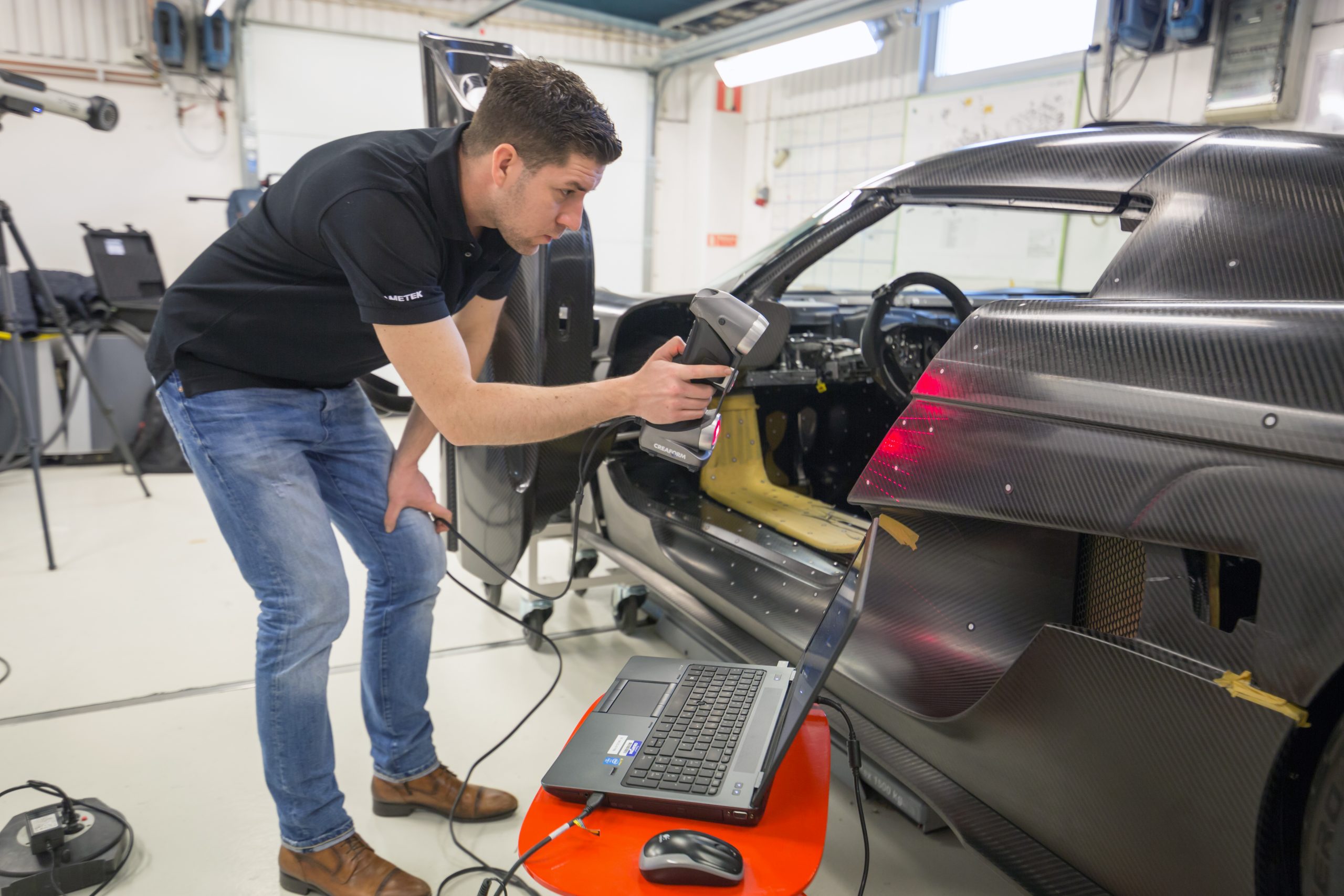
For quality control or engineering projects, HandySCAN 3D enables users to reduce turnaround times and increase profitability. Shown above scanning the body of a Koenigsegg Regera.

Jon Gunner is happy with the in the Creaform systems: “Already six months after the purchase, I estimated that we were halfway to gaining a return on our investment based on third-party rental fees and improvements to production quality. Creaform’s solutions are highly accurate, easy to use and ideal for a production line environment. Having the system ready at hand gives us the flexibility and response time we need to quickly investigate measurement and quality issues as they arise.”

With NX, ÀNIMA delivers a new level of innovation, including a visually striking electric motorcycle

Product: NX CAD
IndustrY: Automotive and Transportation

We needed a cost-effective solution that suited our technical needs and worked for both Windows and Mac OS X. We were also looking for a solution that would allow us to grow by extending our potential with Teamcenter in order to monitor and manage projects in all their phases. We found these characteristics in NX.

Joan Sabata, Partner and Director

“Helping companies to innovate through design”

ÀNIMA Barcelona (ÀNIMA) is an industrial design firm founded in 2002 by Diego Quiroga and Joan Sabata. From the beginning, ÀNIMA has combined creative talent with entrepreneurial energy to help customers improve product design and new product development. The mission and values of ÀNIMA are summed up in its motto: “Helping companies to innovate through design.”

Today, ÀNIMA comprises a multidisciplinary staff of industrial designers, engineers and experts in marketing and innovation who work with a large network of international experts. This allows ÀNIMA to provide its services to companies from a wide range of industries, including automotive, sustainable mobility, machinery, industrial and personal equipment, electronics, medical products, bathroom fittings, lighting and furniture.“Helping companies to innovate through design”

The search for a high-performance CAD system

The designers at ÀNIMA were highly-experienced at modeling solid objects in three dimensions. However, they began encountering more and more projects that demanded increasing use of advanced surfaces. In addition, the company wanted to expand its client portfolio into industries in which a high-performance computer-aided design (CAD) system was crucial, enabling it to develop more complex designs. ÀNIMA concluded that its current CAD system was inadequate, and the search began for a replacement.

To begin its search, ÀNIMA consulted engineering and product lifecycle management (PLM) specialist, Análisis y Simulación (AyS), a partner of Siemens Digital Industries Software. ÀNIMA explained its needs and long term plans. AyS studied the situation carefully, taking into account both the company’s design process as well as the specific requirements of each of its departments. The selection phase included the evaluation of specific tools for advanced surface design and solid modeling in 3D. Some candidate systems were discarded because they did not support the Mac OS® operating system software from Apple.

During the selection process, ÀNIMA soon realized that a comprehensive tool was the most economical option, because it meant buying only once and maintaining a single system. The company also wanted a CAD system that avoided the problems of compatibility between different brands of software, so as to eliminate wasting time translating file geometry.

After attending several meetings and software demonstrations, ÀNIMA chose NX™ software from Siemens Digital Industries Software. ÀNIMA considered NX to be a comprehensive product development tool, calculating that its use could save the company up to 50 percent of its planned investment in the software. ÀNIMA also valued the tight integration of NX with the digital lifecycle management system, Teamcenter® software, also from Siemens Digital Industries Software. ÀNIMA plans to implement Teamcenter in the near future to improve process control and efficiency.

“We needed a cost-effective solution that suited our technical needs and worked for both Windows and Mac OS X,” says Joan Sabata, ÀNIMA partner and owner. “We were also looking for a solution that would allow us to grow by extending our potential with Teamcenter in order to monitor and manage projects in all their phases. We found these characteristics in NX.”The search for a high-performance CAD system

NX proves effective from the start

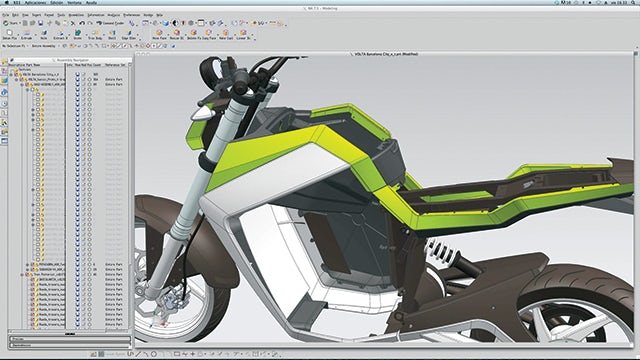
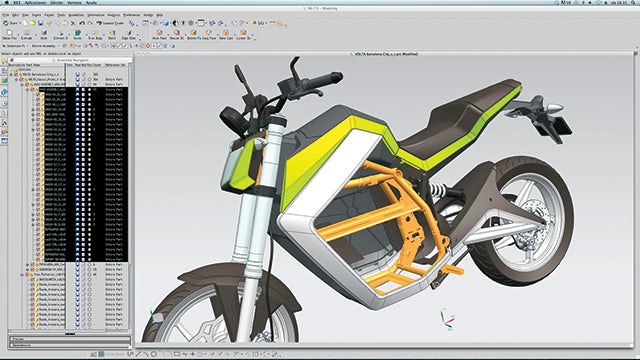
The first project developed entirely with NX was the design of the Volta® BCN electric motorcycle, which was aimed at promoting sustainable mobility in urban environments. ÀNIMA designers used NX for the entire process, from initial sketches to full development.

According to ÀNIMA management, the use of NX resulted in significant improvements in design creativity and design process efficiency. Management notes that the time needed to complete the whole design process – until the manufacture of the first prototype – has decreased by 65 percent.

“Now we know that we can tackle ambitious projects, because NX meets our high level of demand,” says Sabata. She adds, “Having Análisis y Simulación as a technology partner gives us special confidence, because of the organization’s subject-matter expertise and highly professional advice.”

With NX fully implemented, the creative team at ÀNIMA is busy developing projects for both local and international markets. Among projects, ÀNIMA is currently working on new designs for the automotive industry that will soon come to light. In fact, the design team is quite excited about the excellent impression its work will make in this market space, but moreover, the team is eager to demonstrate the value the designs will bring to its customers.NX proves effective from the startNX proves effective from the start

Enhancing data accuracy to reduce time spent on digital model queries by 50 percent

Product: Teamcenter
Industry: Automotive and Transportation

Overcoming an inefficient system

Based in Liuzhou, China, Dongfeng Liuzhou Motor Co., Ltd. (Dongfeng Liuzhou) is one of Dongfeng Motor Group’s production bases, producing a wide range of commercial vehicles, including tractors, dump trucks, electric logistics vehicles and passenger cars as well as sport utility vehicles (SUVs), sedans and electric vehicles. Dongfeng Liuzhou is also the primary research and development (R&D) center for the group. The company caters to domestic and overseas markets, including the Americas, the Middle East and Africa. Founded in 1954, Dongfeng Liuzhou has more than 5,700 employees.

The company’s existing digital models could only be used to produce 2D computer-aided design (CAD) drawings and were not systematically managed. The Dongfeng Liuzhou design departments needed to collaborate more closely due to the increase in the types of designs required, such as hybrid and electric vehicle technology, but this was not possible with their existing software.

More advanced vehicle models, which required increasing amounts of data, soon exposed problems caused by ineffective data use and management, including the lack of full model configuration management and fully configured bills-of-material (BOM). This resulted in a growing number of single vehicle BOMs, creating a system that was time-consuming and costly.

To meet this challenge, Dongfeng Liuzhou implemented Teamcenter® software, which is part of the Siemens Xcelerator portfolio, the comprehensive and integrated portfolio of software, hardware and services. This helped enable Dongfeng Liuzhou to improve its R&D management and structural process management, resulting in significantly increased efficiency and accuracy.

Outdated data management creates long project cycles

Dongfeng Liuzhou’s production was plagued by inefficiencies and problems with model accuracy. The company’s existing data management tool could not meet their design needs; it was neither fast enough nor able to handle the depth of detail increasingly required for Dongfeng Liuzhou’s vehicle designs.

Dongfeng Liuzhou’s design teams were finding it impossible to use their existing tool design management (TDM) to collaborate in real time across disciplines and design processes. They found that collaboration was only possible on finished designs, a factor which significantly slowed the production process.

With each part of CAD and BOM data management being handled in separate processes, the design requirements had to be dealt with consecutively, which also affected accuracy as they passed from one team to another.

Although Dongfeng Liuzhou’s modeling engineers were able to manage digital models, they could only process partial inspections at any one time on their personal computers, which meant the team could not inspect the entire design as a single entity. Often, the entire vehicle model was too large for the company’s outdated software to handle. The modeling engineers were unable to inspect systems and subsystems simultaneously, resulting in a significant increase in project cycle length and cost issues that only came to light at the production stage.

As departments were not able to collaborate during the design process, colleagues had to rely on spreadsheets to share information and track progress, which increased the risk of human error while hindering attempts to make meaningful improvements to the management system.

Expert partner implements tailored solutions

Dongfeng Liuzhou approached Shanghai Real Information Technology Co., Ltd (Shanghai Real Information Technology) as they had a strong track record in vehicle R&D and product lifecycle management (PLM) for more than 15 years. Shanghai Real Information Technology suggested that Dongfeng Liuzhou use Teamcenter to facilitate the sharing of large amounts of data between departments.

Shanghai Real Information Technology is a Siemens Digital Industries Software Expert Partner in Simcenter® software testing solutions, which, like Teamcenter, is part of the Siemens Xcelerator portfolio, the comprehensive and integrated portfolio of software, hardware and services. Siemens recognizes partners that demonstrate expertise and competency in one of its solutions. These partners are validated by customers and Siemens for demonstrating their superior business and technical acumen.

Shanghai Real Information Technology used the Siemens value delivery methodology (VDM) implementation by standardizing the process. Together with Dongfeng Liuzhou, Shanghai Real Information Technology created a joint project team to transfer the system operation, maintenance and support capabilities during the implementation process and ensure that after the project went live, Dongfeng Liuzhou’s engineers could manage the system, its basic operation and maintenance on their own.

Working closely with Shanghai Real Information Technology, Dongfeng Liuzhou was able to build systems and basic database information. This included the master data of materials, 3D digital models, 2D drawings, BOMs, documents, change data, etc. The basic data was stored in Teamcenter as a structured library to achieve an effective data sharing and permission allocation, while also improving the design re-use rate.

Teamcenter enables real-time management of model data

Shanghai Real Information Technology reorganized Dongfeng Liuzhou’s product data structures to better manage their R&D data. There were two parts to this process: sorting historical product data and building fully configured BOMs.

Implementing Teamcenter enabled Dongfeng Liuzhou to better manage parts, 3D design collaboration, the drawing and document library, standard parts classification and fully configured BOMs as well as process, authority, organization and change management and office integration.

Shanghai Real Information Technology was able to standardize Dongfeng Liuzhou’s existing historical data by using Teamcenter for guided management and applications, as well as to conduct real-time management and verification of their existing R&D vehicle model data.

Accurate digital model data and precise product data structures now provide accurate, real-time data support across all production and manufacturing departments.

Shanghai Real Information Technology and Dongfeng Liuzhou divided the project implementation into system function construction and business application operation and maintenance. The function construction took nine months, and the operation and maintenance is ongoing.

Realizing impressive results with Teamcenter

Dongfeng Liuzhou uses Teamcenter for R&D management and structural process management across their commercial vehicle and passenger vehicle divisions.

Using Teamcenter enabled Dongfeng Liuzhou to cut the labor cost of modeling engineers by 30 percent, 50 percent of which was spent on model queries, and reduce the time spent on report outputs by 90 percent. At the same time, data accuracy increased by 95 percent.

“By using Teamcenter we have removed the existing data inconsistencies and helped us reduce product delivery delays,” said Chen Lai, project lead at Dongfeng Liuzhou.

By using digital prototypes, Dongfeng Liuzhou is able to detect design and manufacturing issues much earlier in these respective processes, which reduces the design and manufacturing rectification tasks, thereby shortening the product development project cycles.

“Using Teamcenter has enabled us to greatly shorten the vehicle development cycles and improve the product development quality,” says Luo Li, PLM division lead at Shanghai Real Information Technology.

As Shanghai Real Information Technology was able to customize the software to the customer’s needs it has built a commercial vehicle-based made-to-order (MTO) design mode based, on the business model of Dongfeng Liuzhou’s Commercial Vehicle Division. The partner also helped Dongfeng Liuzhou to build a fully configured vehicle BOM management system.

Further, Dongfeng Liuzhou also constructed a standard component library and diagram document knowledge base to improve the design re-use rate. It also enhanced sustainability/green initiatives by gradually decreasing offline processes and design data transfers, improving paperless office capabilities and achieving a sustainable environment for enterprise development.

“This project has enabled us to realize the digital R&D business management, laying a good foundation for our manufacturing digitalization in the future,” says Lai. “We have benchmarked with digitally advanced automotive companies in China and achieved rapid implementations, shortening the gap with the industrial benchmark and developing our R&D business.”

Cummins Uses Geomagic Software and Metal 3D Printing to Get 1952 Race Car Running Again 50% Faster

Product: Geomagic Control X
Industry: Automotive and Transportation

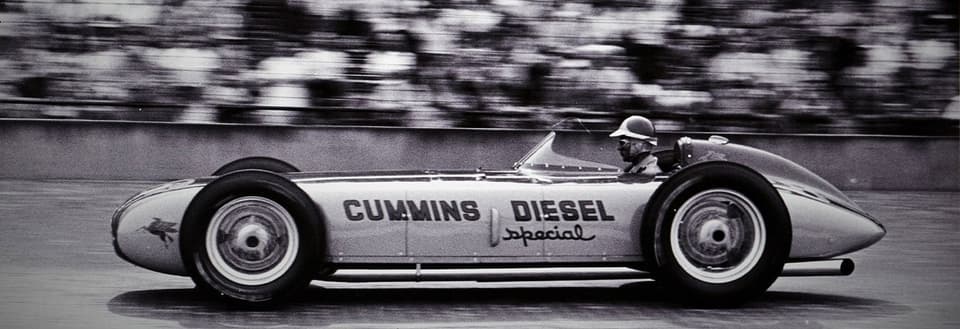
The #28 Cummins Diesel Special shocked the racing world in 1952 when it captured the pole position at the Indianapolis 500 (Indy 500) with the fastest lap time in history. This feat, along with the car’s many other innovations, won it a prominent place in racing history.

Sixty five years later, #28 was invited to the Goodwood Festival of Speed in the United Kingdom to participate in the legendary Goodwood Hillclimb along with hundreds of modern and heritage cars. While preparing #28, the Cummins engineers discovered that the water pump was so corroded it would probably not survive the event. If the #28 car was to make it to Goodwood in working order, it needed a new water pump.

The original water pump was a unique design specific to the #28 car, which meant no spare production parts would fit the bill. To complicate matters further, they had to ship #28 within a matter of weeks, which ruled out traditional sand-casting methods as infeasible for a replacement part given an estimated lead time of 10 weeks. Instead, Cummins engineers turned to reverse engineering and metal additive manufacturing (AM) using a ProX DMP 320 metal 3D printer by 3D Systems with help from 3rd Dimension Industrial 3D Printing, a high-quality production metal manufacturer specializing in 3D direct metal printing (DMP). The new water pump was 3D printed in only three days and the entire process took five weeks instead of 10.

#28 Cummins Diesel Special at the 1952 Indy 500

#28 Cummins Diesel Special at the 1952 Indy 500

A Page Out of Racing History

#28 was the first Indy 500 car equipped with a turbocharger and the first whose aerodynamics were optimized in a wind tunnel. It ran its four qualifying laps at a record-breaking average speed of 138.010 mph.

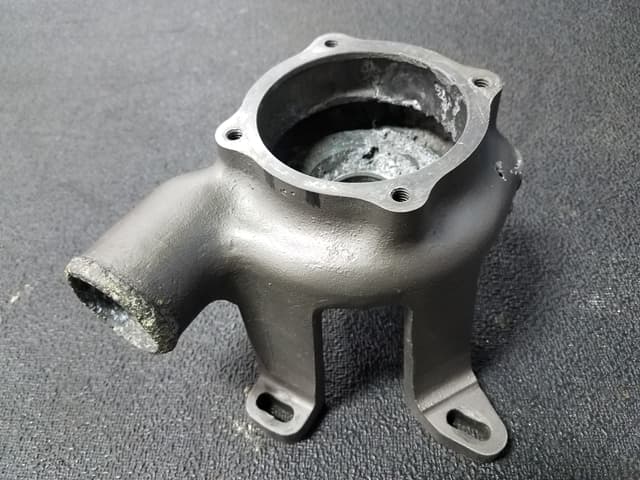
Original water pump showing severe pitting and corrosion

Original water pump showing severe pitting and corrosion

Since its momentous run in 1952, #28 has been displayed at the Indianapolis Motor Speedway Museum and the Cummins corporate office building. In 1969, #28 ran a lap around the Indy track prior to the start of the race to mark the Cummins 50th anniversary celebration. The last time #28 ran was at the Goodwood Festival of Speed in the late 1990s.

“As we prepared the car to run again for the first time in almost 20 years, we noticed severe pitting and corrosion on the water pump,” said Greg Haines, design and development leader for the X15 engine and member of the Cummins history and restoration team. “In a few places, the housing was pitted all the way through and was only kept from leaking by mineral deposits that covered the holes. We needed a new housing quickly if we were to meet our commitment to run the car at Goodwood.”

Racing to Produce a New Water Pump

The baseline method for building a new pump housing is the same method that it used to build the original pump: machining a plastic or wood pattern and using it to form a sand mold for casting. Using this method, it would have taken about 10 weeks to build a single housing, ruling out a run at Goodwood. The lead time for the new water pump housing could have been reduced by 3D printing the new casting pattern or even 3D printing the sand casting mold itself, but the greatest productivity gains available came from bypassing the casting process altogether and using reverse engineering and 3D printing to produce the final part directly in only five weeks—50 percent faster.

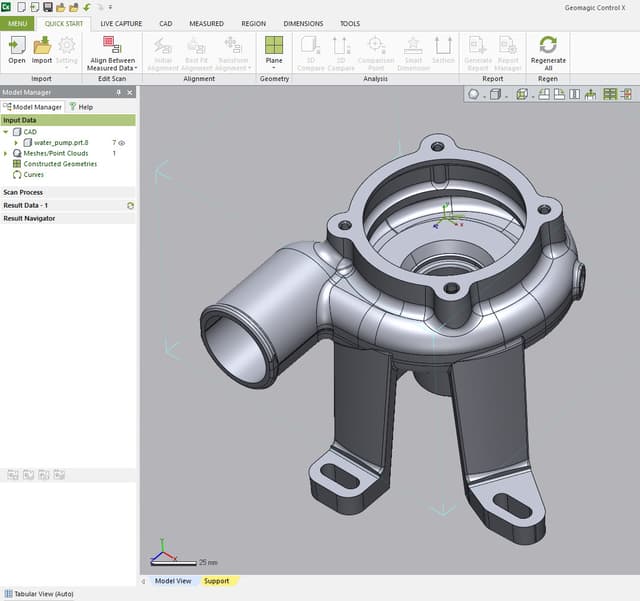
Inspecting water pump in Geomagic Control X

Inspecting water pump in Geomagic Control X

Scanning

Cummins engineers began by scanning the existing water pump housing with a CT scanner. They selected a CT scanner because the pump contained many undercuts and other internal geometries that would have been impossible to capture with a laser scanner or other line-of-sight imaging tool.

Inspecting

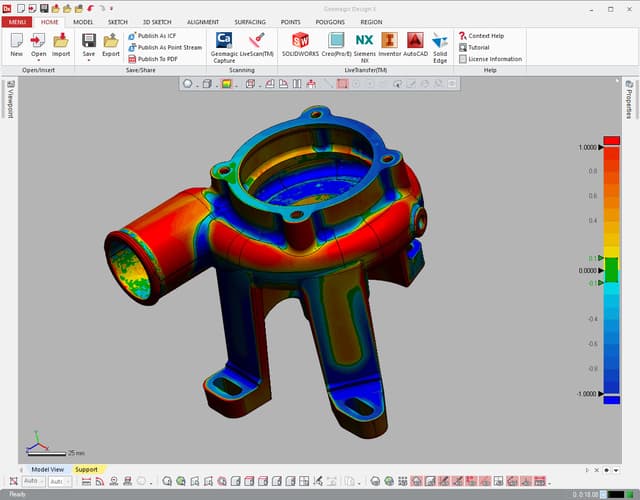
To verify that the scan data was accurate before moving forward, the engineers imported the point cloud data generated by the CT scanner into Geomagic Control X inspection and metrology software where they separated and aligned the internal and external geometry of the pump.

“For a project like this, we typically separate out the internal volute geometry from the body so we can model it as a core and do a comparison back to the point cloud data to be sure all our work is accurate,” said Chris George, master CAD model team leader for advanced system design for Cummins.

Comparing water pump CAD model to scan data in Geomagic Design X

Comparing water pump CAD model to scan data in Geomagic Design X

Reverse Engineering

With good scan geometry to jump-start its design work, Cummins used Geomagic Design X reverse engineering software to convert the point cloud to a nonparametric solid model to perform CAD fit checks. These checks helped the Cummins team determine the right assembly dimensions for the impeller and shaft and how everything would ultimately fit and seal together.

According to George, Cummins uses Geomagic Control X and Geomagic Design X as its primary software for point cloud manipulation. “The 3D Systems Geomagic software provides a complete solution for processing and inspecting scan data and converting it to a solid model,” he says. “We use them for every reverse engineering project we do, which often requires geometric reconciliations, finite element analyses of structure and flow, and model-to-scan comparisons reported to our engineering customers.”

“The 3D Systems Geomagic software provides a complete solution for processing and inspecting scan data and converting it to a solid model. We use them for every reverse engineering project we do.”

—Chris George, Master CAD Model Team Leader for Advanced System Design, Cummins

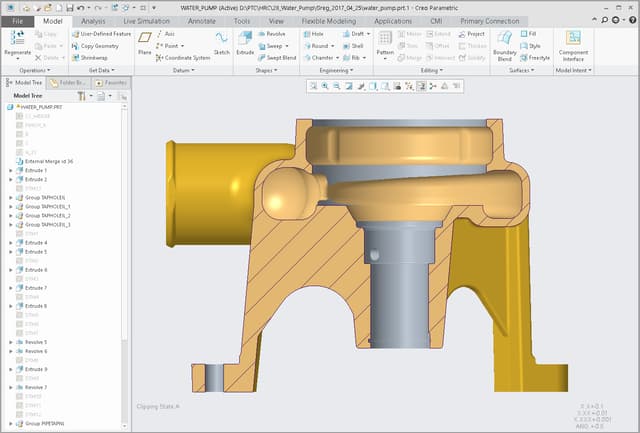
Designing new water pump in Creo

Designing new water pump in Creo

Designing

Due to the significant corrosion of the original part, Cummins could not use the model created from the scanned data as the basis for 3D printing. Instead, Cummins engineers imported the nonparametric model into PTC Creo® 3D CAD software to act as a template for creating a parametric model. In light of the physical damage to the scanned pump, the Cummins team had to make informed decisions as they 3D modeled the replacement to achieve a functional final model.

3D Printing

They then sent this file to the team at 3rd Dimension, who cleaned it up, analyzed it for optimal print orientation, and assigned supports for stable printing. 3rd Dimension engineers further sliced and hatched the part to define the movement of the laser during the build.

Although the original water pump housing had been made of magnesium to help reduce weight, magnesium’s susceptibility to corrosion following extended water and coolant exposure was a large factor in the problem Cummins was trying to solve. Therefore, 3rd Dimension manufactured the final 3D-printed part using LaserForm 316-L stainless steel material on a ProX DMP 320 metal 3D printer.

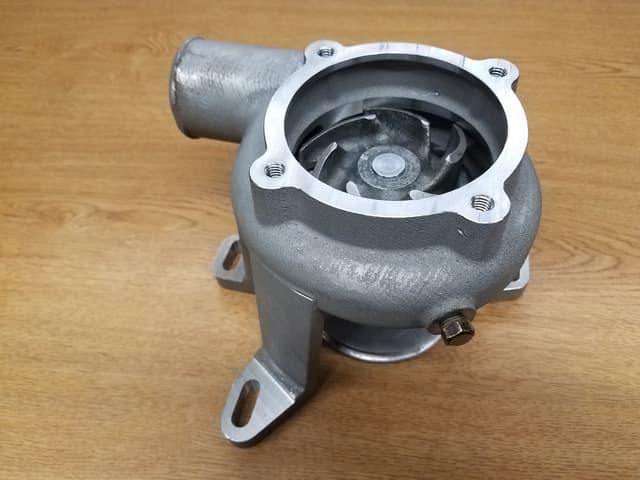
New 3D-printed water pump with impeller assembly

New 3D-printed water pump with impeller assembly

“The larger build volume of the ProX DMP 320 enabled us to have some additional options with part orientation, which helped us optimize supports, and the print speed allowed us to get the print done in the time we had,” said Bob Markley, president of 3rd Dimension. “The ProX DMP 320 also does not use a binder to join the material, which means the output is a pure alloy that performs like real metal—because it is real metal. This is a benefit to final part performance given the operational environment.”

Only three days after receiving the 3D file of the water pump geometry, 3rd Dimension sent Cummins the completed pump housing.

Making Racing History Again

The housing mated perfectly with the other pump components and provided like-new performance for over six Goodwood Hillclimb runs. Just as it had at Indy, #28 thrilled the fans at Goodwood and was featured in “The 10 Best Things We Saw at the 2017 Goodwood Festival of Speed” by Car and Driver magazine.

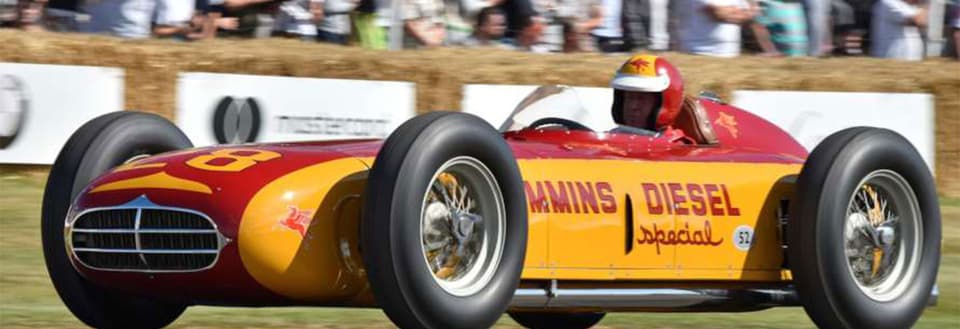
#28 Cummins Diesel Special at the 2017 Goodwood Festival of Speed

In addition, as it did for the Cummins 50th anniversary in 1969, the #28 had a featured role in celebrating the Cummins 100th anniversary by running a parade lap around the track prior to the start of the 2019 Indy 500 race.

×