Zanini Renk, a renowned player in the manufacturing industry, has embarked on a transformative journey towards Industry 4.0 with the help of Siemens solutions. By leveraging their integrated software, Opcenter Execution Discrete and Opcenter Advanced Planning and Scheduling (APS), Zanini Renkhas revolutionized their operations and achieved remarkable improvements in efficiency, visibility, and customer satisfaction.
Enhancing Efficiency and Visibility
Prior to implementing Siemens solutions, Zanini Renk faced significant challenges in their factory operations. A lack of visibility and accuracy in scheduling resulted in daily firefighting and missed deadlines. However, with Opcenter Execution Discrete, the company gained a real-time view of their shop floor, allowing them to track and document the transformation of raw materials into finished goods with precision and transparency. Opcenter APS further facilitated detailed production scheduling, enabling Zanini Renk to optimize their manufacturing process and allocate resources effectively.
Transforming Operations with Industry 4.0
The implementation of Siemens solutions enabled them to determine their Overall Equipment Effectiveness (OEE). Within two years, their OEE increased from 45% to an impressive 71%, showcasing significant improvements in productivity and efficiency. The production data collection software, Opcenter Execution, provided Zanini Renk with precise measurement of data for each part, ensuring quality control and informed decision-making.
Gaining Holistic Visibility and Cultural Shift
With the aid of Opcenter APS, Zanini Renk experienced a cultural shift within their organization. Their team embraced the new system, reaping the benefits of increased visibility, credibility, and accuracy in delivery timelines. The software offered a holistic view of operations, enabling the company to overcome local limitations and make data-driven decisions on a global scale.
Next Steps Forward
Integrating Engineering with Manufacturing: Zanini Renk recognizes that true integration between engineering and the factory is the next clear step in their Industry 4.0 journey. To achieve this, they plan to introduce engineering software, such as Product Lifecycle Management (PLM), that seamlessly integrates with their production software. By creating a greater integration between engineering and the factory, Zanini Renk aims to enhance collaboration, optimize processes, and further improve efficiency. They believe that this integration will unlock new possibilities and drive their competitiveness to new heights.
Leveraging Data Analytics: In the era of Industry 4.0, data analytics plays a crucial role in driving improvement and increasing competitiveness. Zanini Renk recognizes the importance of leveraging the vast amount of data they generate and utilizing it effectively to fuel continuous improvement. By harnessing the power of data analytics, they aim to gain valuable insights that will enable them to make data-driven decisions, optimize their processes, and identify opportunities for further enhancement. Zanini Renk firmly believes that by embracing data analytics, they will propel their organization forward and continue to thrive in the dynamic landscape of Industry,
With the purpose of providing students with the necessary tools to develop their technological skills, the German company Siemens donated 200 software licenses to four higher education institutions in Chihuahua.
Each license, valued at more than one million pesos, was donated by Siemens and will be distributed among Conalep, ITCH, ITCH II, UTCH and UTCH Sur, benefiting more than 3,000 students. The symbolic delivery of these licenses was presided over by José Jesús Jordan Orozco, Director of Economic Development and Competitiveness, who highlighted the importance of this collaboration between the State Government, the Municipal Government and the educational institutions, considering it a significant step in the modernization of education. He also mentioned that the donated software, which is part of the 4.0 hardware automation technology, will be used in universities for students to learn how to integrate technology with physical reality, which will improve their skills and facilitate their labor insertion after graduation.
“We are convinced that these licenses will have a great impact on students and that, once they graduate, they will find employment more easily thanks to what they have learned,” said Jordán.
For his part, Jaime Luciano Fernández Chávez, Director of Linkage of the Secretariat of Innovation and Economic Development, noted that the delivery of these licenses will open new job opportunities for young people. He added that the Secretariat is working on strategies so that students not only develop their skills, but also decide to stay in Chihuahua, contributing to turn the city into a technological center.
Leveraging the Siemens Xcelerator business platform, the Smart Factory Research Center became a key development for improving the university’s training quality.
Dr. Tran Duc Quy, Rector Hanoi University of Industry
Keeping up with engineering education standards
Established in 1898, Hanoi University of Industry (HaUI) was one of Vietnam’s first technical schools. With a focus on delivering a comprehensive education and supporting Vietnam’s national industrial revolution, the university envisions becoming an institution of applied scientific research and training since many of their students aim for a career in either engineering or manufacturing. This has led the university to continually improve and develop its academic offerings to keep up with industry standards.
HaUI gradually built a series of modern laboratories to provide students with comprehensive, real-world training. For this, the university investigated solutions within the Siemens Xcelerator business platform.
Solving outdated technology limitations
As engineering and manufacturing industries shift toward smart factories and digital software solutions, such as using a digital twin for product development, the university found that graduates needed extensive on-the-job training.
To prepare students for Industry 4.0, the university needed a digital overhaul. Thus, they examined a range of potential digital tools and chose to implement Siemens Digital Industries Software solutions.
The university enlisted Vietbay, a Siemens partner, to collaborate on updating its training laboratories, leveraging their consultation, installation, integration and training services.
Creating the Smart Factory Research Center
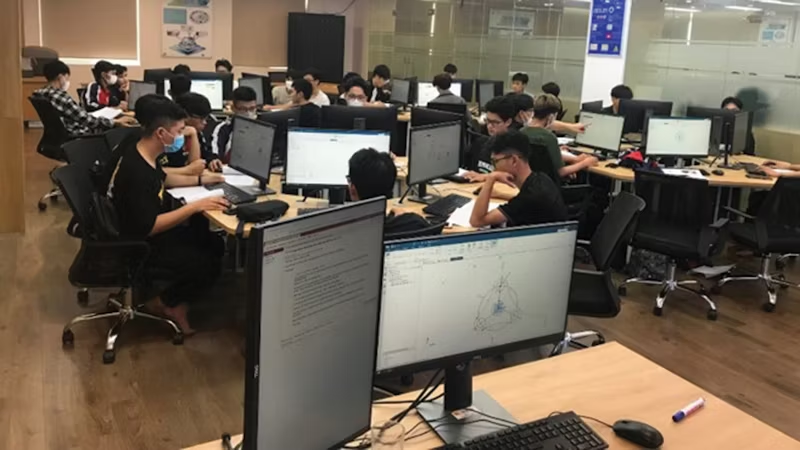
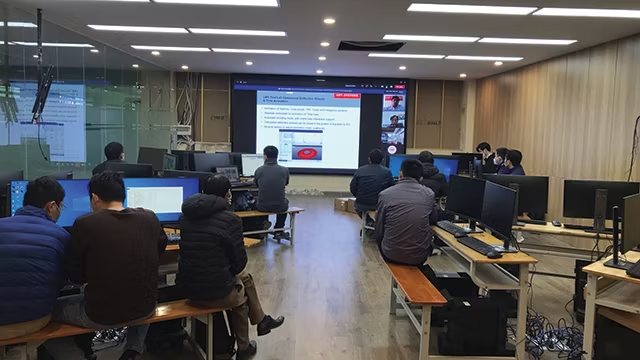
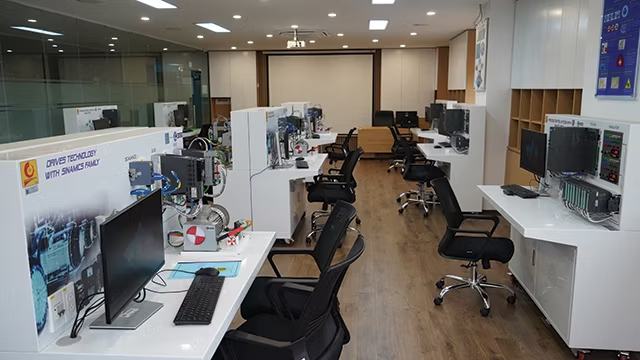
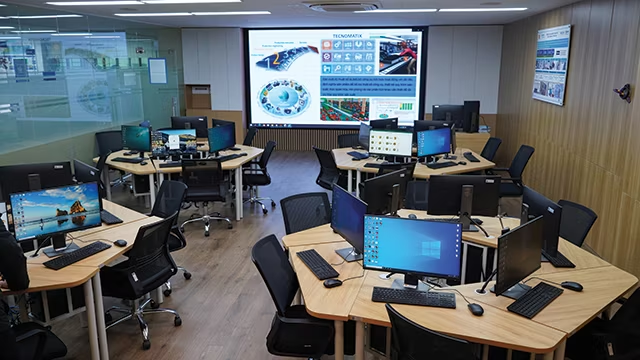
By collaborating with Vietbay, HaUI was able to create the Smart Factory Research Center, which includes five research and practice labs, all connected using the Teamcenter® portfolio. These labs allow students to gain experience in all areas of production before graduation, with each corresponding to a specific product development stage, including research and development (R&D), mold and die, digital manufacturing, basic automation and advanced automation.
One of the biggest challenges was integrating the university’s requirements, such as its 3-axis and 5-axis computer numerical control (CNC) machining centers, with advanced technology. However, leveraging the user-friendly design of Teamcenter and Vietbay’s expertise, they were able to fully onboard the university’s machinery to facilitate information sharing across all production stages.
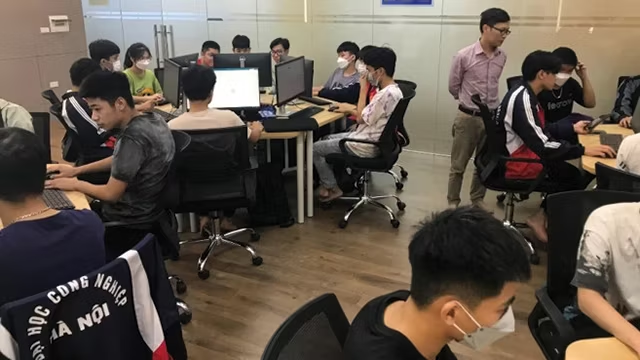
Vietbay also offered extensive training as part of its support package to the university. This included 40 courses delivered over 170 working days and introductions to tooling design in NX™ software, advanced planning and scheduling (APS) in Opcenter™ APS software, the internet of things (IoT) and low-code programming in the Mendix™ platform and application lifecycle management (ALM) in the Polarion™ portfolio. Teamcenter, NX, Opcenter, Mendix and Polarion are all part of the Siemens Xcelerator business platform of software, hardware and services.
Students and instructors participated in this training, paving the way for future course improvements.
“Leveraging the Siemens Xcelerator business platform, the Smart Factory Research Center became a key development for improving the university’s training quality,” says Dr. Tran Duc Quy, rector at Hanoi University of Industry. “Thanks to Siemens and Vietbay, we can provide thousands of lecturers and students the opportunity to practice using the latest technologies prevalent in Industry 4.0.”
“The Smart Factory Research Center, using the Siemens Xcelerator business platform, provides a powerful set of tools for teaching, researching and training engineering students,” says Hoang Tien Dung, head of the Faculty of Mechanical Engineering.
Digitalizing to improve student education
By collaborating, HaUI and Vietbay were able to revitalize the university’s hands-on training while eliminating the need to invest in new equipment. For example, using 3D computer-aided design (CAD) tools such as NX, students were able to practice using a digital twin without needing access to physical machinery. This shift toward virtual spaces resulted in budget savings of an estimated 15 percent since the university was able to reduce its outlay on electricity and miscellaneous upkeep.
With the Vietbay training courses, combined with increased accessibility to technology, the university expanded its educational offerings to over 200 courses, making use of the Smart Factory Research Center.
“Lecturers are now trained to use the Siemens Xcelerator business platform,” says Trinh Van Long, director of the Smart Factory Research Center at HaUI. “This means educators can access a treasure trove of the most advanced technology currently available for teaching students.”
By improving access to high-quality testing environments and tools, students can pick increasingly complex topics for their graduation theses and essays, reducing the need for post-graduation training. These improvements are also attracting new students, with student enrollment increasing year-over-year (YoY) by 10 percent since finalizing the Smart Factory Research Center.
Experts in intralogistics and warehousing operations
Intelligent Distributed Controls (IDC) was founded in 2003 to support customers with intralogistics and warehousing operations in the U.K. and Europe. The engineering, management and IT team at IDC have a broad range of skills including HV Control Panel Design, PLC Software Development, with C# .NET and Android supporting the WCS and WMS development. The team is also supported by project managers with an in-depth knowledge of intralogistics and warehousing and advises customers on automation and warehouse control and management systems (WMS).
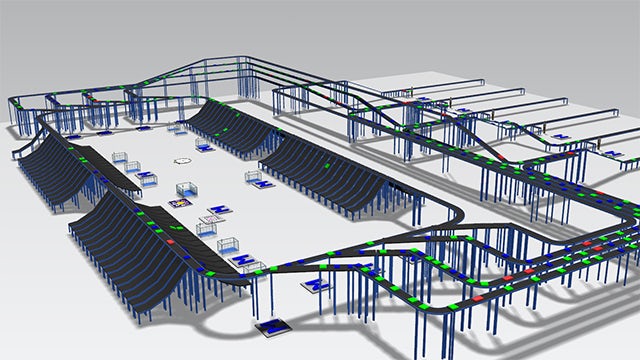
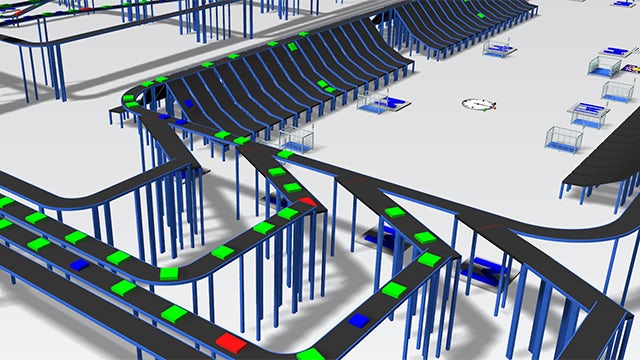
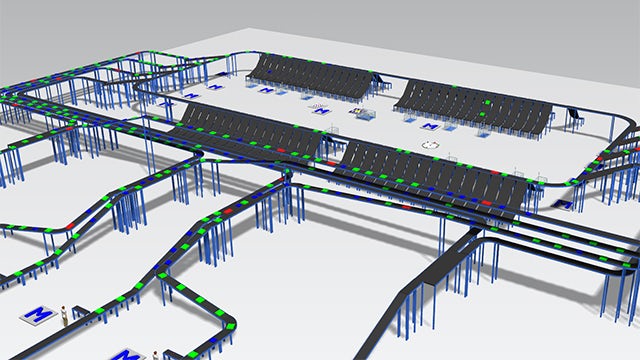
One of IDC’s customers, a retail distribution center serving major mail order and e-commerce businesses, had begun planning in spring for the upcoming Christmas seasonal peak. One of the key machines in the distribution center is a high-speed tilt-tray sortation machine that processes more than 6,000 items per hour. The customer wanted to update the machine’s systems due to unsupportable SCADA and controls systems, and asked IDC to complete the upgrade in a narrow two-month window during May and June.
Besides its short time frame, the project posed additional challenges for IDC. IDC wanted to explore how much work could be completed remotely, to reduce the time required for final commissioning checks at the customer site.
Partnership with Simsol
IDC decided to use a combination of virtual and on-site commissioning techniques to reduce lead time on the project, and for this purpose partnered with Simsol, a Siemens Digital Industries Software solution partner.
Simsol is focused on Siemens’ Tecnomatix® portfolio of digital manufacturing solutions, and has gained recognition as a Expert partner, providing specialized expertise in digital manufacturing technologies and production simulation. Simsol trained IDC on the Tecnomatix software and offered best-practice advice on how to use and construct its models throughout the project.
Leveraging the digital twin
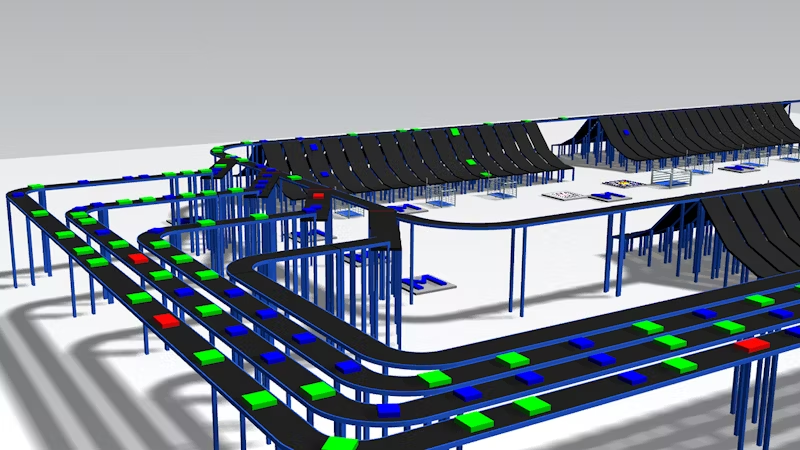
IDC used Plant Simulation in the Tecnomatix portfolio to build a comprehensive digital twin of the retail distribution center – a complete and accurate 3D model of the logistics systems and their processes, including control logic. The digital twin gives a strategic overview of the entire operation, rather than just a single cell or line. This gives more opportunity to focus on key areas identified for investigation and to continually improve across the whole production. IDC used the digital twin to explore and optimize the distribution center for performance, and to accurately simulate the tilt-tray sortation machine and more importantly the induction logic, which is critical to optimizing the throughput.
To make the most of the time available, the IDC team focused on the more complex areas of the machinery, investigating the dynamics and relationships among components and simulating mechanical changes to moving parts.
With the digital twin, the team was able to consider oversized (or “ugly”) items. Instead of building from the general throughput rate for standard items, the team generated virtual stock data in a range of item sizes that closely represented the packages to be processed by the distribution center. The dynamic data yielded a more realistic view of machinery performance. Performing this work remotely was crucial to meeting the customer’s deadlines.
“Without access to the actual sortation machinery, we had to use standard warehouse control system design models to construct code for testing,” says Richard Towne, Managing Director at IDC. “With the simulation model that IDC created, we could simulate almost all aspects and know that the code was validated against the system design, so we didn’t need major changes when we got on site.”
Tangible results
IDC realized tangible results from the use of digital twin plant simulation. The company was able to upgrade the controls and commission the tilt-tray sortation machine in just five weeks, well within the time frame proposed by the customer. With remote commissioning, IDC also minimized costly on-site time, reducing overall commissioning time by three weeks as compared to a similar upgrade project that required eight weeks using on-site commissioning only. The controls upgrades also increased the throughput of the sortation machine.
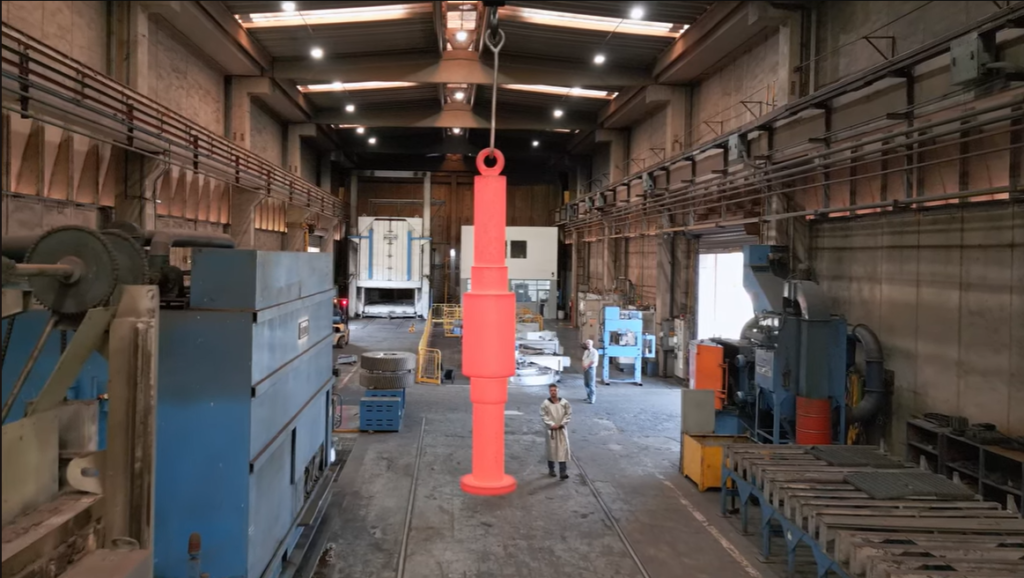
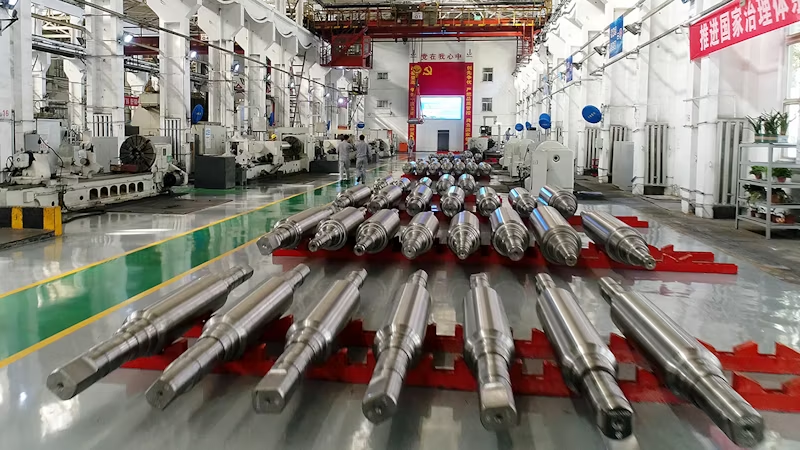
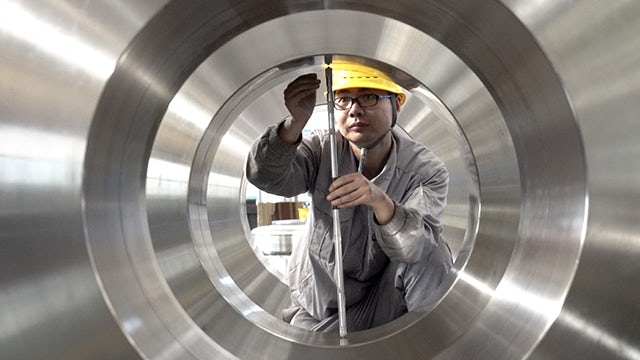
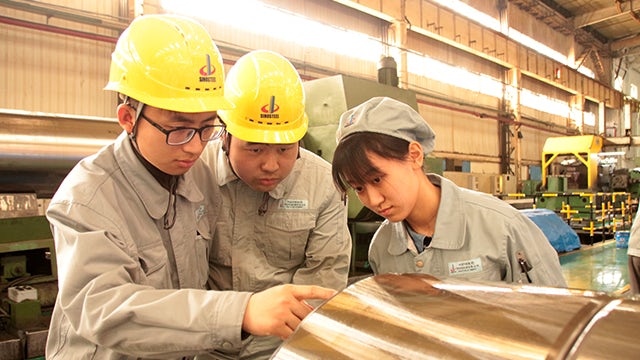
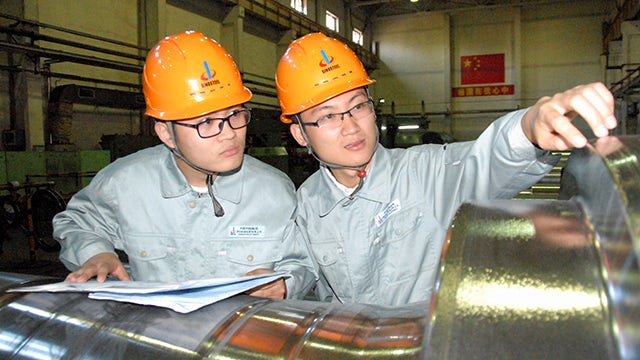
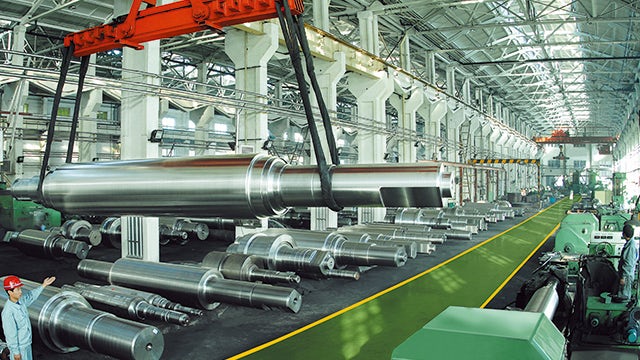
Sinosteel Xingtai Machinery and Mill Roll Co., Ltd. (Sinosteel Xingtai) is the world’s largest producer of mill rolls with an annual output of 180,000 tons and a global market share of more than 20 percent. Pursuing the China 2025 national industrial manufacturing strategy, the company began upgrading its plants in 2018. The company moved to the Xingtai economic development zone to build new plants, investing nearly 10 billion RMB. Xingtai Machinery and Mill Roll aims to become the world’s first intelligent digital roll production enterprise.
Implementing Tecnomatix digital manufacturing
In the earliest phase of new plant planning, the company adopted the Tecnomatix® portfolio of digital manufacturing solutions, part of the Siemens Xcelerator business platform of software, hardware and services. With the assistance of IPS, a Siemens Smart Partner consultancy, Xingtai Machinery and Mill Roll collected production and logistics data and imported a new plant blueprint into the Tecnomatix Plant Simulation 2D/3D simulation environment.
Tecnomatix Plant Simulation includes tools for simulating, exploring, and optimizing logistics systems and their processes. The plant models enable analysis of material flow, resource utilization, and logistics for all levels of manufacturing planning, well in advance of production execution. Using these tools, Xingtai Machinery and Mill Roll conducted the plant simulations, verified the layout and logistics, and optimized the total manufacturing plan.
An effective way to discover plan deficiencies after the static design phase
By simulating the production and logistics processes, the Xingtai Machinery and Mill Roll team effectively discovered several problems that are otherwise difficult to detect at the static design phase. For example, the simulation results revealed that the inventory of pig iron and steel scrap was negative when studying the cross-region material distribution. By checking the input data table, the team found that the daily demand for pig iron and steel scrap was greater than the planned capacity of the storage tanks.
In another example, the team used Plant Simulation to discover that a flat car did not return to the waiting position for the next batch of material according to the batching schedule. The flat car was still in the melting span, and the material on the flat car had not been consumed, so the next batch of material could not be distributed on time. The error in the logistics design was easily understood when the team compared the simulation data with the input data table. The problem was finally solved by adding a spare material plate. Simulation has helped to accurately identify and correct other problems, such as the interference of a moving crane with other cranes and equipment. The ability and efficiency of Plant Simulation to help discover problems introduced at the static planning phase is highly valued by the company.
A powerful platform for plan optimization
Using Plant Simulation, Xingtai Machinery and Mill Roll optimized the plant plan. For example, one of the optimization considerations for a steel sand box area was whether to add a flat car track. Plant Simulation helped the team to easily verify the option by running the simulation and comparing the results. The simulation determined that adding a flat car track would reduce the moving distance of the overhead traveling crane by 1,600 meters and reduce working time by 27 minutes per day. Similarly, in a cast crossing and other areas, the team proposed a series of optimization solutions that were quickly verified by the simulation. These optimizations helped eliminate logistics collisions and increase the efficiency and utilization rates of high-value equipment. By the end of the first phase of the plant simulation project, the team had found six important design deficiencies and proposed two important optimization solutions for layout and logistics.
“With the help of Tecnomatix solutions and IPS consultants, we have improved the plan of the new plant in a relatively short time at a limited cost,” says Wang Jingjun, director of information management at Sinosteel Xingtai Machinery and Mill Roll. “The project not only helped avoid several important design deficiencies, but also helped save 100 million RMB in equipment investment by optimizing the layout and logistics.”
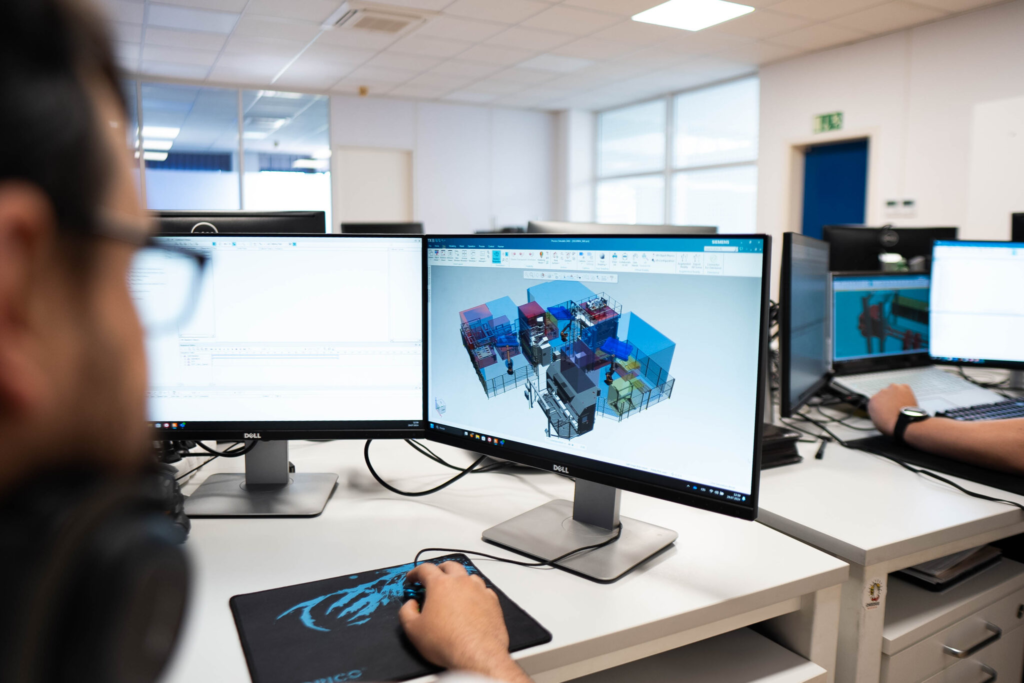
Hear from Ondřej Pažout, Benthor head of robotics and simulation, about how the leading automation machinery innovator uses Siemens Process Simulate software to help elevate robotic safety and efficiency. Benthor is a leading innovator in the manufacturing industry, specializing in the design and integration of advanced robotic systems.
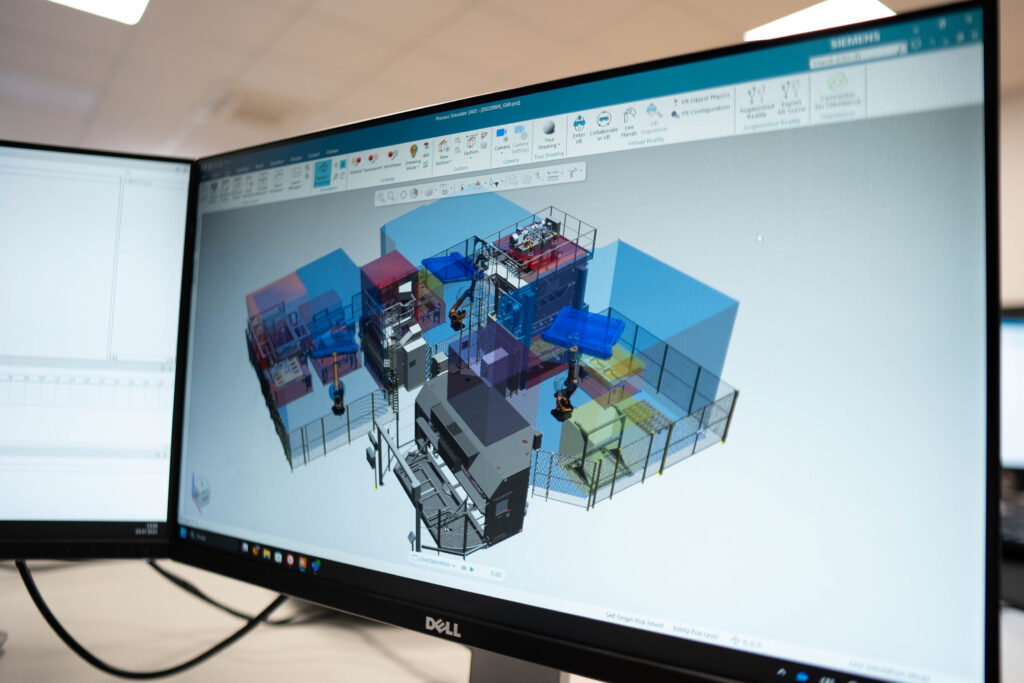
Benthor engineers can monitor the status of robots in a simulated environment where there is no risk of injury or hardware damage.
Automation solutions for machines and production facilities
Benthor Automation, based in Mladá Boleslav, Czech Republic, develops automation and information technology (IT) systems for industrial manufacturing. The company’s customers are primarily in the automotive industry and include domestic and foreign car makers. Benthor’s core competencies include automation solutions for machines and production facilities with superior control technology and material flow management, and it offers services throughout the process chain, including consulting, technical solutions, hardware planning, software development, system deployment and after-sales service.
At Benthor, we prioritize the safety of robotic systems, and thanks to our collaboration with safety experts, we are able to design cutting-edge manufacturing equipment with integrated safety elements from the very first concepts of the workstations. This way, we provide our customers with transparency — visualizing the future workstation while eliminating additional costs caused by misinterpretation or misunderstanding of functionality.”Ondřej Pažout, Head of robotics and simulation for Benthor automation s.r.o.
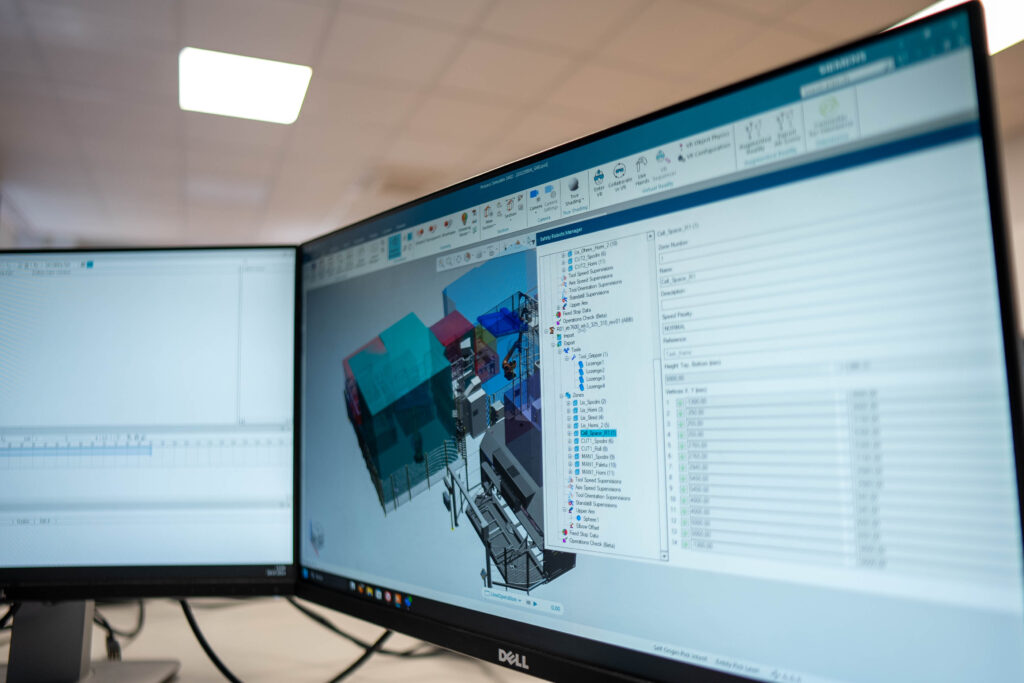
In the industrial automation space and as robotic systems become more prevalent in densely populated automated lines, functional safety remains crucial to prevent human injury and equipment damage. When planning a new robot station or lines, whether implementing changes for new products or layout adjustments, prioritizing robot safety is paramount. The intricacies of addressing robot safety in production systems started only as a discussion between Benthor and Siemens team, and now it has evolved into a strategic business priority for Benthor. That is when the leading automation machinery manufacturer realized the value of using Process Simulate Safety Robots Manager to address the safety of robotic workstations.
Meet the robot safety experts part of this collaboration:
Eddy Finaro Product Manager Siemens Digital Industries Software
Alex Greenberg Director of Advanced Robotics Simulation Siemens Digital Industries Software
Hear from Ondřej Pažout, Head of robotics and simulation for Benthor
Priority at Benthor
At Benthor, we fully recognize the crucial importance of safety in the integration of robotic systems. We design robotic workstations with the goal of minimizing risks for both operators and the equipment itself. Our integrations include not only physical barriers, but also sophisticated software tools for simulation and safety management. We address safety right from the start of the project by using simulations that consider all possible scenarios and potential safety incidents arising from risk analysis.
This approach allows us to eliminate potential risks even before the construction of the workstation begins. This helps us avoid costly adjustments to equipment or software during or after deployment. Thanks to our collaboration with the Siemens team responsible for Tecnomatix Process Simulate Safety Robots Manager, Benthor is able to implement advanced simulation technologies and methodologies that ensure detailed analysis and optimization of robotic workstations.
Solution: Process Simulate Safety Robots Manager
One of the key tools we use at Benthor is Process Simulate Safety Robots Manager (SRM). This application enables detailed management of robot safety functions and helps us simulate safety scenarios before physical implementation. With SRM, we can set up safety zones, define allowed movements, and monitor the status of robots in a simulated environment where there is no risk of injury or hardware damage. This allows us to quickly respond to any safety deviations and take appropriate measures during the design or virtual commissioning phase. This approach not only increases safety but also the efficiency, reliability, and profitability of automated systems.
Robot safety use cases
By utilizing solutions from the Tecnomatix Process Simulate portfolio, we have integrated more than 2,000 robots at Benthor, with nearly half of the installations using Safety Robots Manager to simulate safe robot behavior at the software level. Recently, we successfully implemented a robotic system project for the production of interior textile linings in the automotive industry. The core focus was the safety of operators when handling materials and preventing collisions with pressing tools. This resulted in more than 40 safety zones were successfully deployed and simulated across three robots. Thanks to simulation with SRM, Benthor was able to optimize robot movements and the production cycle without compromising safety standards.Ondřej Pažout, Head of robotics and simulation for Benthor automation s.r.o.
A robust partnership and the future of robot safety
The collaboration between Benthor and Siemens has proven invaluable in advancing the safety and effectiveness of our robotic workstations. By leveraging advanced simulation tools like Process Simulate Safety Robots Manager, Benthor continues to innovate and ensure that its systems meet the highest safety standards. Looking ahead, Siemens and Benthor are excited about future projects and the ongoing improvement of advancing safety protocols, which will further strengthen Benthor’s commitment to providing next-level solutions for its customers.
Connect Group NV (Connect Group) is a multinational electronics manufacturing services (EMS) contractor, providing printed circuit board (PCB) assembly and cable assembly services for various customers in the automotive, railway, healthcare, infrastructure, defense and avionics industries. The company is headquartered in Kampenhout, Belgium, and maintain production facilities in Belgium, the Netherlands, Germany, Romania and the Czech Republic.
Connect Group was established in 1987 and, in recent years, has acquired a series of European electronics manufacturers including IKOR, a company with locations in Spain, China and Mexico. Wouter Peene, operations manager for Connect Group, was faced with coordinating the activities of its new subsidiaries and reorganizing company-wide work practices.
“My goal was to standardize and unify manufacturing operations in all of our sites,” says Peene. “This wasn’t an easy task. We had machines from different vendors at each site. All of our engineering and testing departments were using different software and methodologies, including legacy solutions such as UNICAM 6.2 and Test-Expert 7.3. In addition, we used a lot of manual processes, such as offline board inspection, to discover incorrect component positioning and rotation.
“At first, we wanted to keep using some of our existing legacy software to leverage our knowledge and save time and money. But none of our existing solutions could support our entire operation. They lacked interfaces to many of our machines and couldn’t generate the documentation we needed.
“We needed an end-to-end solution that would serve all our production sites,” says Peene.
The Valor solution
Since Connect Group was already using Valor™ Process Preparation software in some of its factories, the company decided to expand its use of the software to access more of its engineering capabilities. Valor Process Preparation is part of the Siemens Xcelerator portfolio, the comprehensive and integrated portfolio of software, hardware and services.
“We were already using the vPlan function in Valor Process Preparation and realized we could benefit from additional functions,” says Peene. “For example, we used the Valor Process Preparation automated stencil tool across the organization. Getting the stencil right requires special expertise that wasn’t always available. Using the stencil tool helped us reduce soldering errors and the lead time required by the stencil-cutter service provider.
“Currently, we use the virtual sticky tape feature to verify component position and polarity before starting production. The comprehensive digital twin approach enables us to shorten the verification process and reduce downtime. Using Valor Process Preparation allows us to connect to all of our machines so we can implement it as a company-wide solution.”
Connect Group used Valor Process Preparation and the comprehensive Valor Parts Library software component database to accurately simulate each component’s shape. “Using Valor Parts Library helps us eliminate costly design errors before production starts,” says Peene.
In addition, Connect Group used Valor NPI software, Siemens’ on-premise design-for-manufacturing (DFM) platform. “We offer the Valor NPI DFM as a service to our customers,” says Bart Allaert, head of the company’s technology is a service group, “It is part of the shift left concept, encouraging the designer to be aware of manufacturing constraints.
“They use DFM to ensure their design is manufacturable, so we spend less time afterward tweaking the design for them. Then, we use Valor NPI to perform checks and generate an analysis of the PCB assembly and tests. Using Valor NPI helps us bring higher quality products to market, faster, as part of a First Time Right strategy” says Allaert.
Return-on-investment
Connect Group established an execution team with Siemens that provided training sessions to implement a solution for all production locations in a few months. The centralized solution enabled Connect Group to easily move production between sites whenever necessary.
Following implementation of the Siemens solution, Connect Group reported a return-on-investment (ROI) within six months based on increased company profits of approximately €400,000 per year thanks to improved manpower and reduced downtime on its production lines.
Connect Group has major profitability factors, including product engineering, flying probe testing (FBT) and project migration.
The product engineering solution helped engineers reduce manpower requirements by about two hours per project, multiplied by 2,500 projects per year, for a total of 5,000 hours.
Using Valor Process Preparation saved Connect Group engineers approximately two hours of FPT programming per project multiplied by 500 projects per year, for a total of 1,000 hours.
When transferring a project to a different site, the process took an average of eight hours. Using Valor Process Preparation, the task is now completed within minutes. Connect Group migrates an average of 75 projects per year, resulting in a savings of 600 hours.
As a result, Connect Group has reduced manpower requirements by 6,600 hours per year. In addition, each of the above factors contributed to a reduction in line downtime. These improvements helped the company improve profitability by €400,000 per year.
Additional features for the future
“To optimize our use of the Siemens solution, we’ve made requests for additional features that are scheduled for upcoming releases. Siemens fully understands our requirements and supports us in adapting the software to our needs,” says Peene.
Space exploration is one of engineering’s most demanding arenas. The unforgiving conditions and the necessity for precise, reliable technology present formidable challenges. Recently, on the Engineer Innovation podcast, Tom Stoumbos, Director of Engineering at Northrop Grumman, shared his insights on why space exploration is both difficult and exhilarating. He delved into the critical roles played by simulation, testing, AI, and data management.
From the home office in the cosmos, where the stars align and rockets soar, we have the top 10 quotes from Tom. Buckle up because we’re about to launch into some stellar insights.
10 “Operating in the virtual world is much easier than the prototypes in the real world with all the constraints about volume, space, mass that that takes. “
9 “Lunar exploration was a success of the ’60s. We worked hard together with a lot less resources to accomplish something inconceivable and now 50 years later it’s still difficult.”
8 “The models are complex, which means…there’s a lot of fidelity. For example, a space vehicle, it comprises of a lot of subsystems. So, it’s just not the structure. We have motors, we have mechanisms, we have complex joints that we need to simulate or operate. We have software that controls robotic arms. So, we need to make sure we understand how these things are controlled from the control system of that space vehicle. “
7 “In the virtual world, you can do design updates quickly…you can engage AI through custom algorithms that search for optimum solutions based on design constraints.”
6 “It’s difficult to establish a launch site here on Earth, furthermore in the moon that has no infrastructure.”
5 Simulation is critical to space exploration “Simulation is critical to making mission operations and design decisions better.”
4 “We’re basing a lot of the work we do on HEEDS. We think it’s an invaluable tool to do that first step of tying all the solvers that we’re using together and allowing us to do these design of experiments or Monte Carlo simulations for our missions quickly and efficiently.”
3 “With computing power exponential increase…we need to make sure the algorithms are properly conceived, and they help us reach that optimum solution, but [AI and Machine Learning] definitely make it much faster”
2 “AI is definitely much faster…we can save 50% of the time to market time by engaging as soon as we can with AI and ML.”
And finally, the number 1 quote from Tom Stoumbos: “Teamcenter Simulation allows you to track what tools you use, what requirements you tied those to, and all the data that has been generated…it’s easily searchable.”
Pioneering new frontiers in space exploration Space exploration is a challenging but rewarding field that pushes the boundaries of human knowledge and capability. Tom Stoumbos’s insights underscore the importance of robust simulation and testing processes and the transformative potential of AI and data management. As we continue to explore the cosmos, these technologies will play an increasingly vital role in ensuring the success of our missions.
Millions of people are confined to wheelchairs due to illness or injury. Despite some advancements in wheelchair technology, the lack of significant progress since its invention still falls short in providing individuals with the ability to stand and walk. First, there is the social aspect of being at a different height from those around you. Second, the prolonged sitting position associated with wheelchair use can lead to health issues, such as reduced bone density, osteoporosis, muscle atrophy, pressure sores, spasms, changes in blood pressure, joint problems and even cardiovascular conditions.
Nicolas Simon has several family members who suffer from Charcot-Marie-Tooth, a degenerative condition that in its advanced stages often requires patients to use a wheelchair.
With no known cure, Simon wanted to provide an alternative. So in 2012 he founded Wandercraft with the aim of developing an exoskeleton that would allow people disabled below the waist to walk again.
The company has built and implemented the Atalante X in rehabilitation settings in hospitals, but it wants to expand that vision beyond a healthcare setting. “We want to give people more autonomy and to be able to use these exoskeletons in the real world, not only in a controlled environment with a doctor or physiotherapist,” says Fabien Expert, chief technology officer (CTO) of Wandercraft. “In the United States alone, we estimate there are 300,000 people with spinal cord injuries that could benefit from the exoskeleton in its current form. As we adapt the design in future versions, we hope to make it suitable for even more people by extending it to other pathologies, stroke rehabilitation and multiple sclerosis.”
To achieve this goal, Wandercraft adopted Siemens Digital Industries Software’s Simcenter™ Madymo™ software. Simcenter Madymo, which was developed primarily for the automotive industry, is used to develop better occupant and pedestrian safety solutions faster. Simcenter Madymo is part of the Siemens Xcelerator business platform of software, hardware and services.
Mitigating the risk of further injury
Taking the device to the streets is a big step. “Safety is absolutely critical,” explains Expert. “The people we are helping can get around by themselves in a wheelchair. The exoskeleton allows them to stand and walk, but we need to mitigate the risk of further injury. For instance, if they were to fall and suffer fractures or head injuries, this would put them in an even worse position than before.”
With the exoskeleton already proving functional, Wandercraft needed to adapt it to protect users so that they didn’t fear the possibility of an accident that would cause additional long-term injuries.
Personal airbag system
Wandercraft was inspired by airbags used in vehicles as they are designed to cushion impact on humans and minimize injuries. The exoskeleton is designed so the center of mass of the system is on the back, so if there is a power failure an imbalance occurs, the person using it would naturally fall backwards. This means they could install the airbag on the back to protect the user.
However, ensuring the effectiveness of the airbag required considerable analysis and assessment. It needed to be easy to add to the exoskeleton without incumbering the user, but also provide enough protection to significantly reduce the risk of injury in the event of a fall.
“We first had to understand if it was even feasible,” says Expert. “We must be able to detect that a fall is happening and then deploy the airbag within a half second. It was important to determine whether multiple airbags or just one would be better, and to get the sizing correct so that it provided enough protection without adding too much weight to the exoskeleton.”
Building physical prototypes to test this would have been a very time-consuming process because each airbag had to be made by hand. Using physical dummies would also not give full data on potential injuries to users. Wandercraft needed a faster solution that could fully replicate the human body and predict how well the airbag protected it during a fall.
Combining FEA with multibody simulation
Initially, Wandercraft used a finite element analysis (FEA) simulation tool, but this wasn’t sufficient to give them the data they needed. “We had no way of accurately modeling the patient to understand what injuries might be incurred,” explains Maxime Beck, head of mechanical engineering. “We had a separate multibody simulation tool, but we needed a solution that would combine both.”
To help them, Wandercraft reached out to the University of Strasbourg. “The university introduced us to Simcenter Madymo,” says Beck. “We could measure acceleration and angular speed, but we didn’t know how to use that to predict the impact on the patient. The University of Strasbourg showed us how to create the simulation with Simcenter Madymo and use its human body models to measure the effect on the user.
“The fact that Simcenter Madymo has been used for safety simulations in vehicles really helped as it has lots of models for how an airbag should perform. With Simcenter Madymo, we were able to match up the simulation results with physical test results, which gave us confidence to continue with it. Then we could optimize with each iteration without having to create a new prototype every time we changed the design.”
Simplified design and shorter development time
One of the most important outcomes from the simulation was to determine how many airbags should be used – primarily to maximize safety but also to make the device as cost-effective as possible. “Simulation allowed us to experiment with multiple airbags, but we found this didn’t add any more protection for the user,” says Beck “Each airbag needs its own gas and trigger mechanism, so the more you have, the more complex the setup is. Knowing that one large airbag gave as much protection as two or three smaller ones meant that we could reduce the complexity, making the whole unit easier and cheaper to manufacture.”
In fact, having just one airbag is not only more cost-effective but safer too. A multi-airbag system relies on each airbag to trigger at exactly the right moment. If one fails, then it’s the same as having no protection at all. The more complex a system is, the more chance there is of failure. So, by having just one airbag and one trigger the system immediately became more reliable.
Expert says that using Simcenter Madymo saved significant engineering development time, too: “The physical prototypes took one engineer three days to make each time. And it’s such a unique process that we only had one person with the necessary skill set. Without simulation, we would have had to wait this long between each iteration to test our theories. It would have taken so much time to reach the optimal design that it simply wouldn’t have been practical.
“Once the prototype is built it takes another full day to set up the test, but we can configure a simulation with any parameters we want in just a couple of hours.”
Regulations, improvements and new features
Now that Wandercraft is confident in the safety of its exoskeleton, the company is carrying out further testing to pass the necessary regulations. “We hope to achieve full regulatory clearance before the end of 2025,” says Expert. “Then we’ll be able to get it to market and we’ll see people using our exoskeleton in everyday life.”
But that is only the start. Thanks to simulation that made the first device possible, Wandercraft will continue to make use of it as they improve future products. “We’ve achieved the first target of getting patients out of wheelchairs,” says Expert. “But the aim is to give them more. We know they will demand more once they begin to experience their new freedom, whether it’s freedom they haven’t had since an injury or freedom they’ve never had due to being born with a certain condition. We intend to work on additional features to meet that demand. “Thanks to Simcenter Madymo, we’ll always be able to ensure that devices with these new features will be safe for the users.”







-640x360.jpg?w=900&fit=max&q=60&dpr=1&auto=format)
-640x360.jpg?w=900&fit=max&q=60&dpr=1&auto=format)
-640x360.jpg?w=900&fit=max&q=60&dpr=1&auto=format)
-640x360.jpg?w=900&fit=max&q=60&dpr=1&auto=format)
-640x360.jpg?w=900&fit=max&q=60&dpr=1&auto=format)