Product: NX Design Industry: Construction and Manufacturing
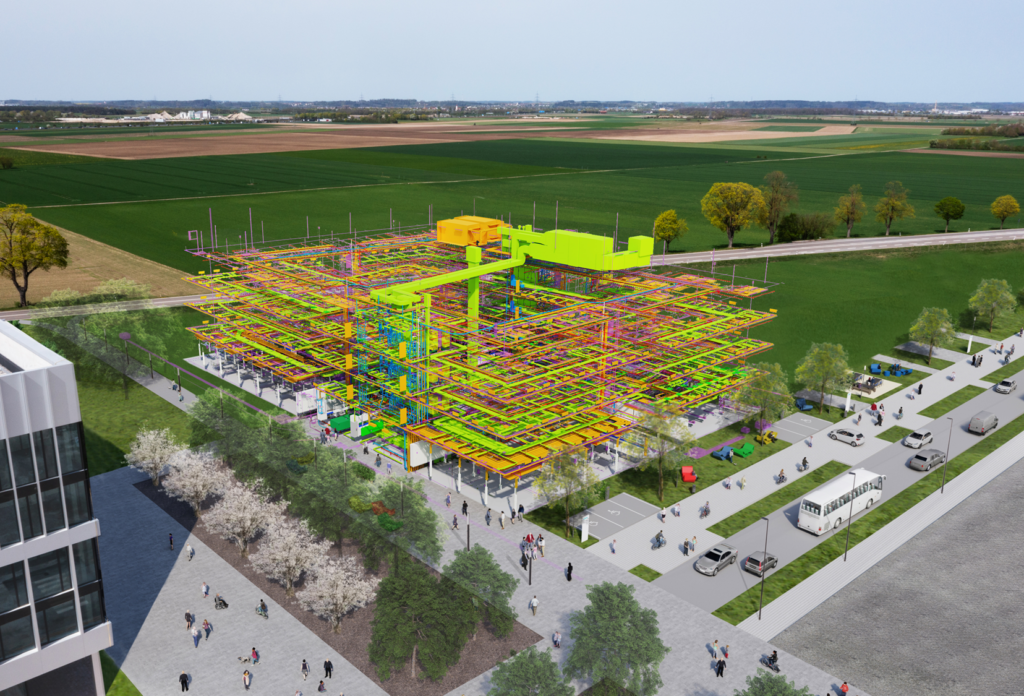
The integration of Building Information Modeling (BIM) with NX is transforming the way industrial plants and factories are designed. By combining the strengths of both tools, Siemens Real Estate and Siemens Digital Industries Software are streamlining workflows, improving collaboration, and enhancing efficiency in shop floor planning.
BIM and NX: A Powerful Collaboration
Siemens Real Estate (SRE), a global leader in corporate real estate management, is at the forefront of digitalization and innovation. With a “digital-first” approach, SRE mandates the use of BIM for all new construction projects. This methodology enables the seamless connection between the physical and digital worlds, laying the foundation for a digital twin of buildings and shop floors.
A prime example is the Digital Native Factory in Nanjing, which was fully planned and simulated using digital twin technology. By integrating factory data, shop floor layouts, and building performance data, SRE created a comprehensive digital representation of the facility. This success highlighted the need for more efficient processes to scale projects and integrate multiple teams.
Bridging the Gap Between BIM and CAD
Typically, BIM and mechanical CAD are managed by separate teams. BIM data, owned by Siemens Real Estate, is used to design buildings, while shop floor layouts are planned by engineers. The traditional workflow involves:
Creating and updating BIM models in dedicated software.
Importing BIM data into NX for shop floor planning.
Revising and exporting design changes via IFC format to ensure updates are reflected in both environments.
Since design reviews occur frequently, this process demands constant data transfers between architects and engineers, increasing complexity and the risk of errors.
Challenges in BIM and CAD Integration
The manual process of exporting and importing data presents major challenges, including:
Data Format Differences: BIM data is stored in single part files, while NX structures data as assemblies and components.
Positioning Issues: BIM relies on a consistent coordinate system, which must align with NX models.
Complexity in Data Translation: Converting large-scale BIM models into NX can be time-consuming, requiring hours of processing and generating thousands of parts.
To address these challenges, Siemens Real Estate collaborated with Siemens Digital Industries Software to develop better BIM data import solutions in NX. These solutions include preserving BIM structures, simplifying file conversions, and improving IFC translation to reduce errors and enhance usability.
The Future of BIM and NX Collaboration
Looking ahead, Siemens is working on real-time design updates between BIM and NX, reducing the need for manual transfers. The goal is to create a seamless, interconnected workflow, where engineers receive automatic alerts when changes occur.
Additionally, VR and Immersive Engineering are becoming integral to design collaboration. Siemens is exploring Sony’s XR head-mounted displays and the Industrial Metaverse to enhance shop floor planning and virtual decision-making.
Another significant advancement is the NX Translator for Revit, introduced in June 2024. This tool, available via token licensing, enables the direct recognition of identical components (e.g., doors, beams, windows), streamlining BIM data import into NX.
Ultimately, Siemens aims to develop a single source of truth for BIM and CAD data, eliminating inefficiencies and enabling fully digitalized, automated workflows. By continuing to innovate, Siemens Real Estate and Siemens Digital Industries Software are shaping the future of integrated industrial design.
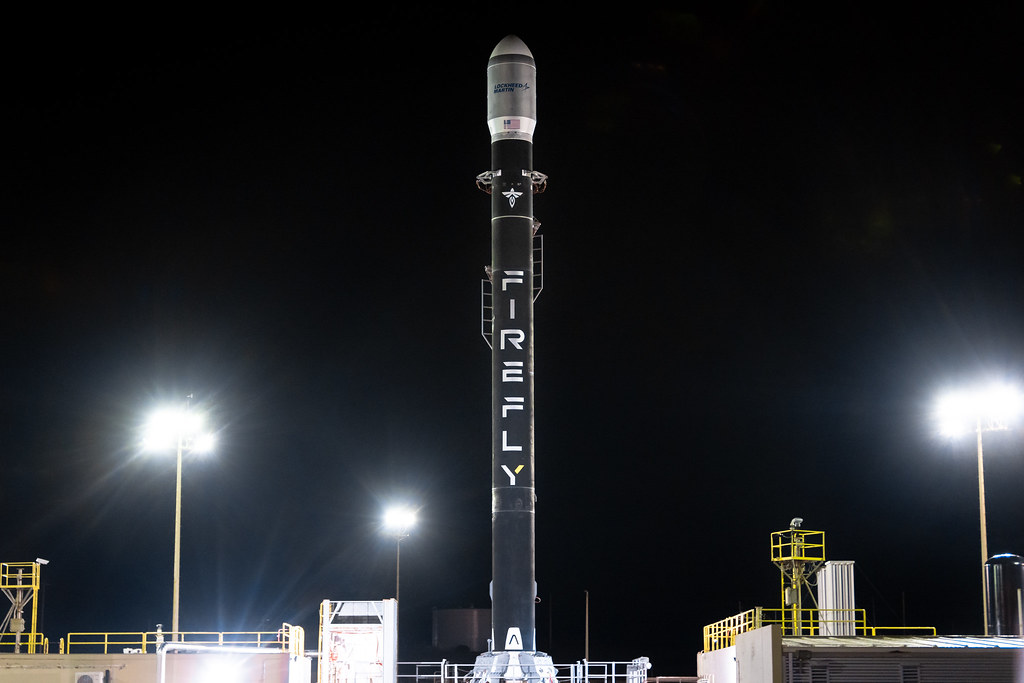
Morgan and Drew from Firefly Aerospace take us behind the scenes of their design process—from whiteboard sketches to fully engineered rockets. Learn how they leverage advanced tools like Siemens’ NX and Teamcenter to iterate quickly and bring complex structures to life.
They also reveal their thoughts on the role of AI in aerospace engineering, the significance of sustainability in rocket development, and the push for reusable rockets to lower costs and minimize environmental impact. The engineers also share insights on the future of space travel, the challenges of scaling rocket designs, and how the private space sector is driving a new era of exploration.
What you’ll learn about in this episode:
What is Firefly Aerospace?
Firefly Aerospace is a Texas-based private aerospace company founded in 2017 focusing on providing end-to-end space transportation services. Firefly is on a mission to enable our world to launch, land and operate in space, anywhere, anytime. They specialize in launch vehicles and spacecraft.
The design process at Firefly Aerospace
Drew, Morgan and Greg begin discussing the design process at Firefly Aerospace and how they get from concept to launch. They start with a goal or problem statement at a whiteboard discussion and then begin making early sketches. With the necessary stakeholders, they determine boundary conditions, constraints, what materials are available and what the budget is. From then, they begin creating a preliminary CAD model. They emphasize their iterative design process, so they iterate on and refine the CAD model through discussions, meetings and design reviews.
Morgan notes that sometimes the iterative process is physical and sometimes it is digital on the CAD models, running simulations and analyses virtually. But eventually, the iterations will come into the physical world for real-life validation of the design. The design touches different teams and design trades throughout the process to ensure it is up to regulations, standards and requirements.
CAD software and Siemens’ NX in aerospace design
Greg then Morgan and Drew about the benefits they see using CAD, specifically NX CAD software from Siemens Digital Industries Software. Morgan discusses how it’s nice to be able to “fly around in 3D space” and actually look at a design on the screen. You can make updates quickly, share easily with Teamcenter to get a visual representation and fully see the entirety and fullness of a design in CAD software.
Drew mentions structures as an area where visualization is especially helpful to note clearances with other components and knowing something will work when it’s manufactured. Morgan also adds that you can “virtually cut something in half to look at a joint.”
Rockets require very complex assemblies, but with NX, that design complexity is simplified. They mention how load settings such as how loading only one part of an assembly can speed up the design or review process, as well as how NX helps with being able to create structures with a “sandwich laminate,” as their previous software didn’t allow individual parts to have dissimilar materials. “With NX, it’s fully streamlined. It’s easier to do those kind of parts,” Drew says.
Before moving on, Drew also notes how helpful and useful advanced features in NX such as Synchronous Modeling are. “To be able to just do that on the fly without fully rebuilding the model, it’s so useful,” he says.
Challenges in the design process at Firefly Aerospace
We then move on to talk about challenges in the day-to-day design process working in the aerospace industry at Firefly. Morgan first mentions how regulations and the general rapid pacing of the industry can be a challenge, “It’s incredibly competitive. It’s like running on a treadmill. You have to always be innovating, always be iterating, testing, and doing better so that you are still a competitor in the industry,” she says.
Drew then mentions that the iterative process itself is a challenge, especially if it is something they haven’t done before so they can’t apply lessons from previous experiences. There is a lot of trial and error in the design process. Morgan and Drew discuss a specific example with scaling their flight-proven 6-feet-diameter Alpha rocket to a medium-class launch vehicle that is 14 feet in diameter. Throughout the process, they are learning new lessons as they create a bigger rocket.
They mention that one thing that does help them face challenges easier though is collaboration with Teamcenter. Everyone at Firefly has access to view CAD files and drawings so can reference anything needed during a design review concurrently, whether they’re in the Cedar Park office or at the different test sites.
The future of sustainability in aerospace design and engineering
We then move on to talk about trends in the industry, beginning with sustainability. Morgan notes how important sustainability and especially reusability is in their field, as not only does it help from an environmental standpoint but it enables cost savings as they don’t need to start from the ground up every time. They save on labor costs as well as reduce lead times for materials the pain points that come along with creating something completely new. Both Morgan and Drew also add that Firefly is focused on composites and lightweighting with carbon fiber structures.
“Pioneering carbon fiber structures. That’s been Firefly’s main selling point—a fully composite rocket. So, lighter materials, better-performing rockets,” Drew says. Morgan adds, “When you have lighter structures, you can lift either more propellant or more payload.”
Morgan also discusses how designing for reusability evolves over time as a young aerospace company. When they first start out, they’re focusing on being flight-proven and less on reusability. When they are more established, they can pivot towards reusability if it’s economically viable. The three then talk about what recovery and reusability actually looks like in practice, including calculating where the rocket will splash back down.
The future role of the Industrial Metaverse and Immersive Engineering in rocket design
Continuing the talk on trends, Greg briefly explains the Industrial Metaverse and Immersive Engineering and asks if Firefly would benefit from leveraging immersive tools. Drew thinks immersive technology would be especially beneficial for integration and production planning. Morgan agrees with the benefits within manufacturing and production planning, and also thinks the integration of AR and VR into training could be incredibly valuable. Though they haven’t explored it yet, Morgan says, “We haven’t dipped our toes into that realm yet. I think it’s a technology that is very promising and has a lot of room to grow in this industry, and Firefly could absolutely make use of it in the future.”
Morgan adds how helpful immersive technology could be in manufacturing with mitigating issues that arise in non-conformance reports. For example, showing a circle where a bolt hole is meant to be if someone is a few degrees off during manufacturing.
Greg also asks if they would find value specifically in the Sony XR head-mounted display and NX Immersive Designer, with visualizing massive structures like rockets in an immersive environment. Drew says that an immersive experience would be really helpful with seeing models in real-time scale and space, visualizing sizes of parts and getting a sense of scale. With some parts being absolutely massive, they want to know if a crane would be needed, if multiple people would be needed to move it or if there is clearance to get inside the space to install a part before getting to the manufacturing stage. Morgan tells a story about discovering a part in real-life being much bigger than it’s on-screen digital counterpart, “Sometimes you do lose that sense of scale when you’re sitting behind a desk,” she says. “If I had the ability to slap on some glasses or a headset and be able to walk around the rocket at scale, that would be incredibly useful.”
How does Firefly Aerospace use AI in the design process?
Moving onto the last trend of the episode, we discuss AI and how/if Firefly is using it throughout their design process. Drew says that while they have experimented with generative design, improvements are necessary for it to be incredibly useful for their design process. He cites an example of generative design technology creating a “cool and optimized” part, but it could not take into account manufacturability, integration into the full assembly, or cost/budget into its design. However, he believes that as AI grows and gets more capable, it will be a very useful tool for engineering. “Maybe just to do a quick trade study for a particular design, where you can give it a prompt, and it can create a quick concept design that you can refine from there. Less so just a one-and-done and makes-it-for-you solution,” he says, then concluding how AI will evolve and get better and he looks forward to the improvements that will be made over time.
Though Morgan also believes that AI is powerful and has come a long way in a short amount of time, she says “I think there’s still something inherently human in a lot of the engineering that you do…there are engineering decisions and judgments that humans make. Something imperfect is purposely included because the design is, therefore, more human, more manufacturable, or more usable.” So while she doesn’t see AI doing the design work any time soon, she does think that AI could take over a lot of automation like in math, analysis processes and design edits.
Check out our previous episode recap of our AI episode, AI-Enabled CAD: Enhancing Design Efficiency with Siemens’ NX, to learn about some of the AI-enabled capabilities in NX that help engineers to be more productive and reduce inefficiencies. Similar to Drew’s wish of giving a prompt to the software, we also recently introduced NX Copilot, powered by Microsoft Azure.
What does the future of design look like to Firefly Aerospace?
Morgan says the next generation of engineers will continue to build with AI and new features and technology that come out, such as Immersive. For herself, she hopes to be like Tony Stark— seeing holograms of a rocket and updating it with a wave of a hand or voice command.
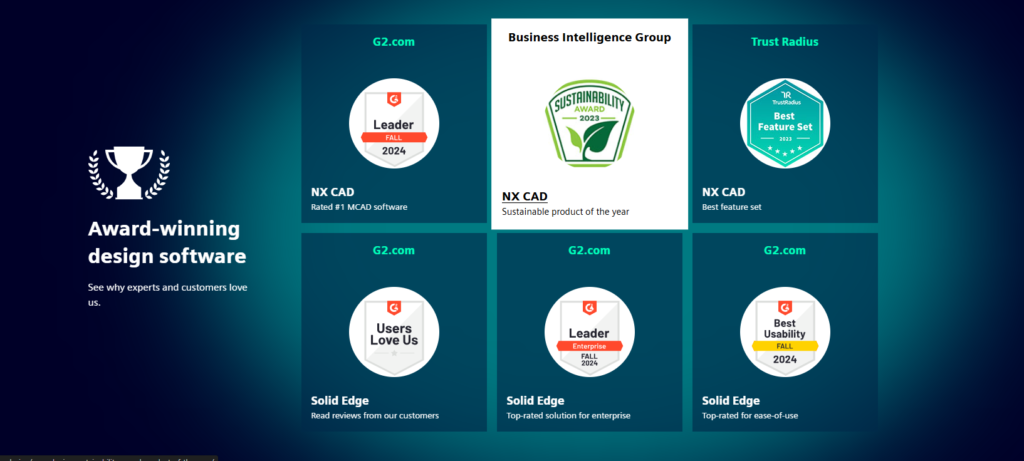
In the world of design and engineering, having reliable, innovative, and high-performance tools makes all the difference. Siemens, a global leader in digital transformation and engineering, has recently received multiple awards for its NX CAD and Solid Edge software solutions. These accolades reinforce Siemens’ commitment to excellence, sustainability, and ease of use, positioning them as industry leaders.
NX CAD: The Best MCAD Solution Recognized Worldwide
NX CAD has established itself as one of the most advanced tools for product design, offering robust capabilities in modeling, simulation, and manufacturing. Its impact on the industry has been recognized with several prestigious awards:
Rated #1 MCAD Software – G2.com NX CAD has been ranked as the best mechanical computer-aided design (MCAD) software by G2.com, one of the most influential review platforms in the industry.
Sustainable Product of the Year – Business Intelligence Group Siemens’ commitment to sustainability is reflected in this award, recognizing its efforts in energy efficiency, material optimization, and reducing environmental impact in manufacturing.
Best Feature Set – TrustRadius NX CAD has been awarded for offering the best set of features, enabling engineers and designers to develop products faster and more efficiently.
Solid Edge: Innovation and Ease of Use for Businesses
Similarly, Solid Edge continues to prove itself as one of the best solutions for 3D design, reverse engineering, and digital manufacturing. Its recent recognitions highlight its accessibility and performance in enterprise environments:
Top-rated Solution for Enterprise – G2.com Solid Edge has been rated as one of the best solutions for enterprises, helping companies of all sizes improve productivity and optimize their design processes.
Top-rated for Ease of Use – G2.com One of Solid Edge’s key differentiators is its user-friendly interface. This award recognizes its intuitive design and ability to shorten the learning curve for new users.
Read Reviews from Our Customers – G2.com Thousands of users have shared positive experiences with Solid Edge, praising its flexibility, advanced tools, and seamless integration with other systems.
Conclusion
The multiple recognitions awarded to NX CAD and Solid Edge demonstrate Siemens’ excellence in developing software for design and manufacturing. From technological innovation to a strong focus on sustainability, these solutions continue to set the standard in the industry.
At Goaltech, as a Siemens partner, we specialize in helping companies maximize these technologies. If you’re looking for a solution to optimize your design and manufacturing processes, contact us to learn how NX CAD and Solid Edge can transform your business.
Want to learn more? Contact us for personalized advice.
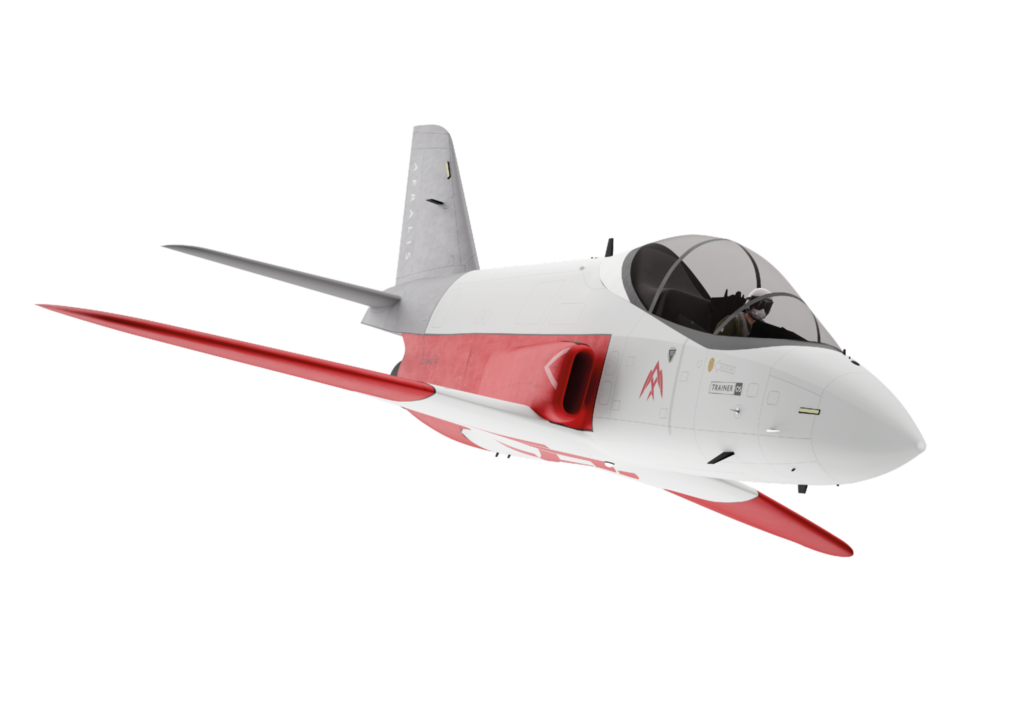
AERALIS is a digital enterprise that leverages digital engineering and a digital thread in accordance to AERSIDE: AERALIS Smart Integrated Digital Enterprise. As requirements and technology changes in the aerospace industry, it is absolutely needed to be a digital enterprise. Charlie says, “Aircraft are designed about 20 years before they land on the market in some cases, and by that point, the requirements and technology have completely changed. So, there’s a real push to keep up with that change and reduce the period from ideation to launch.”
Charlie defines digital engineering as “the application of digital processes throughout the entire lifecycle of a system, from concept to manufacture, operation, certification and disposal, but all connected via a single source of truth.” At AERALIS, the entire lifecycle of the aircraft is digitally developed, connected by a single source of truth. Callum says this digital engineering enables efficiency, collaboration and innovation.
With a digital thread, they can design parts based on known requirements, and anyone can see and be notified of changes to requirements or parts themselves. Callum again emphasizes how a digital thread enables efficiency. With everything being digital-first, Charlie notes that AERALIS can easily collaborate in a live design environment with other designers or manufacturers. From simulation and optimization to manufacturing and real world operations, everything is linked together along the digital thread with digital twins.
Model-Based System Engineering (MBSE) at AERALIS
AERALIS adopts the Model-Based Systems Engineering Arcadia Method. Callum explains how they are “breaking down a problem at an operational level and then going into more detail at functional, logical and physical levels.” With this MBSE approach, they are not just using it on the aircraft but to all business operations as a whole. Charlie uses the comparison of just how computer-aided design (CAD) evolved and became a digital step in design as opposed to drawings on paper, MBSE is the development of digital models instead of just documents and drawings.
AERALIS works closely with Siemens with our professional services implementation team. AERALIS engages in agile collaborative feedback with Siemens daily, including identifying new capabilities that they need or trialing different capabilities and methodologies. “Every week, we’re designing something, building it, testing it, changing it a bit more, and working in that real agile sprint,” Charlie says regarding testing new capabilities they request. This workflow of close collaboration helps them launch, deploy and adopt new functionality amongst their engineers quickly.
How AERALIS uses NX to solve challenges
Callum notes that AERALIS has a managed NX environment, where everything in NX is integrated with Teamcenter PLM software to enable collaboration with design partners such as Hamble Aerostructures. With NX and Teamcenter, both design teams located in Bristol and Southampton can work together on the same live digital models with the same requirements. With NX and Teamcenter, they can leverage a full digital thread— “It is a thread and collaboration and efficiency and working on the same stuff. It’s not emails.”
Charlie and Callum also call out specific benefits they realize with NX, such as including maintainability in their aircraft from day one. NX also includes human models, so they can test their designs and make sure anyone from the largest man to the shortest woman can access all parts of the aircraft needed to fly. “You can mock the view of a pilot from their eyes, and you can move their head up and down, and you’ll be able to see what they see in the cockpit. So, you can map out the anthropometrics,” Charlie says.
The design process at AERALIS
Callum briefly explains the design process at AERALIS, stating that it operates as a “thin prime.” They are modular in their organization and design by a requirements-driven approach. They collaborate with Hamble Aerostructures for some of the design and manufacturing including the Common Core fuselage, and other design firms for system design. With multiple companies, they still design as “one team” as a digital enterprise.
Aerospace industry challenges
Charlie and Callum then describe some of the challenges being seen in the aerospace industry and how AERALIS is responding to them. Charlie notes that aircraft systems have more complexity, take longer to develop, need more resources and require a bigger industrial base. Requirements change quickly, and pilots need to train based on those new requirements, but the trainer platforms have to adjust and adapt. He also notes that traditional companies wrestle with legacy IT estates that are not on new technology and not digital. He acknowledges that while AERALIS does not have a legacy IT estate to deal with which allows them to innovate faster, that it also means they are building an organization, processes and toolsets at the same time as trying to build the aircraft itself.
Callum adds on to the challenge of increasing complexity, saying that certification is getting more expensive as complexity and requirements evolve. “I fear that may be reducing the appetite for people to try new things, and limiting how eVTOLs are progressing,” he states.
Greg asks if there are any challenges that are unique to AERALIS, and Charlie mentions that there are not many new aerospace companies in general, but it is especially a challenge as they are trying to do something that has not been done before in the defense industry: modular aircraft. They have to balance the need to get it to market, getting it flying and getting it certified. But they are leveraging partnerships and collaborations with other companies across the UK and the world to solve these challenges.
When it comes to overcoming challenges, Callum says that at AERALIS they start from a theoretical standpoint and ensure that they are future-proofing and having one single source of truth for solutions as they communicate and share data. He shares an example of a challenge they had with part numbering, but states that their “secret sauce” is simply: “Just think about it as a whole— don’t just jump in— and try to build something for the future.”
The future of design at AERALIS
Before closing out the episode, Greg asks about some trends in the industry. They discuss sustainability, noting that sustainability will only increase and leveraging digital tools will allow them to identify more opportunities for optimized and sustainable solutions. The modularity of an AERALIS aircraft is inherently more efficient and sustainable as it is adaptable.
They also address the Industrial Metaverse and Immersive Engineering and look forward to experiencing the benefits of Immersive tools from initial requirements to design to manufacturing. “You can sit on a chair, put a VR headset on, and play around with potential cockpit designs. That’s only possible because we’ve been designing digitally from day one,” Charlie says.
We conclude the episode talking about AERALIS’ ultimate goal of revolutionizing the aerospace industry with modular defense aircraft, how they think the aerospace industry has evolved in their few years as engineers and how it will continue to evolve and their perspective on the general next generation of design.
Dexcom is an emerging medical technology leader headquartered in San Diego, California, specializing in the development and production of continuous glucose monitoring (CGM) systems. These devices are essential in helping patients monitor their glucose levels in real-time, offering a less invasive alternative to traditional blood glucose meters.
Dexcom’s latest device, the Dexcom G7, allows users to effortlessly track their glucose levels, helping them make smarter decisions about food and activity in the moment to take better control of their diabetes. With the launch of this new device, Dexcom continues to push the boundaries of innovation, ensuring smaller, more effective, and user-friendly products.
Challenges in scaling operations
Faced with increasing demand for its CGM devices, Dexcom needed to scale its operations without compromising efficiency, safety, or cost-effectiveness. It was also crucial to maintain a focus on customer experience to ensure broader accessibility while continually improving the product.
To overcome these challenges, Dexcom adopted Siemens’ Plant Simulation technology. As Mohamed Elsayed, Industrial Engineering Manager – Modeling & Simulation at Dexcom, explains:
“We’re making Plant Simulation part of Dexcom’s DNA. It supports our decision-making process, allowing us to continuously advance our product while optimizing operations and boosting productivity at a lower cost.”
Simulation driving productivity and innovation
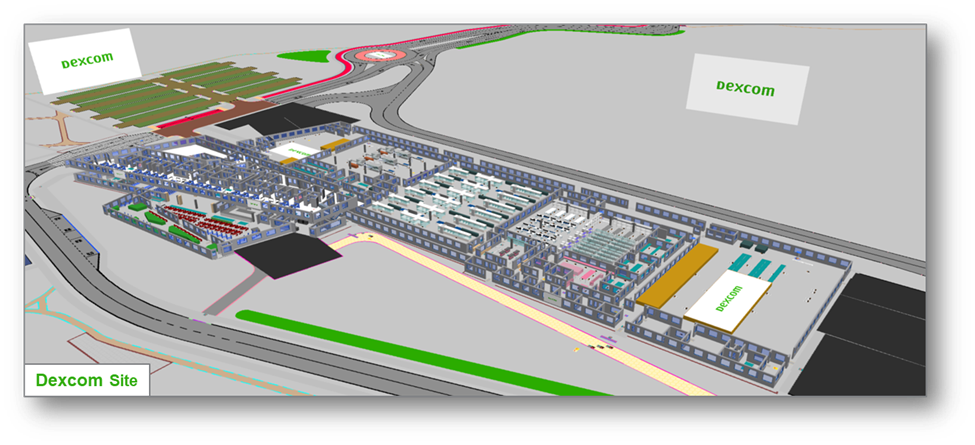
Dexcom implemented Plant Simulation to digitally replicate its factory sites and optimize production processes. This technology enables them to model, analyze, and optimize their operations in a virtual environment before making physical changes, resulting in enhanced safety, increased productivity, and better resource utilization, ultimately reducing costs and increasing product accessibility.
Notable use cases of Plant Simulation at Dexcom
Enhancing production line efficiency Dexcom used Plant Simulation to optimize production lines, modeling different scenarios and workflows. This allowed them to identify bottlenecks and allocate resources efficiently, increasing production throughput and ensuring smooth transitions when introducing new products.
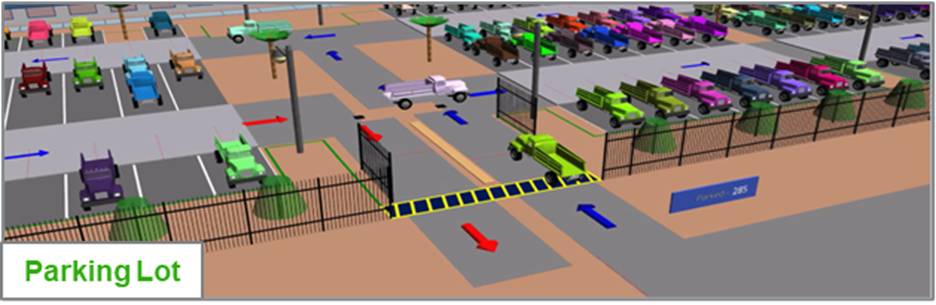
Improving facility layout and safety The company used simulation to improve safety and layout configurations, including parking lots. By modeling various scenarios, they optimized traffic flows and minimized congestion, improving safety and employee convenience.
Designing new manufacturing sites As Dexcom expands globally, they use Plant Simulation to design new manufacturing sites before construction begins. The software helps model emergency scenarios, like fire drills, ensuring safe and efficient evacuation routes and compliance with safety regulations.
The future of simulation at Dexcom
Looking ahead, Dexcom plans to democratize factory simulation, making it accessible to more employees, including those on the shop floor. The goal is to integrate this technology into everyday decision-making, enabling real-time adjustments based on resource availability and production demands.
By leveraging Siemens Plant Simulation, Dexcom has embedded a culture of continuous improvement and innovation in its operations. This technology not only optimizes processes but also supports Dexcom’s mission to improve the lives of people with diabetes worldwide.
Siemens Digital Industries Software and Oracle Red Bull Racing Celebrate 20 Years of Innovation in Formula 1™
Siemens Digital Industries Software is celebrating two decades of partnership with Oracle Red Bull Racing, marking one of the longest and most successful technical collaborations in Formula 1 today.
Christian Horner, CEO and Team Principal, emphasized the importance of this collaboration: “With Siemens, we have a digital backbone that enables us to turn ideas into reality faster than ever. Their tools give our engineers the freedom to innovate, adapt, and stay agile, which in Formula 1 can be the difference between winning and losing. It’s a partnership that continues to push us to new heights each season.”
Since 2004, Oracle Red Bull Racing has built its engineering infrastructure on the Siemens Xcelerator software portfolio. Since then, the team has effectively managed logistical challenges, increasing design complexity, and the growing number of parts and thousands of engineering changes each year, all while improving manufacturing repeatability.
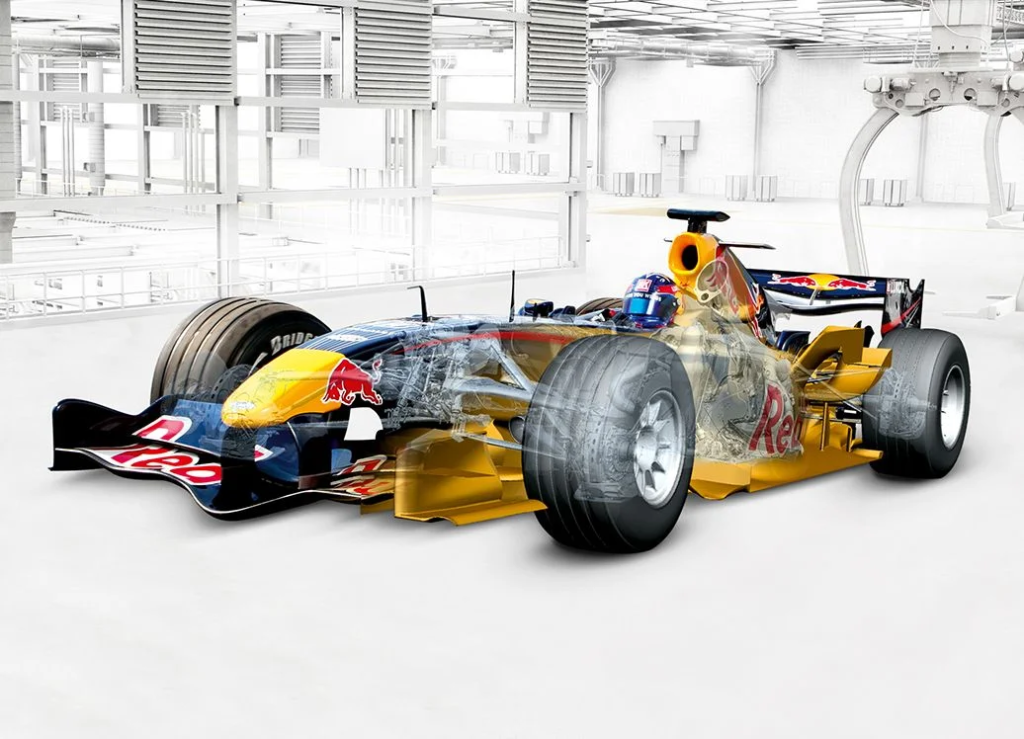
Today, Red Bull Racing relies on Siemens Xcelerator and the world’s most comprehensive digital twin technology to thrive under the immense pressure of the Formula 1 racing season, designing, refining, and manufacturing cars while continuing to drive the team’s success on the track.
Ben Sheath, Vice President and General Manager of Siemens Digital Industries Software in the UK and Ireland, said: “Working with Red Bull Racing from day one has been an incredible journey, both personally and professionally. I started as an engineer at Siemens, supporting their vision, and 20 years later, I’m proud to see how our collaboration has helped fuel their success. Seeing Red Bull Racing become a powerhouse in Formula 1, knowing Siemens technology has been a key part of that, fills me with immense pride. It’s a partnership built on pushing boundaries, and I’m thrilled to have been a part of it every step of the way.”
Siemens Xcelerator has enabled the team to digitally transform their processes, from reinventing the speed at which engineering changes can be executed and managed, to adopting the latest product engineering technology that allows for rapid part design, composite part development, and harness engineering.
The team is continually designing, manufacturing, and even additively producing parts at their technical center and on the track. When combined with the team’s focus on measurable performance and data-driven guidance for progressive improvements based on real-time actionable information, Siemens Xcelerator supports the team’s leadership in engineering, manufacturing, and ongoing success.
Key Facts: Siemens Digital Industries Software and Oracle Red Bull Racing Technical Partnership
Digital Twin Technology: Oracle Red Bull Racing relies on Siemens’ comprehensive digital twin technology, enabled by Siemens Xcelerator, to design, test, validate, and manufacture championship-winning cars at the incredible speed demanded by Formula 1.
Design Efficiency: The team has seen a 300% improvement in the cycle time of part designs using Siemens NX™ for product engineering. The software’s complex shape modeling capabilities have also made aerodynamic design 1,000% faster per iteration.
Managing Complex Parts: With around 10,000 unique parts per car, the team uses Teamcenter® software to manage specific car configurations required for each track around the world, reducing design approval times from weeks to hours.
Generative Design: The team reduced design time from two weeks to two days by utilizing generative design capabilities in NX to create optimized designs for structural support components and cooling systems.
Composite Materials: Design and manufacturing of composite materials with the support of Siemens’ Fibersim™ portfolio have resulted in a 30% improvement in design time to delivery.
Customized Seats: The engineering team created custom seats that support each driver in an optimal position, reducing fatigue and improving control during races through a combination of Simcenter™, NX, and Fibersim software.
This partnership exemplifies how Siemens technology not only drives performance on the track but also redefines engineering and manufacturing standards in Formula 1.
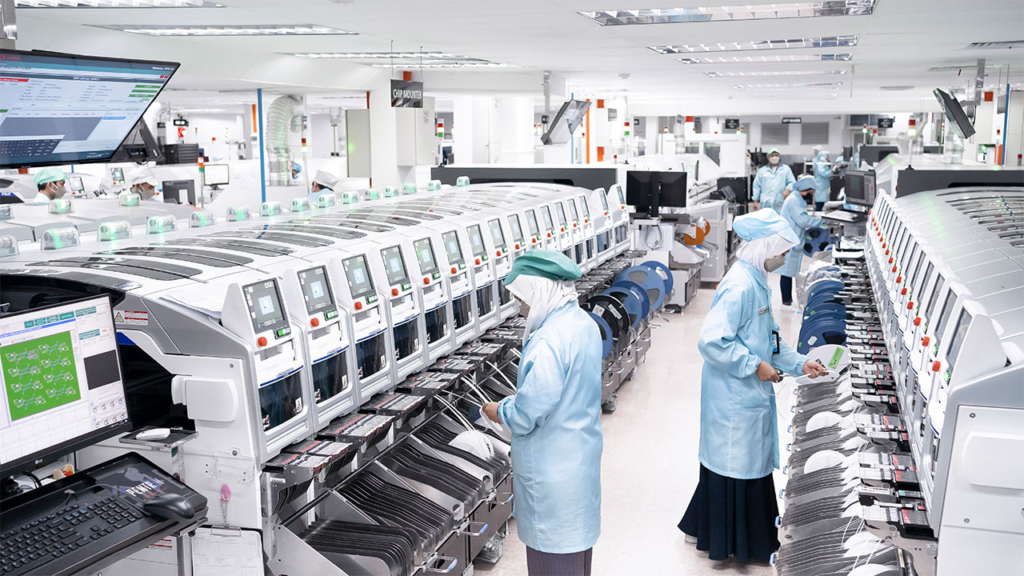
Sat Nusapersada Boosts NPI and SMT Efficiency with Siemens Process Preparation Software
Sat Nusapersada, one of Indonesia’s largest Electronics Manufacturing Services (EMS) providers, has chosen Siemens’ Process Preparation software to enhance its New Product Introduction (NPI) processes and increase the efficiency of its Surface Mount Technology (SMT) production lines by 33%.
Founded in 1990, Sat Nusapersada is the first high-tech EMS listed on the Indonesia Stock Exchange, serving global brands like Asus, Huawei, Xiaomi, and Sharp. With growing customer demands, Sat Nusa expanded its SMT lines to 24. However, as production capacity and monthly requests for quotes (RFQs) increased, the company needed to reduce manual work, particularly in the NPI phase, to maintain efficiency and competitiveness.
Following a thorough evaluation, Sat Nusapersada implemented Siemens’ Process Preparation software. This solution allows the company to streamline assembly, testing, and inspection processes, keeping all information updated in a single environment. The software eliminates the need for manual corrections, reducing errors and improving consistency across their operations.
“We’ve seen significant improvements in our production capacity since implementing Siemens’ Process Preparation software,” said Stanly Rocky, general manager & public relations at Sat Nusapersada. “With less manual rework, we’re able to better serve our customers and meet the fast-paced demands of today’s electronics industry.”
The results have been impressive. Sat Nusapersada reduced the time needed to gather incoming project data by 92%, and overall line efficiency improved by 33%. The software also streamlined SMT programming tasks, cutting down time by 31% for line configuration setup and other related processes. Additionally, the design for solder stencils was reduced by 50% thanks to the software’s learning libraries.
Alex Teo, managing director and vice president for Southeast Asia at Siemens Digital Industries Software, commented, “It’s great to see Sat Nusapersada benefiting from Siemens’ Process Preparation software. Our focus is on helping customers like Sat Nusa scale their production lines to meet the increasing global demand for electronics.”