In the context of the Hannover Messe technology fair, Siemens met at the Berlin Embassy in Germany with customers, business partners and government representatives from Querétaro, Monterrey and Chihuahua to commemorate 130 years of its presence in Mexico.
Alejandro Preinfalk, president and CEO of Siemens Mexico, Central America and the Caribbean, highlighted that during these 130 years, Siemens has established itself as a reliable partner for Mexico. “We are particularly proud to maintain long and fruitful relationships with our employees, customers, governments, academia and society,” he said.
In the last year, Siemens has carried out significant actions in its plants. In Querétaro, with the Kaizen project, the optimization and expansion of its production began with an investment of more than 900 million pesos over the next five years. In addition, within the framework of Hannover Messe 2024, Siemens, the government of the state of Querétaro, the Estainium Association, Grupo Ecológico Sierra Gorda (GESG), OpenForests and Callirius AG, signed a memorandum of understanding. This agreement, which builds on the partnership established during the 2023 United Nations Climate Change Conference (COP28), lays the foundation and action plan to create a functional supply chain decarbonization ecosystem. The objective is to develop a Minimum Viable Product (MVP) that can be replicated in other sectors to reduce greenhouse gas (GHG) emissions in the value chain of companies and industries in Querétaro.
On the other hand, in the state of Chihuahua, Siemens inaugurated in January 2024, together with government representatives, the ITESA 4 project in Ciudad Juarez. This new manufacturing plant focuses on the production of products for energy measurement and distribution, with an investment of more than 300 million pesos.
We congratulate our partner for its anniversary in our country, we are sure that the growth will continue for many years to come.
When we do have to make a tricky decision because of a supply chain issue or other unexpected event, using Opcenter lets us simulate and compare different scenarios.
Florian Funke, Production Scheduler Siemens Healthineers
Exacting medical equipment industry demands
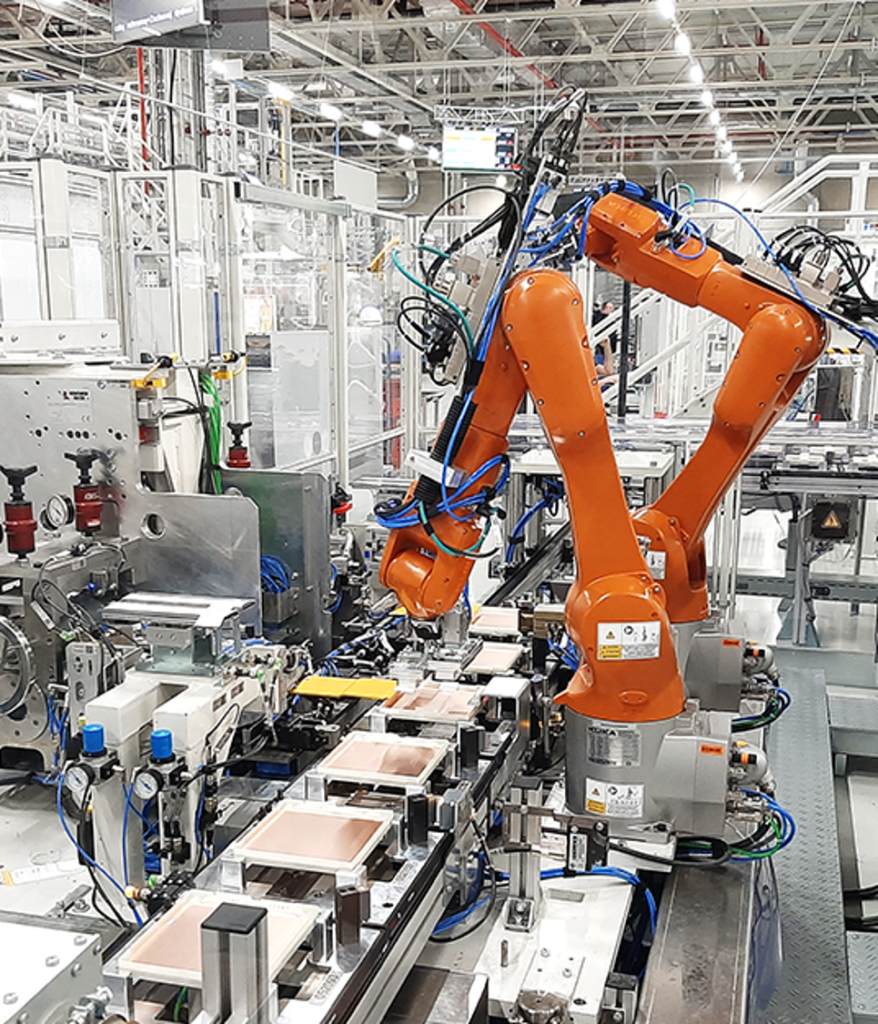
Manufacturing printed circuit boards (PCBs) requires precision, perfect duplication, high speeds, expert raw and rare material management and flexibility. This includes using robots and specialized, high tech equipment to work holistically on dedicated batches in changeable production lines. The entire process demands exacting accuracy, experts and fine-tuned processes without forgetting about sourcing and delivering those expensive raw materials and high tech components.
Now apply this to the highly regulated and exacting medical equipment industry. If you think there is a lot of complexity in the PCBs that run your smart phone or laptop, just imagine the scrutiny required for medical PCBs running a computed tomography (CT) scanner, ultrasound machine, photon scanner or magnetic resonance imaging (MRI) machine.
To ensure safe and reliable patient care, onboard medical PCBs must meet a plethora of strict standards and regulations, including Food and Drug Administration (FDA) and European Conformity (CE) approval. In addition to lists of health and safety factors (thermal management restraints and electromagnetic interference (EMI) issues), regulations also include standards for how a manufacturer designs and builds the medical PCB itself.
“We produce thousands of medical PCBs and components for all types of Siemens Healthineers equipment,” says Jochen Raaber, production scheduler at Siemens Healthineers, which is headquartered in Erlangen, Germany. “Every PCB needs to meet exacting quality standards. As PCB production planners, our job is to make sure that we have the right materials at the right location on time. These are the challenges we have nowadays.”
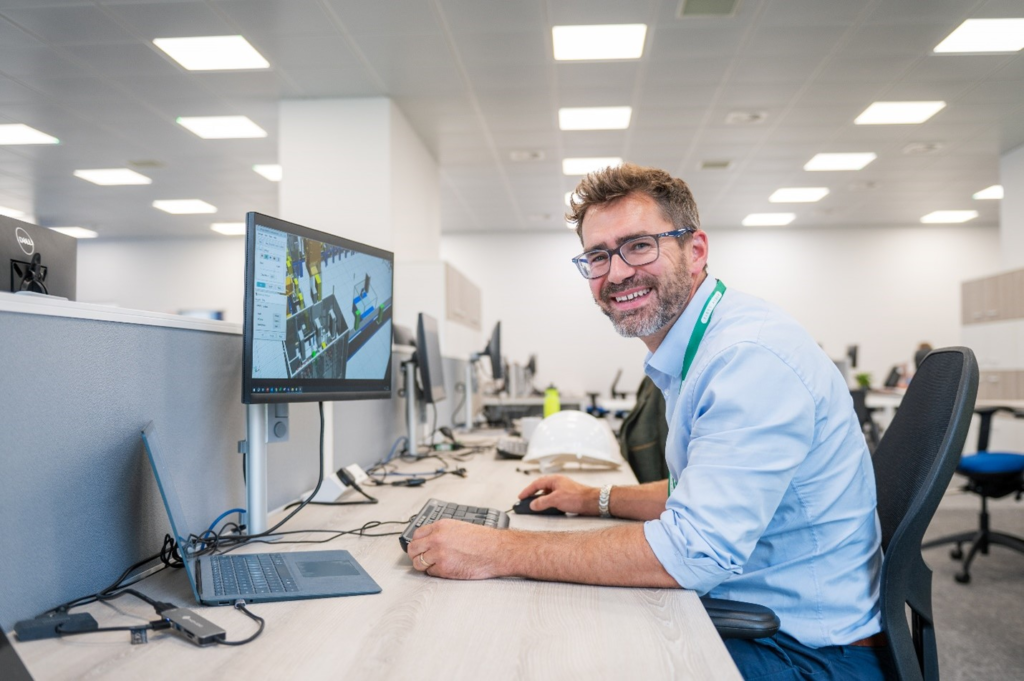
To overcome these challenges, the PCB production planners at Siemens Healthineers leveraged Opcenter™ Scheduling Surface Mount Technology (SMT) software, which is part of the Siemens Xcelerator business platform of software, hardware and services.
Turning complexity into a competitive advantage
The planning team at Siemens Healthineers needs to handle various products and customer requirements with varying degrees of PCB complexity according to the final medical equipment specifications. With a continually changing scheduling environment, just-in-time (JIT) delivery, production delivery deadlines and raw material and component shortages, it is crucial to create an advantage from changes in complex processes.
“We found that to succeed, we needed to be more process-based than product-based,” explains Florian Funke, production scheduler at Siemens Healthineers. “It is one of the key reasons we turned to the Opcenter team and its dedicated solution for SMT scheduling and planning.”
A core part of medical PCB manufacturing is SMT, which is an assembly technique where components are attached and connected to the PCB’s surface using batch soldering processes. The connections between the planner and the shop floor need to work well to achieve this outcome.
Previously, the planning team used a highly customized spreadsheet for assembly to shop floor planning. As experts, they found they could make the right calls based on experience. However, they knew they could improve by leveraging a better tool. One tool they tested using was the Opcenter Scheduling SMT software.
“What we liked about using Opcenter Scheduling SMT is that it covers all our job’s basics, like the production schedules, the frequency, the real-time changes when it comes to new products or short runs and the documentation capabilities, which are important in the medical equipment industry,” says Funke. “But where we really saw value were improvements in our big picture work order workflow. Now this was very interesting for us.”
Integrating SAP and ASM
Siemens Healthineers used Opcenter Scheduling SMT to tailor new features for automatically pulling data from three important workflow sources. This includes: 1) machinery, line configurations and resource availability from the shop floor; 2) work orders, schedules and work hours from an enterprise resource planning (ERP) system (in this case, SAP) and 3) material availability and location from the supply chain systems.
The team recently completed an SAP integration to publish XML work order data directly for PCB manufacturing. Using Opcenter Scheduling SMT automatically picks up files and processes the work orders with minimal effort from the planning team. After this success, the team was curious to see how Opcenter could be leveraged to handle a new process work-flow for a new product.
“When it comes to introducing PCBs for new products, we don’t need to do much,” says Funke. “With Opcenter, you don’t need to hunt down data from other sources, which used to take hours or even days if something was lost or not interconnected. Using Opcenter Scheduling SMT, everything is interconnected. We just select similar products, parts and component data directly from our ASM software. Leveraging Opcenter automatically picks up all the required data from SAP and the ASM. It loads all the lists in about a minute. This is an extremely quick way to get the missing product data for a new product.”
“Because all our data is aggregated in a single place within our Opcenter process, we don’t waste time fetching it from various sources,” says Raaber. “The data we use now is purpose-built for us and in one single place, which is optimal for our scheduling team.”
Increasing flexibility
Planners at Siemens Healthineers were also happy to learn they could use Opcenter Scheduling SMT to automatically assign work orders to individual lines with its factory schedule optimizer, Multiline, including aligning the work orders by grouping and sequencing.
“Compared to other solutions, using Opcenter Scheduling SMT is far more flexible,” says Raaber. “You can customize it exactly as you need it for the most complex production scheduling.”
The team can even tailor optimization criteria to its exact SMT and production line needs. This covers vital scheduling criteria, like production time, group count, due dates, missing parts, etc.
“We work with fixed groups and setups,” says Funke. “The tool does a lot of the work for us. Using it puts everything automatically in the correct setup and quickly assigns everything to the correct line according to the work order or product. We just check it. There is very little manual retrieval these days. We can comfortably work with a team of two on a shift, whereas in the past we needed three people on the floor to get the job done right.”
Improving downtime
The goal is to optimize the overall production process because downtime can hinder the most organized teams. Siemens Healthineers planners hoped to use Opcenter to reduce downtime and optimize production batches. As the recent global chip shortage and supply chain issues demonstrated, the more they can analyze and compensate for unexpected events, like a shipment stuck in transit or a shortage of standard chips or copper, the easier it is for Siemens Healthineers to meet on-time delivery commitments within their production environments.
“When we do have to make a tricky decision because of a supply chain issue or other unexpected event, using Opcenter lets us simulate and compare different scenarios,” says Funke. “We can even input our expertise and preferences by adding weight to the various criteria. Then we just choose the options and schedule that work best for overall production.”
“The software adapts to what is coming in the production process and leaves us with the flexibility to make the right informed choices,” says Raaber. “I think this is the key strength of leveraging Opcenter Scheduling SMT.”
The team at the Erlangen plant was up and running with ease after three days of installation support and hands-on training. They can use Opcenter Scheduling SMT to do the busy work, from importing orders from SAP and other sources to optimizing the SMT groupings for best-case changeover to flagging PCB production issues, including material availability. Additionally, leveraging the Opcenter Scheduling SMT what-if analysis capability is handy in a constantly changing world where Siemens Healthineers’ high tech production expectations require accurate, practical, on-the-fly scheduling expertise.
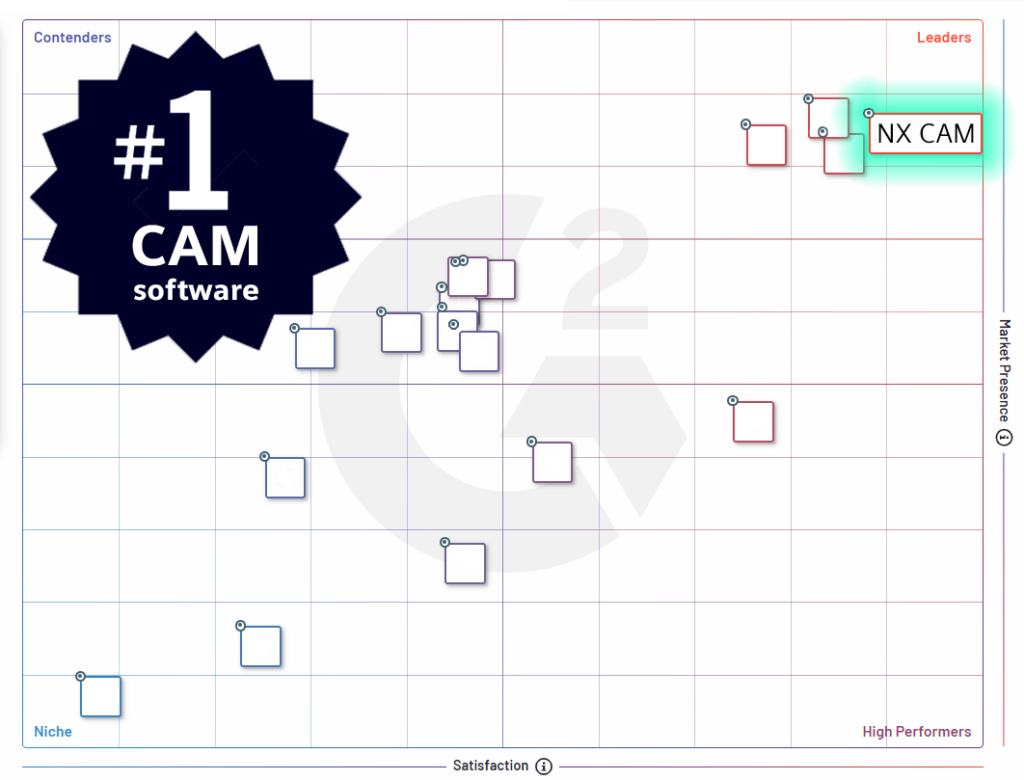
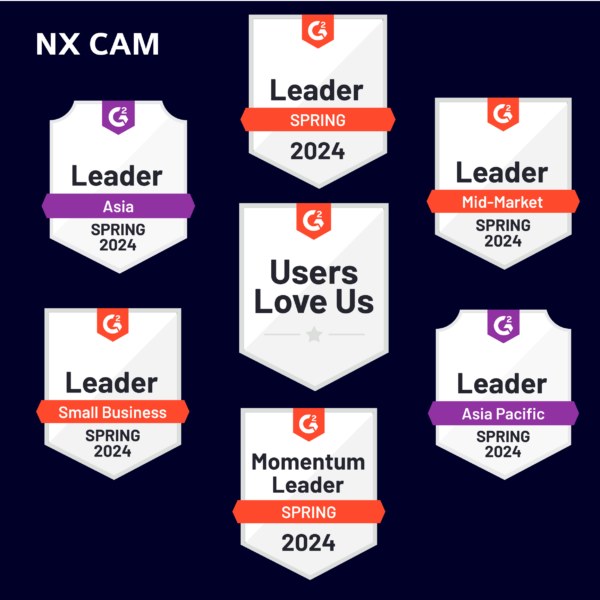
G2 Spring report 2024 is here and NX CAM ranks as #1 CAM software.
Manufacturing experts, like many of this blog readers, have recognized NX CAM as the leader in the CAM (computer-aided manufacturing) software category. With insights from almost 100 CNC programmers, NX CAM stands out among other CAM software options, as shown in the live G2 Grid Report below:
Spring 2024 Grid report for CAM software
This demonstrates our commitment to developing the most complete and advanced CAM software, which is both scalable and seamlessly integrated into the Siemens Xcelerator, our comprehensive software portfolio for digital transformation.
Our users, who provide constant feedback, make this possible. Based on their input, we incorporate significant and powerful new capabilities into each new release to address the most challenging machining requirements and enhance the overall CAM experience. During Spring 2024, NX CAM earned 7 more badges from our users from around the world and across all major industries, including automotive, aerospace and industrial machinery industry sectors.
Share your NX CAM success story
What are the benefits that #1 CAM software provides?
While selecting the right CAM software for your machining jobs might be challenging, G2 makes the decision-making easier. It provides featured comparison criteria to help CNC programmers understand and differentiate the distinctive features of each CAM software provider.
CAD to CAM
The transition from CAD to CAM is essential because it ensures a seamless flow of design data into the manufacturing process, facilitating an efficient production process.
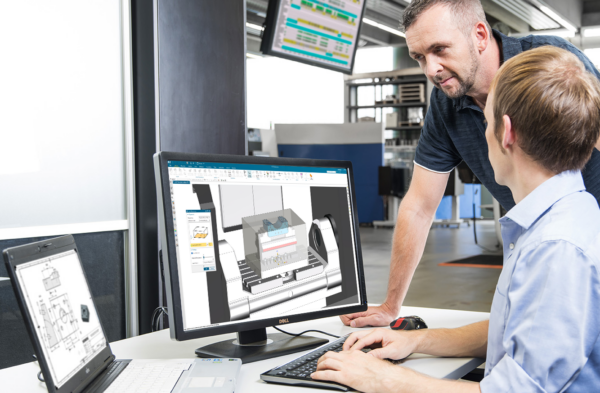
NX CAM has the capability to read any standard CAD format. Customers find the most advantage when they utilize the integrated CAD/CAM functionality in NX. It ensures a smooth transition from the CAD part model to the CAM environment to create necessary machining operations to manufacture the part.
By maintaining the associativity between CAD and CAM data the design changes are automatically reflected in the machining process, enabling seamless workflow and minimizing rework.
CNC Programming
To effectively program the increasingly challenging components, manufacturing companies need to equip programmers with powerful CAM software.
That’s why it’s crucial for the software to be user-friendly yet capable. This allows programmers to define the machining process for parts of any complexity faster, while having full control of all the machining parameters. With NX CAM, you get streamlined CNC workflows even for the most complex 5-axis machining.
For prismatic parts, NX CAM simplifies CNC programming with its automated Feature-Based Machining capabilities. You can program complete parts with many (sometimes hundreds of) features (e.g. pockets, compound holes, and slots) in minutes, saving hours of valuable programming time. By automating repetitive tasks and recognizing machining features, NX CAM helps programmers reduce machining time by up to 90%.
CNC Machining
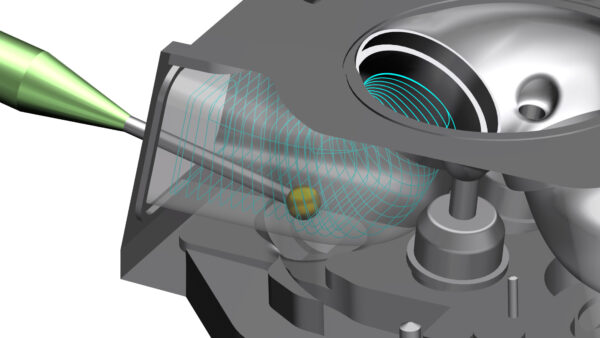
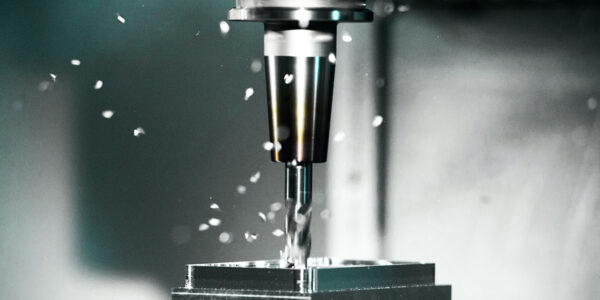
Advanced toolpath strategies enable part manufacturers to achieve greater efficiency and improved parts quality. NX CAM provides a range of toolpaths that helps streamline the machining process and reduce the overall machining time. Operations like 3D Adaptive Roughing speed up the toolpath generation significantly faster which boosts the part programming speed for the user and helps to remove the bulk of the material 60% faster than the traditional methods. With the smooth-flowing finishing strategies in NX CAM, users achieve mirror-like surface finish, while extending tool life and improving the overall productivity.
Data behind the ranking
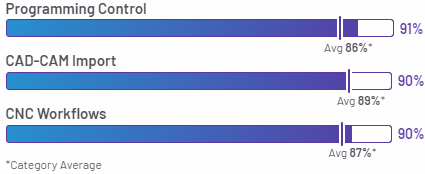
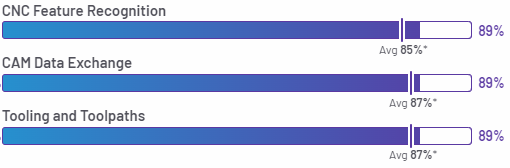
Customers assessed CAM software through G2’s scoring framework. Below is the detailed information on how NX CAM was rated by the users for some of the key capabilities:
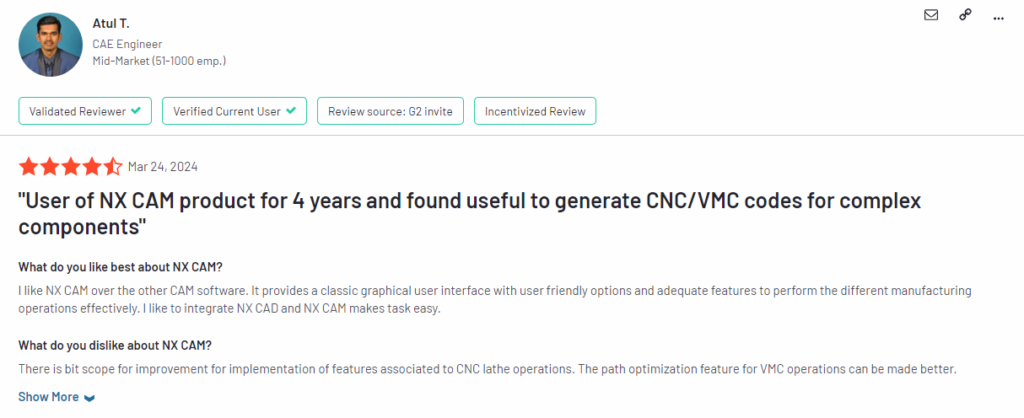
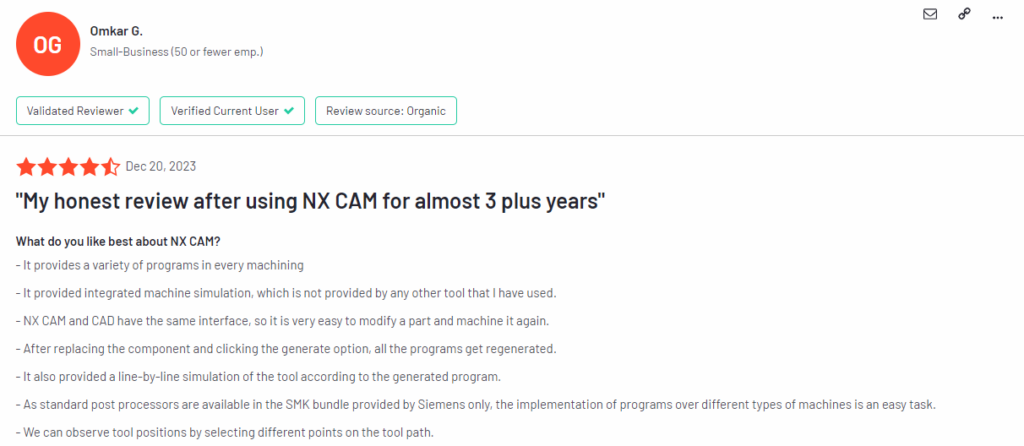
Listen to what our users are saying
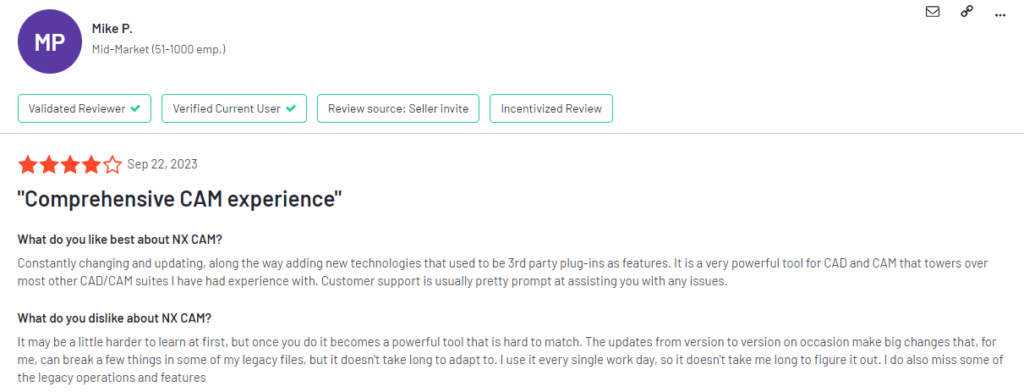
Learn more about NX CAM software and get direct insights from NX CAM users about their favorite aspects of the product:
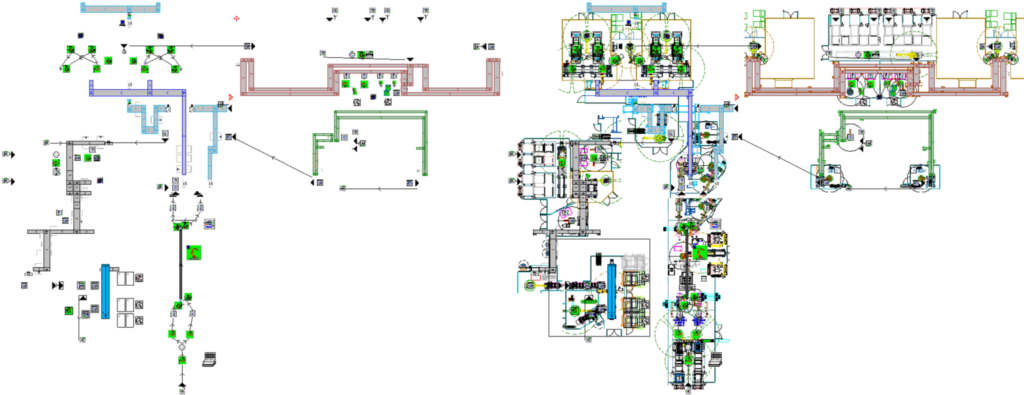
Battery production takes place in a dynamic landscape of manufacturing. Efficiency is the cornerstone of success. Nowhere is this more evident than in the realm of automotive battery production, where precision and optimization are paramount. At EBZ Group, a beacon of innovation in the transportation industry, Louisa Christin, a senior project manager in production planning, is leading the charge towards enhancing battery production through the integration of layout planning into material flow simulation.
Unlocking potential
Louisa Christin’s journey into the world of mechanical engineering at the University of Applied Science Ravensburg-Weingarten laid the foundation for her pioneering work at EBZ. Since joining the company in 2018, she is responsible for projects in production planning, focusing particularly on body-in-white and battery production facilities. Her expertise extends to material flow simulation, where she has been instrumental in implementing static and dynamic simulations using Siemens Tecnomatix Plant Simulation software.
The power of integration In her lecture, Louisa will shed light on the synergies between layout planning and material flow simulation, emphasizing the advantages of their integration in the context of battery production. By combining these methodologies, companies can gain invaluable insights into their production processes, leading to enhanced efficiency, reduced costs and improved quality.
Navigating challenges Drawing from real-world experiences, Louisa will present three compelling use cases from EBZ’s project business. Each case will provide a comprehensive overview of the project, highlighting the differences between battery production in material flow simulation with and without layout implementation. Attendees will gain a deep understanding of the evolution of battery production in material flow simulation and the challenges encountered along the way.
Realizing benefits Louisa will delve into the heart of each use case, discussing the biggest challenges faced and the strategies employed to overcome them. Attendees can expect to learn about the tangible benefits that have resulted from integrating layout planning into material flow simulation, including increased throughput, optimized resource utilization and streamlined processes.
By seamlessly integrating layout planning with material flow simulation, automated battery production lines engineered by EBZ not only optimize efficiency but also propel us into a future where precision and innovation converge to power the automotive industry forward.”
Vehicle cooling systems are indispensable since they not only improve an occupant’s comfort but maintain the vehicle’s correct internal temperature and protect key components. They extend the lifetime of engines and ensure proper performance, reducing harmful exhaust emissions. Therefore, the largest automotive companies want high-quality components, which means cooperating with partners who can guarantee their product’s quality.
ESTRA Automotive Systems (ESTRA) is a global leader in the automotive cooling system industry. It has been in business under its present name since 2019, but its history in the automotive industry dates to 1998. That is when it began to build its position, specializing in the design, validation and production of vehicle thermal components and systems. Today, its operations include offices and technology centers around the world, as well as 14 production plants, including one in Zabrze, Poland.
This is where the company manufactures vehicle powertrain cooling modules, including liquid-cooled condensers, heat exchangers, radiators and condensers. Due to its many years of experience and competencies in cooling systems, ESTRA provides solutions for internal combustion engines (ICEs), electric and hybrid vehicles. For these vehicle types, ESTRA provides solutions tailored to their unique characteristics and manufactures them with the utmost attention to detail.
Using Opcenter for global MES
The automotive sector requires companies to meet stringent constraints for product quality, process validation and certification. With the increasing sophistication of cars and their systems, manufacturers’ expectations regarding individual component quality from external partners are also changing. Due to these strict requirements and manufacturing processes, ESTRA sought out and implemented a manufacturing execution system (MES), which they integrated in their Asia-based markets. However, to integrate this system globally meant the current system would not be sufficient due to support and standardization challenges.
When building a new factory in Poland, ESTRA started looking for standardized global solutions that had full local support. They wanted a solution that would allow precise monitoring and control of production processes in real time to quickly detect and respond to any irregularities and unforeseen situations. With help from ASKOM, a certified Siemens Digital Industries Software manufacturing operations management (MOM) partner, the company decided to integrate Opcenter™ software, which is part of the Siemens Xcelerator business platform of software, hardware and services, into the Zabrze plant. Using Opcenter gave the company a full range of locally implemented services and technical support.
“We wanted to find a solution with a global footprint that had the necessary local technical support we required,” says Waldemar Wojtasz, the MES coordinator and change leader at ESTRA. “We were able to achieve our goals by cooperating with Siemens and ASKOM.”
When Opcenter was implemented, the plant employed solutions to match the condenser design for one of its key automotive original equipment manufacturers (OEMs). The next step was to use Opcenter Execution Discrete, a production execution system, to handle complex assembly operations. Using its base version with basic functionalities, ESTRA was able to gather data to create a personalized solution that allowed them to develop established products while evolving the system.
“Solution flexibility was critical to us,” says Wojtasz. “We wanted to deploy a solution that was tailored to us, our needs and the nature of production, as opposed to having to adapt to the technologies. This was undoubtedly a valuable benefit from cooperating with ASKOM and Siemens.”
Improving the quality of production
Leveraging Opcenter Execution Discrete, which uses a set of standard and company-specific functionalities, ESTRA workers can more efficiently handle production orders, carrying out production processes faster while maintaining high-quality standards. Since machines verify most components, which helps reduce errors, the company can ensure product quality and detect any shortcomings at an earlier stage. This allows the company to take measures to avoid and minimize situations where corrective action would be necessary.
Since the ESTRA plant’s label management and quality control are more automated and precise, the company can reduce the risk of defective products. Additionally, by using Opcenter Execution Discrete, the company was able to introduce full production process traceability. This is important in the automotive sector for tracking every component, from the moment the raw material enters production to the final product. ESTRA can then store the information for the next 30 years.
By using an MES, which acts as the factory’s nervous system and brain, the company can digitally manage huge amounts of information, reducing paperwork. “We liken the MES to a policing system that keeps things in order,” says Wojtasz. “Every radiator we produce has its own identity in the system, receiving a code on its core in the process to track and record its history. This is how ESTRA, and our customers, know exactly where the product has been and how it behaved during each production stage.”
By integrating Opcenter Execution with SAP enterprise resource planning (ERP), ESTRA was able to provide a consistent flow of information between the business and production systems. This helped the company increase their operational efficiency and improve production order and material data management. By transferring data between the system and the production line in real time, they were able to create a planned cycle time, reducing production cycle time to less than 1 minute.
Additionally, by integrating Opcenter Execution with the Open Platform Communications Unified Architecture (OPC UA) standard into the automation systems from various vendors, ESTRA was able to further automate production processes. Since companies collect process data directly from the machines, the systems provide valuable production line performance information, optimizing and preventing downtime. The production team has access to various key performance indicators (KPIs) in real time and uses them to make quick decisions, ensuring the factory’s efficiency and competitiveness in the automotive sector.
Further, ESTRA created a more flexible production process and improved company transparency by integrating vertical information technology (IT) and operational technology (OT). For example, they were able to connect the shop floor to the top floor.
“Having this knowledge at our fingertips allows us to respond to problems of various degrees of severity,” says Wojtasz. “Using Opcenter, we can respond to trivial issues concerning the arrangement of product parts on the production line to more important issues like missing information that could result in corrective actions.”
Moving towards further automation
The ESTRA factory in Zabrze is constantly evolving since the company is regularly bringing in new machines and production lines. ESTRA is implementing these improvements to meet specific customer needs and further automate the factory.
Next steps include implementing a preventive maintenance scheme to further reduce downtime. By using an MES system to organize data collected in real time from machines, the company can access information to define the scope of work for maintaining the line and machinery fleet.
Additionally, ESTRA aims to integrate Teamcenter® software, which is also part of Siemens Xcelerator, to achieve a closed-loop manufacturing process and a solution that includes product lifecycle management (PLM), ERP and MOM. This could provide ESTRA’s factory with further growth opportunities, enabling seamless information exchange and interaction in the physical and virtual worlds. Further, the company can take another step toward achieving operational excellence and reinforcing its position in the automotive sector.
As the automotive industry evolves, new opportunities are opening via technologies; however, this can cause production quality, validation and certification challenges. Manufacturers like ESTRA are leveraging the support of trusted partners, like Siemens and ASKOM, and available solutions in their quest for excellence and innovation. “Thanks to Opcenter, our customers can get better products while we save money by minimizing the number of corrective actions,” says Wojtasz. ESTRA provides a model for other companies, showing how to effectively meet rigorous industry standards and customer expectations while keeping
Explore how Siemens Tecnomatix Plant Simulation and Opcenter solutions help to digitalize pharmaceutical manufacturing for sustainable efficiency.
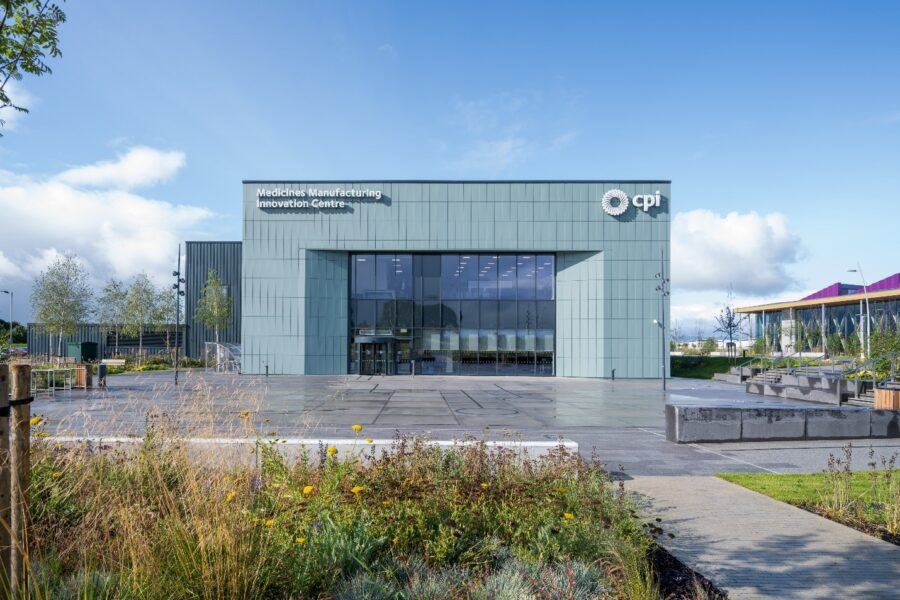
In the heart of Glasgow, Scotland, the Medicines Manufacturing Innovation Centre (MMIC) spearheads a transformative journey within the pharmaceutical (pharma) industry. CPI, technology innovation catalyst, opened the world leading MMIC to raise the bar in pharmaceutical manufacturing by redefining the future of pharmaceutical production with cutting-edge digital technology, collaborative expertise and more sustainable manufacturing practices. The MMIC is a unique collaboration between CPI and 23 partner organizations from all different sectors.
MMIC is an open-access collaborative innovation center specific to pharma manufacturing, meaning they work with numerous partners, such as industry giants like GSK, Pfizer and Novartis as well as partners from business, academia and government agencies Their collaboration for pharma manufacturing aims to deliver innovation that drives new processes and products into the pharma industry using Siemens digitalization solutions to tackle issues such as the development of more sustainable manufacturing processes.
The unique pharma manufacturing challenge
MMIC works with pharma companies, as well as technology companies and equipment manufacturers that provide technology to help the industry. However, one of the center’s challenges relates to maintaining the truest sense of collaboration through digitalization by creating a standard architecture that allows the factories to build consistently. This includes streamlining processes, accelerating development, and reducing waste and energy consumption, which is where Plant Simulation in the Tecnomatix® portfolio comes into play. By creating a digital twin based on real data, Tecnomatix empowers operators to optimize processes, minimize waste and enhance efficiency. Driving the center’s innovation engine is the digital twin. With it, pharma companies can design everything from the smallest single product, to manufacturing processes, to the entire factory, and detail and tweak each as needed. From identifying which materials work well to storing the the finished products, Tecnomatix Plant Simulation lets operators choose the right modules, conduct tests, and avoid bottlenecks.
The tool that we’ve used most for our digital twins for design is Tecnomatix. Our industrial partners set our digital ambition and my team delivers it.”
The major pharma’s success also lies in leveraging Siemens Opcenter™ Execution alongside Tecnomatix. This seamless integration among Siemens digital manufacturing software is a perfect example of how the Siemens Xcelerator portfolio ensures a streamlined experience for software users. Opcenter is a key element of the digital twin, ensuring the manufacturing execution is performed correctly and provides full traceability of the product and process. MMIC can now ensure information tracking, regulated process control and simplified approval processes. With customized dashboards consolidating data from various systems, personnel can make faster, more informed decisions, driving efficiency and agility.
Tecnomatix Plant Simulation and Opcenter software drive manufacturing success
At the core of innovation lies the digital twin, powered by Tecnomatix. The factory simulation software enables pharmaceutical companies to design and fine-tune every aspect of manufacturing processes, from individual products to entire factories. By simulation scenarios and identifying optimal solutions, Tecnomatix drives efficiency and minimizes waste. Not to mention, real-time data further enhances simulation accuracy, with Simatic® Real-time Location Services (RTLS) providing insights into object movement within the facility. This integration closes the loop between simulation and reality, facilitating continuous improvement and optimization.
Beyond efficiency gains, the center embraces sustainability as a core principle. Collaborating with Siemens consultants, MMIC was able to deploy automation, optimize processes and adopt smart building solutions to reduce their carbon footprint. The strive for sustainability is paramount for MMIC, which is enabled by Siemens digitalization solutions. Tecnomatix Plant Simulation emerges as a cornerstone in the pharmaceutical industry’s journey towards sustainability and efficiency. By optimizing processes, reducing waste and embracing digitalization, the MMIC sets a precedent for clean and sustainable manufacturing practices. With Tecnomatix as a driving success factor, the future of pharma manufacturing looks brighter, greener and more efficient than ever before.
Following Siemens Energy’s strategy to reduce carbon emissions globally, the company has announced that its plants in Querétaro and Guanajuato will begin generating electricity from solar photovoltaic energy. This initiative marks a significant step forward in its commitment to carbon neutrality.
During an event held at Siemens Energy’s plant in El Marqués, Querétaro, Javier Pastorino, General Manager for Mexico, Central America and the Caribbean, emphasized that the company’s goal is to achieve carbon neutrality in all its operations by 2030. In line with this goal, the electricity consumption of both plants will be completely covered by renewable sources, complemented by the acquisition of Clean Energy Certificates (CEL’s) for any additional consumption.
“By using electricity from renewable sources, our plants become 100% carbon neutral facilities,” the executive explained during his speech. He also shared Siemens Energy’s vision of the energy transition, which focuses on three pillars: energy efficiency, transmission and deep decarbonization.
In the first phase, the company aims to leverage its resources and the technology currently available in the market. “To achieve carbon neutrality by 2050, emissions need to be reduced by 43% by 2030. The use of transition technologies, such as combined cycles, can help to far exceed this goal,” the executive pointed out.
In addition, the executive stressed that “There can be no transition without adequate transmission infrastructure”, which implies improving the development of the infrastructure available in the country to bring renewable energy to consumption centers. Finally, deep decarbonization implies the use of new technologies, such as green hydrogen. In this regard, he revealed that the company’s objective is to advance with this technology in the medium term until it becomes predominant in the market.
Regarding the development of hydrogen and energy transmission, Javier Pastorino stated that Mexico has great potential due to its renewable energy resources and infrastructure, such as ports, to export products derived from this technology. “We seek to have responsible operations, with a social commitment and respect for human rights, the environment and natural resources,” he said.
To date, Siemens Energy is involved in four combined cycle projects of the Federal Electricity Commission: Tuxpan, El Sauz, González Ortega and San Luis Río Colorado. In this sense, the company participates as a supplier of integral solutions, contributing 28% of CFE’s installed capacity in Mexico.
Siemens Energy’s presence in Mexico is also reflected in its 50% participation in the transmission network, more than 1,200 km of compressors in the gas compression networks, 3,000 MW installed in the national territory, and three factories in the Bajío region: high voltage switchgear in El Marqués and two transformer production plants in Guanajuato.
During his speech, Marco del Prete, Secretary of Sustainable Development of Querétaro, emphasized the collaboration of Siemens Energy in accordance with the public policy promoted by the state authorities. “The mission of the Secretariat is to promote economic development through projects such as this one. Today, global companies that adopt ESG (Environmental, Social and Governance) policies recognize the importance of environmental protection, which complements the Secretariat’s efforts.”
In addition, the official highlighted the State Seal in Low Carbon Emissions initiative, unique at the national level, driven by a tax on carbon dioxide emissions into the atmosphere. “The funds generated go directly to the preservation and care of the forests of the Sierra Gorda de Querétaro. It is an economic benefit that goes hand in hand with environmental protection, and Siemens is one of the pioneers in adopting it,” he concluded.
Using Siemens Opcenter, leading chemicals company streamlines production with digital manufacturing
BASF, one of the world’s largest chemical companies, has achieved the highest levels of operational excellence by streamlining the production of their crop protection solutions for soil management, plant health, pest control and digital farming. Their Xemium® product is an active and environmentally safe fungicide that enables highly reliable crop protection for greater yields, helping growers combine profitability with environment protection.
Xemium production runs 24 hours a day, 365 days per year and involves both continuous and batch processes as well as laboratory analyses for quality control and end-of-line packaging. BASF sought a digital solution that would help them reliably produce and package their fungicides, improve production transparency, and maximize productivity. They chose Siemens Opcenter as their foundation for digital manufacturing.
Opcenter allowed BASF to create vertical process integration, closing the digital gap between ERP and SCADA systems. Quality control was integrated throughout their digitalized production processes, with handheld scanners improving their data acquisition from operations.
The result was a complete digital thread that streamlined their manufacturing operations, reducing their batch production time by 5 to 10 percent. They were able to eliminate 5 days of manual paperwork per month by digitalizing their processes and capturing production data automatically. Their fungicide supply was delivered on a more timely schedule for their customers, promoting sustainable, high-yield farming.



-640x360.jpg?w=900&fit=max&q=60&dpr=1&auto=format)
-640x360.jpg?w=900&fit=max&q=60&dpr=1&auto=format)
-640x360.jpg?w=900&fit=max&q=60&dpr=1&auto=format)
-640x360.jpg?w=900&fit=max&q=60&dpr=1&auto=format)
-640x360.jpg?w=900&fit=max&q=60&dpr=1&auto=format)
-640x360.jpg?w=900&fit=max&q=60&dpr=1&auto=format)
-640x360.jpg?w=900&fit=max&q=60&dpr=1&auto=format)

-640x360.jpg?w=900&fit=max&q=60&dpr=1&auto=format)
-640x360.jpg?w=900&fit=max&q=60&dpr=1&auto=format)
-640x360.jpg?w=900&fit=max&q=60&dpr=1&auto=format)
-640x360.jpg?w=900&fit=max&q=60&dpr=1&auto=format)