

Siemens
Reducing Wheel Force Measurement Costs by 66% Using Virtual Sensors, Simulation and AI

Industry; Automotive

The challenge: accurately measuring wheel forces
For automotive OEMs, understanding the forces acting on the wheels is critical. These forces define the loads a vehicle will experience and directly influence how it must be designed to withstand them.
Traditionally, engineers attach wheel force transducers to each wheel of a vehicle and perform test runs with a wide range of maneuvers to measure all the forces experienced during driving.
However, wheel force transducers are extremely expensive, typically costing €250,000 to €500,000 for a set of four wheels on a single vehicle. In addition, manufacturers must consider how vehicles are used in different countries, as forces vary depending on driving style, road surface, traffic density and weather conditions.
As a result, if forces need to be understood across four different countries using four vehicles, the investment in transducers alone can reach €1 million.
These transducers also require significant time for installation and calibration to ensure accurate measurements. Their size increases the overall width of the vehicle, which can make driving on certain roads impractical or even illegal. This added width also increases the risk of damage on narrow roads, a serious concern given the high cost of the equipment.
Despite these challenges, wheel forces must be measured. Without accurate data, design trade‑offs become difficult, often resulting in vehicles that either degrade too quickly or are over‑engineered, leading to inefficient and costly development.
A new approach: lower cost and faster testing
Fortunately, there is an alternative approach that has already proven successful for one customer.
This Siemens‑delivered solution achieved:
- A 66% reduction in wheel force measurement costs
- A 50% reduction in total proving‑ground testing time, from two weeks to one
Let’s explore how this was achieved.

Combining small sensors, simulation and AI
Simcenter Engineering Services developed a new solution that combines traditional wheel force transducers with lower‑cost, easily configurable sensors, along with simulation and artificial intelligence models. This approach delivers the same results much faster and at a fraction of the cost.
Physical sensors and AI for wheel force measurement
One set of high‑end wheel force transducers is still required to provide ground truth data. This enables benchmarking and validation of the forces estimated by the virtual wheel force sensors. However, all of this data can be collected on a proving ground, without the need to drive on public roads.
Proving grounds are typically busy and offer limited time slots, making efficiency essential. At the same time, a wide variety of maneuvers must be performed to capture real‑world driving scenarios, including:
- Acceleration and braking events
- Lateral events such as cornering
- Vertical events such as speed bumps and hills
- Different road surface conditions
Efficient data acquisition with Simcenter SCADAS RS
Simcenter SCADAS RS enables fast and efficient test setup by allowing multiple engineers to work in parallel. For example:
- One engineer can define channel names
- Another can install sensors and adjust their directions
- A third engineer can perform quick sanity checks on the sensor installation
The software also uses event markers, allowing the test driver to annotate each measurement with the test condition. This eliminates the need for an additional engineer inside the vehicle during testing. These annotations are stored as channels in the dataset, making post‑processing and analysis more efficient.
Creating virtual sensors for wheel force measurement
Simcenter SCADAS RS captures and processes the data and then transfers it to Simcenter Testlab Neo Process Designer. This tool automatically removes accelerometer drift, corrects sensitivity issues and compensates for sensor orientation errors, ensuring the AI model is trained with high‑quality and reliable data.
Further processing in Simcenter Testlab Neo extracts additional information from the measured signals. For example, instead of using raw acceleration data, the workflow can leverage the jerk of a filtered accelerometer signal within a specific frequency range, such as 60 to 100 Hz.
Using Simcenter Testlab Workflow Automation, engineers can apply this processing across hundreds of test runs overnight, without manual intervention.
Finally, Simcenter Reduced Order Modeling is used to build a model that predicts wheel forces based on data from the lower‑cost sensors.
The results show a close correlation between the forces predicted by the AI model and the forces measured by the physical transducers.

Results: 66% lower cost and 50% less testing time
Based on testing conducted across four countries, this solution delivers the same results with a 66% reduction in wheel force measurement costs. In addition, it cuts total proving‑ground testing time in half, from two weeks to one.
These significant savings allow manufacturers to test more vehicles while still spending considerably less than traditional methods applied to fewer units.
Benefits beyond durability
This specific use case focused on durability, ensuring vehicles are designed to last. However, the same methodology can also be applied to:
- Predict maintenance needs earlier or later than average estimates
- Support NVH optimization, helping engineers understand how noise and vibration impact cabin comfort under different conditions

An end‑to‑end approach enabled by Siemens
The key to the significant time and cost savings achieved in this case lies in the end‑to‑end approach developed by Simcenter Engineering Services, covering the complete workflow:
- Data acquisition
- Data processing
- AI model training
All fully enabled by Siemens tools.
Advanced data and AI solutions make these gains possible. Simcenter Engineering Services helps integrate data into automated, AI‑driven workflows using simulation and physical testing solutions such as Simcenter SCADAS and Simcenter Testlab, providing a powerful competitive advantage in product development.
How Pierre Fabre Is Advancing Sustainable Water Management with Siemens Digital Twin Technology
Industry: Pharmaceutical
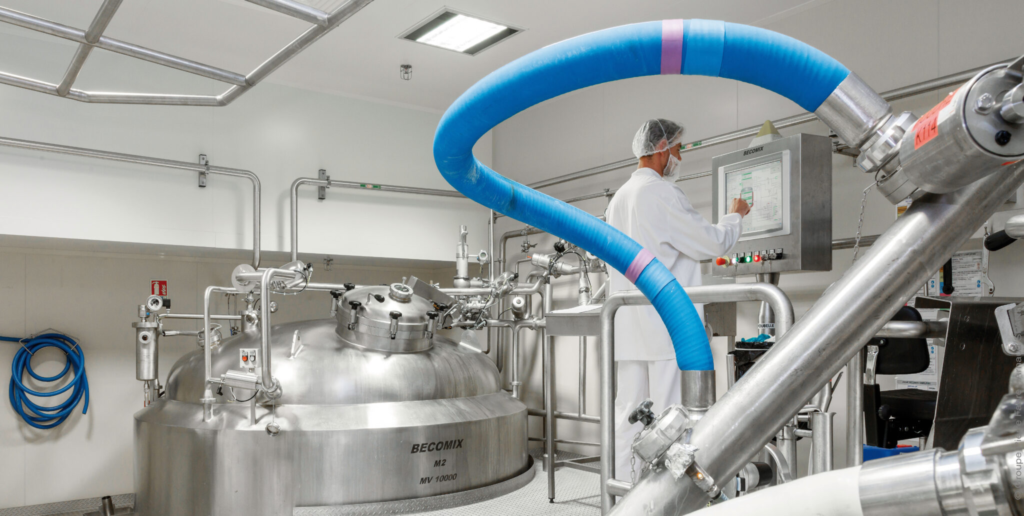
Pierre Fabre, one of France’s leading pharmaceutical and dermo-cosmetic companies, faced increasing pressure to enhance the sustainability of its water management practices without compromising operational reliability. Today, managing water resources has become more complex than ever, especially under strict regulatory requirements and the need for transparent, real-time operations.
The Challenge: Balancing Sustainability and Operational Continuity
Organizations must strike a delicate balance between meeting environmental goals and maintaining efficient production. For Pierre Fabre, traditional approaches based on static planning and reactive adjustments were no longer sufficient. These methods could not handle the interplay between production demands, seasonal water availability, and regulatory constraints.
To address these challenges, the company partnered with Siemens and Institut Mines-Télécom in a research initiative centered around digital twin technology.
The Solution: A Calibrated, Strategic Digital Twin
A well-calibrated digital twin is key to transforming water management. This technology enables precise short- and long-term simulations of water usage and provides a clear understanding of how operational decisions will play out.
Additionally, scenario-based investment analysis helps prioritize the most effective and sustainable actions, ensuring alignment between environmental and business objectives.

Advanced Simulation and Forecasting
By developing a digital twin of its water management system using Siemens Plant Simulation and Optimize My Plant, Pierre Fabre created a virtual model that mirrors real-world parameters. This allowed the company to:
- Simulate multiple operational scenarios under real constraints
- Forecast daily and seasonal consumption patterns
- Identify structural improvements to significantly reduce water usage
- Make smarter, data-driven investment decisions
Early results showed strong potential: the company uncovered clear opportunities to optimize consumption and pursue investments that balance economic priorities with environmental responsibility.

Value Across the Organization
The digital twin delivers value at multiple organizational levels. First, it provides simulation capabilities to understand and resolve operational challenges. Then, by integrating real-time data, it enables both proactive and reactive supervision.
“The digital twin provides answers at all levels within organizations. The first level is simulation to understand and solve operational issues. Next, the integration of real-time data enables proactive and reactive supervision.”
— Christophe Rousse, Operations Data & Analytics Director at Pierre Fabre Group
Looking Ahead
Pierre Fabre plans to evolve its digital twin into a fully supervised system capable of dynamically adjusting water usage and strengthening its sustainability commitments. This use case demonstrates how digital twins are guiding the pharmaceutical industry toward smarter, greener production.
It also highlights the importance of Siemens’ simulation expertise and academic collaboration in solving real industrial challenges.