
Increasing sales by 100 percent

Product: Opcenter
Industry: Screw conveyors
Producing high-quality auger blades

Based in Edewecht, Northern Germany, C. E. Schneckenflügel GmbH has been a guarantor for producing high-quality auger blades for screw conveyors for 40 years. Today, their customers’ demands go beyond purely solid mechanical production. These demands focus on optimal production processes and workflows, as well as automation and digitization to obtain the exact screw flights rapidly and at a low cost. The company opted for Opcenter™ advanced planning and scheduling (APS) software for detailed production planning. This is part of the Siemens Xcelerator business Platform of software, hardware and services. The implementation was carried out by Siemens’ solution partner, A+B Solutions GmbH, which specializes in digital solutions in the manufacturing sector.

Rolf Eiting, managing director at C.E. Schneckenflügel, believes that digitization is the only way to establish the company’s competitiveness for its future. “When we were founded 40 years ago, we were shaped by the mechanical and manual production processes used to manufacture our sectional flights,” states Eiting. “Today, we make sure the processes are state-of-the-art to offer the best performance at the best price.”

Increasing sales by 100 percent

This attitude now permeates all areas. Eiting recognized that investing in production equipment is only one side of the coin. Investing in digitization significantly increases productivity and sales. “Five years ago, we started to consistently invest in digitalization. This strategic decision led us to increase sales by 100 percent without needing to significantly increase our team.” Eiting continues, “back then, we generated 2.3 million euros with 14 employees and now we generate 4.5 million euros with 17 employees. We also reduced the average delivery time by 50 percent. Additionally, the error rate has drastically reduced while material yield has increased.”
Implementing a central production control system

C. E. Schneckenflügel received the “Große VR-Mittelstandspreis Weser-Ems” 2020 for exemplary optimization and digitalization. The company also made it on the list of the top 100 fastest growing German companies of 2020 according to a survey from the German magazine, Focus, in cooperation with Statista. In the meantime, the production control system has made a significant contribution to the company’s success. “Until a few years ago, we did not have any electronic production control. The production manager and the sales manager spent 20 minutes per day discussing which orders were pending and what had to go out,” Eiting continues. “Then, we started to rebuild our ERP system – infra:NET. This offered a module with production control, which I initially implemented to get accurate information about production use.

Unfortunately, the team’s acceptance was low due to the user interface. When I discovered Opcenter APS from A+B Solutions, I was immediately electrified. We were impressed by the graphical user interface. What kept us from placing an order immediately was the question of the connection to our existing ERP system.”

Gaining a new ERP partnership

The enterprise resource planning (ERP) software manufacturer, iN|ES GmbH in Calw, Germany was looking for a replacement for the previous module for production control. This was created by a small system house whose owner retired and discontinued development. Therefore, iN|ES partnered with A+B Solutions. Since Opcenter APS is offered and distributed worldwide in the software industries sector, it represented a considerable safety factor for iN|ES in terms of consistency and future security. Nothing stood in the way of this cooperation since both are similar sizes and structures, which benefits the combination of ERP and production control.

Successfully incorporating Opcenter APS

The first beneficiary of the cooperation is Eiting. As the initiator, he now benefits from the pilot role. “After the cooperation was established, we introduced Opcenter APS directly and immediately had great experiences. After five days of training and familiarization from A+B Solutions, we were already able to work with the system,” continues Eiting. “Our production manager also uses the software for intensive production planning.” The next step is to link the system to Reiner SCT’s existing personnel time recording system. Master data of machines and personnel are required for comprehensive capacity planning. With the coupling to the personnel time recording system, the data exchange is then automate
Saving material with automation

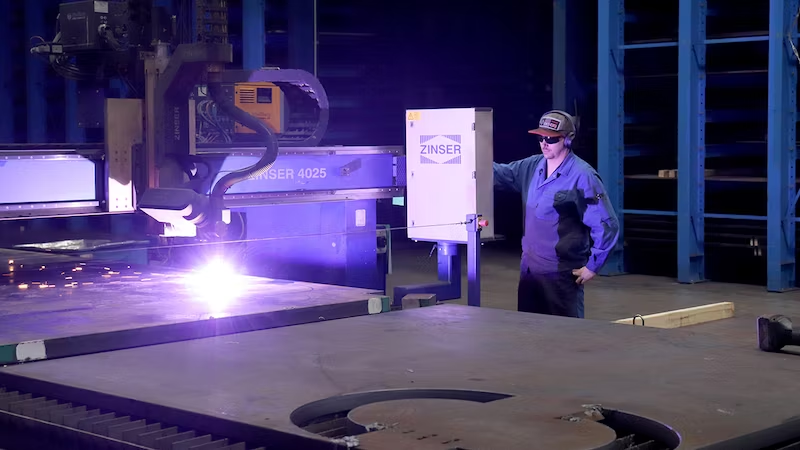
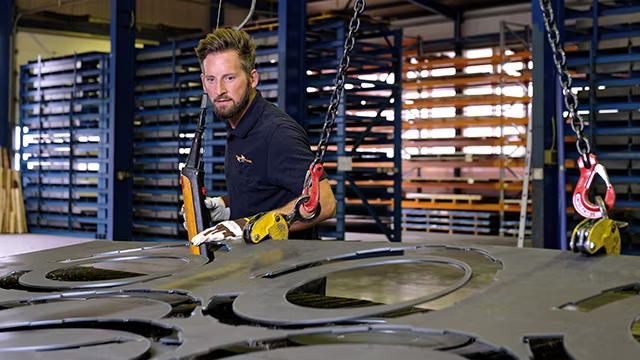
The automation is the most important aspect for Eiting. It runs like a thread through the entire company. “If there is an opportunity to automate a work step, we take it. Currently, there is no manual input except for order data. No one at our company is involved in permanent data maintenance,” explains Eiting. “Even shipping and handover to the freight forwarder is done automatically. All necessary information flows from the systems, such as ERP, into the production control system. The production control system supplies the plasma cutting system with order data and shows when the order can be produced and on which press. It takes over the automatic generation of the production plans and the work schedules, as well as the transfer to the sheet cutting system where the optimal nesting is carried out independently. The production control system indicates when the cutting can take place at the latest. If the nesting plan is not optimal, it is canceled and the system waits to see if another order with the same sheet thickness comes in. This saves material because there is less waste. The entire work process is fully automatic and we always have an up-to-date status. In the second work step, the cut rings are pressed into screw flights. Based on the data from the production control system, the orders are distributed to the presses.”

Producing short lead times

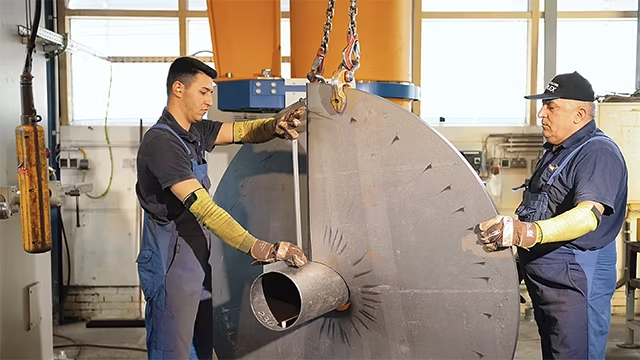
The time span between order and delivery is relatively short at C. E. Schneckenflügel. The screw flights are cut from sheet metal as rings, then pressed into shape. The customer selects the desired sheet type and thickness as well as their parameters for the screw flights from a stock capacity of 400 tons. The entire production process is exclusively order-related – production only starts when an order is received. As soon as an inquiry is received, the interested party receives a quotation in 24 hours. Once the order has been received, a binding delivery commitment is issued in five to 10 days, regardless of standard or special design. If it must be faster, the express option takes effect. This fast turnaround requires precise detailed production planning.

Maintaining delivery date promises

C. E. Schneckenflügel has about 2,500 active customers. Their order frequencies and volume significantly vary and can range from very small orders of 100 euros to several tens of thousands of euros. “Our goal is to make it as easy as possible for customers to place orders and deliver them as quickly as possible with the best quality. If we promise a delivery date, it must be met. We achieve this goal with Opcenter APS and the detailed production planning from A+B Solutions. Opcenter APS is the basis for the high productivity we have achieved today. It is the central software in our production,” claims Eiting.
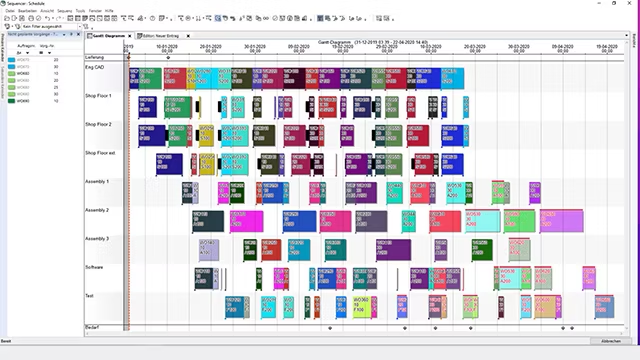
Using Opcenter Scheduling for detailed planning

A+B Solutions helped adapt Opcenter APS to C. E. Schneckenflügel’s manufacturing processes. To achieve a high degree of automation of the processes with short lead times, the focus is on Opcenter Scheduling. By using this module, production processes can be planned well in advance and controlled in the short term. The licensing distinguishes between planners and viewers. The planners include Eiting and Andre Bergenthal, production manager at C. E. Schneckenflügel. Information on production capacity and order status can only be viewed in the sales department. Approximately 100 orders per week are processed this way. Each order is divided into five to six operations, resulting in up to 600 operations that are managed weekly by Opcenter Scheduling.

Resolving process concerns with A+B Solutions

Eiting is happy with A+B Solutions’ performance in terms of consulting, configuration and customization. “By partnering with A+B solutions, we were able to deeply resolve our concerns. We are very satisfied with the implementation. Our production manager, the team and the specialists at A+B Solutions quickly found their way together,” Eiting continues. “From our point of view, it is crucial to show a willingness to change to clearly express one’s wishes and keep the project of intelligent production control in mind.” The reward is a clear increase in productivity that is more efficient than classic investments in people and machines.

Expanding pioneering position

Currently, implementing a quotation generator is in the pipeline, which draws all information on daily updated sheet metal prices, production time and delivery date directly from the systems. The quotation is generated in minutes, online. Opcenter APS plays a key role in this process, as the system accurately determines the current production capacity and the expected. The use of Opcenter Scheduling for detailed production planning makes C. E. Schneckenflügel a digital pioneer in the industry. “Our team became highly enthusiastic about digital detailed production planning once implementing this system. Everyone recognizes the advantages Opcenter APS brings us and the opportunities it opens for us,” claims Eiting. “This modern orientation makes us more attractive as an employer and establishes our competitiveness. Today, despite a higher workload, we have a much better overview of production and smooth processes. As a result, we are much more relaxed from working with greater efficiency. A+B Solutions really gave us digital wings with Siemens Opcenter APS.”

If we promise a delivery date, it must be met. We achieve this goal with Opcenter APS and the detailed production planning from A+B Solutions.

Rolf Eiting, Managing Director
C.E. Schneckenflügel GmbH

Achieving over 30% time savings in solar photovoltaic manufacturing with Siemens Plant Simulation software

Product: Tecnomatix
Industry: Solar Energy

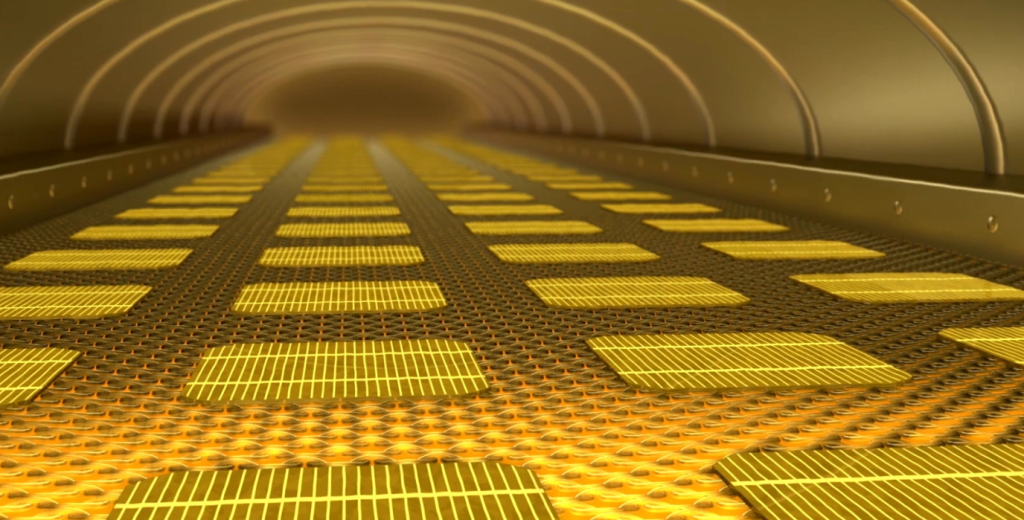
Photovoltaic manufacturing in the solar industry is facing increasingly diverse demands, requiring companies to balance economic efficiency with a sustainable vision for our planet. To meet these high standards, integrated and sophisticated technologies are essential throughout the entire value chain, from polysilicon production and ingot cutting to cell manufacturing and module assembly. Siemens Digital Industries Software Tecnomatix Plant Simulation software is a powerful tool that enables companies like M10 Solar Equipment GmbH to optimize their operations, resulting in remarkable time savings of over 30%.
Introducing M10 Solar Equipment GmbH

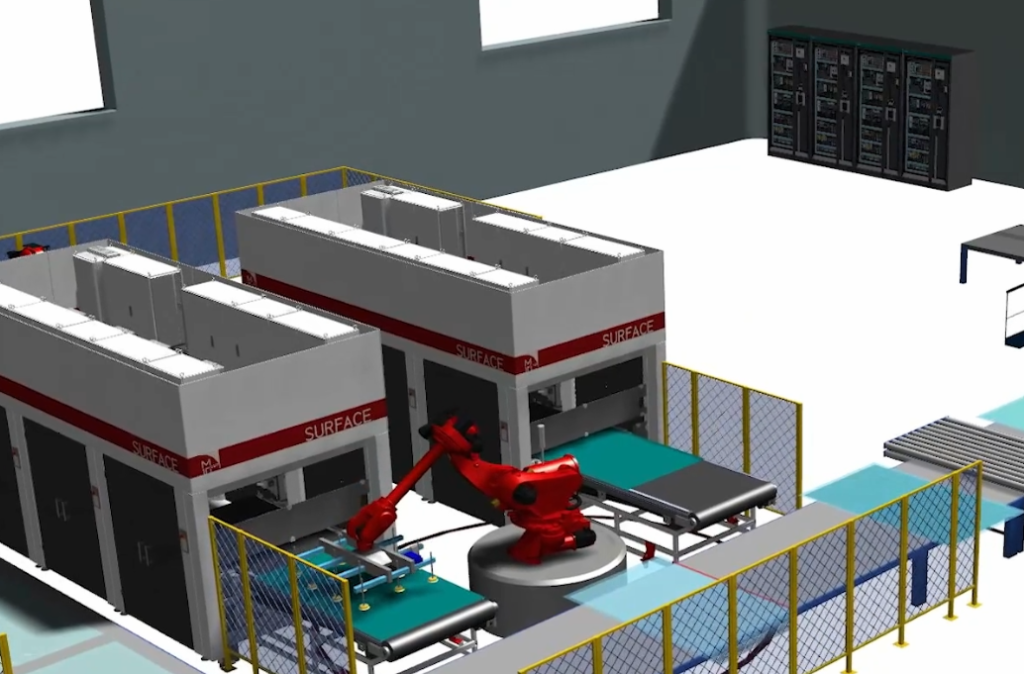
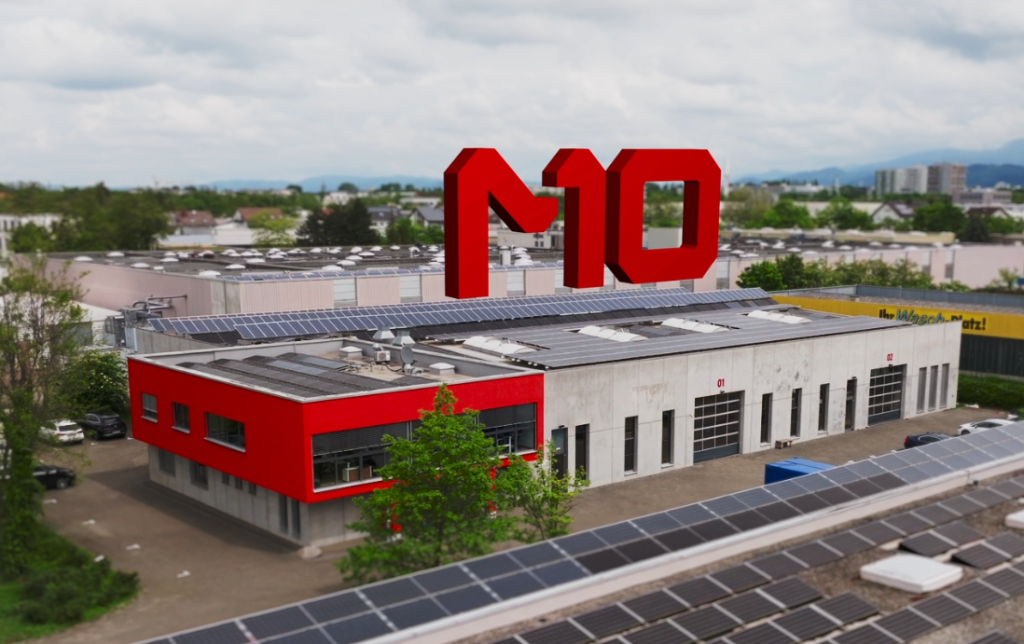
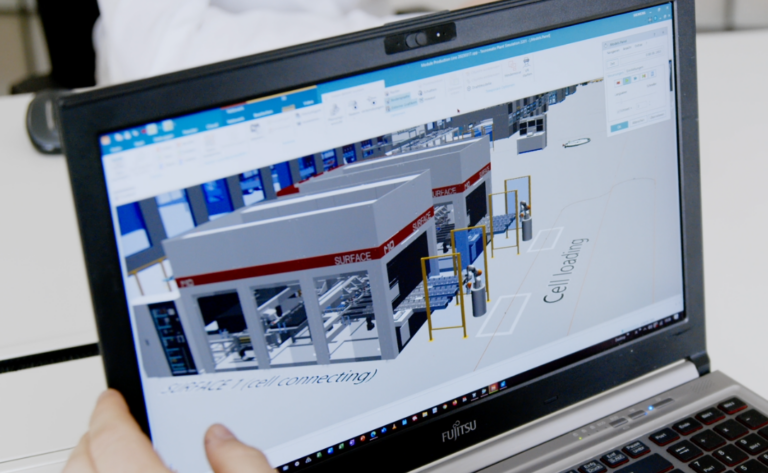
M10 Solar Equipment GmbH, a leading manufacturer of automatic systems for photovoltaic module production, is dedicated to advancing the global energy transition. Focusing on ECA (Electrically Conductive Adhesive) connection technology in conjunction with schematic technology, M10 developed the Surface machine to enable the industrial-scale implementation of this innovative module manufacturing approach. The company’s mission is to supply the European and global markets with cutting-edge machine technology that drives the renewable energy revolution.

The importance of simulation in development

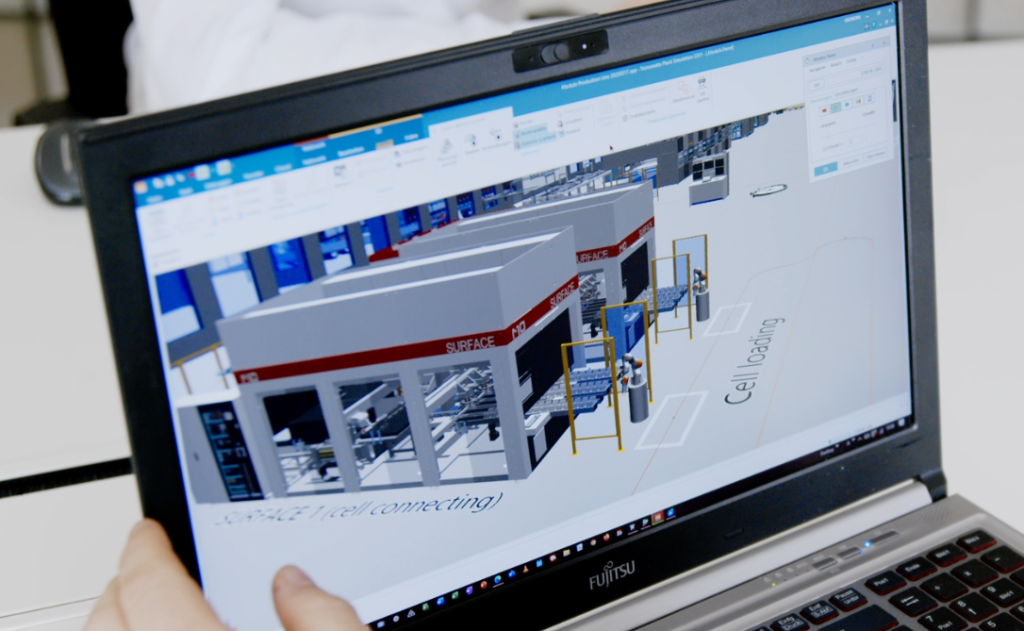
Simulation plays a pivotal role in the development process at M10. Utilizing Plant Simulation software for photovoltaic manufacturing, the company was able to accurately model its goals of producing 12,010 strips per hour. This simulation-based approach allowed them to optimize production lines, streamline processes, reduce employee travel distances, minimize machine downtimes, shorten setup times and optimize energy consumption. Through the collaboration with Siemens, M10 achieved their objectives and realized significant time savings of over 30% throughout the entire project duration.

Driving innovation and collaboration

The collaboration between Siemens and M10 for photovoltaic manufacturing brought significant advantages and enabled the creation of new industry standards in automation. This partnership empowered all stakeholders involved to perfectly align their expertise and leverage innovative technologies, providing a competitive advantage in the blossoming European production landscape, particularly in Germany. By working together as equals with shared goals, both companies were able to provide strong mutual support and achieve remarkable results. These efforts supported the growth of the solar industry, especially in solar glass production, contributing to the revitalization of European value chains and bolstering the renewable energy transition.

Conclusion

Siemens Tecnomatix Plant Simulation software has played a crucial role in enabling M10 Solar Equipment GmbH to achieve remarkable time savings of over 30% in their solar photovoltaic manufacturing processes. By leveraging this powerful simulation software, M10 Solar Equipment GmbH optimized their production line, resulting in reduced operational inefficiencies and enhanced productivity. This success story showcases the immense potential of collaboration between innovative companies and the impact it can have on the solar industry, the energy transition and the overall growth of sustainable manufacturing practices.
How the EDAG Group goes the extra mile to improve pedestrian safety

Product: Simcenter
Industry: Safety

Nearly 20% of all road accident fatalities in the EU are pedestrians. Car manufacturers all over the world want to improve pedestrian safety. In this blog, we share the story of the world’s leading mobility engineering experts, the EDAG Group AG in Germany.

Remember those adverts where a car drives into a wall, and the crash-test dummies inside are left intact? If you watched closely, you might have noticed that different dummies are used in different tests. This is because they are highly calibrated for each test, and any changes will affect their validation. You might have also noticed that the acceleration given to the car is always in one direction. This ensures the dummy does not change position before impact. The dummies are passive objects and can not reposition themselves. A test is ruined if they move out of position before the impact.  

Using dummies comes with three problems

Firstly, you can’t test until you have built a complete physical prototype. Secondly, you will need to destroy multiple vehicles to complete all the validation tests. Thirdly, you can not quickly test pre-crash maneuvers such as lane change.

From physical to virtual dummies

A few decades ago, manufacturers had to crash over a hundred vehicles while designing a single model. Today, only a fraction of that number is required. With the use of virtual models, engineers can design new, safer models quicker and more cheaply.

Simcenter Madymo simulates both dummy and human models, including models that can reposition themselves after and during a maneuver. It integrates Multibody Dynamics, Finite Elements, and CFD technologies in one single solver that includes a database dummy and human models that can be scaled to any size or to population percentiles.

This means that not only can you get the most realistic assessment of what will happen to occupants and pedestrians in a collision, but you can also carry out testing much earlier in the development phase. Once you have your virtual vehicle model, combine it with your Simcenter Madymo model, and you’ll get accurate test results before you’ve built a single prototype.

Crash Test Innovation of the Year

In 2021 Simcenter Madymo was named the ‘Crash Test Innovation of the Year’ by ATTI magazine. It is no wonder that more companies are turning to this simulation software to aid vehicle design.

Keeping pedestrians safe

EDAG Group supplies mobility engineering expertise to the worldwide automotive industry. Its CAE and Safety department specializes in attaining the highest safety levels for vehicles and meeting legal requirements and customer ratings for particular regions or companies.

The Active Hood is a common pedestrian safety solution for minimizing head injuries when a pedestrian is struck by a car. By automatically lifting the hood when a collision is detected, a space is created between the inside surface and the rigid components underneath. This ensures that when the head hits the hood, the head is much less likely to suffer serious damage.

But to develop an effective Active Hood, engineers need to understand exactly how a human body will behave when struck by that vehicle.

This is where Simcenter Madymo comes in

The CAE and Safety department, led by Stefan Hundertmark, uses Simcenter Madymo to simulate the kinematic behavior of pedestrians’ bodies in accidents to help their customers develop the safest possible vehicles. Read the case study to discover how Simcenter Madymo allows them to significantly reduce simulation time for human body behavior from days to hours while meeting all the necessary standards and regulations in pedestrian safety performance.

You can also find out more about how Simcenter Madymo enables manufacturers to meet regulations by watching the pedestrian safety systems webinar featuring Assistant Professor Corina Klug of TU Graz and Cindy Charlot, technical lead of the Safety and Comfort Modeling team of Simcenter Madymo. Corina Klug was instrumental in creating the Euro NCAP guidelines, which reduced EU pedestrian fatalities by 36%. Cindy explains how to use Simcenter Madymo in the validation process and how to comply with all certification requirements.

Vision Zero

The ultimate aim for The EDAG Group and other companies using Simcenter Madymo is to eliminate all traffic fatalities and severe injuries.

That might sound like a pipe dream, but it forms part of a global movement known as Vision Zero.

The campaign began in Sweden in the 1990s and has since proved successful across Europe and is now gaining momentum in the United States.

First and foremost, it challenges the traditional belief that road traffic deaths are inevitable and that saving lives is expensive. Vision Zero accepts that human failure and collisions will happen, but with a systemic approach, we can prevent fatal and severe crashes that lead to deaths.

Simcenter Madymo is a key element of Vision Zero as its occupant and pedestrian safety simulations help manufacturers design vehicles that offer the most protection.

Car manufacturers such as Volvo incorporate zero accidents in their vision. The basic philosophy of the Volvo Group Safety Vision is that accidents can be prevented. At the same time, they are aware that many things are outside of their control. This is why collaboration with other players is important. And change is happening. Also, suppliers such as ZF or Continental go the extra mile to contribute to the zero fatalities future. For more information, read this article on how Continental is heading for Vision Zero.

Pedestrian safety and ADAS & autonomous vehicles

Don’t be mistaken by thinking that ADAS (Advanced Driver Assistance Systems) and fully autonomous vehicles will render accident simulation obsolete.

In fact, they make it even more important.

Even with self-driving vehicles, collisions will still happen. The artificial intelligence controlling the vehicle needs to be able to minimize injury and calculate the best course of action in a split second. It’s no use swerving to avoid one car if that takes you into the path of several cars and causes a bigger crash.

Using Simcenter Madymo, developers of these systems can train them to maximize occupant and pedestrian safety. By understanding exactly how human bodies will be affected by collisions, AI can determine which action will result in the least injury. So instead of swerving, it may simply choose to brake. While not avoiding the collision completely, the reduction in speed, combined with ensuring airbags fire at the right moment and the seat belts do their job, will be enough to prevent serious injury. Ultimately, it will lead to fewer deaths, which is the number one priority on the path toward Vision Zero.

InMotion student team breaks records with 12-minute charging

Product: Simcenter
Industry: Motor Racing

Now that is something to celebrate…

Today to celebrate the fifth UNESCO International Day of Education, we want to highlight quite an exceptional story from the InMotion student team that just happens to use Siemens software – and of course: Simcenter.

Although InMotion has made a serious technical impact with its all-electric, track-ready Le Mans race car, the Revolution, the real beauty of this story is what this team of students has accomplished with their 12-minute fast-charging technology and next-generation battery packs.

Based on the Automotive Campus in Helmond, The Netherlands, InMotion is closely associated with the Technical University of Eindhoven. The InMotion team, which is run as a foundation and rotates students annually, practices continuous innovation. Experienced former members meet weekly with the current team to guarantee knowledge transfer and help solve technical challenges.

Moving forward and making progress

Over its ten-year history (plus), InMotion has built four, successive innovative race cars, including the heritage bio-ethanol Ignition, the fastest student e-Formula 3, the Fusion, the Vision, a more aerodynamic e-concept car and the Revolution, a true pioneer with its 12-minute e-charging time – that is faster than an e-Porsche or even a Tesla.

“Ten years being a student team is quite amazing. I think this is what makes InMotion special. The people that founded it ten years ago are still on the supervisory board. People that built the first electric race car, the Fusion, are still providing us knowledge on the Revolution. That’s unique. It’s about moving forward, making progress, and keeping continuity in the team,” states Ewout Timmermans, former Team Manager, InMotion.

Digital twin work experience

Working in a digital thread with a digital twin was new to some of the engineers on the team. Old school tactics, like prototyping and on-the-fly troubleshooting, are things left in the past for the new generation of InMotion engineers.

“I think for most of the engineers, it was a true eye opener that you can work in this detail and represent advanced design and engineering performance this accurately in a virtual world,” explains Thomas Kuijpers, former Technical Manager, InMotion.

The team is quick to point out that getting everyone up to speed on all the Siemens Xcelerator tools, pretty much the same package that many F1 teams use, btw, was far from an out-of-box experience. They had help from cards PLM Solutions, a Siemens Platinum Smart Expert Partner, based nearby in Best, The Netherlands.

“The consultants from cards PLM were always really quick to respond and help point us in the right direction when we got stuck,” explains Kuijpers. “Another plus point about Siemens, especially for students, is the Siemens Xcelerator Academy. Most of us had already followed courses online with university, but once we started working as a new team, we even had more access to more specific material and tutorials. This was very useful for us.”

Innovation on the mobility side

“We really try to innovate on the mobility side. We believe that fast charging is way too slow at this point, and that might be a reason that people do not drive electrically,” explains Martijn Scholtus, former Account Manager, InMotion. “With the Revolution, we want to make the charging time as fast as possible. It is charging in 12 minutes. That’s a big leap. And it’s a Le Mans race car.”

“The most prestigious race is the 24 Hours of Le Mans. It is really a dream of the entire team to race there with this technology.” Adds Scholtus, “If it works at the 24 Hours of Le Mans, then it’s going to work everywhere.”

The importance of hands-on experience

Clearly the InMotion team has put its footprint on the power of innovative technology and, without forgetting International Day of Education, the importance of getting out of the classroom for some hands-on experience and on-the-job training in the world of engineering education (or any higher education for that matter). But more importantly, the team shares passion for engineering innovation to make the world a better place. And, at Siemens and Simcenter, all we can say is that we are happy that we could help.

A short InMotion Photo Gallery

A rotating student team going into its 11th season, InMotion aims to inspire students, organizations, and society with its unique concept to accelerate the energy transition in the automotive industry. The team’s vision is to make future charging as fast as “filling up”. To showcase its unique electric refueling technology, the team is setting a goal to race in the toughest endurance racing environments, the 24 Hours of Le Mans.

The simulated top speed of the Revolution is 300 km/h. Either way, it definitely outpaced our famous technology demonstrator, the Simcenter SimRod, on the track. (Although you have to argue that even though SimRod never set out to be a famous race car with a need for speed, it can pack a bit of punch…and keep up with the big guys.)

Using AOI false call reduction software increases first pass yield by 42 percent

Product: Opcenter
Industry: Electronics

Opcenter Intelligence fits perfectly with our needs. We are always looking for innovative technical solutions and using Opcenter AOI FCR enabled significant improvement with reduced effort, which customers benefited from as well.

Tobias Morlock, Head of Process and Technology (Manufacturing)
Siemens Rastatt

Reducing false positives

Siemens Rastatt, which is part of Siemens AG, develops, manufactures and markets products and systems for heating, ventilation and air conditioning (HVAC) technology in Rastatt, Germany. Their products are used in a variety of applications, including forced-air burners, boilers, alternative heating systems and industrial plants. Siemens Rastatt provides complete system solutions as well as controls, actuators, valves, automatic burner control systems for oil and gas burners and associated test equipment.

Their components are found in residential boilers and larger systems, such as in airports. They are also used in industry; for example, in drying equipment in paint lines of major car manufacturers.

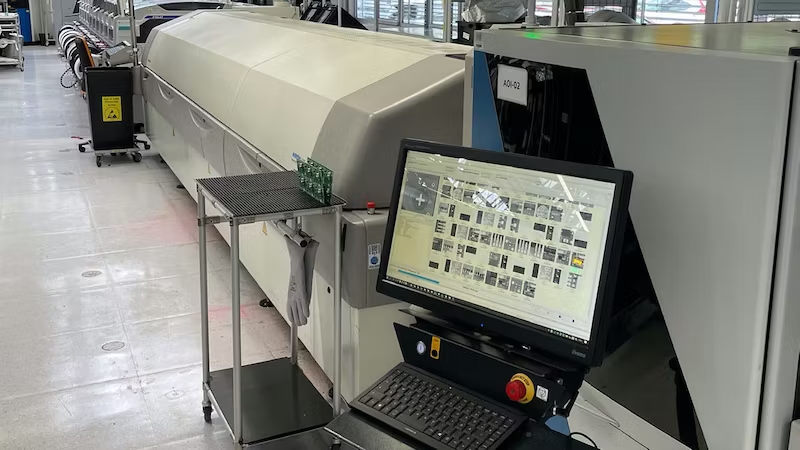
Siemens Rastatt has four production lines and each one includes an automated optical inspection (AOI) machine to check the printed circuit board assemblies (PCBA) on its products. The first pass yield (FPY) was only 60 percent and of the remaining 40 percent, 97.5 percent were false calls.

“Whenever the AOI detects a potential error, an operator must check the board manually,” says Tobias Morlock, head of process and technology (manufacturing) at Siemens Rastatt. “It requires time but it also leads to what is known in the industry as ‘alarm fatigue’ and eventually the operator will unintentionally make more mistakes and tend to be more likely to approve a faulty board, which will be discovered only later in the production process. This led to greater overhead and losses.

“Usually, we would ask our AOI experts to optimize the machine settings to decrease the level of false results. The AOI machine vendor offered a partial solution that helped to manually optimize the process. We were using that solution, but it provided limited help. When we became aware of the new Siemens Digital Industries Software solution, we tried it and were happy to see better results.”

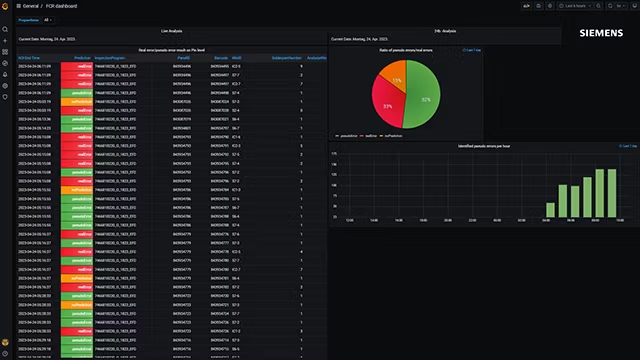
Siemens Rastatt adopted Opcenter™ Intelligence AOI False Call Reduction (FCR) software, which helped improve their initial FPY by 42 percent without any additional effort by their AOI experts. Opcenter Intelligence is part of the Siemens Xcelerator business platform of software, hardware and services. Using Siemens Xcelerator enables customers to accelerate their digital transformation at scale.

Siemens Rastatt analyzed several artificial intelligence (AI) solutions. Most of the solutions required additional effort for integrating and developing interfaces for machines and implementing hardware, etc.

“The huge benefit of using Opcenter Intelligence AOI False Call Reduction was that we got a complete package from a responsible partner that operates on its own and provides a finished solution,” says Morlock.

“Opcenter Intelligence fits perfectly with our needs. We are always looking for innovative technical solutions and using Opcenter AOI FCR enabled significant improvement with reduced effort, which customers benefited from as well.

One of the big advantages of Opcenter AOI FCR is that it is a SaaS solution that significantly reduces the effort on our side. It was completely ready to be integrated into our AOI machines. It took less than 12 weeks to go from the first discussions to the start of commissioning. Twelve weeks later we started the operation phase successfully.”

With Opcenter Intelligence AOI FCR, an AI model is generated from AOI measurements data and operator-classified data. Concerns regarding escapes or slips are addressed in the assessment stage. Models are then validated to prove they have equal or better accuracy than the baseline.

The AI model is deployed to the shop floor on Siemens Industrial Edge devices and receives measurement data in real time from the AOI. The Industrial Edge platform provides decentralized and local data acquisition, analytics and transfer capabilities. In addition, it allows the user to deploy any software rapidly and reliably on to the shop floor, which reduces complexity and information technology (IT) costs by providing edge device and application lifecycle management (ALM) functionalities. Further, the Industrial Edge ecosystem provides secure data handling in production by using industrial grade hardware.

Using Opcenter Intelligence does not require the customer domain experts to have knowledge of Industrial Edge as it is covered by the AI lifecycle.

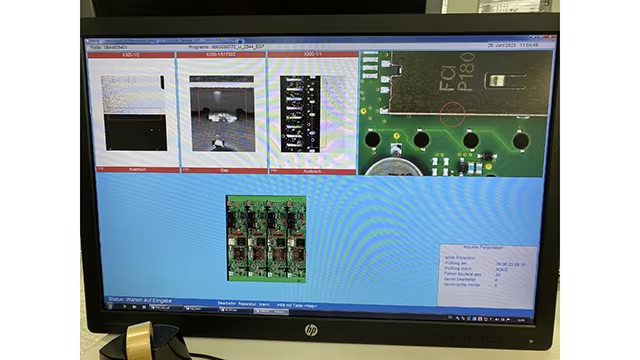
The AI consumes measurement data and outputs a decision: for instance, is the board a false call or potentially a real error? The result is delivered before the operator needs to check the board, saving time and effort. The AI is consistently more accurate than the operator and fewer mistakes are made deciding whether a real or false error has occurred.

Opcenter Intelligence AOI FCR is integrated into the four production lines. The AI result is seamlessly integrated into the testing station without disrupting the regular user experience of the operator.

Siemens provides full support

There were a number of keys to success to Siemens Rastatt’s implementation of Opcenter Intelligence AOI FCR: It does not require any AI expertise or user training and implementation was intuitive and rapid. The solution can be used out-of-the-box (OOTB) and the AOI experts do not experience any changes in their user experience.

The key factor is the seamless integration with the customer infrastructure and Siemens’ continual updating and refining of models. Machine learning operation services are used to continually optimize the availability and performance of models.

“The great thing about Opcenter Intelligence AOI FCR is you get the entire solution from one source,” says Morlock. “That makes it easy and fast to implement. Siemens Digital Industries Software does everything in the background. That helps us to focus our resources on more important tasks.

“Because of the smart solution from Siemens Digital Industries Software, the implementation was very quick. They provided a complete package of SaaS, including finished and tested interfaces to our AOI machine. Thanks to the remote access to our data, Siemens Digital Industries Software can work and optimize the AI in the background without any additional effort from us.”

Siemens Rastatt expects to use Opcenter Intelligence AOI FCR to drill down and configure the AOI parameters to directly impact the FPY at the source, and leverage AI to explore the routing of good boards sequentially. They are also considering using it as part of shop floor automation and for component analysis.

The huge benefit of using Opcenter Intelligence AOI False Call Reduction was that we got a complete package from a responsible partner that operates on its own and provides a finished solution.

Tobias Morlock, Head of Process and Technology (Manufacturing)
Siemens Rastatt

Reducing manual planning time for plastic material manufacturing

Product: Opcenter
Industry: Plastic

Not knowing or seeing the future and day-to-day planning was a nightmare. Then, I was introduced to Opcenter Scheduling, the best program for scheduling production.

Mitja Pavlic, Head of Planning Department
Plastoform Šmarjeta

Manufacturing thermoformable plastic material

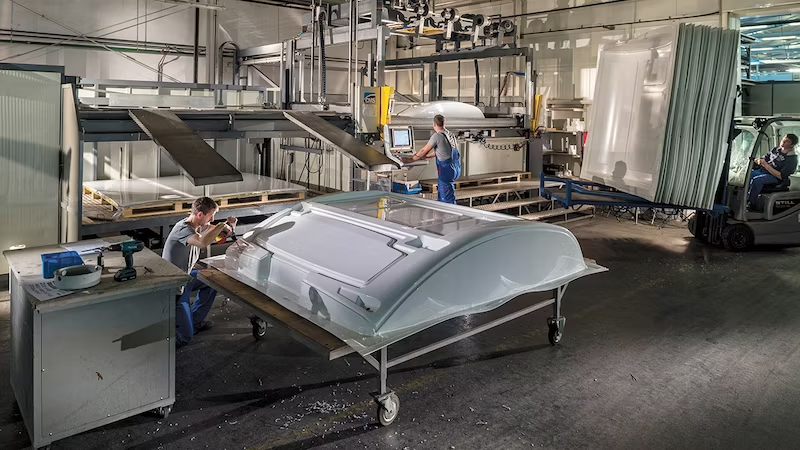
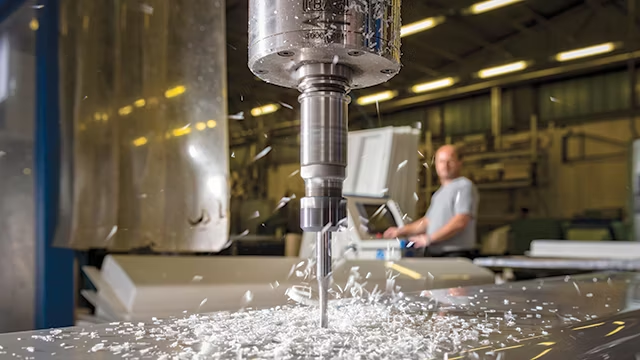
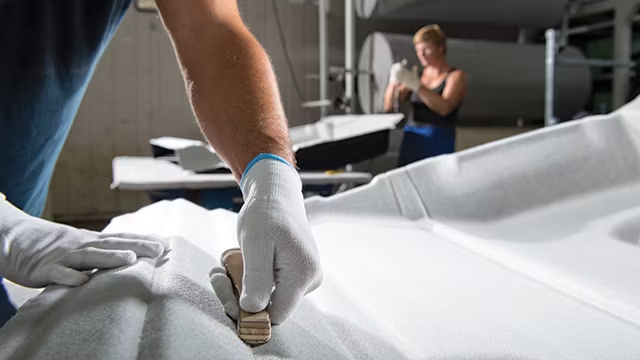
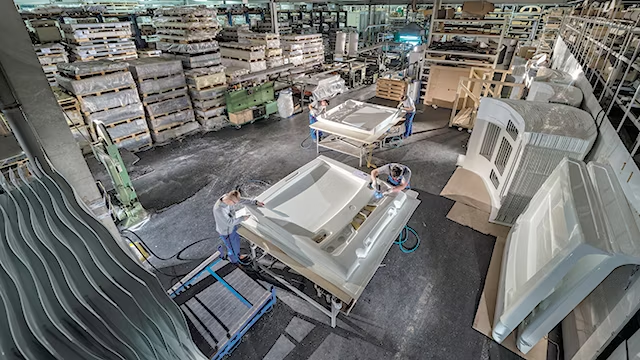
Plastoform is one of Europe’s leading thermoformable plastic material manufacturers for the automotive, agriculture and marine industries. Headquartered in Šmarješke Toplice, Slovenia, Plastoform manufactures products and parts used in industrial machinery, recreational and special vehicles, busses, medical equipment, gaming units and more. Plastoform employs the thermoforming process, which is a method for molding plastic sheets into three-dimensional shapes using heat. Its production line also consists of computer numerical control (CNC) trimming, polyurethane (PU) foam technology, textile finishing and 3D scanning.

The company stands out from its competitors with its high adaptability to customer design needs, in-house tooling manufacturing capabilities, proactive and reactive continuous improvement, process control and flexibility. Currently, its technologies consist of 20 thermoforming machines and 19 5-axis CNC trimming machines.

Optimizing production scheduling

Plastoform found that its machine setup was wasting time during production. Its CNC machines typically take 20 minutes to set up, whereas its more complicated machines take about an hour. Additionally, it needed a way to manage orders in its production process and its existing tools were not efficient.

With the goal to increase planning efficiency, Plastoform was seeking a modern information system that it could integrate with its existing enterprise resource planning (ERP) system to support production scheduling. It wanted to increase planning efficiency by creating schedules for longer periods of time as well as optimizing its machines and tooling.

“Most people think that planning is a stressful job. It is if you do not have the tools to do it,” explains Mitja Pavlic, head of planning department at Plastoform.

Using Opcenter Scheduling to increase planning efficiency

Being able to look far into the production future enables the team to discover bottlenecks and areas of improvement. Therefore, Plastoform selected Opcenter™ Scheduling software, which is a part of the Siemens Xcelerator business platform of software, hardware and services.

Plastoform worked with Siemens’ solution partner, INEA d.o.o., which specializes in solving complex operations and supply chain problems in manufacturing. INEA installed Opcenter Scheduling and offered valuable insights on production planning and detailed scheduling efficiencies while also providing an operations roadmap.

Unlike Plastoform’s previous scheduling system, Opcenter Scheduling considers existing manufacturing constraints such as materials, tools, operators and capacity for production schedule generation. Opcenter Scheduling’s out-of-the-box (OOTB) versions provide an interactive interface to understand the current workload on the shop floor and the impact of day-to-day changes on customer delivery.

“Not knowing or seeing the future and day-to-day planning was a nightmare. Then, I was introduced to Opcenter Scheduling, the best program for scheduling production,” explains Pavlic.

Incorporating Opcenter Scheduling helped Plastoform navigate operational obstacles and improve production planning and detailed scheduling. It enabled the team to test out multiple production options, ultimately reducing bottlenecks. “Efficient planning is a key challenge in guaranteeing quality service and products for our customers. After introducing Opcenter Scheduling, I can say that I finally see into the future,” states Pavlic.

Expanding the planning horizon

When Plastoform felt more in control of their production scheduling and had increased its planning horizon, it tested the concept of reducing stock levels and pushing just-in-time (JIT) deliveries by having materials delivered directly to the production area as needed. In a few projects, it reduced stock levels by over 90 percent during a 14-day production schedule and had stable JIT deliveries.

With longer production schedules, Plastoform could provide accurate delivery dates and enable its suppliers to deliver right on time when the materials were required. Using Opcenter Scheduling enabled the team to automatically schedule 20,000 working hours compared to previously manually scheduling only 8,000 working hours with many difficulties. Plastoform also reduced the number of weekly setups by increasing planning efficiency and optimizing tooling. This increased production time by eight percent.

Another benefit of a longer planning horizon is that it enables the team to provide more accurate delivery dates, resulting in higher customer satisfaction with on-time deliveries.

’’Plastoform is an excellent example of what can be done with the right tool and the right team. As a result of using Opcenter Scheduling, it improved its ERP data, scheduling process and the quality of the entire supply chain,” explains Helena Trdan Campa, Opcenter Scheduling project manager at INEA.

After seeing the positive results of the first Opcenter Scheduling implementation, Plastoform is thinking about expanding its system with additional Opcenter Scheduling configuration to further improve its state-of-the-art scheduling process.

Plastoform is an excellent example of what can be done with the right tool and the right team. As a result of using Opcenter Scheduling, it improved its ERP data, scheduling process and the quality of the entire supply chain.

Helena Trdan Campa, Opcenter Scheduling Project Manager
INEA d.o.o

Putting sound quality on the e-bike metric map with the award-winning Fuel EXe

Product: Simcenter
Industry: Bicycles
Trek Bicycle
Trek Bicycle (Trek) is based in Waterloo, Wisconsin and was founded in 1976. Trek designs and manufactures various types of bikes including electric mountain bikes, road/city bikes and other accessories.

Using Simcenter SCADAS XS and Simcenter Testlab Neo software let me focus less on how to get correct answers and more on what those answers were teaching me.

Paul Harder, Principal R&D Engineer
Trek Performance Research Group, Trek Bicycle

Trek Bicycle (Trek) is based in Waterloo, Wisconsin and was founded in 1976. Trek designs and manufactures various types of bikes including electric mountain bikes, road/city bikes and other accessories. Trek aims to achieve continuous innovation and high-tech performance throughout its entire product range.

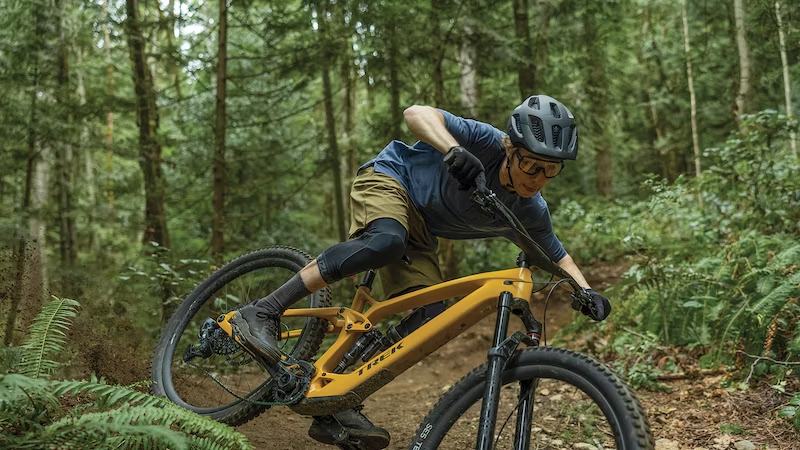
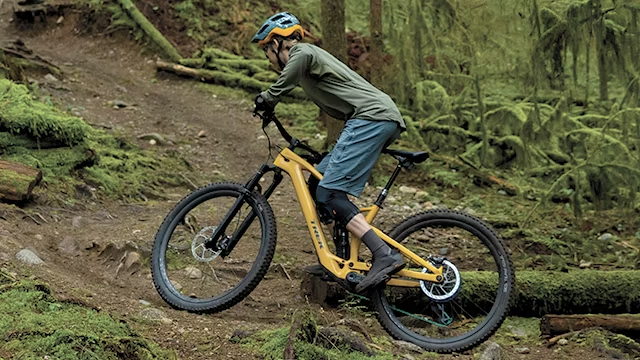
Trek Bicycle continues to innovate with the Fuel EXe bike, a pioneering line released in July 2022. The Fuel EXe is a high-powered electric mountain bike designed to provide riders with a quieter riding experience. The Fuel EXe includes high-quality Trek design, high-standard components, a lighter-weight yet tough frame and a comprehensive e-motor designed to enhance the sound experience for riders. Trek put e-bike acoustics on the map and is known for its innovative bike engineering group, including experienced mountain bike (MTB) engineers and dedicated bike-minded analysts who bring measurements and quantitative insight into new performance metrics like acoustics.

E-mountain bike acoustics

Trek is pioneering the concept of putting sound quality on the e-mountain bike metric map as it continues to be a hot topic in the industry.

“As Trek’s acoustics testing and analysis expert, which was not only a new role for me but a new type of role for the bike industry, we aimed to take Trek’s acoustics competency to the next level while applying new test and analysis methods to the Fuel EXe development cycle,” explains Paul Harder, principal research and development (R&D) engineer within the Trek Performance Research Group at Trek.

“It was quite the endeavor with a lot of firsts happening at the same time.”

The R&D engineers in Trek’s Performance Research Group tend to stay on the experimentation and simulation side of things, testing new prototype ideas and conducting experiments to seek out new knowledge in bike physics and human performance. This quest for new knowledge landed the team in the sound quality realm.

“Over the years, the industry has made a lot of progress to make e-bike motor and battery systems smaller, lighter, more integrated and more ‘natural’ to pedal,” says Harder. “But the inherent noise of electric motor and gearbox systems often remained a common downside. With the Fuel EXe, we had a unique opportunity to improve that last piece of the puzzle and make an e-bike that really has no downsides.”

To produce this e-bike, Trek partnered with Siemens Digital Industries Software to use Simcenter™ software as part of the design process to bring the Fuel EXe to life. Simcenter is part of the Siemens Xcelerator business platform of software, hardware and services.

Inspired by EVs

The team looked to the electric vehicle (EV) industry for inspiration. They realized that, like the early days of automotive EVs, the world of e-bike acoustics presented opportunities. The Trek team took acoustics full circle when investigating the options for the Fuel EXe in terms of the sound experience and unpleasant sounds. This included looking at industry-first acoustic metrics for the e-bike sector, like tonality and the articulation index.

“Since I almost always ride with other people, any noise that distracts from the ability to converse bothers me. This relates to the articulation index,” adds Harder. “Using tonality as our key metric for unpleasantness came from quite a bit of exploration and research into the many sound quality metrics that are commonly applied to electric motors.”

Integrating sound science with advanced engineering

Harder and the MTB engineering team at Trek knew the acoustic experience for the Fuel EXe depended heavily on the e-motor. The team was working with TQ’s HPR120 motor, which is a powerful but fairly loud motor. The team was looking for a smaller, quieter version of the motor. They found that TQ’s harmonic pin ring technology with minimum moving parts and unique gear meshing could play a role in making a new, quieter motor.

“We have an exclusive partnership with our e-motor OEM, TQ, so that means we can effectively collaborate when creating specs and testing our e-motors,” says Harder. This collaboration resulted in the HPR50 e-motor that’s in the Fuel EXe and Domane+”.

Making a great first impression

After the usual back and forth between Trek and TQ, the prototypes with the HPR50 were ready to hit the test trails. The Trek test riders thought the prototypes with the HPR50 e-motor sounded really good. This was great news, but Harder knew they would have more work to do.

“Our team had developed solid acoustics test and analysis capabilities, but we still needed to figure out how to quantify what ‘sounded really good’ meant in the context of an e-bike,” explains Harder. “We had acoustics as a key goal for the new TQ motor and we used the analysis to quantify that, understand it and track it as we decided between the many prototype iterations throughout the development process.”

From subjective opinions to objective measurements

The team started by measuring loudness and found out that Fuel EXe was nearly two times quieter than other e-bikes but the test riders subjectively thought this understated how much better it sounded.

“At this point, we realized just how important sound quality is to the e-bike experience and how important tonality as a key metric is for quantifying the pleasantness of electric motor noise,” says Harder. “We knew we had to get a little bit smarter about how we quantified these sound descriptions. So, we moved to the sound quality aspect, which has a ton of options. We looked closely at the EV acoustic space where we knew that tonality was a best practice.”

Executing the test on the trail and the sound studio

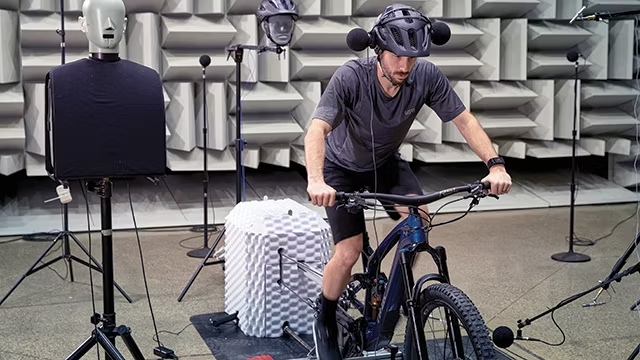
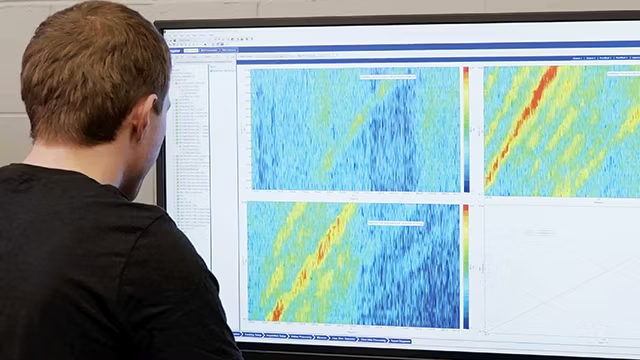
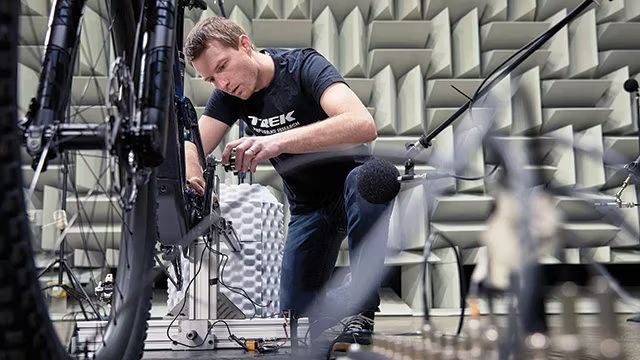
After the initial test rides, the team needed more concrete acoustic data to work with. They headed to the sound studio at the Trek factory headquarters in Waterloo, Wisconsin, which is where Trek’s private mountain bike trails are, to run more exploratory acoustic analyses. This included sound power and sound quality metrics such as loudness, tonality and articulation index using Simcenter testing solutions, like the portable, Simcenter SCADAS™ XS hardware and Simcenter Testlab™ Neo software, the next-generation software platform for multidisciplinary test-based performance engineering.

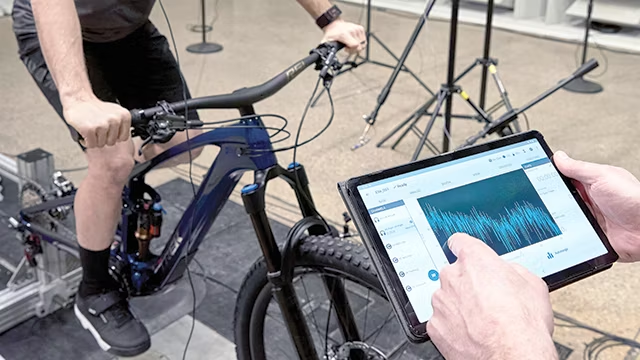
“Using Simcenter SCADAS XS to perform field testing is pretty easy because it fits in a bike jersey pocket, integrates seamlessly with the binaural headset and can be controlled wirelessly with the Simcenter Testlab Scope App on a tablet outside,” adds Harder. “During the trail tests, we also used a GPS and action camera to visualize the data in Simcenter Testlab Neo.”

The lab test setup included the Simcenter SCADAS XS, professional microphones, an acoustically-isolated stationary trainer set to 300W total resistance and, of course, the Trek Fuel EXe adjusted to maximum assist mode. The Trek team used Simcenter Testlab Neo according to the ECMA-74:2019 standard to calculate tonality.

“After researching various sound quality metrics, it became clear that tonality was the most representative of what our riders were hearing,” says Harder. “Thanks to using Simcenter Testlab, we could easily explore other relevant metrics like prominence ratio and articulation index. Nothing is worse than coding an algorithm by hand for a couple of days only to realize it’s not a useful metric for this test.”

Harder and team provided feedback throughout the prototyping process and ended up creating an advanced set of methods to diagnose and improve e-bike motor acoustics. As a final step, they verified the field and lab results on the final production motor for two days in an anechoic chamber. The final results proved that using Simcenter helped them design the Fuel EXe to sound five times more pleasant and nearly two times quieter than other popular e-mountain bikes.

The future of e-bike acoustics

As the HPR50 and Fuel EXe rolled into production, the Trek Performance Research Group realized that they were working on cutting-edge e-bike acoustics.

“Quantifying human sound perception is extremely complicated”, says Harder. “Using Simcenter SCADAS XS and Simcenter Testlab Neo software let me focus less on how to get correct answers and more on what those answers were teaching me. The ability to quickly test different metrics and interactively visualize, filter and playback data led to much quicker and more confident insights than we couldn’t have gotten otherwise.” Harder says, “The really exciting thing is that we can now leverage these tools and acoustic knowledge in even earlier stages of future e-motor and e-bike R&D projects.”

Using Simcenter SCADAS XS to perform field testing is pretty easy because it fits in a bike jersey pocket, integrates seamlessly with the binaural headset and can be controlled wirelessly with the Simcenter Testlab Scope App on a tablet outside.

Paul Harder, Principal R&D Engineer
Trek Performance Research Group, Trek Bicycle

How Northrop Grumman supercharged their digital transformation with PLM

Product: Teamcenter
Industry: Aerospace

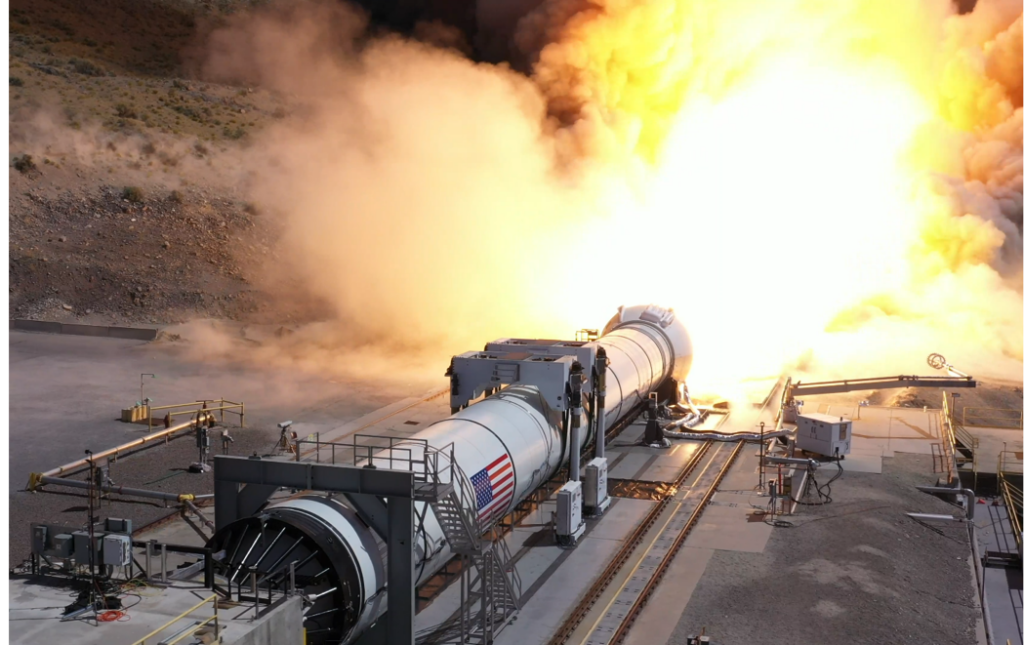
Northrop Grumman Corporation is an American multinational aerospace and defense technology company focused on digital transformation. With 90,000 employees and an annual revenue in excess of $30 billion, it is one of the world’s largest weapons manufacturers and military technology providers. Altair Kaminski, PLM Systems & Digital Strategy Manager, works in the propulsion systems division, which develops solid rocket motors for the space sector.

The propulsion systems division of Northrop Grumman uses Siemens’ product lifecycle management products to support its digital transformation goals, including for CAD management and manufacturing applications.

Verification management in complex product development environments

For aerospace manufacturers, certification is everything. In addition to already strict regulations, today’s aerospace and defense companies face additional demands for advancements such as aggressive sustainability targets and autonomous aircraft options, which require more integrated systems driven by software and electronics.

While managing the development of their highly complex product line, Northrop Grumman are acutely aware of these challenges. First and foremost, they must meet customer expectations to deliver new products and updates to existing products to market as fast as possible.

To expedite certification and bring products to market faster, it is essential for Northrop Grumman to drive efficiencies to their business processes and operations. When presented with a challenge like change management, product developers need to understand not only why a change is being made, but what impacts a change will have across the entire array of the product.

Reconciling a single change can be extremely tedious when the product data isn’t connected or in context for certification. The problem becomes exacerbated when one change must be multiplied across millions of parts and hundreds of suppliers. To ensure they have the right tools in place to support their programs, Northrop Grumman enlisted Siemens to aid them in their journey toward organizational digital transformation.

Embracing digital transformation

Kaminski and her group have embraced the concept of digital transformation. Digital transformation refers to the adoption of data and digital solutions for business activities and processes. With their PLM system serving as the backbone for enablement, digital transformation engages people with digital workflows to promote the full advantage of technology investments across an organization.

“Data is key to gaining information, but connecting it is where the real power of digital transformation comes from,” said Kaminski.

PLM is used by Northrop Grumman as a massive hub for storing and managing the information required to establish a digital thread throughout their product lifecycle. It helps to tie the relationships between data together, bring in additional information, and connect to external systems.

A system of systems approach in action

To support their digital transformation, Northrop Grumman has established a product lifecycle digital thread. The PLM system serves as the digital thread backbone, connecting information across functional domains and operational disciplines to enable individual functions to operate as a collaborative unit. This “system of systems” approach opens the door to explore powerful cross-functional capabilities like digital twins.

We were able to see a 25% weight reduction by being able to have access to both the model and run a bunch of iterations on the design in order to get optimal efficiency.

– Altair Kaminski, PLM Systems & Digital Strategy Manager

For their launch abort system manifold, Northrop Grumman leveraged digital twins, coordinating physical and virtual testing to achieve significant product weight reduction. With the ability to integrate simulation and virtual testing into their project plan, Northrop Grumman can plan the certification testing and documentation in real time. The digital thread creates a fully traceable and auditable chain of data from requirements through service, reducing the reliance on physical parts testing by linking virtual and physical testing for proof of compliance.

Armed with a digitalized virtual verification and validation strategy backed by PLM, Northrop Grumman can more efficiently produce and more confidently show proof of compliance of their advanced products and achieve certification faster.

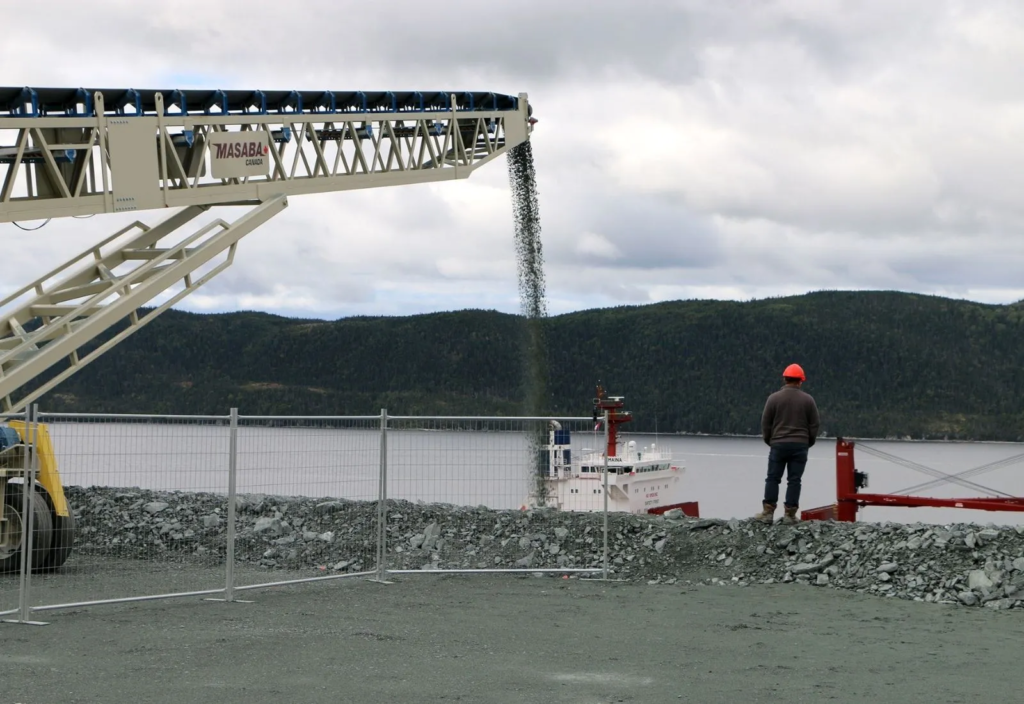
Masaba Canada: Improving operational efficiency in mining equipment manufacturing with Opcenter

Product: Opcenter
Industry: Heavy machinery

A leader in mining equipment
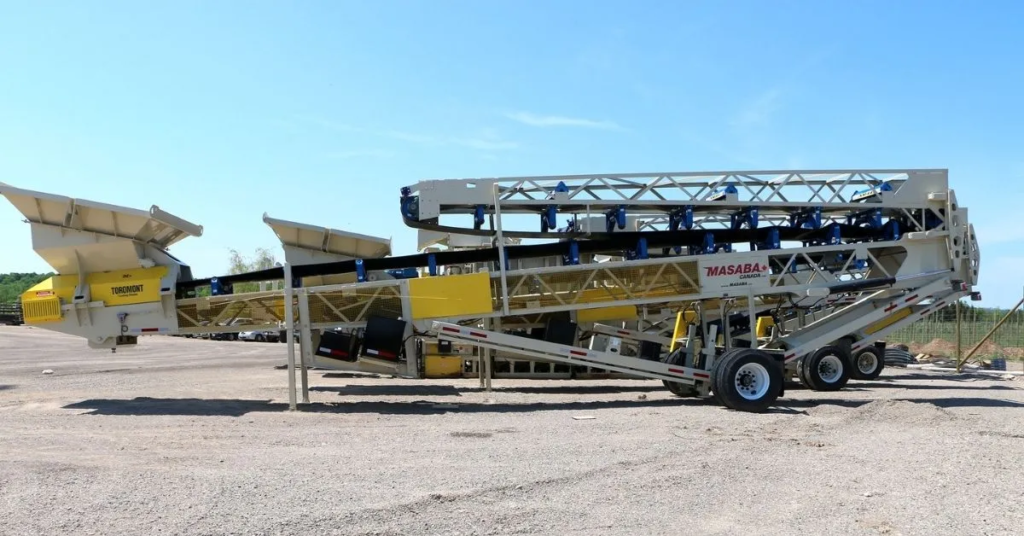
Masaba Inc. is a manufacturer of mining and aggregate equipment. Masaba Canada was first established in 2009, when Masaba Mining was experiencing a high demand for its equipment. The facility was originally located in Brampton, Ontario until 2013, when Masaba Canada relocated to a larger facility in Clarksburg, Ontario due to growth in the Canadian market. Masaba offers a complete line of portable and stationary conveyors and surge bins and machinery for crushing, screening and wash-ing. Masaba also designs custom equipment to customer specifications. All of the compa-ny‘s equipment is designed to withstand some of the hardest working environments.
Increasing demand“We’ve seen increased demand for higher tonnage, reduced setup and permanent custom-built plants,” says John Elmes, manufacturing manager at Masaba Increasing demand.


“We’ve seen increased demand for higher tonnage, reduced setup and permanent custom-built plants,” says John Elmes, manufacturing manager at Masaba Canada. “With custom plants, each one is different and difficult to plan.”Elmes’s job includes managing personnel and project timelines and overseeing product deliv-ery and material purchasing for the mining system products. Masaba’s Canadian plant has six departments – saw, machine, fabrication, sandblast, paint, and assembly – that produce permanent and mobile material handling systems.


Productivity for the busy season
Masaba customers often request design changes after the production for their order is underway. “The addition of extra features by customers during the build process, which can completely change the end product, the number of production hours and material resources for the work order, is one of our key challenges,” explains Elmes. Since Masaba systems are for mining and aggregate customers, most projects need to be in place by early March when the weather breaks. “Everybody wants the same delivery date, but order dates fluctuate, adding operational complexity,” says Elmes. “The question for us is how to get the most productivity during our busy season.

”Masaba sought to increase productivity through efficient production. The company hoped to improve production planning and scheduling using the capabilities of its enterprise resource planning (ERP) system. The planning and scheduling tools of the ERP system were based on the infinite capacity planning model, which plans production activities backward from a fixed customer due date and does not consider resource constraints, existing work and commitments of the resources. Masaba needed a planning and scheduling solution that recognized its production resource constraints and enabled manag-ers to determine the impact of new orders or customer changes on current produc-tion. Such a solution could help Masaba improve planning and scheduling accuracy and flexibility, and update changing priori-ties, schedules and inventory plans. “Our biggest challenge with custom made-to- order equipment is understanding lead times and adjusting accordingly to what’s happening in the production facility,” says Elmes.


The solution: Opcenter APS

In 2019, Masaba selected Siemens’ Opcenter™ Adavanced Planning and Scheduling (APS) software to help navigate operational obstacles and improve produc-tion planning and detailed scheduling. Opcenter APS is part of the Opcenter family of manufacturing operations man-agement solutions, which is part of the Siemens Xcelerator business platform of software, hardware and services. Masaba relied on the expertise of SNic Solutions, a Siemens solution partner spe-cializing in solving complex operations and supply chain problems in manufacturing. SNic Solutions provided and installed Opcenter APS and offered valuable insights on production planning and detailed scheduling efficiencies for Masaba while also providing an operations roadmap. Unlike the production planning module of its enterprise resource planning (ERP) sys-tem, Opcenter APS scheduling software takes into account existing manufacturing constraints such as materials, tools, opera-tors and capacity to generate production schedules. The software’s out-of-the-box versions provide an interactive interface to understand the current load on the shop floor and the impact of day-to-day changes on customer delivery. Advanced versions have an application programming interface (API) that has enabled SNic Solutions to build industry-specific extensions for preci-sion engineering, tire manufacturing, food production, plastics, packaging and other applications.


Add machinery or personnel?
One of the key decisions in manufacturing planning is whether to increase capacity through the addition of machinery or per-sonnel. After the introduction of Siemens’ Opcenter production scheduling, Masaba realized that increasing the number of machines was not always the answer. The MOM software’s visibility into Masaba’s production operations revealed that personnel utilization could achieve greater efficiency than the addition of more machines. Using Opcenter, Masaba can easily reallo-cate personnel as projects and timelines change. “Opcenter gives us the capability to reassign workers to different depart-ments and see how it affects the schedule,” says Elmes.

“If we see fabrica-tion is falling behind, then we add personnel to that department to meet weekly goals.”An essential feature of the software for Masaba is the ability to conduct “what-if” experiments. With uncertain demand, Masaba wanted to ensure that its manu-facturing would fulfill revenue-producing orders rather than expand the inventories of its distributors. Using Opcenter, produc-tion schedulers can insert a new work order between two existing work orders and accurately determine the impact of the reschedule. This gave Masaba the ability to allocate manufacturing orders to the shop floor that were “make to order” versus “make to stock.”

The efficiency gains continue at Masaba as the company moves past the first phase of the Opcenter implementation. Masaba was able to expand utilization of its nine-per-son fabrication department by adding a third work order to the department. The software recognized, by way of capacity usage graphs, that two work orders only needed to meet 60 percent completion for a particular week, allowing a third work order to be added. “Opcenter removes these inefficiencies and shows that adding more machinery isn’t always the answer,” says Elmes.
Streamlined integration with ERP
In 2020, Masaba extended the integration of Opcenter with the company’s ERP sys-tem. SNic Solutions added its order accelerator extension, which imports bills-of-materials (BOMs) from the compa-ny’s ERP system directly into Opcenter.


Quick answers for customers
Masaba’s data-centered approach and its break from older operational approaches also delivers quick answers to customers on delivery timelines or changes in project scope. “Masaba is always improving cus-tomer responsiveness and experience, and Opcenter helped us understand our work order timelines and quickly respond to customers regarding delivery dates,” says Elmes. The operational efficiencies revealed by production planning and scheduling soft-ware are helping companies to reduce machinery expenditures.

“Production scheduling as the first step to digital trans-formation in manufacturing operations management is improving schedule attain-ment and helping customers avoid unnecessary capital expenditures,” says Nikhil Joshi, founder of SNic Solutions. In addition to increasing manufacturing efficiency, Masaba discovered that its sales department could use Opcenter to com-municate project timelines more quickly and provide more data to its customers based on calculated timelines. Masaba improved its on-time deliveries by 15 per-cent in 2020, a critical achievement in an industry where delivery timelines are complex.

CREAFORM 3D SCANNERS HELPED FORD RESTORE MICHIGAN CENTRAL STATION

Product: Creaform 3D
Industry: Architecture

Making a Difference in the Community

In 2018, Ford acquired the century-old building, aspiring to restore it to its former glory. The upgrade also involves plans to use the site as a new mobility innovation district and as a hub for the development of Ford’s autonomous vehicles.

Nevertheless, time has taken its toll on the building, with many architectural elements now unrecognizable or even completely missing. Complicating things further, the building is so old that its original architectural plans cannot be found.

Challenges Awaiting the Restoration Team

To solve problems along the way and successfully complete this unique restoration project, there were two essential tasks: finding the right partner and using the right technology. Thanks to valuable help from Computer Aided Technology (CATI) and their world-renowned 3D scanning solutions, Ford has been able to move the project along and get through the preliminary restoration phases.

It All Starts with the Right Partner
For help in restoring the ceiling and window components, Ford turned to CATI, whose expertise, problem-solving skills, and continuous support made it possible to overcome challenges as they arose. Thanks to their team’s experience and knowledge, they were able to consider various approaches to resolving issues; CATI’s engineering and manufacturing experts could then choose the right solutions and implement them effectively.
The team being responsive to requests and flexible in how they work resulted in quicker turnaround times in terms of quality control and reverse engineering, which Ford really appreciated. This strategic relationship with CATI and its selection of market-proven technology contributed to Ford’s success in this titanic project.

New Technology Required to Rebuild the Old Train Station

The architects who designed the Beaux-Arts style station had also worked on Grand Central Terminal in New York City. Therefore, in its glory days, the building was rich in architectural elements that are now damaged or partially missing. To ensure historical accuracy in recreating some of its original architectural pieces, the restoration team needed to be able to replicate the right level of detail.

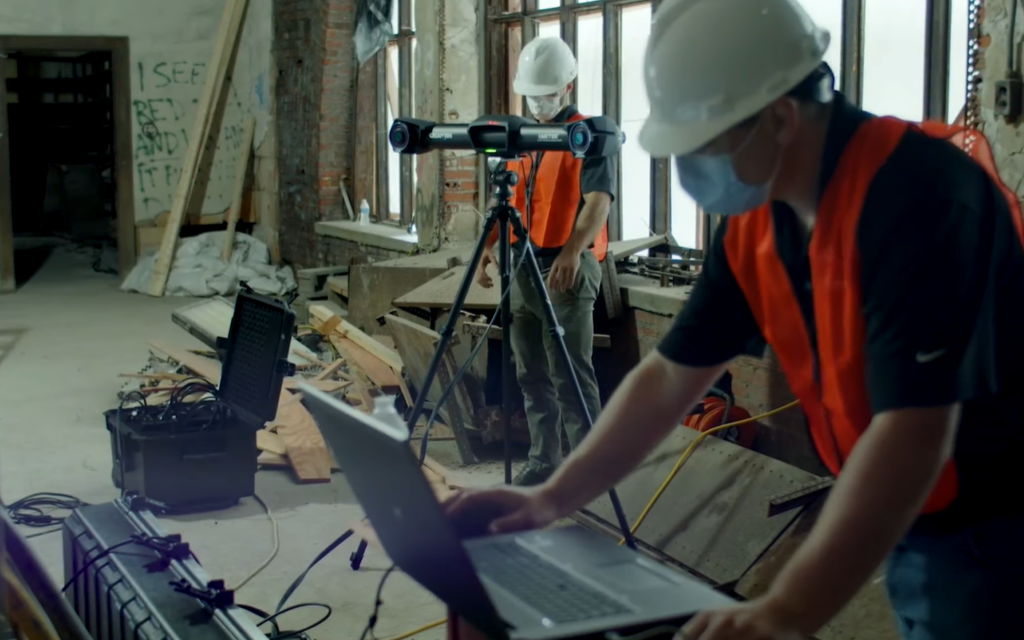
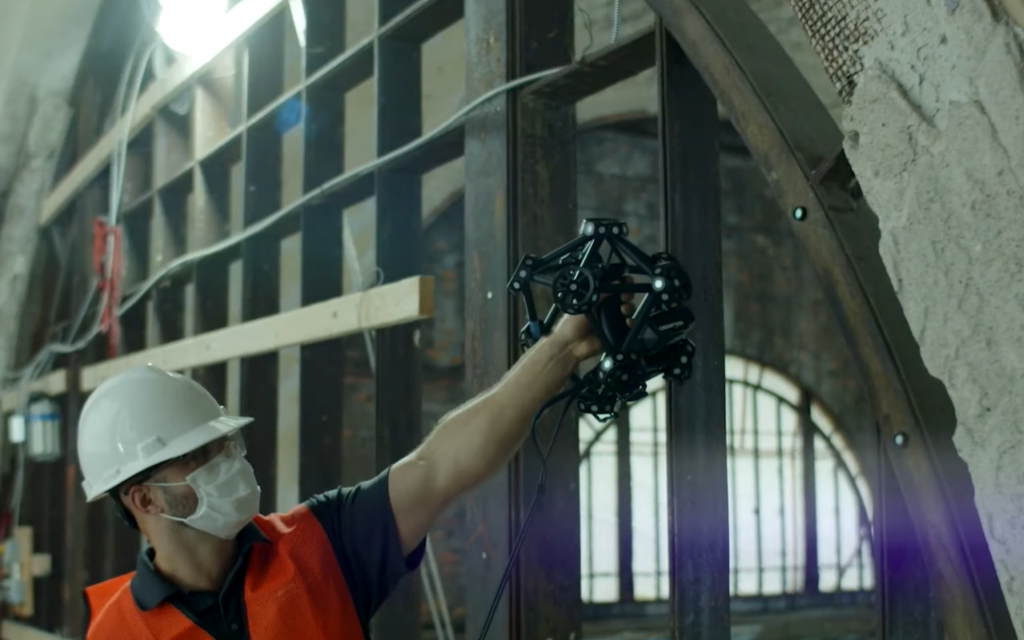
Creaform 3D scanners help turn intricate designs into usable 3D data. With the MetraSCAN 3D and its 15 cross sections, the restoration experts could measure the finest details, digitize the damaged parts of the building, and upload them into software where they could digitally repair them. The digitalized files were thus used to recreate the missing physical pieces in their original forms.

In short, 3D scanning technology made the restoration process faster and more precise, which enables engineers to take measurements and capture information that might have been impossible to obtain with traditional methods.

Heritage Preservation Is Where Old Objects Meet New Technology

Preserving cultural heritage is a delicate task that generally involves reverse engineering – the process of reconstructing a physical object as a 3D model to recover its design intent. Since the computer-aided design (CAD) models or the plans are often difficult to find or no longer available, archivists and heritage managers must use modern technologies to recover 3D data and recreate 3D models.

High-resolution, versatile, easy-to-use, and quick 3D scanning tools and software, such as the MetraSCAN 3D and VXModel, are the preferred solutions for efficiently scanning decorative elements of an architectural design and digitally creating 3D models with maximum quality and realism in order to restore them.

A Historical Symbol Brought Back to Life

Ford wished to make a difference in its community by creating jobs and restoring the former glory of a symbol of innovation from the past. The motor company did so by partnering with CATI experts who employed Creaform 3D scanning solutions. This new generation of technologies was used to recreate architectural details lost to exposure and vandalism.

Modern technology has helped to restore a once-iconic train station that had become a famous urban ruin, transforming it into a new innovation hub where future technologies will be developed and deployed. Creaform is proud to have contributed, through its valuable partner CATI, to this restoration effort and the realization of Ford’s visionary ideas.

×