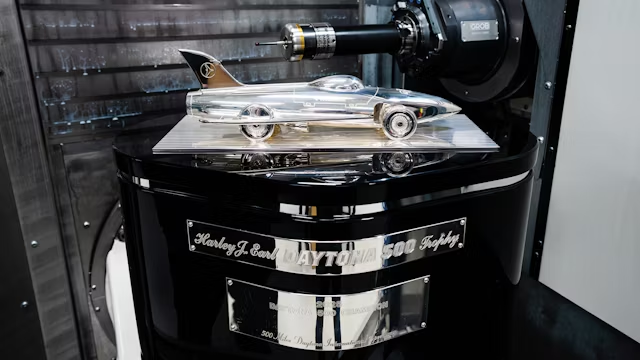
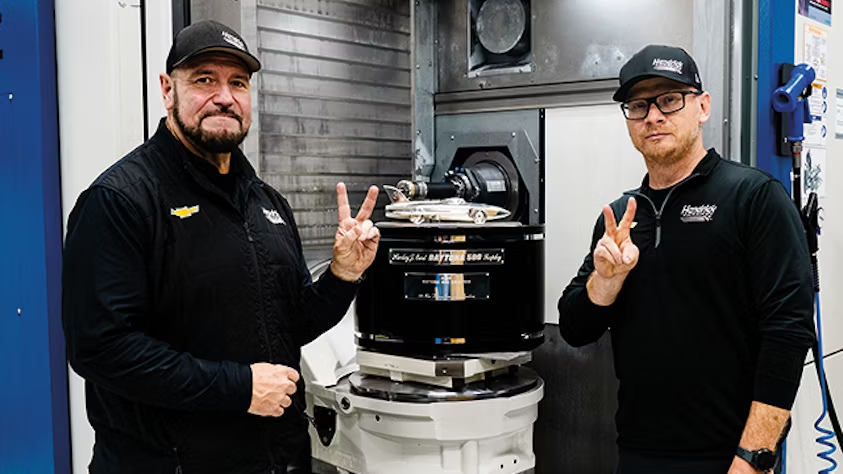
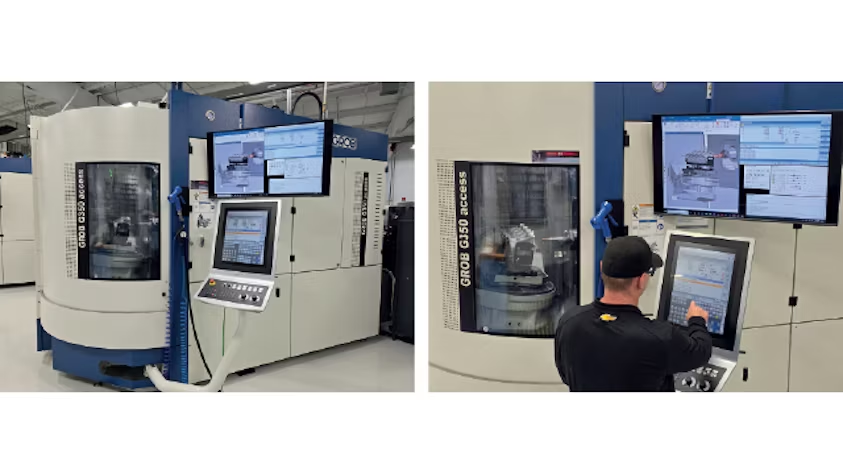
“We now use VNCK every day. It’s been an excellent tool, not just for manufacturing and improving programs, but also as a teaching tool to help us learn the controller.” — Michael Tummond, Engine Engineering Manager, Hendrick Motorsports
Faster, More Powerful Engines
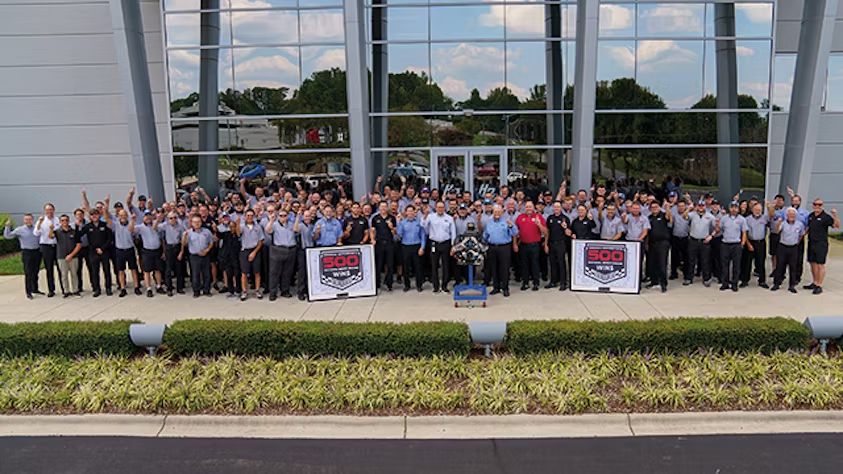
Founded by Rick Hendrick in 1984, Hendrick Motorsports is the most successful team in NASCAR Cup Series history. At the sport’s top level, the organization holds all-time records in every major category: championships, points-paying wins, and laps led. With over 100 team members, its engine department supports more than 500 racing events per year, supplying horsepower for teams in both the Xfinity Series and the top-tier Cup Series. Hendrick engines have powered more than 500 wins across NASCAR’s three national touring series.
In a sport where performance relies heavily on engine power, having efficient, powerful, and durable engines is non-negotiable. That means embracing cutting-edge technology and constantly finding innovative ways to stay ahead of the pack.
Driving Innovation with Siemens and Swoosh Technologies
To stay at the forefront of engine innovation, Hendrick Motorsports partnered with Swoosh Technologies—a Siemens Digital Industries Software partner—and adopted NX™ and VNCK (Virtual Numerical Control Kernel), both part of the Siemens Xcelerator portfolio of software, hardware, and services.
Prioritizing Accuracy and Repeatability
The team’s goal was clear: build better engines. But they had reached the limits of their old equipment and needed more accurate and repeatable results. After a careful evaluation, they invested in higher-precision machines equipped with Siemens controllers.
“We’ve always been a Siemens-driven company,” explains Tummond. “All of our product lifecycle management runs through Siemens software, but we’d never used Siemens numerical controllers for manufacturing. This was our first time, so we reached out to Swoosh Technologies for support.”
The Value of the Digital Twin
Once the new equipment was in place, a new challenge emerged: learning how to use it. With support from Swoosh and Siemens, the team quickly got up to speed and discovered how VNCK and the digital twin could help them improve part production.
“All of our product data was already managed through Siemens software, but it stopped there. We used Siemens for programming, but now that our machines run Siemens controllers, the integration and connectivity between the two has been great,” says Tummond.
A More Efficient Engine Design Process
Along with the new machines, Hendrick Motorsports invested in a machine simulation kit and postprocessor to bring everything together.
“The one piece of software I took a gamble on was VNCK. At first, I thought it just gave digital readouts from the desktop—which would be useful for training—but it turned out to be a full-blown digital twin.”
With VNCK, the team can analyze any machine parameter directly from their desks, revolutionizing how they program and simulate.
“VNCK allows us to write and test programs away from the machine. Programming itself might be simple, but the tolerances we’re chasing are incredibly tight. VNCK lets us prove part alignment before we make any cuts.”
Standout Results:
Zero scrap rate thanks to pre-validation with simulation.
10x improvement in precision, achieving ten-thousandths of an inch vs. thousandths.
50% reduction in setup time, cutting engine block setup from one hour to just minutes.
Faster diagnosis of errors in production.
Full simulation of all processes—moving beyond basic toolpath verification in NX.
A New Simulation-First Culture
Before this shift, the engine department didn’t use simulation in manufacturing. Today, everything is simulated.
“We weren’t taking advantage of the digital twin or even machine simulation before—just the out-of-the-box toolpath verification in NX. Now, with these Siemens solutions, we’re more confident in our programming, especially as our part alignments grow more complex,” says Tummond.
Thanks to NX, VNCK, and Siemens controllers, Hendrick Motorsports has reached a new level of precision.
“We used to be happy with a few thousandths of an inch. Now, we’re working with ten-thousandths. We’ve improved our accuracy tenfold.”
Racing Toward the Future
Currently, only 3 out of 50 machines on the Hendrick Motorsports campus have VNCK capabilities. Looking ahead, the team plans to expand its use of digital twin technology and bring more high-precision machines into their workflow.
“We need to flip the script. This experience has opened our eyes to what’s possible—and what we need to build faster race cars,” concludes Tummond.
Curious about how simulation and digital twins can transform your manufacturing process? Discover what Siemens and its partners can do for your team.
In an era of digital transformation, companies are seeking engineers who are not only technically proficient but also fluent in the digital tools that are reshaping the manufacturing industry. Graz University of Technology (TU Graz) in Austria is responding to this challenge by equipping students with hands-on experience in model-based design, simulation, automation, and closed-loop manufacturing — all powered by Siemens Xcelerator.
A Modern Education for a Digital Industry
At TU Graz, the Faculty of Mechanical Engineering and Economic Sciences combines mechanical engineering with business insight to educate future-ready professionals. As Dr. Franz Haas, Dean of the faculty, explains:
“Our mission is to develop innovative, interdisciplinary, and holistic solutions for the full lifecycle of products in automotive, energy, and production engineering.”
From the first semesters of the bachelor’s degree through master’s and doctoral programs, TU Graz students are immersed in computer-aided engineering tools and digital workflows. Through the Siemens Xcelerator platform — which includes software, hardware, and services — they gain early access to the same technologies used in cutting-edge global industries.
The smartfactory@tugraz: A Living Lab
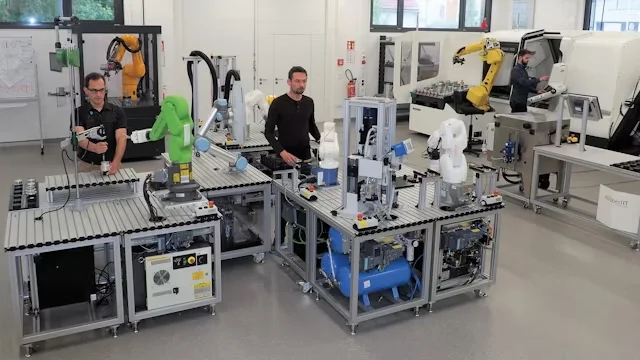
At the heart of TU Graz’s innovation ecosystem is the smartfactory@tugraz, a learning and research facility designed to explore and demonstrate agile, autonomous, and digital production. It’s part of the Smart Production Graz initiative and offers:
Real-time production line reconfiguration
Integration of robotics and additive manufacturing
A private 5G network to support industrial IoT
A safe space for companies to test new manufacturing approaches
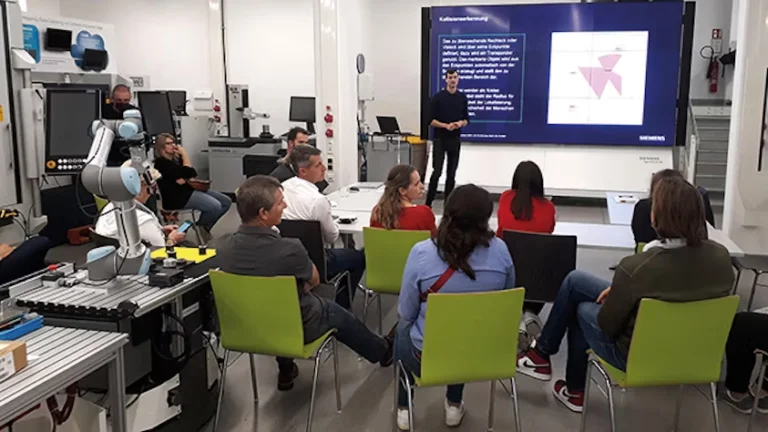
This environment allows students, researchers, and partners to experiment with advanced concepts — from automated tool transport using mobile manipulators to full-scale digital twin applications.
Software-Based Manufacturing in Action
In the smart factory, students use Siemens Digital Industries Software to explore a fully connected product development and manufacturing process. They apply:
NX™ for CAD/CAM
Teamcenter® for PLM
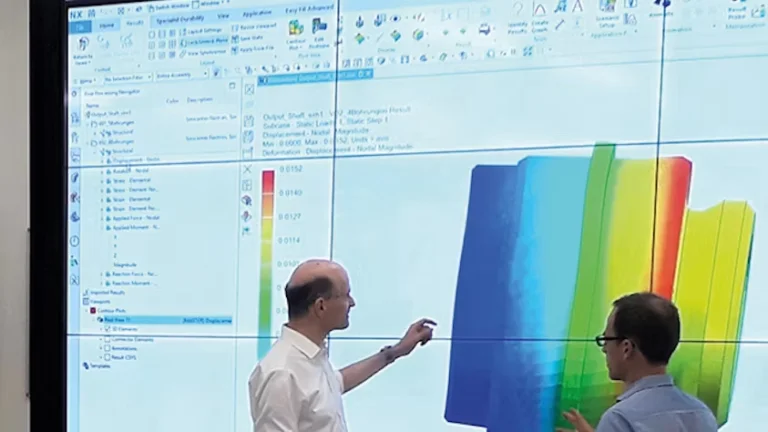
Simcenter™ Nastran for structural simulation
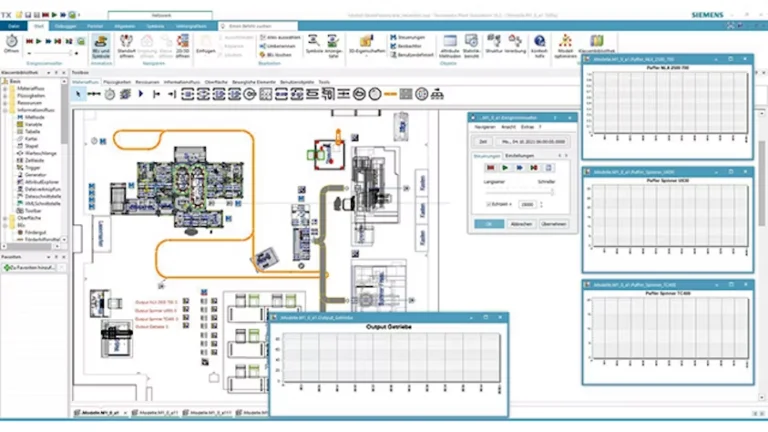
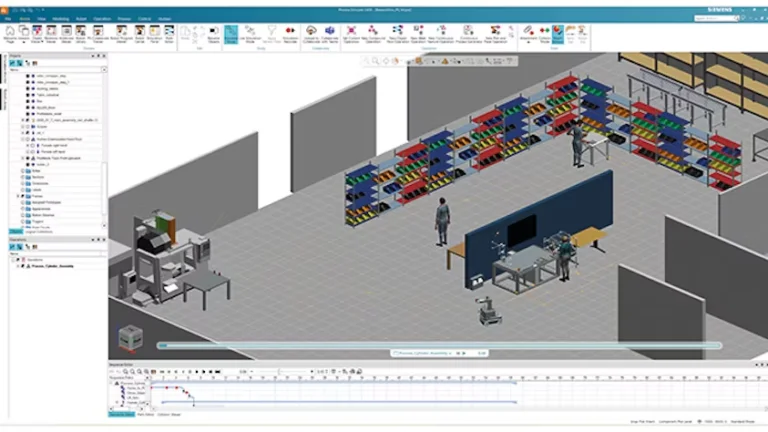
Tecnomatix® for digital manufacturing and robotics simulation
With this software suite, they can design, simulate, and optimize production processes long before physical implementation. They also use virtual commissioning to test PLCs and automation systems digitally, reducing real-world commissioning time and safety risks.
Closed-Loop Manufacturing and Vertical Integration
Thanks to full data consistency from design to execution, TU Graz students experience true closed-loop manufacturing. Updates made by machine operators in the factory are automatically sent back to the digital design environment via Teamcenter and NX Open, allowing for continuous optimization.
Key advantages include:
Real-time location tracking of mobile assets
Predictive maintenance using machine data
Tool digitization via laser scanning and integration into NX CAM
A connected tool database using Teamcenter X Resource Management
Additionally, the university links its smart factory with other academic pilot factories in Austria using Insights Hub, creating a virtual network of collaborative innovation.
A Model for the Factories of the Future
At TU Graz, future engineers gain practical knowledge that often surpasses what’s currently implemented in industry. With support from Siemens and a full suite of Xcelerator tools, they are trained to think holistically, work sustainably, and lead digital manufacturing initiatives with confidence.
“Siemens software covers the entire product lifecycle, which is key to closed-loop manufacturing,” says Dr. Rudolf Pichler, Head of smartfactory@tugraz. “Using Siemens Xcelerator helps us educate broad-minded and skilled creators of tomorrow’s products and systems.”
A digital transformation story presented by Goaltech, Official Siemens Partner
The Challenge: Extreme Quality in Automotive Components
ZF Friedrichshafen AG, a global leader in transmission and chassis technology, faced the challenge of achieving extremely high quality levels in their automotive components. With the industry demanding standards of 15 parts per million (PPM) defects, ZF needed a technological solution that would allow them not only to meet, but exceed these expectations.
Digital Transformation: From Gearboxes to Electric Vehicles
The Context of Change
The automotive industry is experiencing its greatest transformation since the invention of the automobile. ZF, traditionally known for its mechanical transmission systems, had to quickly adapt to the future of electric and autonomous mobility.
Specific Technical Challenges:
Microscopic precision: Manufacturing tolerances in the micron range
Product diversity: From traditional mechanical components to advanced electronic systems
Scalability: Maintaining consistent quality in mass production
Complete traceability: Detailed tracking of each component
The Solution: Siemens’ Simcenter Anovis as Game Changer
Siemens Technology That Makes the Difference
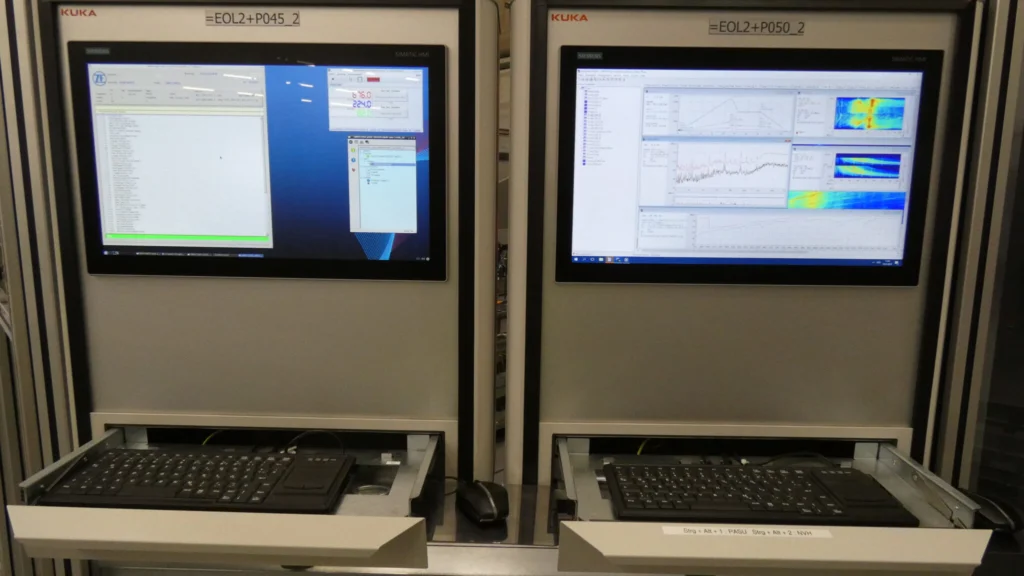
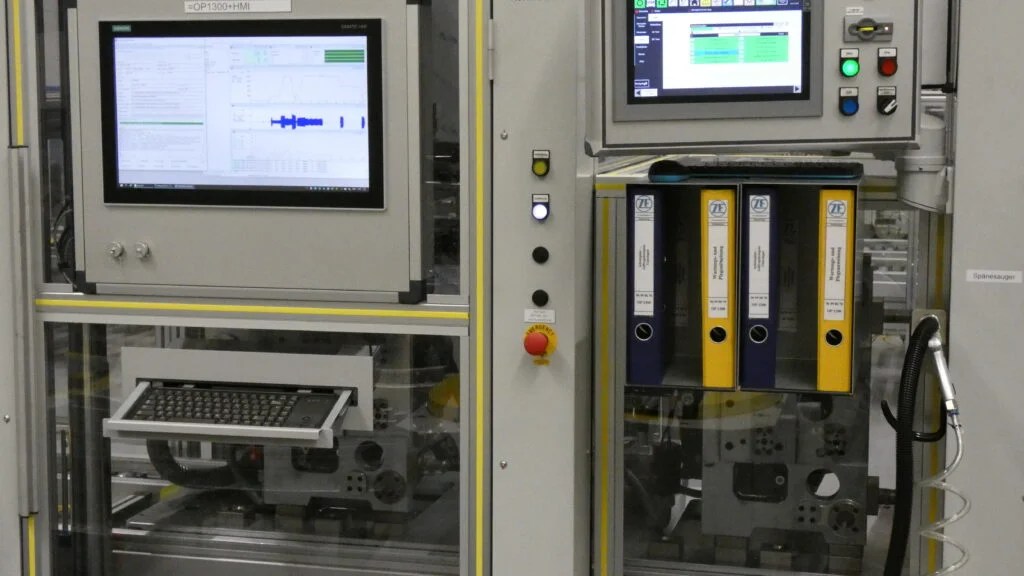
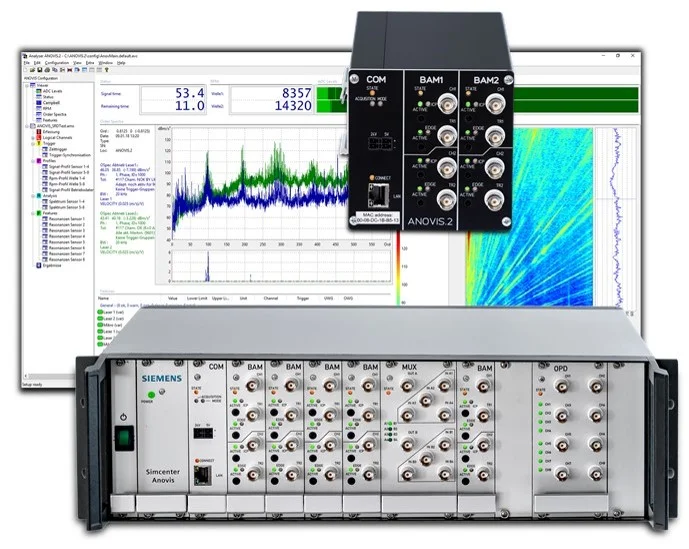
At Goaltech, as Official Siemens Partner, we have witnessed how ZF implemented Simcenter Anovis, one of the most advanced platforms in the Siemens Digital Industries portfolio. This solution combines:
High-precision measurement in real-time
Predictive analysis with artificial intelligence
Complete integration with manufacturing systems
Advanced visualization of quality data
Key Capabilities Implemented:
1. Advanced Metrology
High-precision laser measurement systems
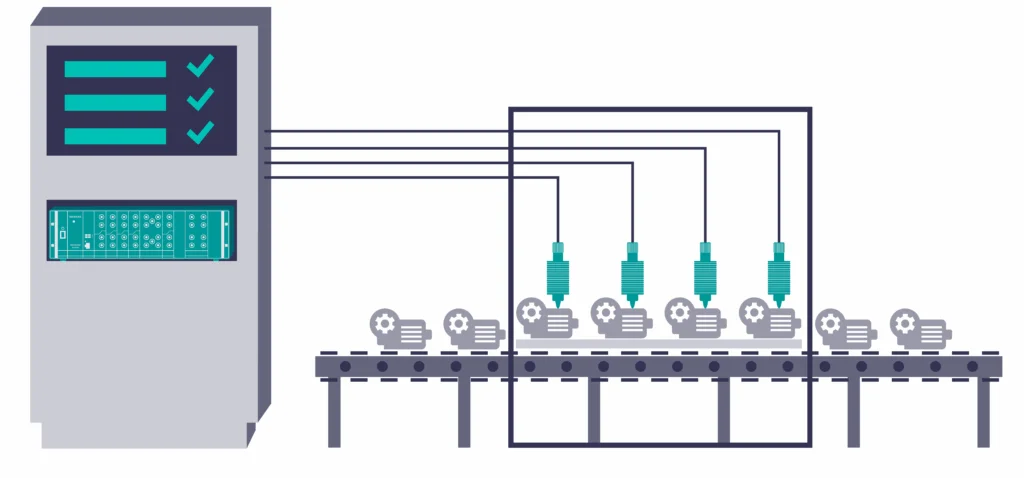
24/7 automated inspection
Real-time defect detection
2. Predictive Analytics
Machine learning algorithms to predict failures
Predictive equipment maintenance
Continuous process optimization
3. Digital Traceability
Complete product lifecycle tracking
Integration with ERP and MES systems
Automatic quality documentation
Extraordinary Results
Impact Metrics:
Quality: Achieved and exceeded the 15 PPM target
Efficiency: 40% reduction in inspection times
Costs: 25% decrease in non-quality costs
Innovation: Acceleration of electric product development
Specific Application Cases:
Electric Transmission Components
Manufacturing precision: ±2 microns
Defect rate: <10 PPM
Inspection time: Reduced by 60%
Power Steering Systems
100% automated inspection
Early wear detection
Service life prediction with 95% accuracy
Competitive Advantage with Siemens and Goaltech
The Siemens Digital Ecosystem
ZF’s successful implementation is based on Siemens’ integrated digital ecosystem, which includes:
Simcenter Anovis: For advanced metrology
Teamcenter: For product lifecycle management
NX: For digital design and manufacturing
Opcenter: For manufacturing operations
Goaltech’s Role as Partner
As Official Siemens Partner, Goaltech provides:
Local expertise: Deep knowledge of the Mexican market
Specialized support: Team certified in Siemens technologies
Comprehensive implementation: From consulting to post-sale support
Continuous training: Formation of local teams
Key Differentiators:
Exceptional Quality: Products that exceed the most demanding expectations
Agility: Rapid adaptation capability to new requirements
Sustainability: Significant waste reduction
Innovation: Platform for future technology development
Lessons Learned and Best Practices
Critical Success Factors:
Executive commitment to digital transformation
Comprehensive training of technical staff
Gradual but consistent integration of technologies
Continuous improvement culture at all levels
Goaltech Recommendations for Implementation:
As experts in Siemens solutions, from Goaltech we recommend:
Comprehensive evaluation: Complete diagnosis of current processes
Personalized roadmap: Implementation plan adapted to each company
Scalable Siemens technology: Solutions that grow with your business
Continuous support: Local Goaltech support at every stage
The Future: Expanding Horizons
ZF continues innovating with plans for:
Advanced artificial intelligence in quality control
Digital twins of manufacturing processes
IoT integration for remote monitoring
Blockchain for immutable traceability
Conclusion: The Future of Manufacturing with Siemens and Goaltech
The ZF case demonstrates the transformative power of Siemens technologies when properly implemented. At Goaltech, as Official Siemens Partner in Mexico, we are committed to bringing these world-class solutions to Mexican industry.
Why choose Goaltech and Siemens?
Proven technology: Solutions used by world leaders like ZF
Local experience: Mexican team with international certifications
Comprehensive support: From consulting to implementation and maintenance
Complete ecosystem: Access to the entire Siemens Digital Industries portfolio
Ready to transform your company?
At Goaltech, we work hand in hand with Siemens to take your company to the next level. Contact us and discover how the same technologies that transformed ZF can revolutionize your business.
Goaltech – Your Siemens Partner in Mexico Transforming Mexican industry with world-class German technology