


admin
Xtreme Manufacturing Boosts Quality and Efficiency with Creaform’s HandySCAN 3D MAX Series

Industry: Telescopic Handlers
Xtreme Manufacturing offers the most extensive and complete line of high-capacity, heavy-duty telehandlers in North America. Known for robust performance and reliability in the most demanding environments, Xtreme places a strong emphasis on quality at every stage of production.
To uphold its commitment to quality when inspecting large welded structures, Xtreme Manufacturing needed a solution that could deliver fast, accurate, and versatile measurements. Among all requirements, speed proved critical to accelerate telehandler assembly. The chosen solution met these demands, combining efficiency, accuracy, and ease of use without compromise.
This article explores how Xtreme Manufacturing improved manufacturing quality and inspection efficiency by integrating the Creaform HandySCAN 3D | MAX Series into its workflow.
Inspection Challenges Impacting Assembly Efficiency
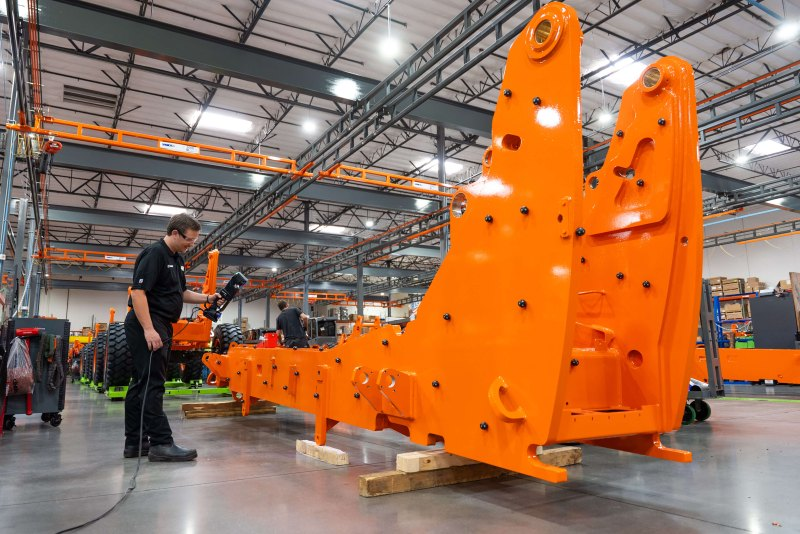
Before adopting Creaform’s 3D measurement technology, accurately inspecting large welded structures was a significant challenge for Xtreme Manufacturing. Manual inspection methods were not only slow but also allowed certain defects to go unnoticed, reaching the assembly line and causing delays and costly rework.
With multiple large welded structures requiring frequent inspections, the company needed a faster and more reliable measurement solution. Speed was a particular concern, as slow inspection processes jeopardized production flow and created bottlenecks.
The Need for Fast, Detailed Inspections on Large Welded Structures
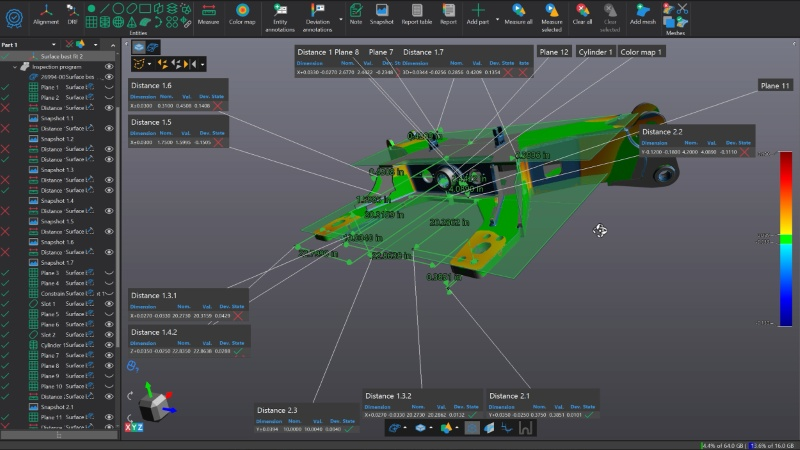
After evaluating several options, Xtreme Manufacturing chose the Creaform HandySCAN 3D | MAX Series for its ability to efficiently inspect multiple features on large welded structures and generate detailed inspection reports. One of the most valued functions was the ability to create an inspection file with all dimensions directly from the CAD model, ensuring a clear correlation between design intent and measurement results.
Integrating the portable HandySCAN 3D scanner into existing inspection workflows was straightforward, and the adoption process exceeded expectations. After just a few scans, the team quickly gained confidence in using both the Creaform portable scanner and the inspection module within the Creaform Metrology Suite, making implementation intuitive and seamless.
Solving Problems Before They Reach the Assembly Line
The adoption of Creaform’s 3D scanning technology quickly paid off. In one case, Xtreme Manufacturing detected an increase in welded stabilizer base structures that could not be installed on machines during assembly. To prevent further disruptions, they proactively removed 30 units from inventory and scanned each one to identify defects before they reached production.
This proactive approach allowed the team to isolate the issue in time and avoid repeated delays. Moving forward, they now have the ability to anticipate quality problems by quickly scanning inventory parts when needed, ensuring that “the pain is felt only once.” As Adam Truster, Manufacturing Engineer, explains:
“Implementing 3D scanning technology has significantly reduced production disruptions by quickly identifying quality defects before they escalate. This has optimized our process, ensuring smoother operations and maintaining high product standards.”
Adam Truster, Manufacturing Engineer at Xtreme Manufacturing

Xtreme and Creaform: A Partnership That Delivers Results
Xtreme Manufacturing’s experience with Creaform has been overwhelmingly positive, from technical support to the performance of the HandySCAN 3D solution. Encouraged by the results, they plan to expand the use of this technology to inspect additional components such as chassis, telescopic booms, and welded structures before they reach the assembly line.
With Creaform, Xtreme continues to raise the bar for innovation and product quality. After all, innovation should simplify processes, not complicate them. By integrating Creaform’s 3D scanner into their workflow, they have improved quality control without disrupting operations—proving that the right technology drives better engineering outcomes.
How Pierre Fabre Is Advancing Sustainable Water Management with Siemens Digital Twin Technology
Industry: Pharmaceutical
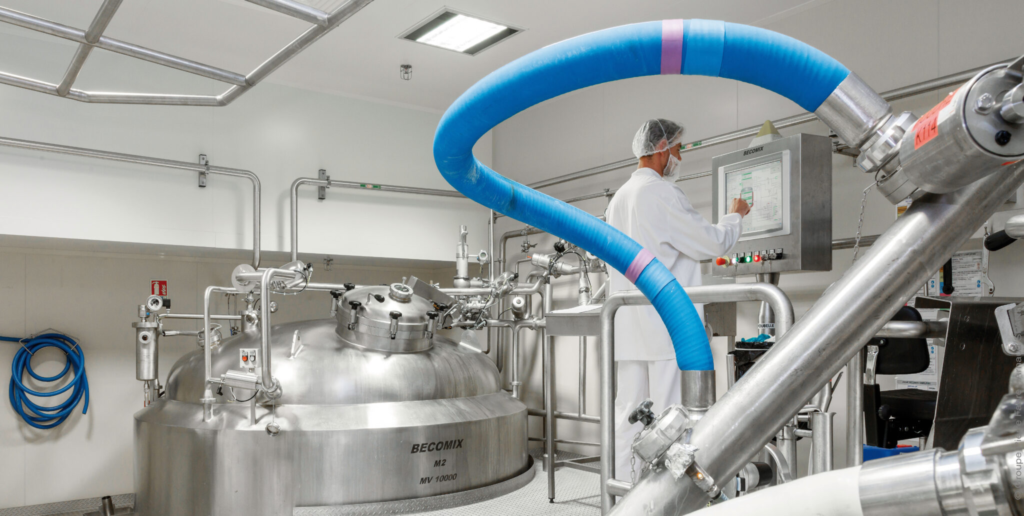
Pierre Fabre, one of France’s leading pharmaceutical and dermo-cosmetic companies, faced increasing pressure to enhance the sustainability of its water management practices without compromising operational reliability. Today, managing water resources has become more complex than ever, especially under strict regulatory requirements and the need for transparent, real-time operations.
The Challenge: Balancing Sustainability and Operational Continuity
Organizations must strike a delicate balance between meeting environmental goals and maintaining efficient production. For Pierre Fabre, traditional approaches based on static planning and reactive adjustments were no longer sufficient. These methods could not handle the interplay between production demands, seasonal water availability, and regulatory constraints.
To address these challenges, the company partnered with Siemens and Institut Mines-Télécom in a research initiative centered around digital twin technology.
The Solution: A Calibrated, Strategic Digital Twin
A well-calibrated digital twin is key to transforming water management. This technology enables precise short- and long-term simulations of water usage and provides a clear understanding of how operational decisions will play out.
Additionally, scenario-based investment analysis helps prioritize the most effective and sustainable actions, ensuring alignment between environmental and business objectives.

Advanced Simulation and Forecasting
By developing a digital twin of its water management system using Siemens Plant Simulation and Optimize My Plant, Pierre Fabre created a virtual model that mirrors real-world parameters. This allowed the company to:
- Simulate multiple operational scenarios under real constraints
- Forecast daily and seasonal consumption patterns
- Identify structural improvements to significantly reduce water usage
- Make smarter, data-driven investment decisions
Early results showed strong potential: the company uncovered clear opportunities to optimize consumption and pursue investments that balance economic priorities with environmental responsibility.

Value Across the Organization
The digital twin delivers value at multiple organizational levels. First, it provides simulation capabilities to understand and resolve operational challenges. Then, by integrating real-time data, it enables both proactive and reactive supervision.
“The digital twin provides answers at all levels within organizations. The first level is simulation to understand and solve operational issues. Next, the integration of real-time data enables proactive and reactive supervision.”
— Christophe Rousse, Operations Data & Analytics Director at Pierre Fabre Group
Looking Ahead
Pierre Fabre plans to evolve its digital twin into a fully supervised system capable of dynamically adjusting water usage and strengthening its sustainability commitments. This use case demonstrates how digital twins are guiding the pharmaceutical industry toward smarter, greener production.
It also highlights the importance of Siemens’ simulation expertise and academic collaboration in solving real industrial challenges.
Goaltech, recognized by Siemens as a success story in industrial digitalization
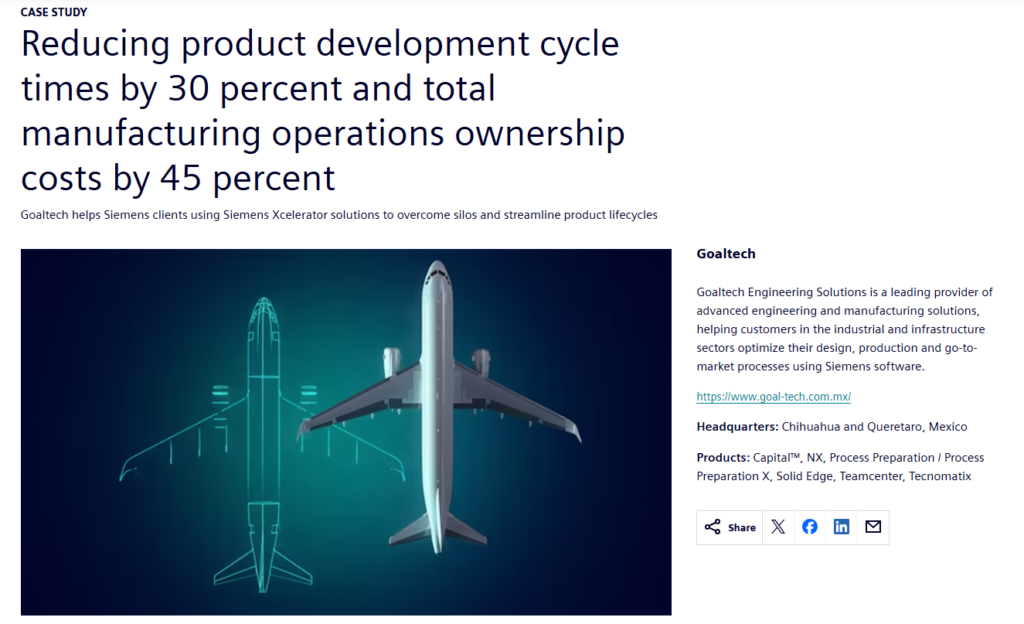
An article was published on the official Siemens Digital Industries Software website that fills us with pride: Goaltech was highlighted as a success story for its role in the digital transformation of Mexican industry. This mention reinforces our commitment to innovation and the adoption of technologies that drive competitiveness in key sectors.
What does Siemens highlight in its article?
The case study describes how Goaltech, as an authorized Siemens partner, has supported Mexican companies in implementing solutions that optimize processes and reduce costs. The publication highlights our expertise in tools such as Tecnomatix, NX, Solid Edge, and Valor, which are essential for improving efficiency in electronics manufacturing and automation.
Impact on the industry
The official article emphasizes that our collaboration with Siemens is not only focused on software sales, but also on technology integration and specialized training, helping our customers face challenges such as reducing time-to-market and migrating to more agile and digital processes.
Read the full article on the official Siemens website:
https://resources.sw.siemens.com/en-US/case-study-goaltech/
Thank you for joining us on this journey
At Goaltech, we are proud of this recognition from Siemens, which reflects our commitment to innovation and technological excellence. We invite you to learn more about our solutions and how we can help your company take the next step toward digitalization.
Crucianelli: Digital Engineering to Transform Agricultural Machinery
Industriy: Agricultural machinery.

Crucianelli, an Argentine manufacturer of seeders with nearly 70 years of history, has embarked on a deep digital transformation with the goal of becoming one of the top five seeder manufacturers in the world by 2030. To achieve this, the company adopted the full Siemens Xcelerator portfolio, redefining its design, simulation, and manufacturing processes.
From Family Workshop to Innovation Leader
Founded by Don Nazareno Crucianelli in Armstrong, Santa Fe, the company began as a small workshop repairing agricultural machinery. Today, under the leadership of the third generation, Crucianelli blends tradition, sustainability, and technology to tackle modern agricultural challenges such as climate change, labor shortages, and the pressure to increase productivity sustainably.
The Solution: Siemens Xcelerator
With support from partners Simecanic / X-Plan and Descar Argentina, Crucianelli implemented a comprehensive solution based on:
- Teamcenter as the PLM backbone, integrated with SAP.
- Simcenter 3D for structural and motion analysis.
- Designcenter NX for advanced CAD design.
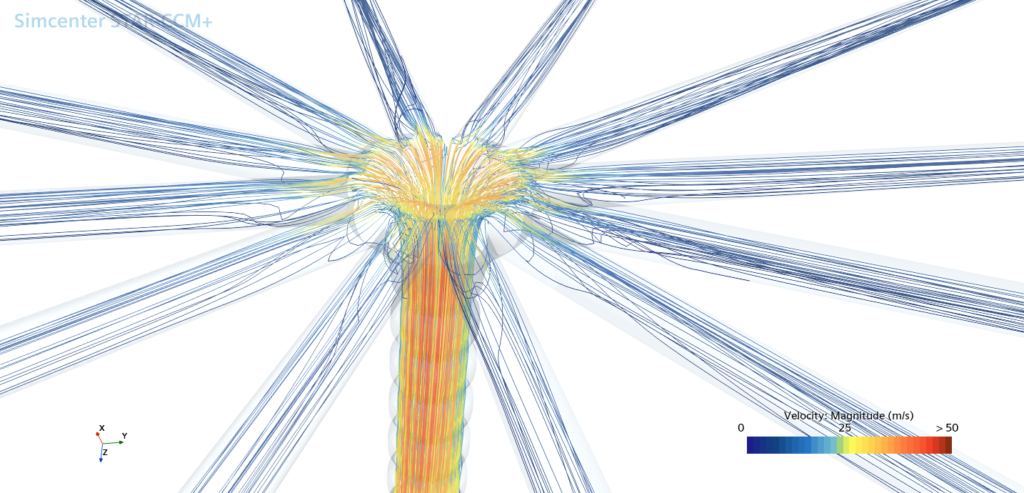
- Simcenter STAR-CCM+ for CFD-DEM simulations of seed distribution systems.
- Tecnomatix Plant Simulation to digitize manufacturing processes.
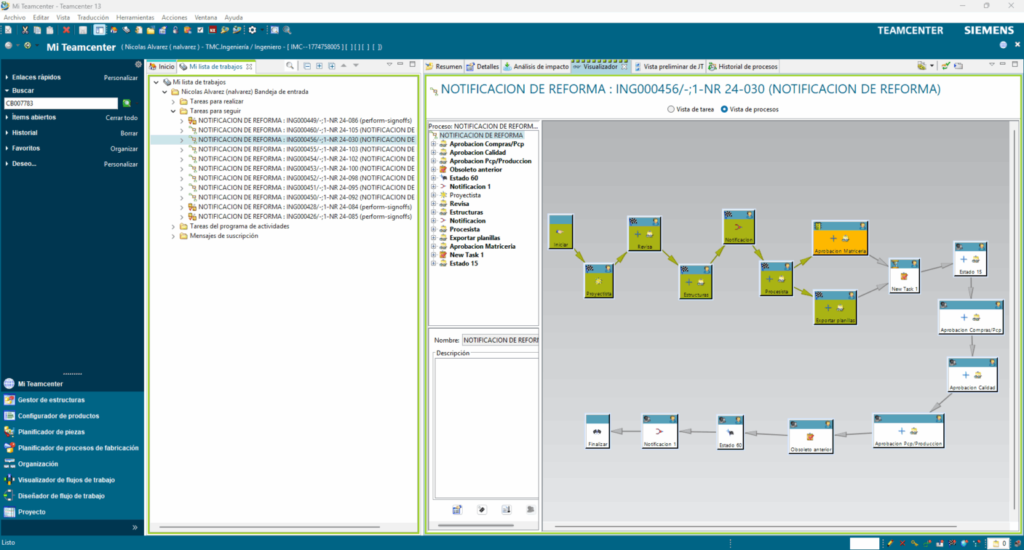
Flagship Project: The Dómina Seeder
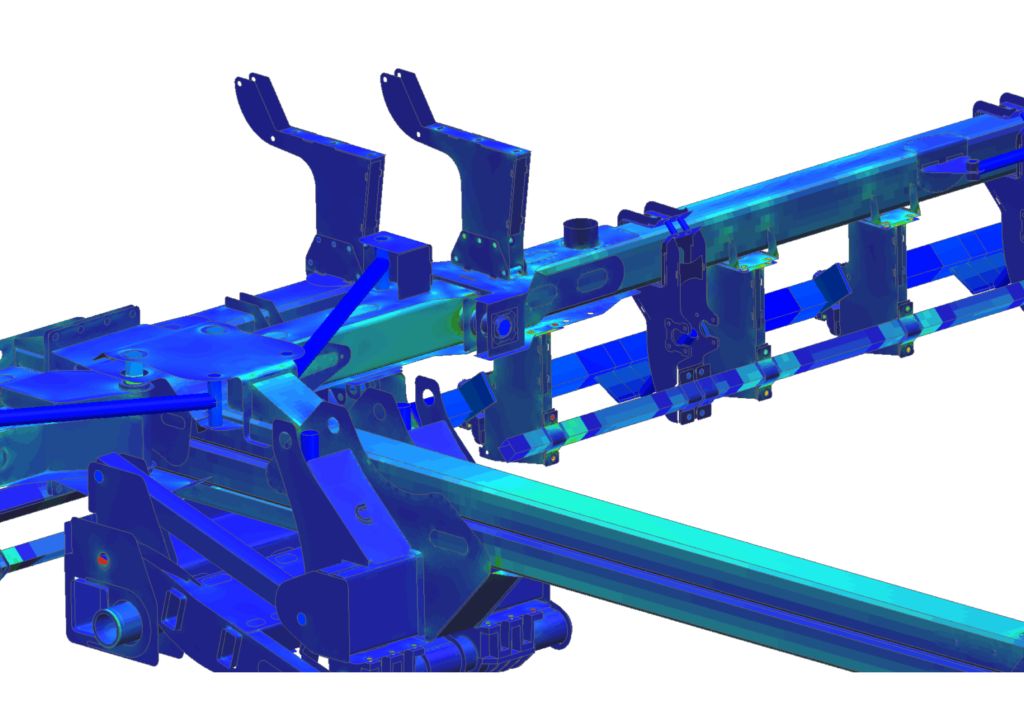
The Dómina is Crucianelli’s first seeder developed entirely in a digital environment. The engineering team built a FEM model with over one million elements (1D, 2D, and 3D), simulating transport and field conditions. With Simcenter 3D, they optimized load distribution, validated structural integrity, and significantly reduced the need for physical prototypes.
A dual-track simulation strategy was applied: one team focused on motion analysis, while another handled structural validation. The integration between NX and Simcenter enabled early design decisions and faster iterations.
Key Results
- Over 40% reduction in development time and physical testing.
- Complete digitalization of design, manufacturing, and product configuration.
- Performance optimization of new and existing machines, such as the Plantor, using CFD-DEM simulations in STAR-CCM+.
Beyond Design: Digitizing the Factory
Crucianelli is also digitizing its production plant using Tecnomatix Plant Simulation, aiming to optimize processes, logistics, and resources. The long-term goal is to replicate digital twin capabilities across the entire organization.
Training and Knowledge Transfer
Success was also driven by a strong training strategy. Young engineers were trained in structural modeling, mesh reduction, and result interpretation, while preserving the hands-on knowledge of experienced technicians. This combination strengthened the company’s innovation culture.
A Collaborative Ecosystem
The collaboration between Crucianelli, Siemens, and local partners was key. The integration of Teamcenter with SAP, automation of product configurations, and ongoing technical support enabled Crucianelli to accelerate innovation and improve competitiveness.
Conclusion
Crucianelli shows how a family-owned company can lead digital transformation in the agricultural sector. With Siemens Xcelerator, it has improved internal efficiency and developed more robust, precise, and field-ready products.