

admin
Goaltech, recognized by Siemens as a success story in industrial digitalization
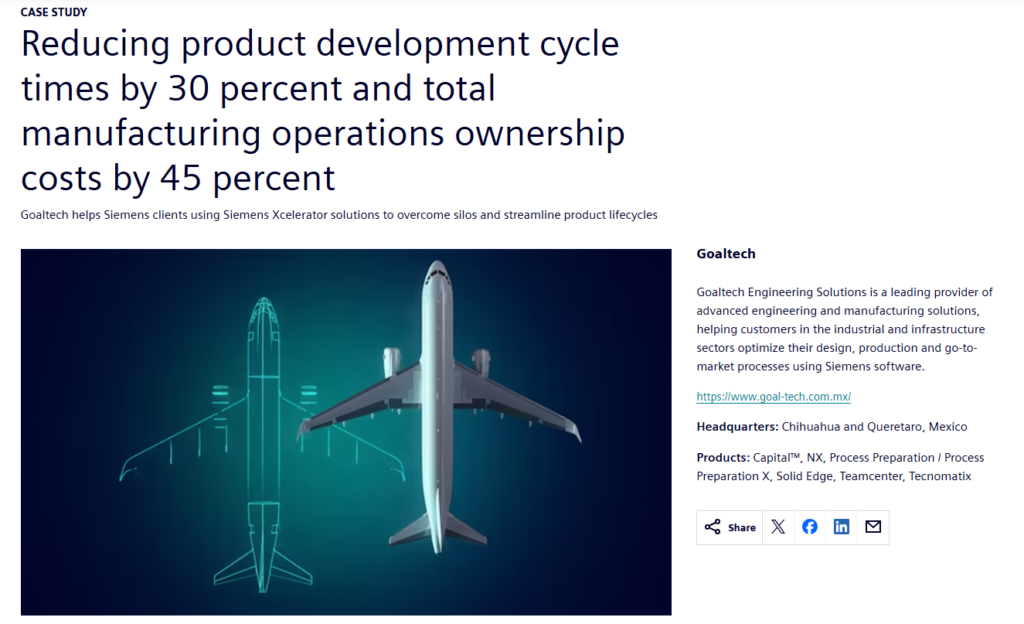
An article was published on the official Siemens Digital Industries Software website that fills us with pride: Goaltech was highlighted as a success story for its role in the digital transformation of Mexican industry. This mention reinforces our commitment to innovation and the adoption of technologies that drive competitiveness in key sectors.
What does Siemens highlight in its article?
The case study describes how Goaltech, as an authorized Siemens partner, has supported Mexican companies in implementing solutions that optimize processes and reduce costs. The publication highlights our expertise in tools such as Tecnomatix, NX, Solid Edge, and Valor, which are essential for improving efficiency in electronics manufacturing and automation.
Impact on the industry
The official article emphasizes that our collaboration with Siemens is not only focused on software sales, but also on technology integration and specialized training, helping our customers face challenges such as reducing time-to-market and migrating to more agile and digital processes.
Read the full article on the official Siemens website:
https://resources.sw.siemens.com/en-US/case-study-goaltech/
Thank you for joining us on this journey
At Goaltech, we are proud of this recognition from Siemens, which reflects our commitment to innovation and technological excellence. We invite you to learn more about our solutions and how we can help your company take the next step toward digitalization.
Crucianelli: Digital Engineering to Transform Agricultural Machinery

Industriy: Agricultural machinery.

Crucianelli, an Argentine manufacturer of seeders with nearly 70 years of history, has embarked on a deep digital transformation with the goal of becoming one of the top five seeder manufacturers in the world by 2030. To achieve this, the company adopted the full Siemens Xcelerator portfolio, redefining its design, simulation, and manufacturing processes.
From Family Workshop to Innovation Leader
Founded by Don Nazareno Crucianelli in Armstrong, Santa Fe, the company began as a small workshop repairing agricultural machinery. Today, under the leadership of the third generation, Crucianelli blends tradition, sustainability, and technology to tackle modern agricultural challenges such as climate change, labor shortages, and the pressure to increase productivity sustainably.
The Solution: Siemens Xcelerator
With support from partners Simecanic / X-Plan and Descar Argentina, Crucianelli implemented a comprehensive solution based on:
- Teamcenter as the PLM backbone, integrated with SAP.
- Simcenter 3D for structural and motion analysis.
- Designcenter NX for advanced CAD design.
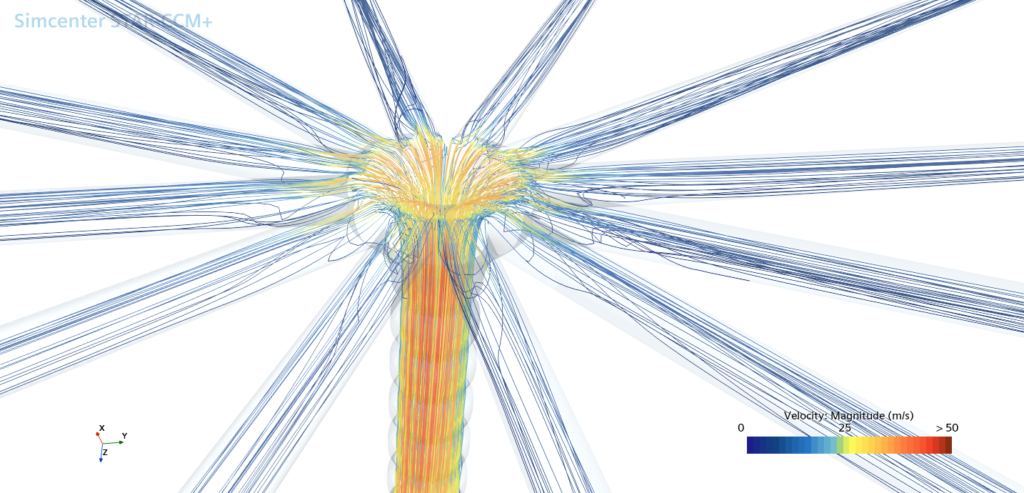
- Simcenter STAR-CCM+ for CFD-DEM simulations of seed distribution systems.
- Tecnomatix Plant Simulation to digitize manufacturing processes.
Flagship Project: The Dómina Seeder
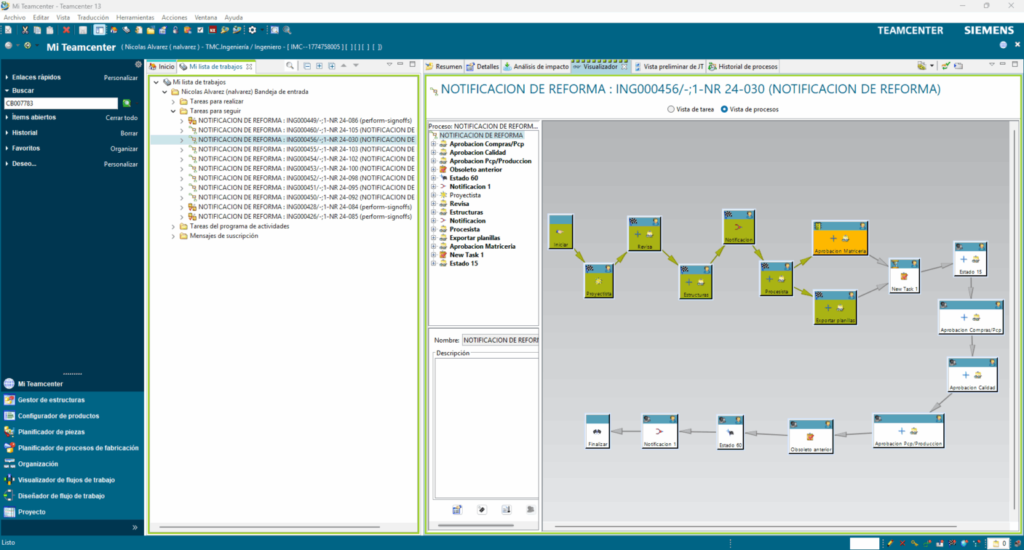
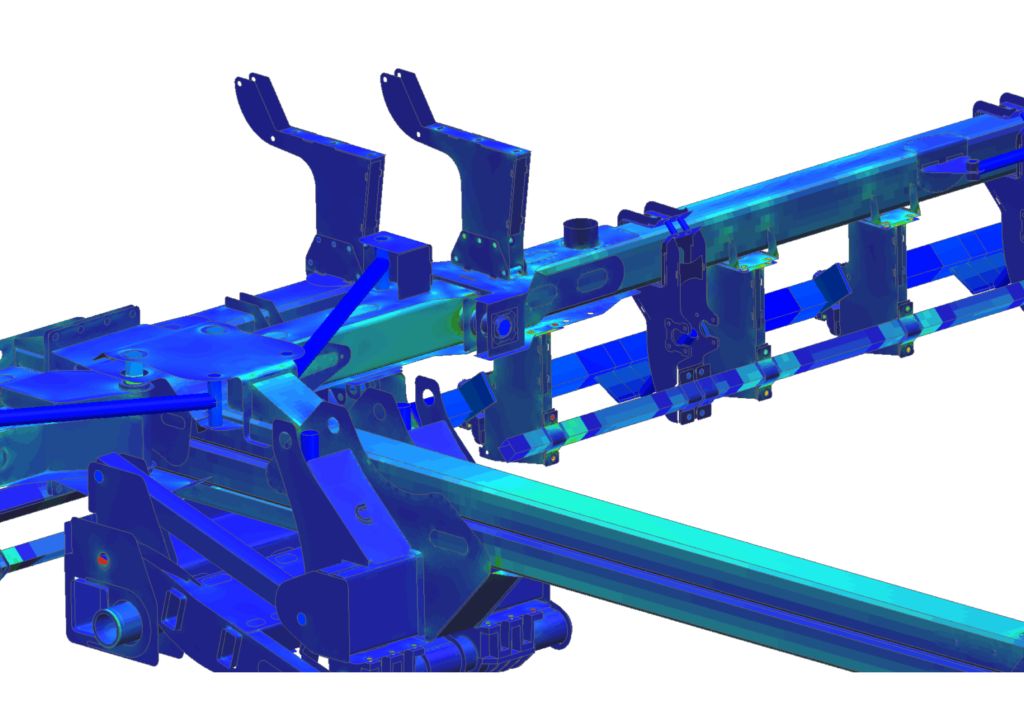
The Dómina is Crucianelli’s first seeder developed entirely in a digital environment. The engineering team built a FEM model with over one million elements (1D, 2D, and 3D), simulating transport and field conditions. With Simcenter 3D, they optimized load distribution, validated structural integrity, and significantly reduced the need for physical prototypes.
A dual-track simulation strategy was applied: one team focused on motion analysis, while another handled structural validation. The integration between NX and Simcenter enabled early design decisions and faster iterations.
Key Results
- Over 40% reduction in development time and physical testing.
- Complete digitalization of design, manufacturing, and product configuration.
- Performance optimization of new and existing machines, such as the Plantor, using CFD-DEM simulations in STAR-CCM+.
Beyond Design: Digitizing the Factory
Crucianelli is also digitizing its production plant using Tecnomatix Plant Simulation, aiming to optimize processes, logistics, and resources. The long-term goal is to replicate digital twin capabilities across the entire organization.
Training and Knowledge Transfer
Success was also driven by a strong training strategy. Young engineers were trained in structural modeling, mesh reduction, and result interpretation, while preserving the hands-on knowledge of experienced technicians. This combination strengthened the company’s innovation culture.
A Collaborative Ecosystem
The collaboration between Crucianelli, Siemens, and local partners was key. The integration of Teamcenter with SAP, automation of product configurations, and ongoing technical support enabled Crucianelli to accelerate innovation and improve competitiveness.
Conclusion
Crucianelli shows how a family-owned company can lead digital transformation in the agricultural sector. With Siemens Xcelerator, it has improved internal efficiency and developed more robust, precise, and field-ready products.
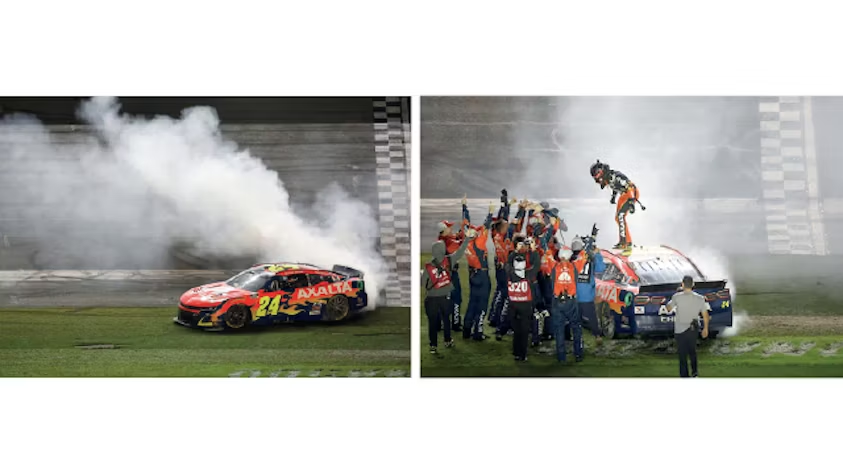
Success Story: Hendrick Motorsports Accelerates Innovation with Siemens and VNCK
Industry: Automotive
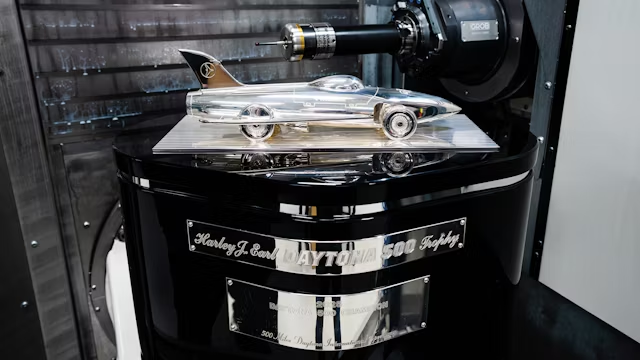
“We now use VNCK every day. It’s been an excellent tool, not just for manufacturing and improving programs, but also as a teaching tool to help us learn the controller.”
— Michael Tummond, Engine Engineering Manager, Hendrick Motorsports
Faster, More Powerful Engines
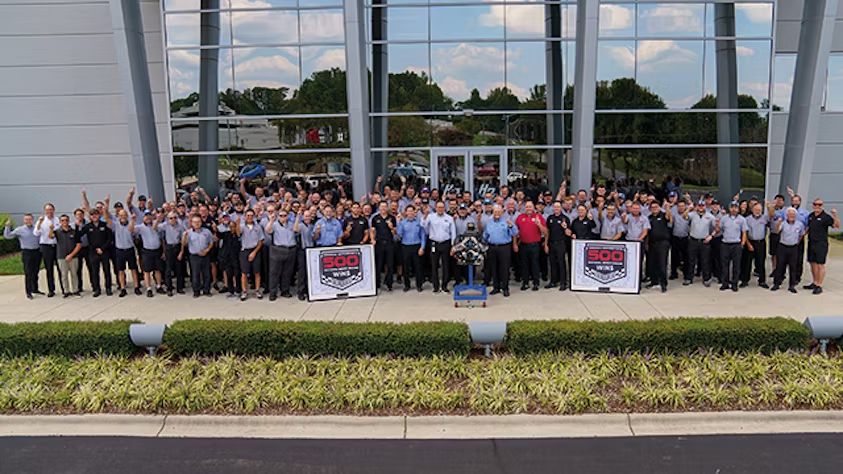
Founded by Rick Hendrick in 1984, Hendrick Motorsports is the most successful team in NASCAR Cup Series history. At the sport’s top level, the organization holds all-time records in every major category: championships, points-paying wins, and laps led. With over 100 team members, its engine department supports more than 500 racing events per year, supplying horsepower for teams in both the Xfinity Series and the top-tier Cup Series. Hendrick engines have powered more than 500 wins across NASCAR’s three national touring series.
In a sport where performance relies heavily on engine power, having efficient, powerful, and durable engines is non-negotiable. That means embracing cutting-edge technology and constantly finding innovative ways to stay ahead of the pack.
Driving Innovation with Siemens and Swoosh Technologies
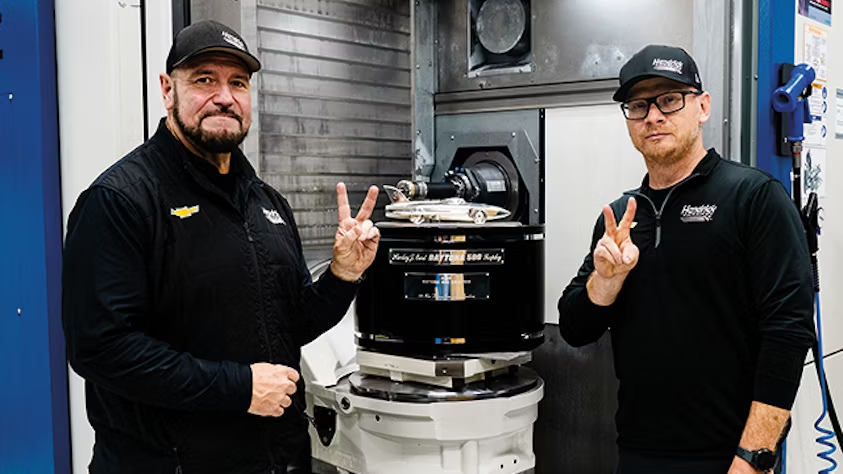
To stay at the forefront of engine innovation, Hendrick Motorsports partnered with Swoosh Technologies—a Siemens Digital Industries Software partner—and adopted NX™ and VNCK (Virtual Numerical Control Kernel), both part of the Siemens Xcelerator portfolio of software, hardware, and services.
Prioritizing Accuracy and Repeatability
The team’s goal was clear: build better engines. But they had reached the limits of their old equipment and needed more accurate and repeatable results. After a careful evaluation, they invested in higher-precision machines equipped with Siemens controllers.
“We’ve always been a Siemens-driven company,” explains Tummond.
“All of our product lifecycle management runs through Siemens software, but we’d never used Siemens numerical controllers for manufacturing. This was our first time, so we reached out to Swoosh Technologies for support.”
The Value of the Digital Twin
Once the new equipment was in place, a new challenge emerged: learning how to use it. With support from Swoosh and Siemens, the team quickly got up to speed and discovered how VNCK and the digital twin could help them improve part production.
“All of our product data was already managed through Siemens software, but it stopped there. We used Siemens for programming, but now that our machines run Siemens controllers, the integration and connectivity between the two has been great,” says Tummond.
A More Efficient Engine Design Process
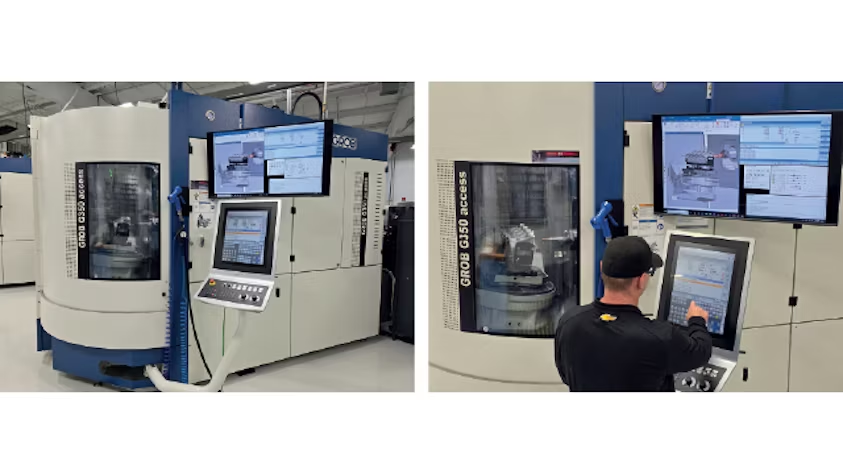
Along with the new machines, Hendrick Motorsports invested in a machine simulation kit and postprocessor to bring everything together.
“The one piece of software I took a gamble on was VNCK. At first, I thought it just gave digital readouts from the desktop—which would be useful for training—but it turned out to be a full-blown digital twin.”
With VNCK, the team can analyze any machine parameter directly from their desks, revolutionizing how they program and simulate.
“VNCK allows us to write and test programs away from the machine. Programming itself might be simple, but the tolerances we’re chasing are incredibly tight. VNCK lets us prove part alignment before we make any cuts.”
Standout Results:
- Zero scrap rate thanks to pre-validation with simulation.
- 10x improvement in precision, achieving ten-thousandths of an inch vs. thousandths.
- 50% reduction in setup time, cutting engine block setup from one hour to just minutes.
- Faster diagnosis of errors in production.
- Full simulation of all processes—moving beyond basic toolpath verification in NX.
A New Simulation-First Culture
Before this shift, the engine department didn’t use simulation in manufacturing. Today, everything is simulated.
“We weren’t taking advantage of the digital twin or even machine simulation before—just the out-of-the-box toolpath verification in NX. Now, with these Siemens solutions, we’re more confident in our programming, especially as our part alignments grow more complex,” says Tummond.
Thanks to NX, VNCK, and Siemens controllers, Hendrick Motorsports has reached a new level of precision.
“We used to be happy with a few thousandths of an inch. Now, we’re working with ten-thousandths. We’ve improved our accuracy tenfold.”
Racing Toward the Future
Currently, only 3 out of 50 machines on the Hendrick Motorsports campus have VNCK capabilities. Looking ahead, the team plans to expand its use of digital twin technology and bring more high-precision machines into their workflow.
“We need to flip the script. This experience has opened our eyes to what’s possible—and what we need to build faster race cars,” concludes Tummond.
Curious about how simulation and digital twins can transform your manufacturing process? Discover what Siemens and its partners can do for your team.
https://goal-tech.com.mx/
Your success, our best engineering.
Would you like this adapted into a social media post, infographic, or presentation as well? I’m happy to help.