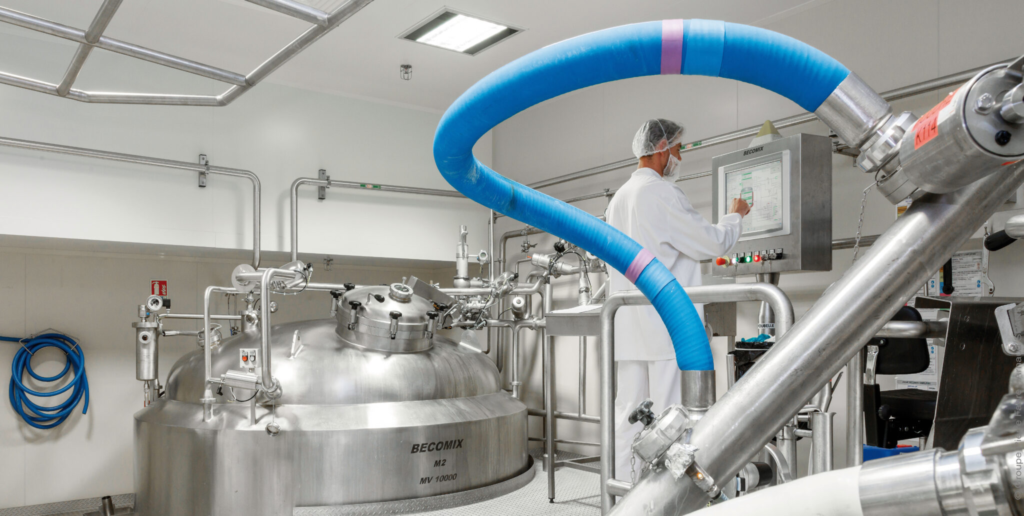
Pierre Fabre, one of France’s leading pharmaceutical and dermo-cosmetic companies, faced increasing pressure to enhance the sustainability of its water management practices without compromising operational reliability. Today, managing water resources has become more complex than ever, especially under strict regulatory requirements and the need for transparent, real-time operations.
The Challenge: Balancing Sustainability and Operational Continuity
Organizations must strike a delicate balance between meeting environmental goals and maintaining efficient production. For Pierre Fabre, traditional approaches based on static planning and reactive adjustments were no longer sufficient. These methods could not handle the interplay between production demands, seasonal water availability, and regulatory constraints.
To address these challenges, the company partnered with Siemens and Institut Mines-Télécom in a research initiative centered around digital twin technology.
The Solution: A Calibrated, Strategic Digital Twin
A well-calibrated digital twin is key to transforming water management. This technology enables precise short- and long-term simulations of water usage and provides a clear understanding of how operational decisions will play out.
Additionally, scenario-based investment analysis helps prioritize the most effective and sustainable actions, ensuring alignment between environmental and business objectives.
Advanced Simulation and Forecasting
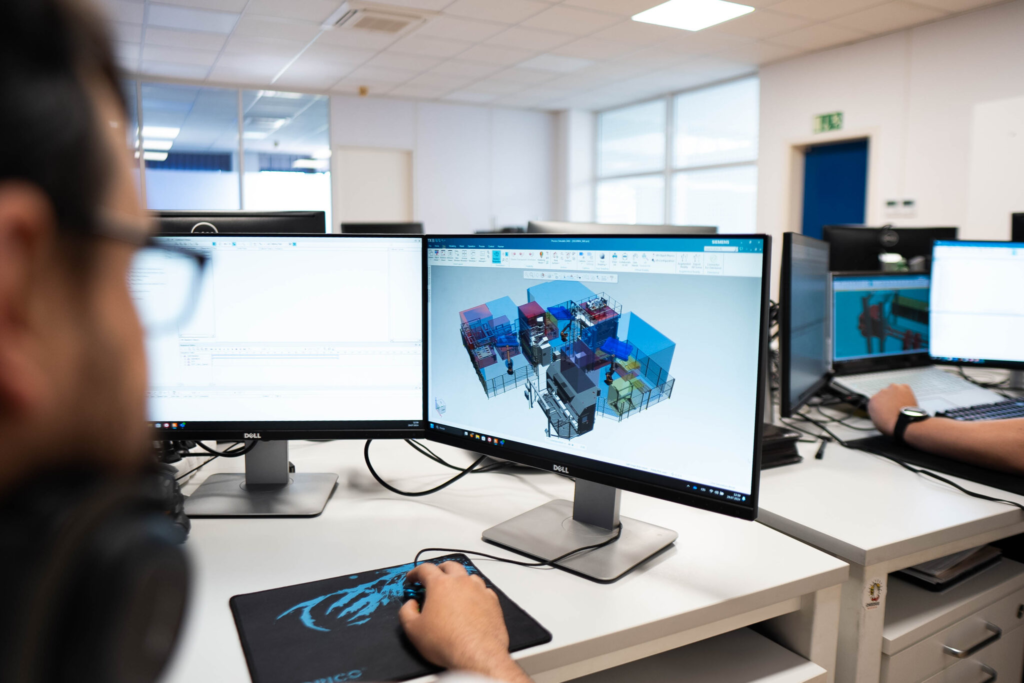
By developing a digital twin of its water management system using Siemens Plant Simulation and Optimize My Plant, Pierre Fabre created a virtual model that mirrors real-world parameters. This allowed the company to:
Simulate multiple operational scenarios under real constraints
Forecast daily and seasonal consumption patterns
Identify structural improvements to significantly reduce water usage
Make smarter, data-driven investment decisions
Early results showed strong potential: the company uncovered clear opportunities to optimize consumption and pursue investments that balance economic priorities with environmental responsibility.
Value Across the Organization
The digital twin delivers value at multiple organizational levels. First, it provides simulation capabilities to understand and resolve operational challenges. Then, by integrating real-time data, it enables both proactive and reactive supervision.
“The digital twin provides answers at all levels within organizations. The first level is simulation to understand and solve operational issues. Next, the integration of real-time data enables proactive and reactive supervision.” — Christophe Rousse, Operations Data & Analytics Director at Pierre Fabre Group
Looking Ahead
Pierre Fabre plans to evolve its digital twin into a fully supervised system capable of dynamically adjusting water usage and strengthening its sustainability commitments. This use case demonstrates how digital twins are guiding the pharmaceutical industry toward smarter, greener production.
It also highlights the importance of Siemens’ simulation expertise and academic collaboration in solving real industrial challenges.
Tackling the challenges of complex automation in wiring
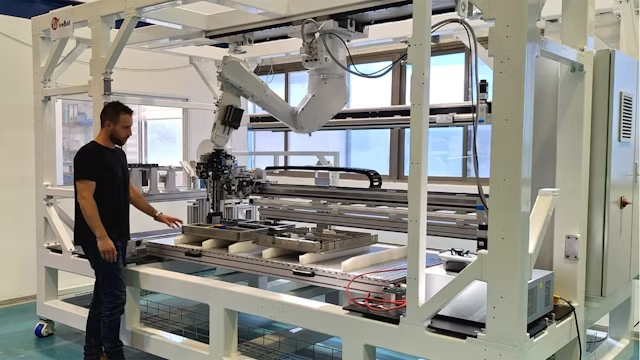
Founded in 1999 and headquartered in Zur Yigal, Israel, Polygon Technologies has become a leading name in robotic engineering, specializing in advanced automation solutions for industries such as automotive, aerospace, electronics, and industrial manufacturing. Their latest innovation, Wirebot, is transforming the way wire harnesses are assembled in control cabinets — and it’s all made possible with Process Simulate from Siemens’ Tecnomatix® portfolio.
As Omer Einav, CEO of Polygon Technologies, explains:
“Using Process Simulate enables WireBot to predict potential issues in the design phase, reducing the risk of delays and improving the quality of the final product.”
A new approach to an old challenge: complex wiring automation
Handling flexible components like wires and fibers has long posed a challenge for traditional robotics. Electrical panel wiring, in particular, has typically been a manual, error-prone, and time-consuming process. Polygon set out to change that with Wirebot, a robotic system designed to outperform human precision in wiring tasks.
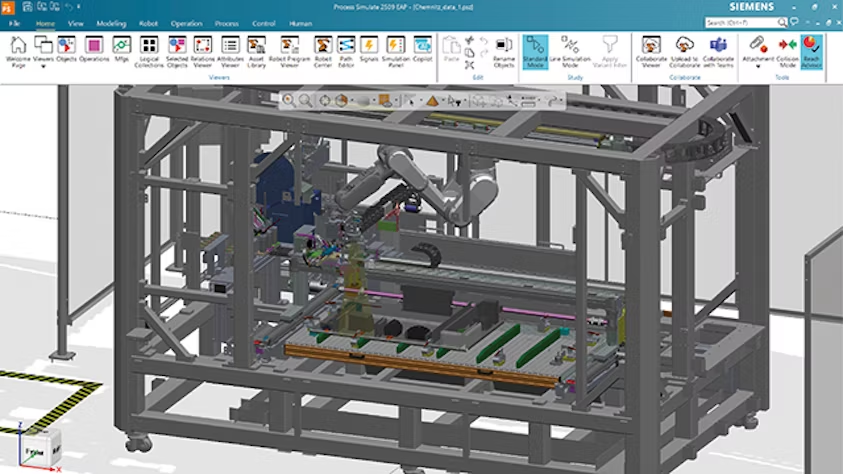
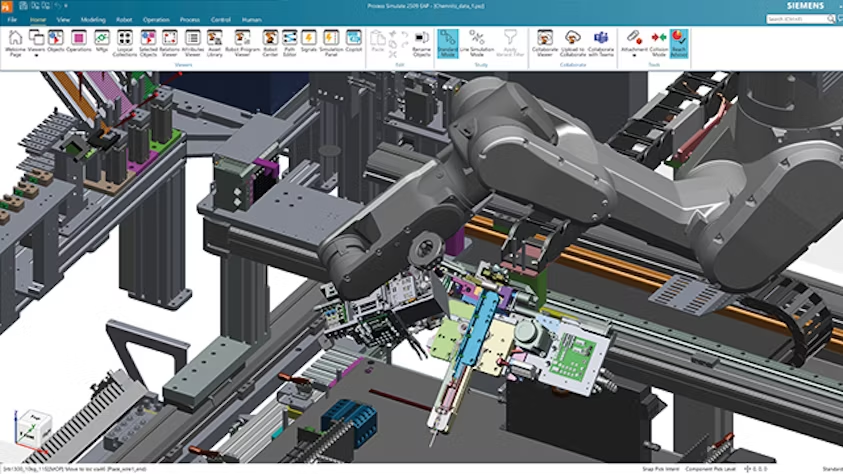
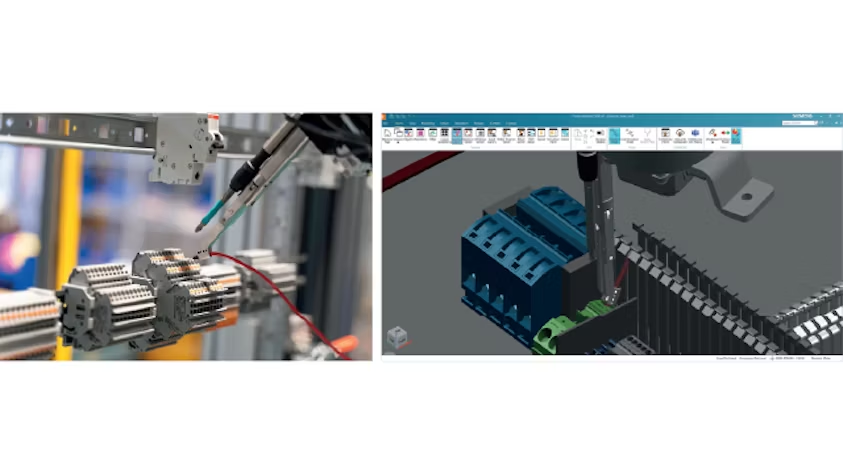
Thanks to Process Simulate, Polygon was able to virtually test and validate complex wiring scenarios before production, optimizing cable routes, avoiding collisions, and streamlining workflows. The result: faster production cycles, fewer errors, and up to 10% savings in copper material, significantly cutting costs and waste.
The key: digital twin, AI, and advanced simulation
Developing Wirebot required recreating human dexterity through cutting-edge technologies like haptic feedback, machine vision, dual-arm coordination, and advanced data processing. The resulting system merges robotics, artificial intelligence, and digital twin technology — made possible through Siemens’ Process Simulate.
“By integrating Process Simulate with WireBot, we provide customers with cost-effective component layouts in the design phase, enhancing wiring efficiency, saving time, and boosting productivity,” Einav says.
Results: precision, efficiency, and scalability
By simulating the process beforehand, Polygon reduced production cycle time by 30%, improved wire positioning accuracy, and minimized rework. Wirebot was also seamlessly integrated into existing manufacturing workflows, increasing overall operational efficiency.
The success of Wirebot has led Polygon to continue exploring new applications for Process Simulate, believing that virtual commissioning and digital twin technology are shaping the future of robotic automation.
Conclusion
The Wirebot success story is a testament to how advanced robotics and Siemens simulation technologies can solve complex challenges, drive productivity, and optimize resource usage. With Process Simulate, Polygon has entered a new era of automated wire harness assembly — and solidified its role as an innovation leader in smart manufacturing.
Dexcom is an emerging medical technology leader headquartered in San Diego, California, specializing in the development and production of continuous glucose monitoring (CGM) systems. These devices are essential in helping patients monitor their glucose levels in real-time, offering a less invasive alternative to traditional blood glucose meters.
Dexcom’s latest device, the Dexcom G7, allows users to effortlessly track their glucose levels, helping them make smarter decisions about food and activity in the moment to take better control of their diabetes. With the launch of this new device, Dexcom continues to push the boundaries of innovation, ensuring smaller, more effective, and user-friendly products.
Challenges in scaling operations
Faced with increasing demand for its CGM devices, Dexcom needed to scale its operations without compromising efficiency, safety, or cost-effectiveness. It was also crucial to maintain a focus on customer experience to ensure broader accessibility while continually improving the product.
To overcome these challenges, Dexcom adopted Siemens’ Plant Simulation technology. As Mohamed Elsayed, Industrial Engineering Manager – Modeling & Simulation at Dexcom, explains:
“We’re making Plant Simulation part of Dexcom’s DNA. It supports our decision-making process, allowing us to continuously advance our product while optimizing operations and boosting productivity at a lower cost.”
Simulation driving productivity and innovation
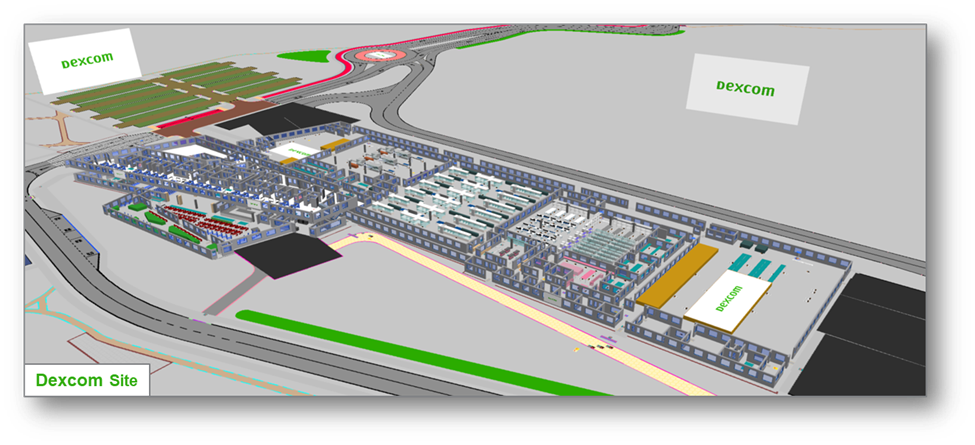
Dexcom implemented Plant Simulation to digitally replicate its factory sites and optimize production processes. This technology enables them to model, analyze, and optimize their operations in a virtual environment before making physical changes, resulting in enhanced safety, increased productivity, and better resource utilization, ultimately reducing costs and increasing product accessibility.
Notable use cases of Plant Simulation at Dexcom
Enhancing production line efficiency Dexcom used Plant Simulation to optimize production lines, modeling different scenarios and workflows. This allowed them to identify bottlenecks and allocate resources efficiently, increasing production throughput and ensuring smooth transitions when introducing new products.
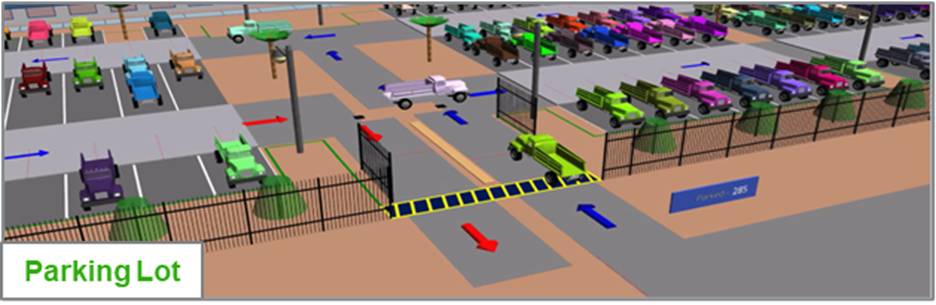
Improving facility layout and safety The company used simulation to improve safety and layout configurations, including parking lots. By modeling various scenarios, they optimized traffic flows and minimized congestion, improving safety and employee convenience.
Designing new manufacturing sites As Dexcom expands globally, they use Plant Simulation to design new manufacturing sites before construction begins. The software helps model emergency scenarios, like fire drills, ensuring safe and efficient evacuation routes and compliance with safety regulations.
The future of simulation at Dexcom
Looking ahead, Dexcom plans to democratize factory simulation, making it accessible to more employees, including those on the shop floor. The goal is to integrate this technology into everyday decision-making, enabling real-time adjustments based on resource availability and production demands.
By leveraging Siemens Plant Simulation, Dexcom has embedded a culture of continuous improvement and innovation in its operations. This technology not only optimizes processes but also supports Dexcom’s mission to improve the lives of people with diabetes worldwide.
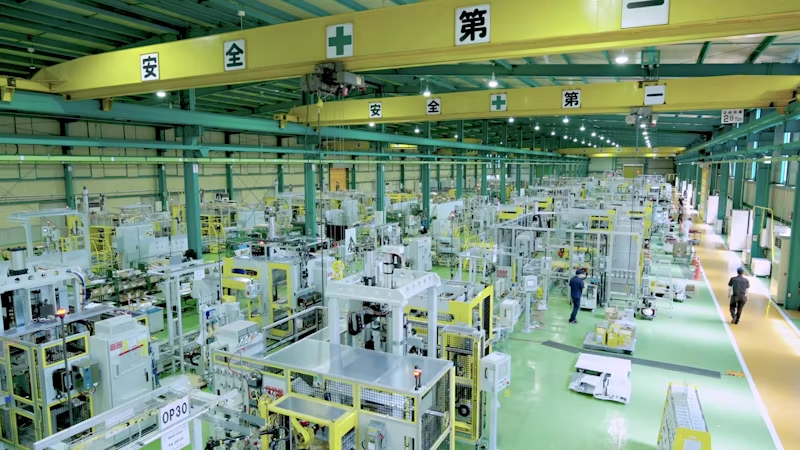
Hirata Corporation (Hirata), headquartered in Kumamoto, Japan, is a global leader in constructing production lines. It has locations throughout Japan as well as plants in North America, Europe and across Asia, providing production equipment to automotive and semiconductor manufacturers worldwide.
Hirata provides transmission assembly lines, engine assembly lines, electrical vehicle (EV) and other automotive production equipment to numerous manufacturers.
When the 2016 Kumamoto earthquakes damaged the company’s plants, Hirata decided to contribute to the reconstruction effort by relocating its headquarters to Kumamoto City.
As sales increased, the company’s newly built plant was expanded to provide space for adjusting equipment test runs and enabling customers to conduct inspections inside the plant. Hirata has integrated design, manufacturing, assembly, electrical work and adjustment test runs. As the company constructed and subsequently expanded its plant, it also started a large-scale digital transformation.
After evaluating several simulation solutions, Hirata chose Siemens Digital Industries Software’s Process Simulate in the Tecnomatix® portfolio. It also decided to work with Siemens as its strategic partner to promote digital transformation, and as part of that initiative introduced the Siemens Xcelerator business platform of software, hardware and services to the company.
Strategically promoting digital transformation
By embracing digital transformation, Hirata has been able to shorten the time it takes to go from product design to manufacturing. Hirata has front-loaded its investment in resources early in the product development process, bringing forward work that was previously done in later stages.
As Hirata’s customers began to face shorter production times, they focused on how to compress the time between new products, handle low-volume, high-mix production and shrink the period required to modify production lines during operation.
Hirata knew the digital transformation would help them, but it was challenging to explain to senior management and on-site personnel what would change and what the simulations with Process Simulate would reveal. Describing the benefits of simulations was particularly difficult at first. Some personnel had the impression that simulations would require twice as much effort. However, as the implementation went ahead, workers were able to see the positive effects and started saying it made sense.
Simulation supports high-quality manufacturing
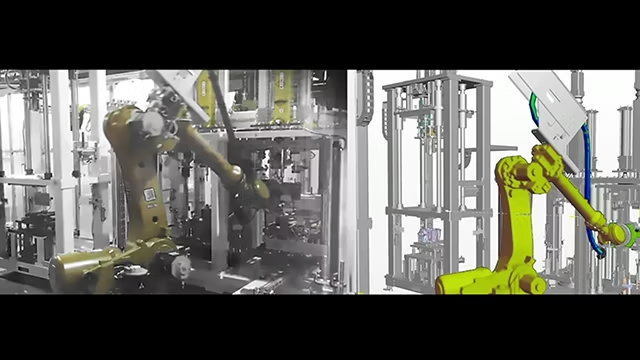
“Prior to introducing digital simulations, we were able to check for equipment interferences and conduct on-site verifications, but now we were able to teach robots offline,” says Shoichiro Seki, general manager of the engineering departments at Hirata. “Once that data has been downloaded, the robots can immediately be operated on-site, which is a huge advantage.
“Previously, we had to turn on the power, start up the robots and then perform the teaching work to check for interferences, cable twists and other issues. Now all of that can be performed offline, which is incredibly helpful for manufacturing.”
Leveraging Process Simulate
Hirata’s major customers have added 3D model validation to their equipment development process and most of them were using Process Simulate, which is part of Siemens Xcelerator. This also motivated Hirata to select Process Simulate.
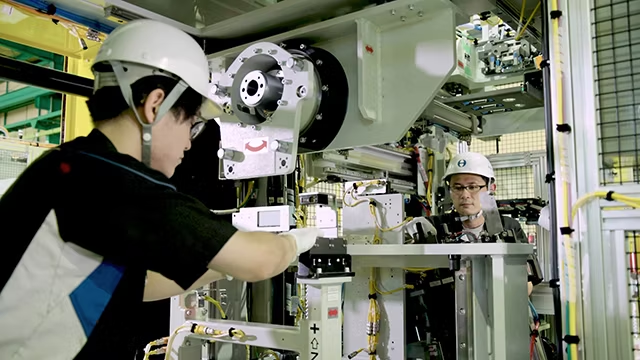
“Previously we required three engineers to complete the verification process in three to 10 days, but one engineer using Process Simulate for cable simulation can complete the verification process in approximately two hours,” says Seki. “That reduced man-hours compared to conventional methods by 90 percent and manpower requirements by 66 percent.”
“After a year of simulation experience with Process Simulate, I was able to gain a deeper overall understanding of the work I had been doing for the past five years in my own area of expertise, human machine interface,” says Mami Hayata, chief of the control design group in the engineering department. “This enabled me to receive information from many different fields, including mechanical, control, instrumentation and robotics. The introduction of simulation has allowed me to learn so much more about the world of equipment.”
“I used to only talk to people in control,” says Kosuke Nishi, who is a mechanical design engineer. “But now I have connections with various people in mechanical, control, instrumentation and robotics. Initially, when simulations were introduced, my requests to mechanical designers to provide information for simulation were met with resistance, but now that awareness and demand have increased considerably, I feel that we are able to exchange useful information.”
“Previously, we determined the optimal cable routes and fixing methods by trial and error,” says Ryosei Sekiguchi, manager of the control design group in the engineering department. “With Process Simulate we can use simulations to verify multiple patterns of routes and fixing methods simultaneously, which significantly reduces the time spent on that.”
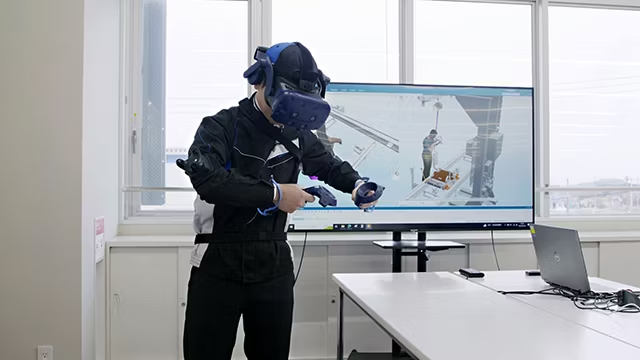
“Prior to introduction, we used 2D drawings to confirm ergonomic areas and workability based on planar dimensions, which frequently led to insufficient verification of worker postures and product shapes,” says Seki.
“This often resulted in us discovering necessary adjustments only after the completed equipment started being used. However, with the introduction of human machine interface, we can now perform work verifications for various postures in 3D. The results are clear and easy to understand, allowing smooth consensus building with customers.
“We compared simulation software from various manufacturers, but ultimately chose to adopt Process Simulate due to its global market share and especially its widespread use among automotive manufacturers.
“As a result of this evaluation, we chose Siemens as our strategic partner to promote digital transformation. We also introduced Siemens Xcelerator as part of that effort.”
Future of Process Simulate
Hirata is implementing Process Simulate add-on features every year, including modules for robotics, virtual commissioning, safety and cable. They have also introduced Plant Simulation in the Tecnomatix portfolio in various departments.
Leveraging the Siemens Xcelerator business platform, the Smart Factory Research Center became a key development for improving the university’s training quality.
Dr. Tran Duc Quy, Rector Hanoi University of Industry
Keeping up with engineering education standards
Established in 1898, Hanoi University of Industry (HaUI) was one of Vietnam’s first technical schools. With a focus on delivering a comprehensive education and supporting Vietnam’s national industrial revolution, the university envisions becoming an institution of applied scientific research and training since many of their students aim for a career in either engineering or manufacturing. This has led the university to continually improve and develop its academic offerings to keep up with industry standards.
HaUI gradually built a series of modern laboratories to provide students with comprehensive, real-world training. For this, the university investigated solutions within the Siemens Xcelerator business platform.
Solving outdated technology limitations
As engineering and manufacturing industries shift toward smart factories and digital software solutions, such as using a digital twin for product development, the university found that graduates needed extensive on-the-job training.
To prepare students for Industry 4.0, the university needed a digital overhaul. Thus, they examined a range of potential digital tools and chose to implement Siemens Digital Industries Software solutions.
The university enlisted Vietbay, a Siemens partner, to collaborate on updating its training laboratories, leveraging their consultation, installation, integration and training services.
Creating the Smart Factory Research Center
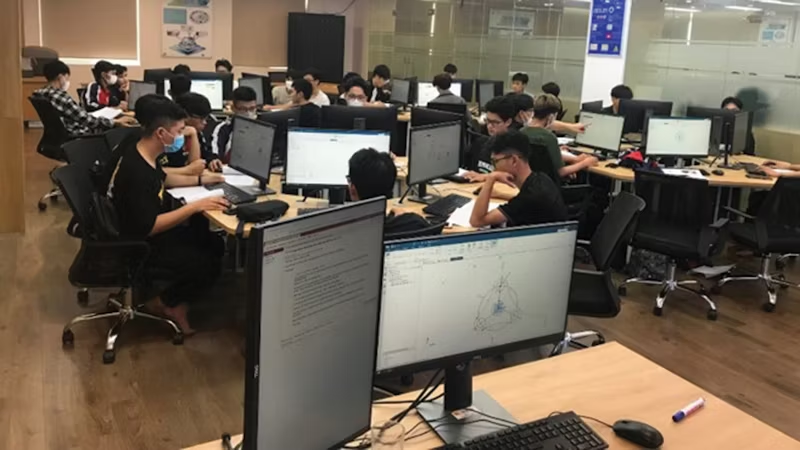
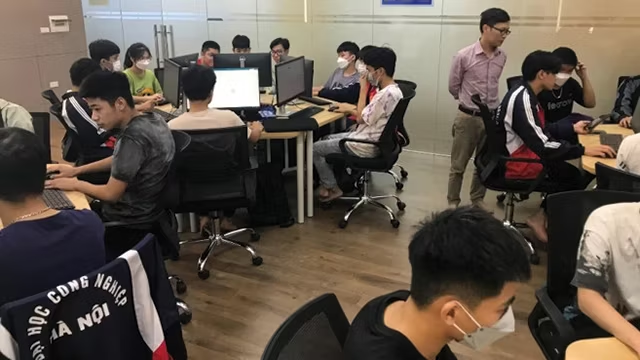
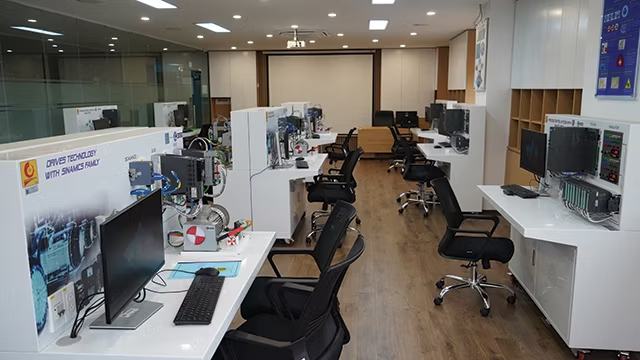
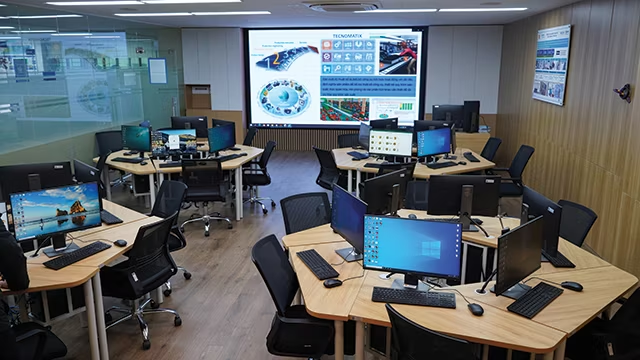
By collaborating with Vietbay, HaUI was able to create the Smart Factory Research Center, which includes five research and practice labs, all connected using the Teamcenter® portfolio. These labs allow students to gain experience in all areas of production before graduation, with each corresponding to a specific product development stage, including research and development (R&D), mold and die, digital manufacturing, basic automation and advanced automation.
One of the biggest challenges was integrating the university’s requirements, such as its 3-axis and 5-axis computer numerical control (CNC) machining centers, with advanced technology. However, leveraging the user-friendly design of Teamcenter and Vietbay’s expertise, they were able to fully onboard the university’s machinery to facilitate information sharing across all production stages.
Vietbay also offered extensive training as part of its support package to the university. This included 40 courses delivered over 170 working days and introductions to tooling design in NX™ software, advanced planning and scheduling (APS) in Opcenter™ APS software, the internet of things (IoT) and low-code programming in the Mendix™ platform and application lifecycle management (ALM) in the Polarion™ portfolio. Teamcenter, NX, Opcenter, Mendix and Polarion are all part of the Siemens Xcelerator business platform of software, hardware and services.
Students and instructors participated in this training, paving the way for future course improvements.
“Leveraging the Siemens Xcelerator business platform, the Smart Factory Research Center became a key development for improving the university’s training quality,” says Dr. Tran Duc Quy, rector at Hanoi University of Industry. “Thanks to Siemens and Vietbay, we can provide thousands of lecturers and students the opportunity to practice using the latest technologies prevalent in Industry 4.0.”
“The Smart Factory Research Center, using the Siemens Xcelerator business platform, provides a powerful set of tools for teaching, researching and training engineering students,” says Hoang Tien Dung, head of the Faculty of Mechanical Engineering.
Digitalizing to improve student education
By collaborating, HaUI and Vietbay were able to revitalize the university’s hands-on training while eliminating the need to invest in new equipment. For example, using 3D computer-aided design (CAD) tools such as NX, students were able to practice using a digital twin without needing access to physical machinery. This shift toward virtual spaces resulted in budget savings of an estimated 15 percent since the university was able to reduce its outlay on electricity and miscellaneous upkeep.
With the Vietbay training courses, combined with increased accessibility to technology, the university expanded its educational offerings to over 200 courses, making use of the Smart Factory Research Center.
“Lecturers are now trained to use the Siemens Xcelerator business platform,” says Trinh Van Long, director of the Smart Factory Research Center at HaUI. “This means educators can access a treasure trove of the most advanced technology currently available for teaching students.”
By improving access to high-quality testing environments and tools, students can pick increasingly complex topics for their graduation theses and essays, reducing the need for post-graduation training. These improvements are also attracting new students, with student enrollment increasing year-over-year (YoY) by 10 percent since finalizing the Smart Factory Research Center.
Experts in intralogistics and warehousing operations
Intelligent Distributed Controls (IDC) was founded in 2003 to support customers with intralogistics and warehousing operations in the U.K. and Europe. The engineering, management and IT team at IDC have a broad range of skills including HV Control Panel Design, PLC Software Development, with C# .NET and Android supporting the WCS and WMS development. The team is also supported by project managers with an in-depth knowledge of intralogistics and warehousing and advises customers on automation and warehouse control and management systems (WMS).
One of IDC’s customers, a retail distribution center serving major mail order and e-commerce businesses, had begun planning in spring for the upcoming Christmas seasonal peak. One of the key machines in the distribution center is a high-speed tilt-tray sortation machine that processes more than 6,000 items per hour. The customer wanted to update the machine’s systems due to unsupportable SCADA and controls systems, and asked IDC to complete the upgrade in a narrow two-month window during May and June.
Besides its short time frame, the project posed additional challenges for IDC. IDC wanted to explore how much work could be completed remotely, to reduce the time required for final commissioning checks at the customer site.
Partnership with Simsol
IDC decided to use a combination of virtual and on-site commissioning techniques to reduce lead time on the project, and for this purpose partnered with Simsol, a Siemens Digital Industries Software solution partner.
Simsol is focused on Siemens’ Tecnomatix® portfolio of digital manufacturing solutions, and has gained recognition as a Expert partner, providing specialized expertise in digital manufacturing technologies and production simulation. Simsol trained IDC on the Tecnomatix software and offered best-practice advice on how to use and construct its models throughout the project.
Leveraging the digital twin
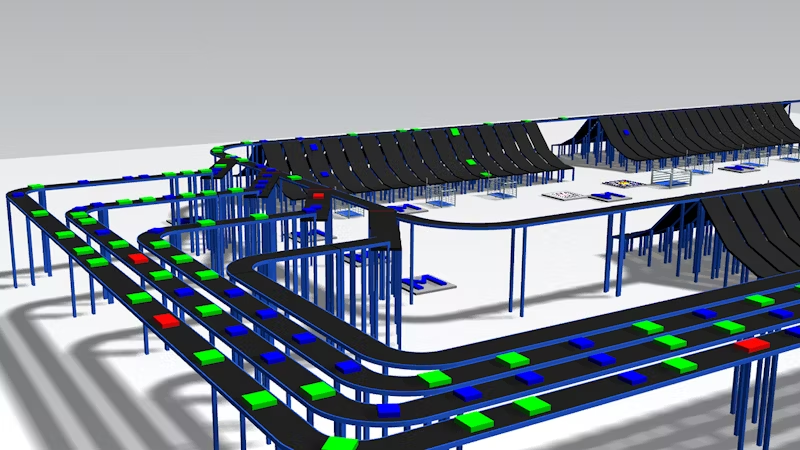
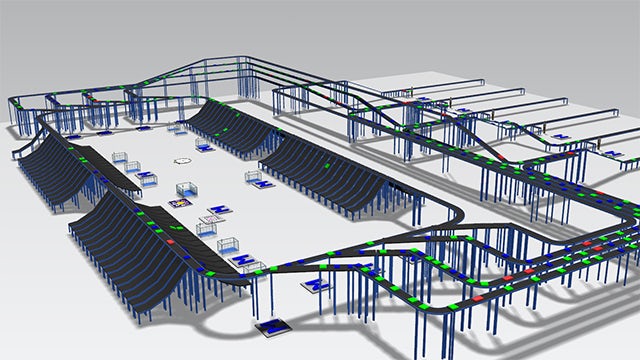
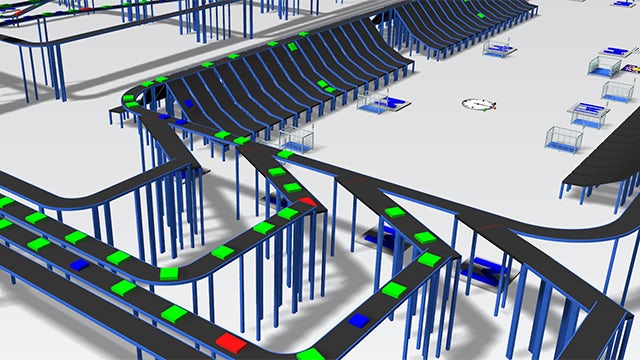
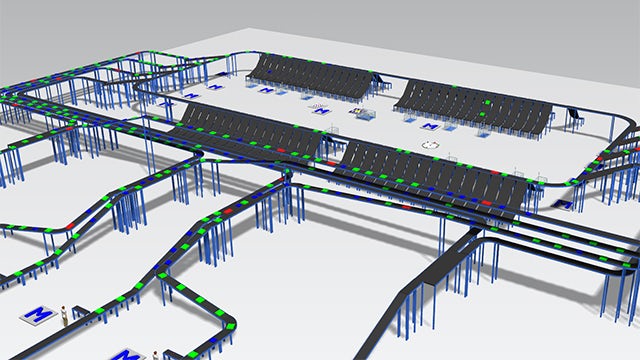
IDC used Plant Simulation in the Tecnomatix portfolio to build a comprehensive digital twin of the retail distribution center – a complete and accurate 3D model of the logistics systems and their processes, including control logic. The digital twin gives a strategic overview of the entire operation, rather than just a single cell or line. This gives more opportunity to focus on key areas identified for investigation and to continually improve across the whole production. IDC used the digital twin to explore and optimize the distribution center for performance, and to accurately simulate the tilt-tray sortation machine and more importantly the induction logic, which is critical to optimizing the throughput.
To make the most of the time available, the IDC team focused on the more complex areas of the machinery, investigating the dynamics and relationships among components and simulating mechanical changes to moving parts.
With the digital twin, the team was able to consider oversized (or “ugly”) items. Instead of building from the general throughput rate for standard items, the team generated virtual stock data in a range of item sizes that closely represented the packages to be processed by the distribution center. The dynamic data yielded a more realistic view of machinery performance. Performing this work remotely was crucial to meeting the customer’s deadlines.
“Without access to the actual sortation machinery, we had to use standard warehouse control system design models to construct code for testing,” says Richard Towne, Managing Director at IDC. “With the simulation model that IDC created, we could simulate almost all aspects and know that the code was validated against the system design, so we didn’t need major changes when we got on site.”
Tangible results
IDC realized tangible results from the use of digital twin plant simulation. The company was able to upgrade the controls and commission the tilt-tray sortation machine in just five weeks, well within the time frame proposed by the customer. With remote commissioning, IDC also minimized costly on-site time, reducing overall commissioning time by three weeks as compared to a similar upgrade project that required eight weeks using on-site commissioning only. The controls upgrades also increased the throughput of the sortation machine.
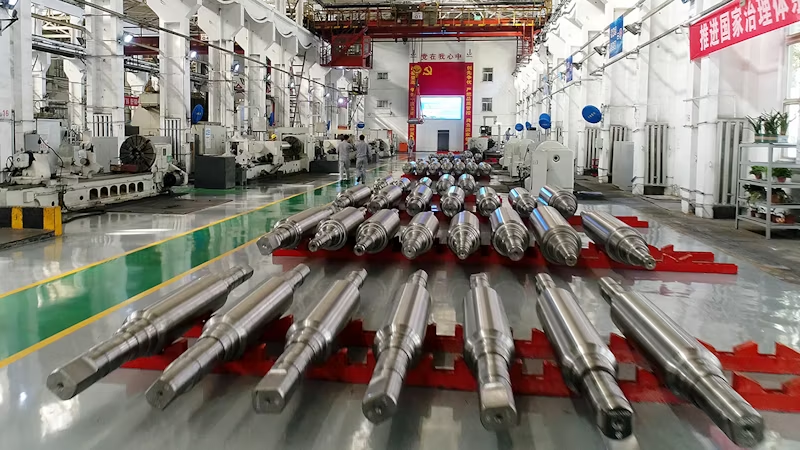
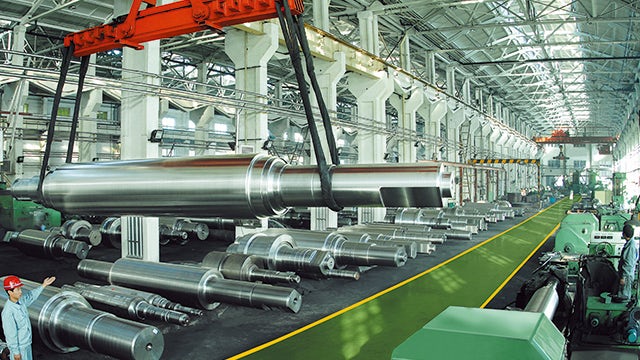
Sinosteel Xingtai Machinery and Mill Roll Co., Ltd. (Sinosteel Xingtai) is the world’s largest producer of mill rolls with an annual output of 180,000 tons and a global market share of more than 20 percent. Pursuing the China 2025 national industrial manufacturing strategy, the company began upgrading its plants in 2018. The company moved to the Xingtai economic development zone to build new plants, investing nearly 10 billion RMB. Xingtai Machinery and Mill Roll aims to become the world’s first intelligent digital roll production enterprise.
Implementing Tecnomatix digital manufacturing
In the earliest phase of new plant planning, the company adopted the Tecnomatix® portfolio of digital manufacturing solutions, part of the Siemens Xcelerator business platform of software, hardware and services. With the assistance of IPS, a Siemens Smart Partner consultancy, Xingtai Machinery and Mill Roll collected production and logistics data and imported a new plant blueprint into the Tecnomatix Plant Simulation 2D/3D simulation environment.
Tecnomatix Plant Simulation includes tools for simulating, exploring, and optimizing logistics systems and their processes. The plant models enable analysis of material flow, resource utilization, and logistics for all levels of manufacturing planning, well in advance of production execution. Using these tools, Xingtai Machinery and Mill Roll conducted the plant simulations, verified the layout and logistics, and optimized the total manufacturing plan.
An effective way to discover plan deficiencies after the static design phase
By simulating the production and logistics processes, the Xingtai Machinery and Mill Roll team effectively discovered several problems that are otherwise difficult to detect at the static design phase. For example, the simulation results revealed that the inventory of pig iron and steel scrap was negative when studying the cross-region material distribution. By checking the input data table, the team found that the daily demand for pig iron and steel scrap was greater than the planned capacity of the storage tanks.
In another example, the team used Plant Simulation to discover that a flat car did not return to the waiting position for the next batch of material according to the batching schedule. The flat car was still in the melting span, and the material on the flat car had not been consumed, so the next batch of material could not be distributed on time. The error in the logistics design was easily understood when the team compared the simulation data with the input data table. The problem was finally solved by adding a spare material plate. Simulation has helped to accurately identify and correct other problems, such as the interference of a moving crane with other cranes and equipment. The ability and efficiency of Plant Simulation to help discover problems introduced at the static planning phase is highly valued by the company.
A powerful platform for plan optimization
Using Plant Simulation, Xingtai Machinery and Mill Roll optimized the plant plan. For example, one of the optimization considerations for a steel sand box area was whether to add a flat car track. Plant Simulation helped the team to easily verify the option by running the simulation and comparing the results. The simulation determined that adding a flat car track would reduce the moving distance of the overhead traveling crane by 1,600 meters and reduce working time by 27 minutes per day. Similarly, in a cast crossing and other areas, the team proposed a series of optimization solutions that were quickly verified by the simulation. These optimizations helped eliminate logistics collisions and increase the efficiency and utilization rates of high-value equipment. By the end of the first phase of the plant simulation project, the team had found six important design deficiencies and proposed two important optimization solutions for layout and logistics.
“With the help of Tecnomatix solutions and IPS consultants, we have improved the plan of the new plant in a relatively short time at a limited cost,” says Wang Jingjun, director of information management at Sinosteel Xingtai Machinery and Mill Roll. “The project not only helped avoid several important design deficiencies, but also helped save 100 million RMB in equipment investment by optimizing the layout and logistics.”
Hear from Ondřej Pažout, Benthor head of robotics and simulation, about how the leading automation machinery innovator uses Siemens Process Simulate software to help elevate robotic safety and efficiency. Benthor is a leading innovator in the manufacturing industry, specializing in the design and integration of advanced robotic systems.
Benthor engineers can monitor the status of robots in a simulated environment where there is no risk of injury or hardware damage.
Automation solutions for machines and production facilities
Benthor Automation, based in Mladá Boleslav, Czech Republic, develops automation and information technology (IT) systems for industrial manufacturing. The company’s customers are primarily in the automotive industry and include domestic and foreign car makers. Benthor’s core competencies include automation solutions for machines and production facilities with superior control technology and material flow management, and it offers services throughout the process chain, including consulting, technical solutions, hardware planning, software development, system deployment and after-sales service.
At Benthor, we prioritize the safety of robotic systems, and thanks to our collaboration with safety experts, we are able to design cutting-edge manufacturing equipment with integrated safety elements from the very first concepts of the workstations. This way, we provide our customers with transparency — visualizing the future workstation while eliminating additional costs caused by misinterpretation or misunderstanding of functionality.”Ondřej Pažout, Head of robotics and simulation for Benthor automation s.r.o.
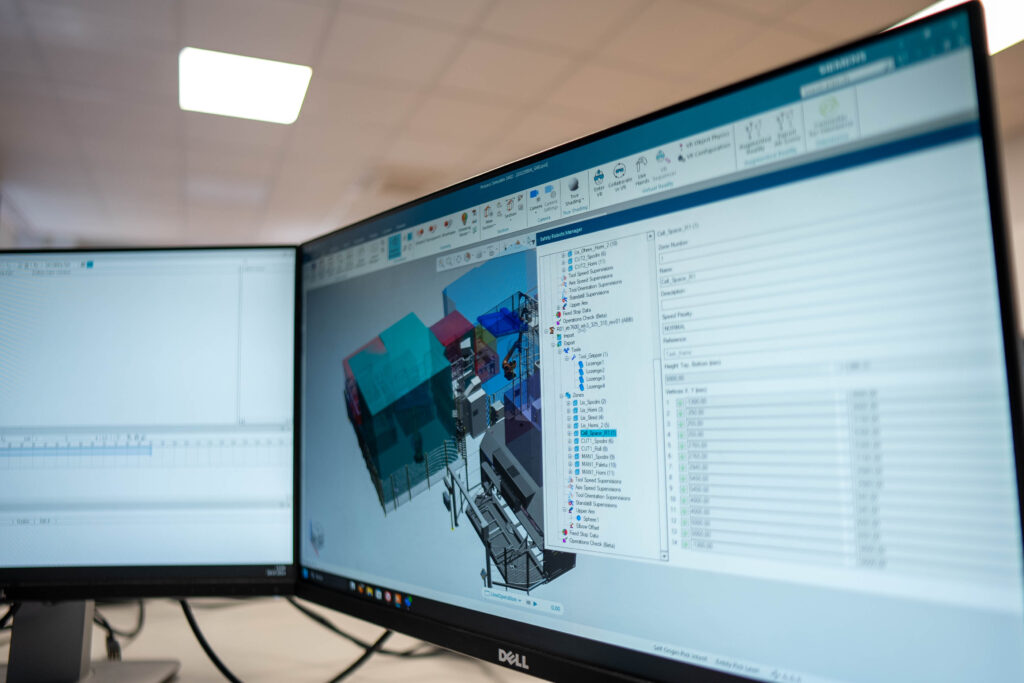
In the industrial automation space and as robotic systems become more prevalent in densely populated automated lines, functional safety remains crucial to prevent human injury and equipment damage. When planning a new robot station or lines, whether implementing changes for new products or layout adjustments, prioritizing robot safety is paramount. The intricacies of addressing robot safety in production systems started only as a discussion between Benthor and Siemens team, and now it has evolved into a strategic business priority for Benthor. That is when the leading automation machinery manufacturer realized the value of using Process Simulate Safety Robots Manager to address the safety of robotic workstations.
Meet the robot safety experts part of this collaboration:
Eddy Finaro Product Manager Siemens Digital Industries Software
Alex Greenberg Director of Advanced Robotics Simulation Siemens Digital Industries Software
Hear from Ondřej Pažout, Head of robotics and simulation for Benthor
Priority at Benthor
At Benthor, we fully recognize the crucial importance of safety in the integration of robotic systems. We design robotic workstations with the goal of minimizing risks for both operators and the equipment itself. Our integrations include not only physical barriers, but also sophisticated software tools for simulation and safety management. We address safety right from the start of the project by using simulations that consider all possible scenarios and potential safety incidents arising from risk analysis.
This approach allows us to eliminate potential risks even before the construction of the workstation begins. This helps us avoid costly adjustments to equipment or software during or after deployment. Thanks to our collaboration with the Siemens team responsible for Tecnomatix Process Simulate Safety Robots Manager, Benthor is able to implement advanced simulation technologies and methodologies that ensure detailed analysis and optimization of robotic workstations.
Solution: Process Simulate Safety Robots Manager
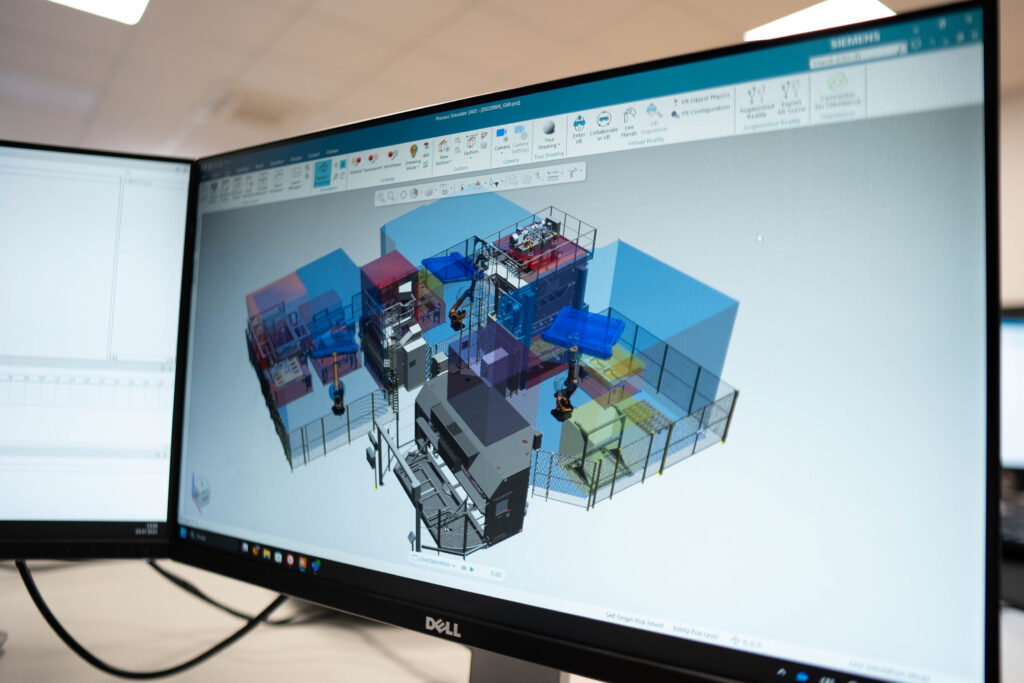
One of the key tools we use at Benthor is Process Simulate Safety Robots Manager (SRM). This application enables detailed management of robot safety functions and helps us simulate safety scenarios before physical implementation. With SRM, we can set up safety zones, define allowed movements, and monitor the status of robots in a simulated environment where there is no risk of injury or hardware damage. This allows us to quickly respond to any safety deviations and take appropriate measures during the design or virtual commissioning phase. This approach not only increases safety but also the efficiency, reliability, and profitability of automated systems.
Robot safety use cases
By utilizing solutions from the Tecnomatix Process Simulate portfolio, we have integrated more than 2,000 robots at Benthor, with nearly half of the installations using Safety Robots Manager to simulate safe robot behavior at the software level. Recently, we successfully implemented a robotic system project for the production of interior textile linings in the automotive industry. The core focus was the safety of operators when handling materials and preventing collisions with pressing tools. This resulted in more than 40 safety zones were successfully deployed and simulated across three robots. Thanks to simulation with SRM, Benthor was able to optimize robot movements and the production cycle without compromising safety standards.Ondřej Pažout, Head of robotics and simulation for Benthor automation s.r.o.
A robust partnership and the future of robot safety
The collaboration between Benthor and Siemens has proven invaluable in advancing the safety and effectiveness of our robotic workstations. By leveraging advanced simulation tools like Process Simulate Safety Robots Manager, Benthor continues to innovate and ensure that its systems meet the highest safety standards. Looking ahead, Siemens and Benthor are excited about future projects and the ongoing improvement of advancing safety protocols, which will further strengthen Benthor’s commitment to providing next-level solutions for its customers.
Exploring automation in autoinjector manufacturing: A comparative analysis for medical device production
SHL Medical; Lu Yi-Chi and Luigi Fumagalli
Medical device manufacturing processes have undergone significant transformations, particularly in the realm of automation. At the 2024 Plant Simulation User Conference, we delve into a comparative analysis of manual versus automated intralogistics and automated storage and retrieval system (ASRS) integration through Plant Simulation, shedding light on the transformative journey within autoinjector manufacturing.
Brief introduction to SHL Medical
Medical device production building; SHL-Medical
Founded with a noble ambition to improve the lives of patients reliant on self-injection solutions, SHL Medical pioneers advancements that foster patient independence and elevate their healthcare experience. Through partnerships with leading pharmaceutical and biotech companies, we deliver high-quality products and reliable platforms, empowering millions of patients annually and catalyzing positive change within the medical device and healthcare ecosystem.
What we do
At SHL Medical, we specialize in the design, development, and manufacturing of self-injection solutions, offering a comprehensive suite of services from design to build and contract manufacturing. Our portfolio includes autoinjectors, pen injectors, and innovative specialty delivery systems tailored for large-volume and high-viscosity formulations.
Background and objective
The transition from manual processes to automation in medical device autoinjector manufacturing presents a paradigm shift with profound operational implications. Our study, utilizing Tecnomatix Plant Simulation, aims to showcase the enhancements in production efficiency, inventory control, and overall process integration achieved through automation in medical device manufacturing. With a focus on optimized operational strategy, our objective is to provide a comparative analysis and actionable insights into integrating automation to enhance operational performance across key areas in medical device production.
Medical device manufacturing of self-injection solutions
Addressing complexity challenges with Plant Simulation
Navigating the complexities of automation implementation necessitates overcoming several challenges. From data dependency and supplier collaboration to integration trials, each hurdle poses unique obstacles. However, Tecnomatix Plant Simulation emerges as a potent solution, enabling data adaptation, guiding suppliers with precise requirements, and minimizing costly trial-and-error processes.
Simulation model development
Central to our analysis is the development of a robust simulation model that encapsulates production data, layout design, operation flow, and intralogistics strategy. By meticulously crafting a virtual representation of manufacturing operations, we gain invaluable insights into the dynamics of manual and automated production stages.
Analysis of results
Our analysis delves into two key aspects: operation evaluation and performance comparison. By meticulously evaluating requirements, testing solutions, and implementing optimization adjustments, we unveil the tangible benefits of automation. From significant headcount savings to enhanced operation efficiency and intralogistics improvements, the data underscores the transformative impact of automation in autoinjector manufacturing.
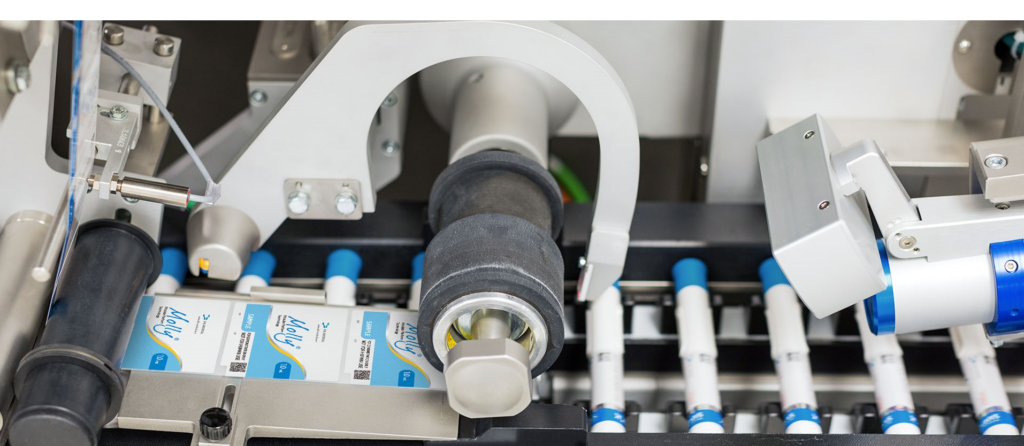
Medical device labeling of self-injection solutions
Analysis of results: Performance comparison
This segment delves into a comparative analysis between the manual and automated production stages, emphasizing the transformative changes achieved through automation and subsequent optimization adjustments. Utilizing plant simulation software as a powerful tool, the data presented below holds significance for the transition to automated systems, aiding in strategic decision-making and investment.
Benefits
-60% headcount saving: Automation drastically reduces the need for manual handling and supervision, resulting in a substantial decrease in labor costs.
15 to -25% inventory level decrease: Automated systems facilitate more precise inventory control, leading to a notable reduction in excess stock and storage space requirements.
+25% operation efficiency: Enhanced automation fosters swift material movements and efficient management, thereby enhancing overall stability and throughput.
+25 to 35% intralogistics improvement: Optimized automated workflows streamline material handling processes, mitigating delays and boosting productivity. Furthermore, the automated storage and retrieval system (ASRS) effectively utilizes limited space, maximizing storage efficiency.
Conclusion
As we navigate the ever-evolving landscape of medical technology, automation emerges as a catalyst for innovation and efficiency. Through meticulous analysis and strategic insights, SHL Medical continues to spearhead transformative initiatives that redefine the boundaries of possibility within autoinjector manufacturing. Join us in shaping the future of healthcare delivery, one innovation at a time.
Explore how Siemens Tecnomatix Plant Simulation and Opcenter solutions help to digitalize pharmaceutical manufacturing for sustainable efficiency.
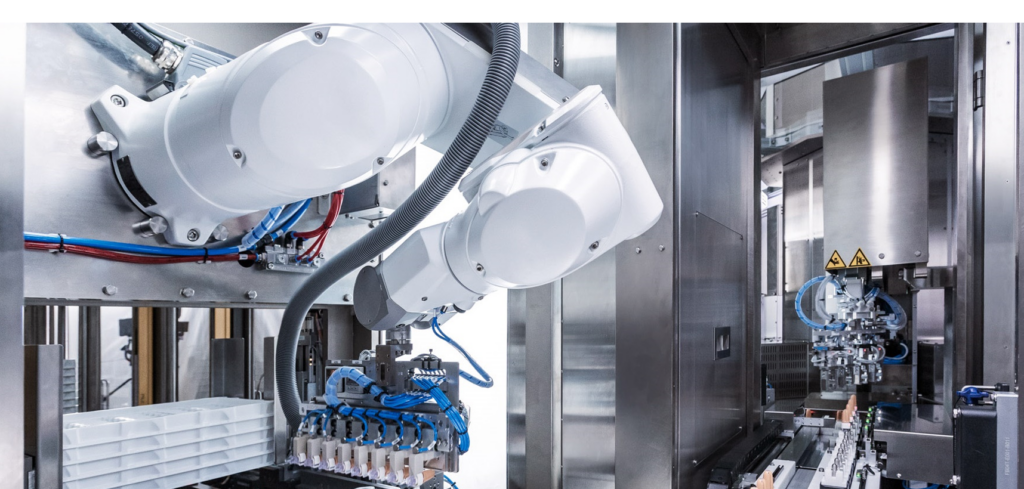
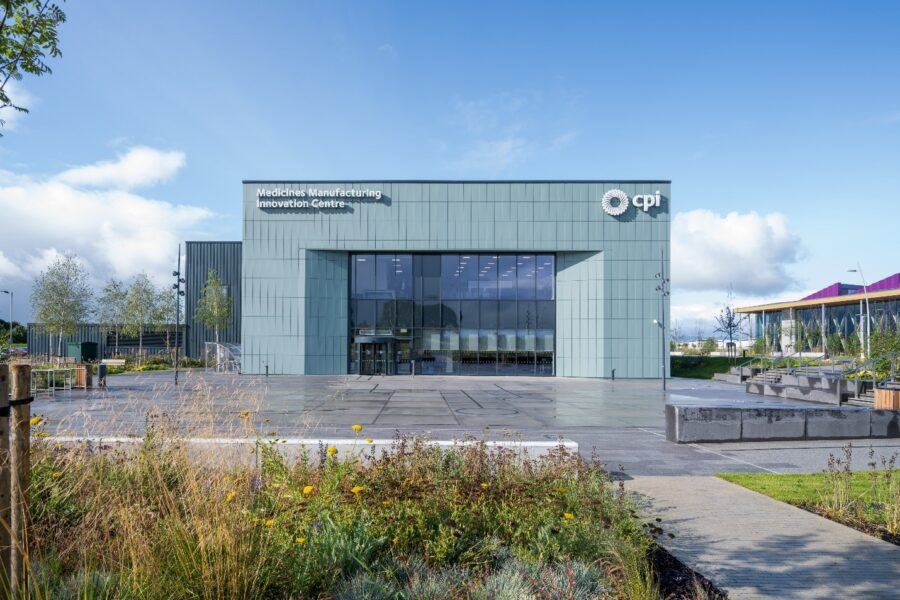
In the heart of Glasgow, Scotland, the Medicines Manufacturing Innovation Centre (MMIC) spearheads a transformative journey within the pharmaceutical (pharma) industry. CPI, technology innovation catalyst, opened the world leading MMIC to raise the bar in pharmaceutical manufacturing by redefining the future of pharmaceutical production with cutting-edge digital technology, collaborative expertise and more sustainable manufacturing practices. The MMIC is a unique collaboration between CPI and 23 partner organizations from all different sectors.
MMIC is an open-access collaborative innovation center specific to pharma manufacturing, meaning they work with numerous partners, such as industry giants like GSK, Pfizer and Novartis as well as partners from business, academia and government agencies Their collaboration for pharma manufacturing aims to deliver innovation that drives new processes and products into the pharma industry using Siemens digitalization solutions to tackle issues such as the development of more sustainable manufacturing processes.
The unique pharma manufacturing challenge
MMIC works with pharma companies, as well as technology companies and equipment manufacturers that provide technology to help the industry. However, one of the center’s challenges relates to maintaining the truest sense of collaboration through digitalization by creating a standard architecture that allows the factories to build consistently. This includes streamlining processes, accelerating development, and reducing waste and energy consumption, which is where Plant Simulation in the Tecnomatix® portfolio comes into play. By creating a digital twin based on real data, Tecnomatix empowers operators to optimize processes, minimize waste and enhance efficiency. Driving the center’s innovation engine is the digital twin. With it, pharma companies can design everything from the smallest single product, to manufacturing processes, to the entire factory, and detail and tweak each as needed. From identifying which materials work well to storing the the finished products, Tecnomatix Plant Simulation lets operators choose the right modules, conduct tests, and avoid bottlenecks.
The tool that we’ve used most for our digital twins for design is Tecnomatix. Our industrial partners set our digital ambition and my team delivers it.”
The major pharma’s success also lies in leveraging Siemens Opcenter™ Execution alongside Tecnomatix. This seamless integration among Siemens digital manufacturing software is a perfect example of how the Siemens Xcelerator portfolio ensures a streamlined experience for software users. Opcenter is a key element of the digital twin, ensuring the manufacturing execution is performed correctly and provides full traceability of the product and process. MMIC can now ensure information tracking, regulated process control and simplified approval processes. With customized dashboards consolidating data from various systems, personnel can make faster, more informed decisions, driving efficiency and agility.
Tecnomatix Plant Simulation and Opcenter software drive manufacturing success
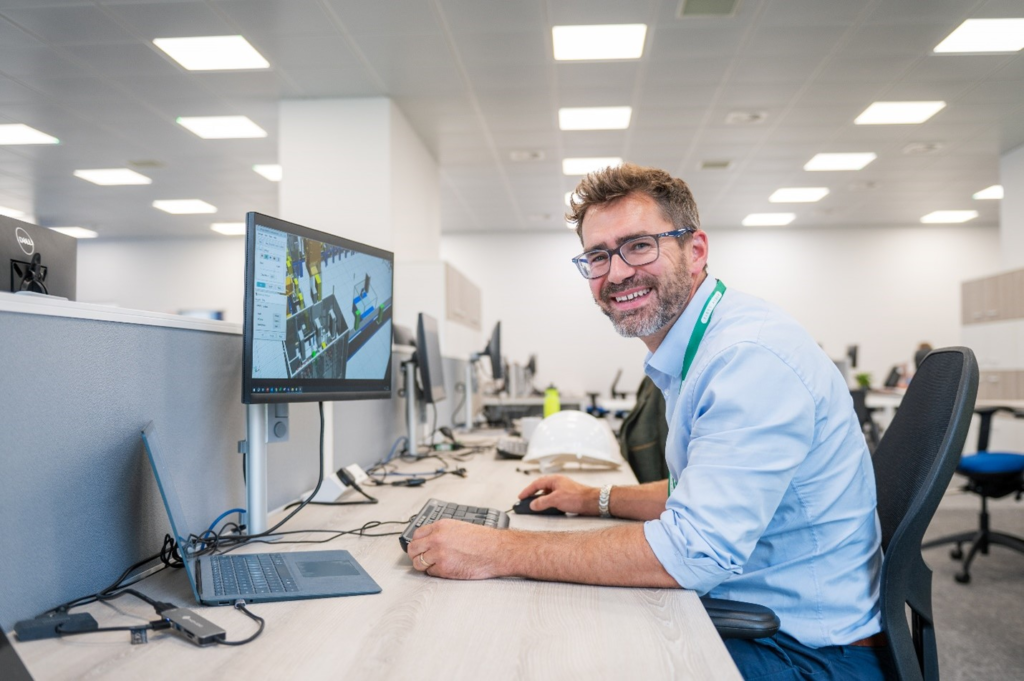
At the core of innovation lies the digital twin, powered by Tecnomatix. The factory simulation software enables pharmaceutical companies to design and fine-tune every aspect of manufacturing processes, from individual products to entire factories. By simulation scenarios and identifying optimal solutions, Tecnomatix drives efficiency and minimizes waste. Not to mention, real-time data further enhances simulation accuracy, with Simatic® Real-time Location Services (RTLS) providing insights into object movement within the facility. This integration closes the loop between simulation and reality, facilitating continuous improvement and optimization.
Beyond efficiency gains, the center embraces sustainability as a core principle. Collaborating with Siemens consultants, MMIC was able to deploy automation, optimize processes and adopt smart building solutions to reduce their carbon footprint. The strive for sustainability is paramount for MMIC, which is enabled by Siemens digitalization solutions. Tecnomatix Plant Simulation emerges as a cornerstone in the pharmaceutical industry’s journey towards sustainability and efficiency. By optimizing processes, reducing waste and embracing digitalization, the MMIC sets a precedent for clean and sustainable manufacturing practices. With Tecnomatix as a driving success factor, the future of pharma manufacturing looks brighter, greener and more efficient than ever before.