
HOW 3D SCANNING HELPS TO MANUFACTURE PARTS FOR THE AEROSPACE INDUSTRY

Product: HandySCAN
Industry: Aerospace and Defense


EADS (European Aeronautic Defense and Space company) is a worldwide leader in aerospace, defense, and associated services. The company has been using Creaform portable 3D measurement products for several years.

More specifically, EADS uses both the HandySCAN 3D and the MetraSCAN 3D optical CMM scanner for scanning tooling and composite parts (carbon/epoxy) and for making parts/CAD comparisons. For its probing needs, EADS uses the HandyPROBE optical CMM. In addition to using VXelements, the data acquisition software behind all Creaform systems, EADS additionally uses the VXtrack module for dynamic measurements, as well as VXlocate, a software module developed through a partnership between Creaform and EADS.

HandySCAN 3D Application Example

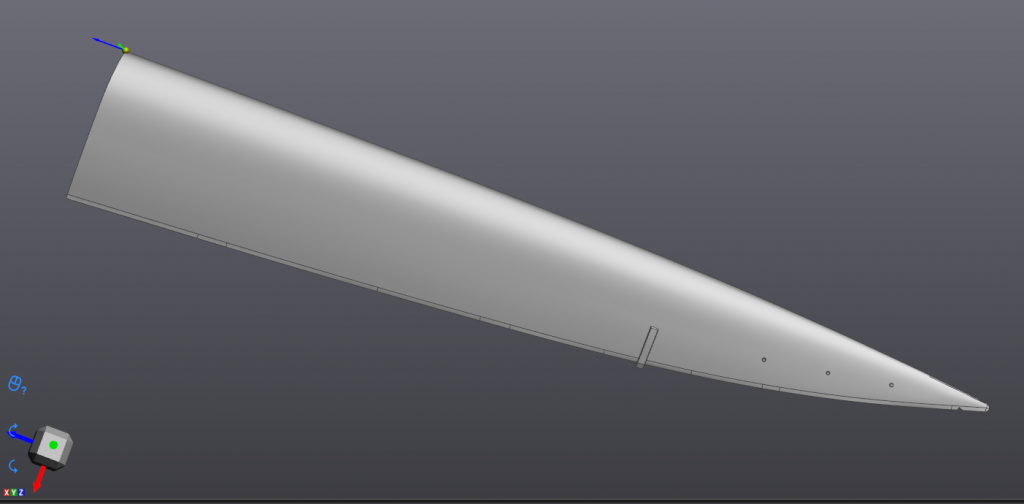
As part of a study on the possible geometric distortion of carbon fiber composite parts and with the help of a HandySCAN 3D device, EADS scanned a 1 000 mm x 800 mm tooling equipment, as well as 650 mm x 300 mm parts, to assess post-manufacturing deformation.
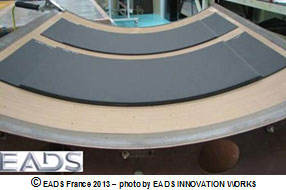
Parts on tooling

Parts on tooling

First, EADS scanned the tooling, in order to verify its compliance with the CAD plan.
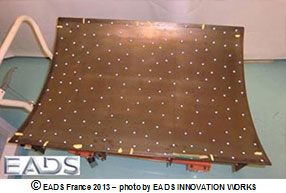
Scanning the tooling with the HandySCAN 3D

Scanning the tooling with the HandySCAN 3D 

Then, two parts manufactured with this tooling were scanned, and the scanning files were compared.
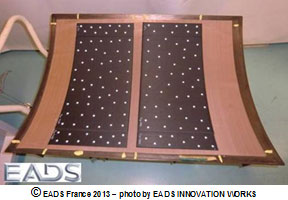
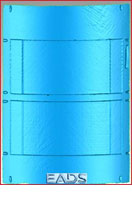
Scanning the parts and results
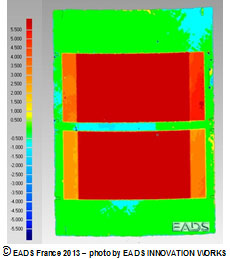

Scanning the parts and results 

Results: tooling/parts gap

Results: tooling/parts gap

­

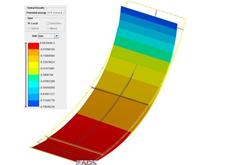
The second step consists of using very powerful simulation tools to estimate the distortion of the parts before manufacturing, in order to compare the manufacturing parts scanning files.
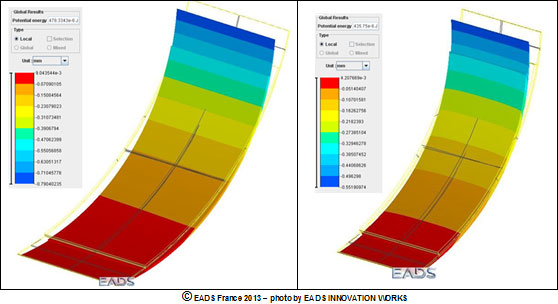
Simulation

Simulation

The results EADS obtained made it possible to validate the simulation software, which was developed to optimize the manufacturing range by identifying adequate parameters and processes.

This project could have been completed with a fringe projection scanning system, but the one EADS owns cannot be used for such large surfaces, and the process is a lot more complex when it comes to measuring the two faces of the composite parts. Additionally, a CMM could have been used, but this possibility came with two drawbacks: one-off measurements, which in turn lead to a much longer acquisition time.

“ The Creaform system enabled us to quickly scan the metallic tooling and the carbon fiber composite parts. Many other systems that are available on the market do not work very well on these composite parts, which aspect is very dark and sometimes very glossy. The equipment being so portable made it possible for us to record the measurements right at the manufacturing site,” explained Ms. Catherine Bosquet, from the EADS Structure Health Engineering (NDT & SHM) department.

“ Before using Creaform’s systems, we used fringe projection, since we purchased a HOLO3 system over 15 years ago. We also tested other available systems (Konica Minolta, Metris, Steinbichler, Aicon, Kreon Technologies, Ettemeyer, GOM), but the Creaform 3D measurement solutions convinced us, because of their quick set up and acquisition, ease of use, measurement performance for many types of surface states, as well as their portability.We must also mention that Creaform experts are always highly available and responsive.”

How 3d measurement technologies can improve quality control in the hypercar market

Product: HandySCAN
Industry: Automotive and Transportation


“The Creaform solution is highly accurate, easy to use and well-suited to a production line environment. Having the system ready at hand gives us the flexibility and response time we need to quickly investigate measurement and quality issues as they arise.”

Swedish design and visionary technical solutions: that’s the way Koenigsegg works.

The Swedish company Koenigsegg Automotive AB is the market leader within the elite hypercar market, developing and hand-building advanced artisan vehicles since 1994.

The journey of Koenigsegg, since its inception, is truly incredible. It all started on August 12, 1994 when a young man, aged 22, set out to realize his childhood dream. He was a young man fuelled by passion, ingenuity and mind-bending will. Christian von Koenigsegg had just made up his mind to live his dream and start his own car company. The odds were stacked against him. It was a now or never moment. His idea was to create a sports car that he felt did not currently exist and one which he believed would be desired—two essential necessities for success, Christian felt.

The concept: A lightweight mid-engine car with a detachable, storable hardtop. The car would also feature a wrap-around screen for good visibility and aerodynamics as well as short overhangs with two large intercooler intakes on the side of the car, located behind the mass centre to aid high-speed stability. The car would look and feel good with the top up or as a roadster—transformed in minutes with the hard top neatly tucked away inside the car. Christian envisioned a car with a timeless appearance that aged like good wine. This was a mid-engine car concept that did not exist at the time.

Every Koenigsegg created since then now includes this simple, but effective, DNA attuned to Christian’s original vision.

Five production models with as many Guinness production car records later, Koenigsegg has exploded onto the international scene and is here to stay. When Christian is asked what his greatest achievement is, he says without hesitation: “Living the dream!”

Measurement tasks and equipment

The day Koenigsegg got in touch with Creaform, the company was using rental services for measurement tasks. A four-meter Romer Arm with scan and probe heads or a Leica Tracker together with PolyWorks were employed. The measurement and scanning systems were primarily used for root cause analysis on the production line, comparing physical parts to nominal CAD as well as for fixture set-up, commissioning and reverse engineering tasks in which handmade parts were replaced by and CAD data produced using Catia V5R19 for production tooling and manufacturing.

Frequent functional downsides of the rental equipment, substantial expenses and time constraints as well as the goal to have in-house 3D measurement skills, brought Koenigsegg to start looking for alternatives on the market. Creaform’s Swedish reseller, MLT Maskin & Laserteknik AB, went to Koenigsegg for an on-site demonstration of Creaform’s 3D measurement technologies.

“After benchmarking all available measurement systems, we felt that Creaform products and solutions fitted best with our demanding requirements and environment. Being less sensitive to movements during scanning and probing, the Creaform’s solutions are better-suited to a production line environment,” explained Jon Gunner, Technical Director at Koenigsegg. “We decided to invest in the HandySCAN 3D scanner and portable optical CMM HandyPROBE from Creaform and the CAD and inspection software called PolyWorks.”

HandySCAN 3D metrology-grade scanners can capture up to 480,000 measurements/s with an accuracy of up to 0.030 mm.

The handheld HandySCAN 3D laser scanners provide breakthrough accuracy and resolution as well as significantly high measurement rates—all in a single, portable device. They can be used in all phases of the product life cycle: from conception, through design, manufacturing up to documentation, maintenance and repair purposes.

Free of any rigid measurement setup, HandyPROBE offers unmatched flexibility and a wider measurement volume than other portable CMMs.

The HandyPROBE portable CMM arm-free measurement system is the alternative to traditional measurement arms. The HandyPROBE is a wireless, triangulation–based CMM that offers complete freedom of movement and can be used for single or repeated measurements of various parts. The CMM is tracked by C-Track optical tracker. C-Track sensors also ensure the exact position of the HandyPROBE, perform continuous image acquisition and transmission, provide lighting of reflectors, manage exchanges with the computer, and store sensor parameters.

Both systems benefit from the integrated TRUaccuracy technology, which ensures highly accurate measurements when operating under real working conditions—regardless of vibrations, instabilities or thermal differences in the work environment.

How Creaform technologies intervene

The HandySCAN 3D scanner and the portable CMM HandyPROBE are now primarily used at the Swedish company for automotive quality control, measuring assemblies and components, and validating them to CAD as well as for root cause problem solving, reverse engineering and jig calibration. For jig calibration, Koenigsegg uses, for example, the probing system HandyPROBE to accurately adjust the nominal hard points. Then, users scan with the HandySCAN 3D scanner the parts once they are held by the jig as a validation process against the CAD data. This allows the company to trim the jig if a nominal offset should be required.

Free of any rigid measurement set up, HandyPROBE offers unmatched flexibility and a wider measurement volume than other portable CMMs

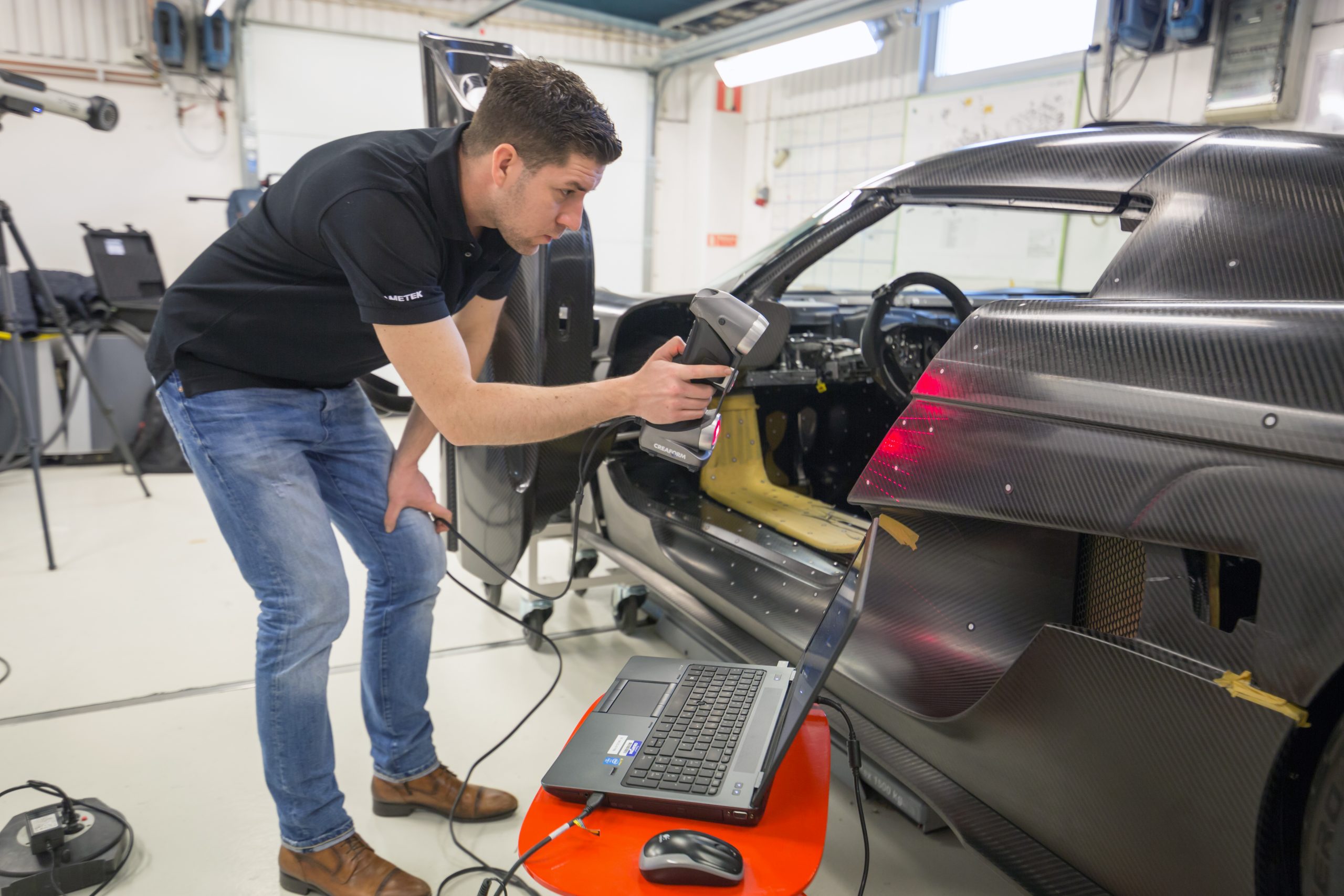
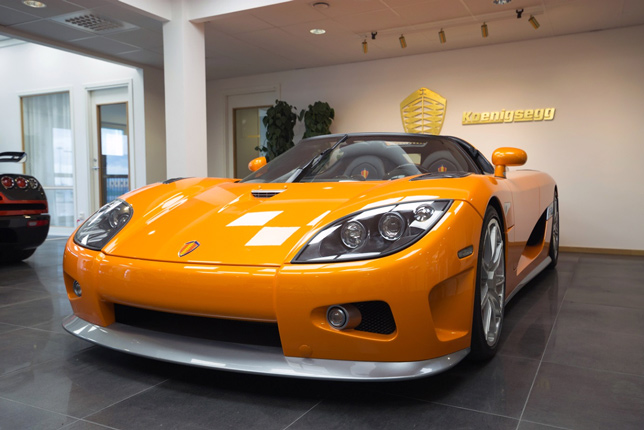
For quality control or engineering projects, HandySCAN 3D enables users to reduce turnaround times and increase profitability. Shown above scanning the body of a Koenigsegg Regera.

Jon Gunner is happy with the in the Creaform systems: “Already six months after the purchase, I estimated that we were halfway to gaining a return on our investment based on third-party rental fees and improvements to production quality. Creaform’s solutions are highly accurate, easy to use and ideal for a production line environment. Having the system ready at hand gives us the flexibility and response time we need to quickly investigate measurement and quality issues as they arise.”

SAMPLING AND PART APPROVALS OF EPP MOLDED PARTS

Product: HandySCAN
Industry: Consumer Products and Retail

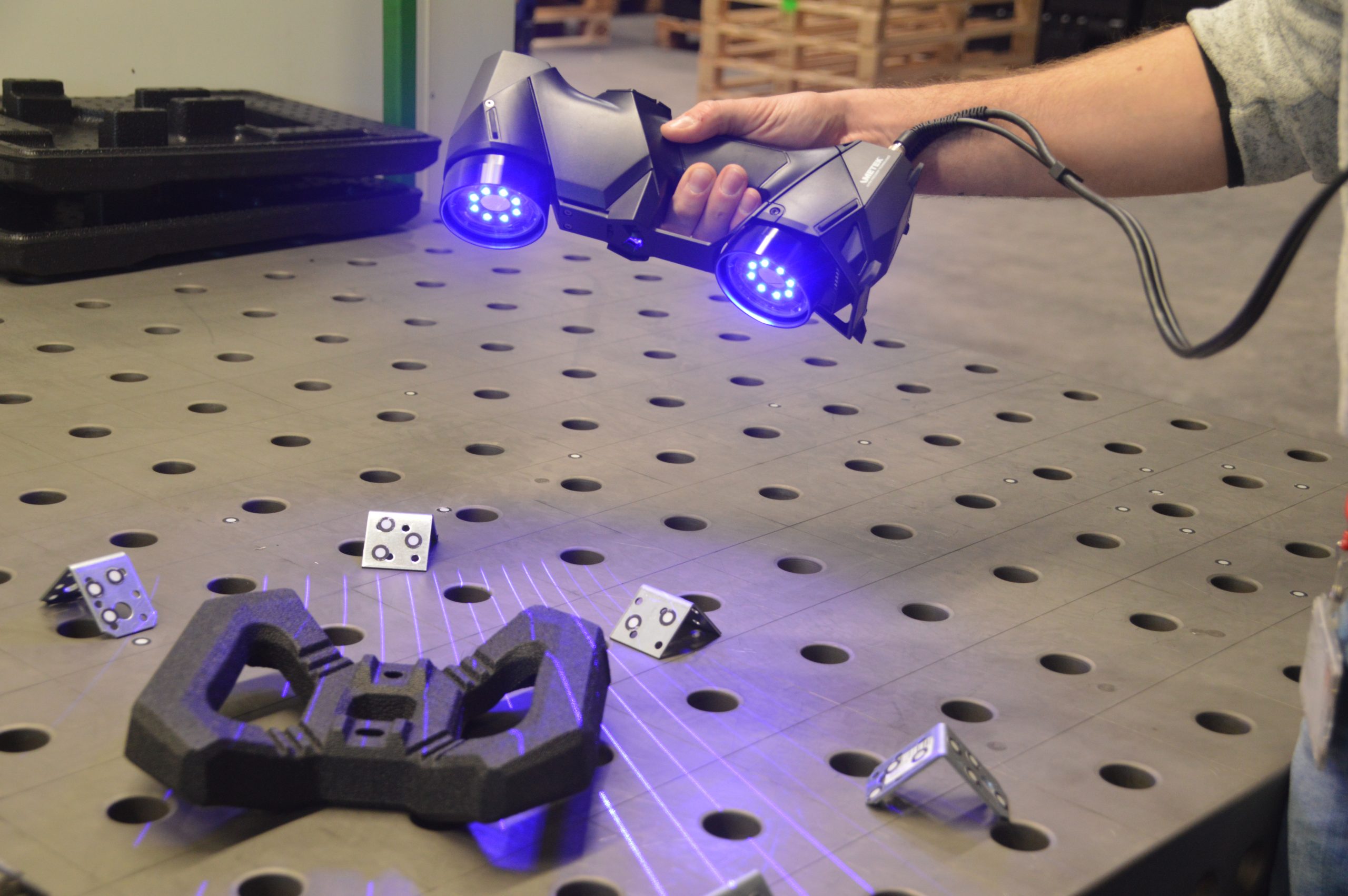
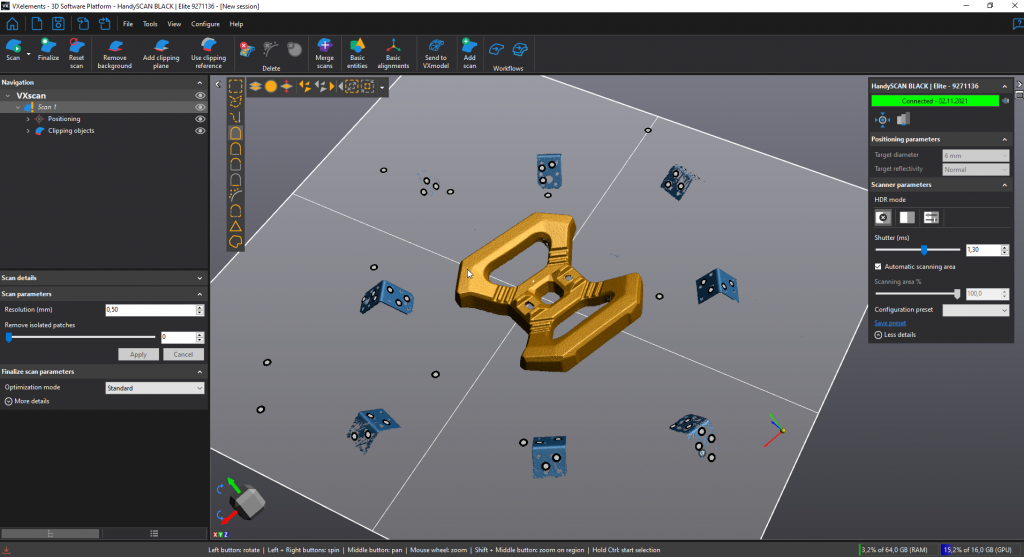
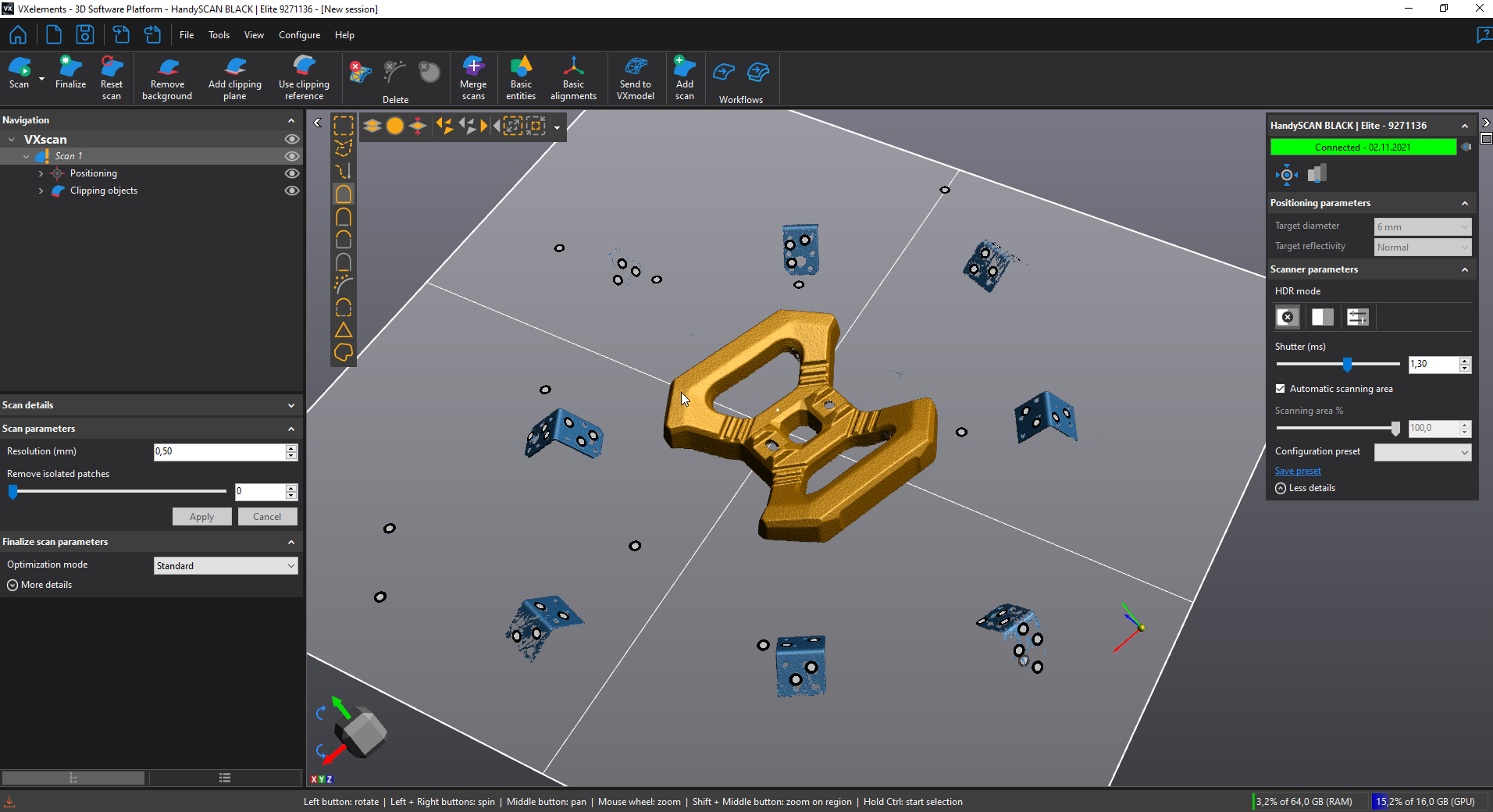
Black EPP part on a table being scanned with a HandySCAN BLACK 3D scanner

Flatz GmbH from Lauterach, Austria, is the market leader for system solutions in the packaging sector and produces corrugated board, insulating solutions, EPP moldings, and pull containers.

For its quality control workflows, Flatz faced the challenge of having to accurately measure increasingly complex contours of technical components, particle foams, and tools. The surfaces can be matte to glossy, with part sizes ranging from 100 mm to 2500 mm. Therefore, the company decided to acquire modern measurement technology to meet a complete range of quality control requirements.

The HandySCAN BLACK Elite from Creaform was the perfect solution. This portable 3D scanner can be used flexibly with an accuracy of 0.025 mm. It can also quickly and accurately measure components of any size, with matte to glossy surfaces in real time. Prior to acquiring Creaform’s new measurement system, Flatz used tape measures, calipers, U-bolts, and similar tools to take measurements.

Bernhard Guldenschuh from Quality Management remarked: “We received excellent training from Creaform, which directly addressed our measurement requirements. We were able to quickly put together a team that can now take measurements on a wide variety of components at any time, if required. Product approvals can now be carried out without any problems.

EEP part approval

Black EPP part on a table

Flatz GmbH had received an order to produce an expanded polypropylene (EPP) part with a size of approximately 250×300 mm for a new customer. It was to be installed on an injection-molded part. EPP is a thermoplastic material that is particularly environmentally friendly and easy to recycle.

The finished EPP part was mounted on an injection-molded part, which was then to be built into a complex device. The EPP part was designed to protect the interior of the injection-molded component. After sampling, however, there were problems with the fitting accuracy of the part. The customer was unable to install the part. The EPP part produced was scanned with the HandySCAN 3D and compared against CAD data in PolyWorks. It quickly became clear that the injection molded part had the wrong dimensions. It was subsequently adjusted and the EPP part could be installed.

Areas of application for the HandySCAN BLACK at Flatz

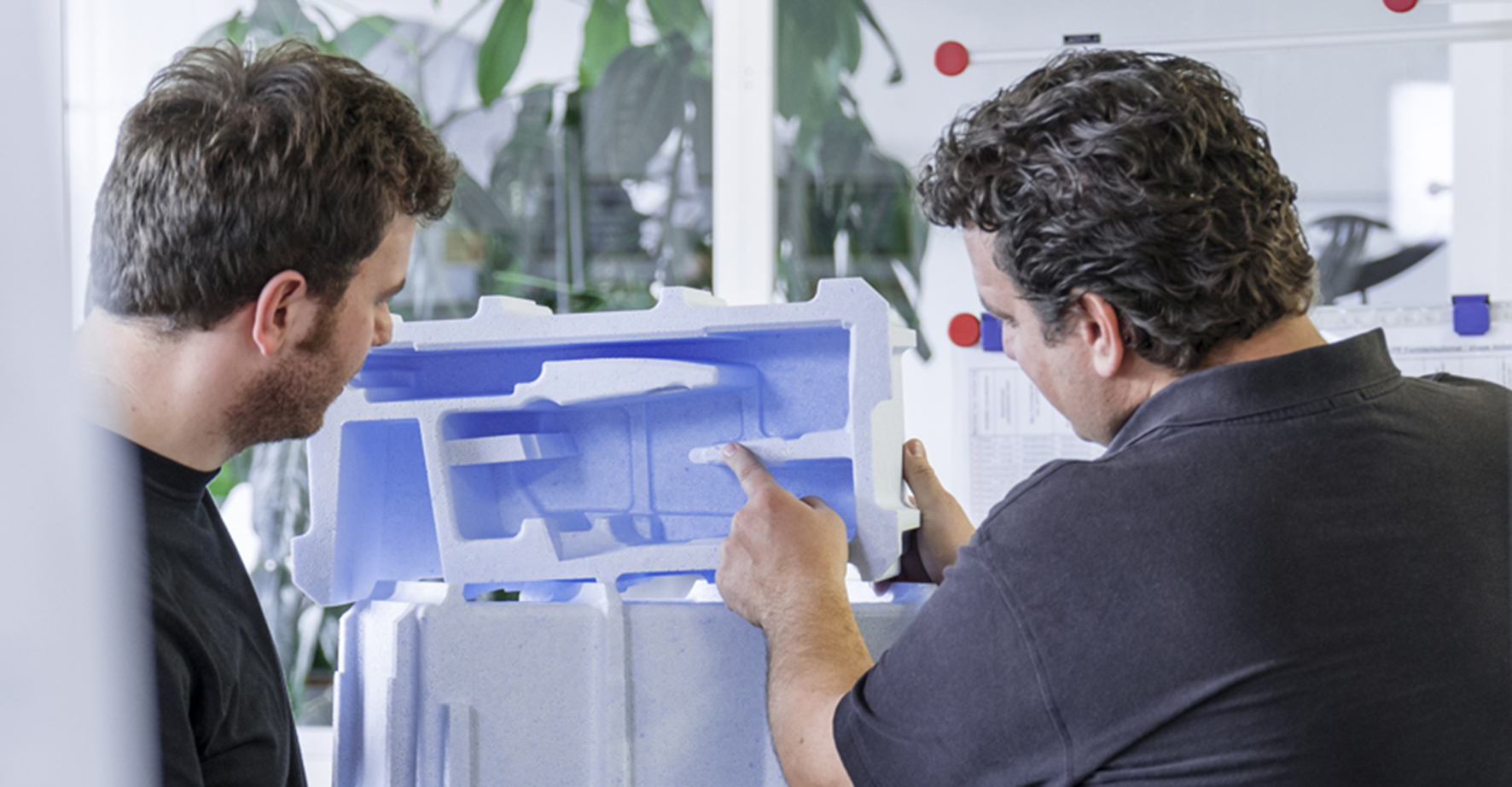
2 workers of Flatz checking a a part

The HandySCAN 3D has become an integral part of the sampling and approval process of components at Flatz. It is used for technical component assessments, inspection of complex tooling, and checking dimensional accuracy. It can be used to quickly verify that a part fits, and provide results on part accuracy.

How Hyundai north america uses Creaform’s 3D scanners for product development and design

Product: HandySCAN
Industry: Automotive and Transportation

How Hyundai Design North America uses HandySCAN 3D for improving real-time design workflows

Opened in January 2003 and located in Irvine, California, Hyundai Design North America’s design and technical center is a 90,000 square foot, $30 million state-of-the-art facility where automobile designers, engineers, model makers and other experts create new vehicles. The team offers alternative designs for its parent company based in South Korea.

As is the case with the vast majority of automotive manufacturers, clay sculpting plays a vital role in the design process in Hyundai Design North America’s studios in order to fine-tune concepts based on scale models and full-size clay vehicles. Clay modelling to design vehicles is still a very common practice with today’s automotive manufacturers to assess design quality and get feedback from reflection-based surfacing.

However, with today’s amplified competition for consumers as well as manufacturers’ accelerated time-to-market development and production schedules, design teams are under increasing pressure to create concepts faster than ever before. Digital modeling using 3D measurement technologies, such as portable 3D scanners, has become a vital solution in order to speed up design workflows.

Legacy 3D scanners no longer fitted the performance bill

For a long time, Hyundai Design North America, which is an early adopter of new technologies, used 3D scanners as a complement to its clay modeling and design processes. Unfortunately, at one point, the team realized it was time for a major equipment upgrade.

“The scanners that we were previously using were too bulky and difficult to manage. The scanning process and post-processing times were long and required most modelers to step away from working on the clay,” explained Rob Homer, Operations Modeling Manager at Hyundai Design North America. “This led to crucial time loss, especially when deliverables had hard target dates.”

Rob and his team began checking out available 3D scanners that fit their requirements. “We wanted a 3D scanner that was compact, easily portable, fast and accurate. It also had to be compatible with our CAD software.”

HandySCAN 3D: A clear front-runner in 3D scanning for designing vehicles in the automotive industry

“After looking into the various 3D measurement technologies out there, Creaform came on top for me with its HandySCAN 3D. It is a very good and reliable product at a very good price point,” Rob added. He was equally impressed with its ease of use and speed.

Hyundai Design North America was able to seamlessly implement HandySCAN 3D into its existing design workflows for real-time development. Training users on the software was completed in a day. “The experience from purchasing the scanner to training was incredibly pleasant and professional.”

Once the 2D sketch is settled, digital modelers get to work on the 3D clay models and mill it out for verifications and fine-tuning. Changes are performed by hand on the clay model, which is then 3D scanned to acquire the digital representation of the modifications.

“The scanning process is quick and easy. We are able to scan selected areas of the model without disturbing anyone working around it,” he said. “We can relay information to the digital team within minutes after finishing the scan.” This quick turnaround time of the scan data to the digital modeler means that affected areas can be fixed quickly to mill the model again before final reviews.

Richard Gillespie, Senior Digital Modeling Manager, says that the 3D measurements enable the modelers and design team to know exactly where the clay models are landed in comparison with design criteria and styling boundaries. They can quickly identify and correct discrepancies. Designers can come to decisions faster thanks to the efficiency and accuracy HandySCAN 3D offers.

One of Rob’s favourite aspects is HandySCAN 3D’s simplicity. “My modeling team can use it independently without having to wait for another expert to do the scans for them. That makes our services a true one stop shop.”

Hyundai Design North America will continue to improve their clay modeling workflows using 3D scanning in order to allow more time for the design process and refinement. We look forward to seeing the new designs hit the market!

3D SCANNER EXPANDS QUALITY ASSURANCE SERVICES

Product: HandySCAN 
Industry: Consumer Products and Retail

With its leading solutions in the fields of testing and measurement, technology systems, and networks and cybersecurity, Rohde & Schwarz, a technology company based in Munich, is one of the pioneers of a more secure and networked world. Founded more than 85 years ago, the group is a reliable partner for its customers in industrial and government sectors around the globe.

Planta de Teisnach Rohde & Schwarz

HandySCAN 3D for the Rohde & Schwarz Teisnach plant

The Teisnach plant is a system supplier and center for mechanical and electronic manufacturing within the Rohde & Schwarz network. Among the products manufactured at the plant are body scanners, housings, printed circuit boards, TV and radio transmitters, customer-specific wireless communications systems, micromechanical precision parts, and electromechanical custom products of all kinds. As a contract manufacturer, manufacturing services are offered as part of the complete range of services from product and software development to after-sales service.

As broadly diversified as the Teisnach plant is, so too are the measurement tasks, which can range from quality control workflows in the company’s own production lines to complete reverse engineering tasks for additive manufacturing projects.

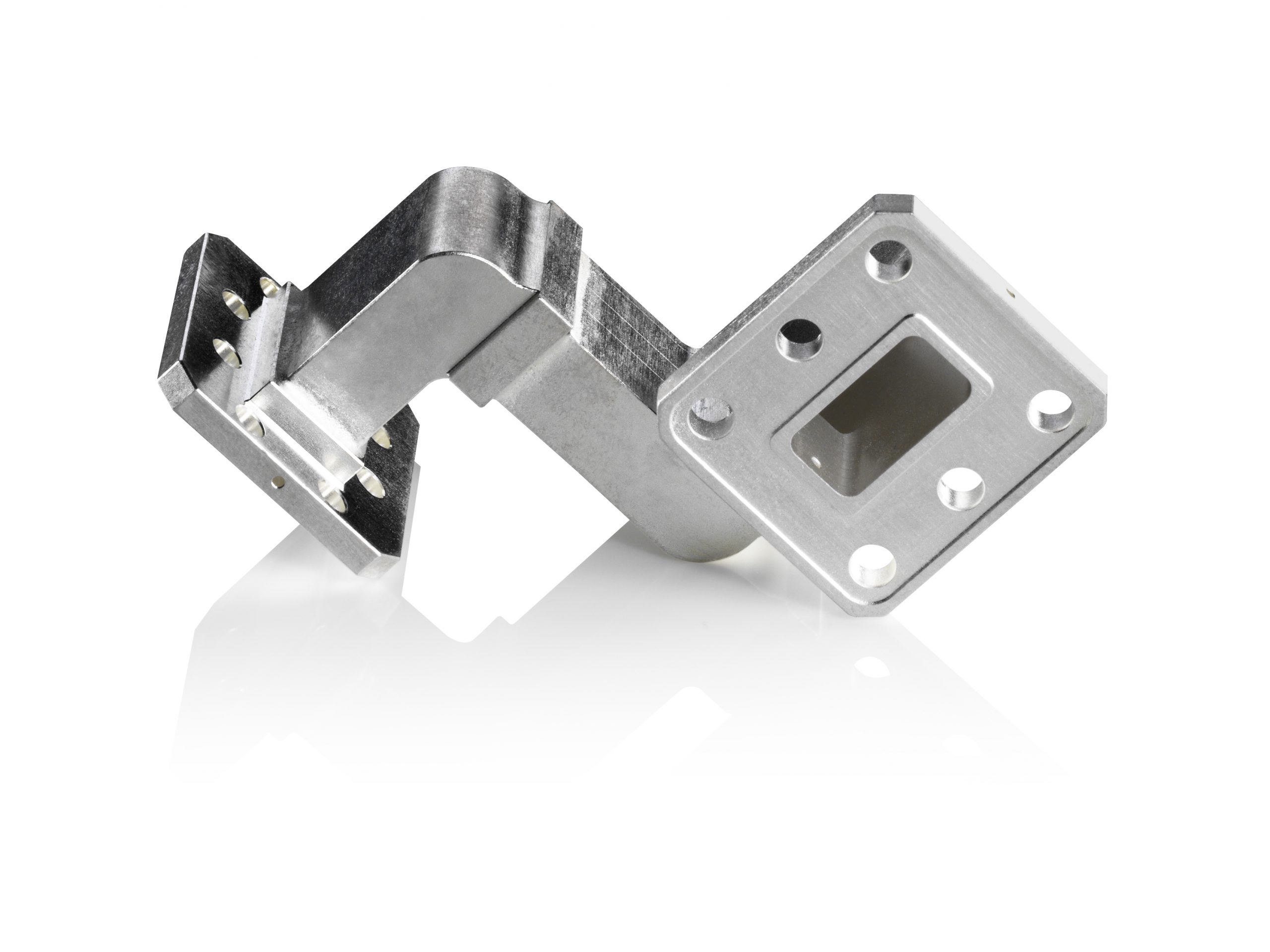
Panel frontal que hay que medir en Rohde & Schwarz
Guía de ondas que debe medirse en Rohde & Schwarz

A flexible 3D measurement system was to be introduced at the Teisnach plant in order to be able to supplement the range of services offered by the internal quality assurance department. The goal was to find a measuring tool that would offer the greatest possible flexibility in measurements as well as in terms of its applications: quality control, the measurement of vehicle interiors for modifications, inspections of free-form surfaces, and additive manufacturing processes. The aim was to achieve a high level of accuracy at all times. In addition, the team was looking to reduce inspection times as well as implement a faster and easier method to create 3D models.

Accuracy requirements also included being able to objects ranging from the size of a 10x10x10 mm cube to the vehicle geometry of a jeep, with a required accuracy of up to 25µm.

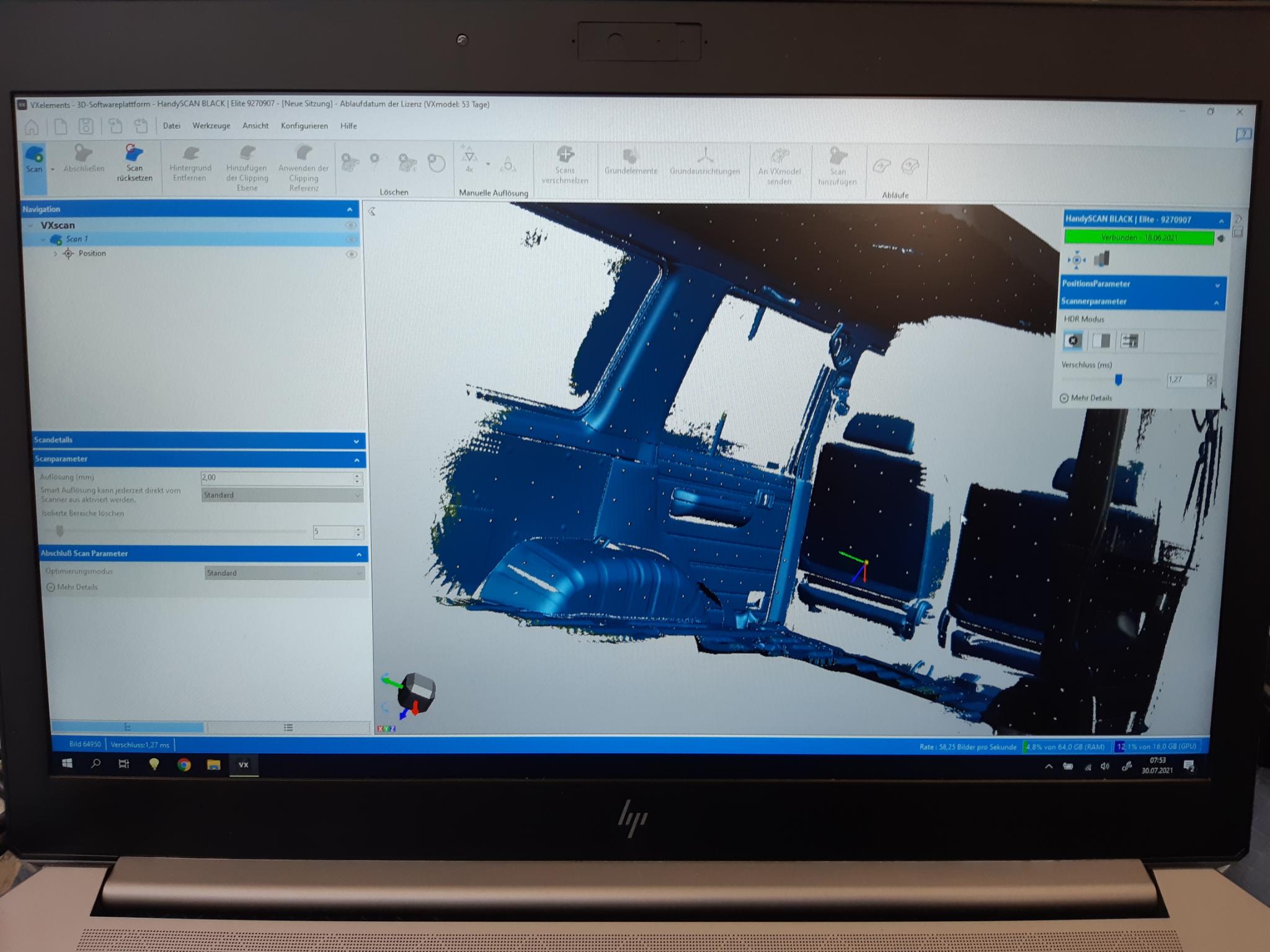
Interior del crucero con objetivos preparados para escaneo 3D
Escaneo 3D del interior de un crucero

The HandySCAN BLACK | Elite from Creaform met all the requirements the measuring system and was integrated as an extension to the range of quality assurance services at Rohde & Schwarz, where other stationary tactile and optical measuring devices are already in use.

The decisive factor for selecting Creaform’s 3D scanning solution was the wide range of applications it could handle and following features:

  • High accuracy and fast acquisition of free-form surfaces and large components as well as quick assessment of the scan data. Thanks to non-contact scanning, highly sensitive surfaces and contours are never damaged—contrary to when a touch probe is used to inspect parts, such as gold-plated components.
  • Older or damaged stamping or injection molding tools for which no 3D data set is available can now be scanned. The generated scan data can be used to generate CAD model sand reproduce the tools.
  • Flexibility, precision and user-friendliness in handling the 3D scanner
  • Due to high scanning speeds, the amount of time needed for the design of vehicle interiors has been reduced from 1 working day to 2 working hours.
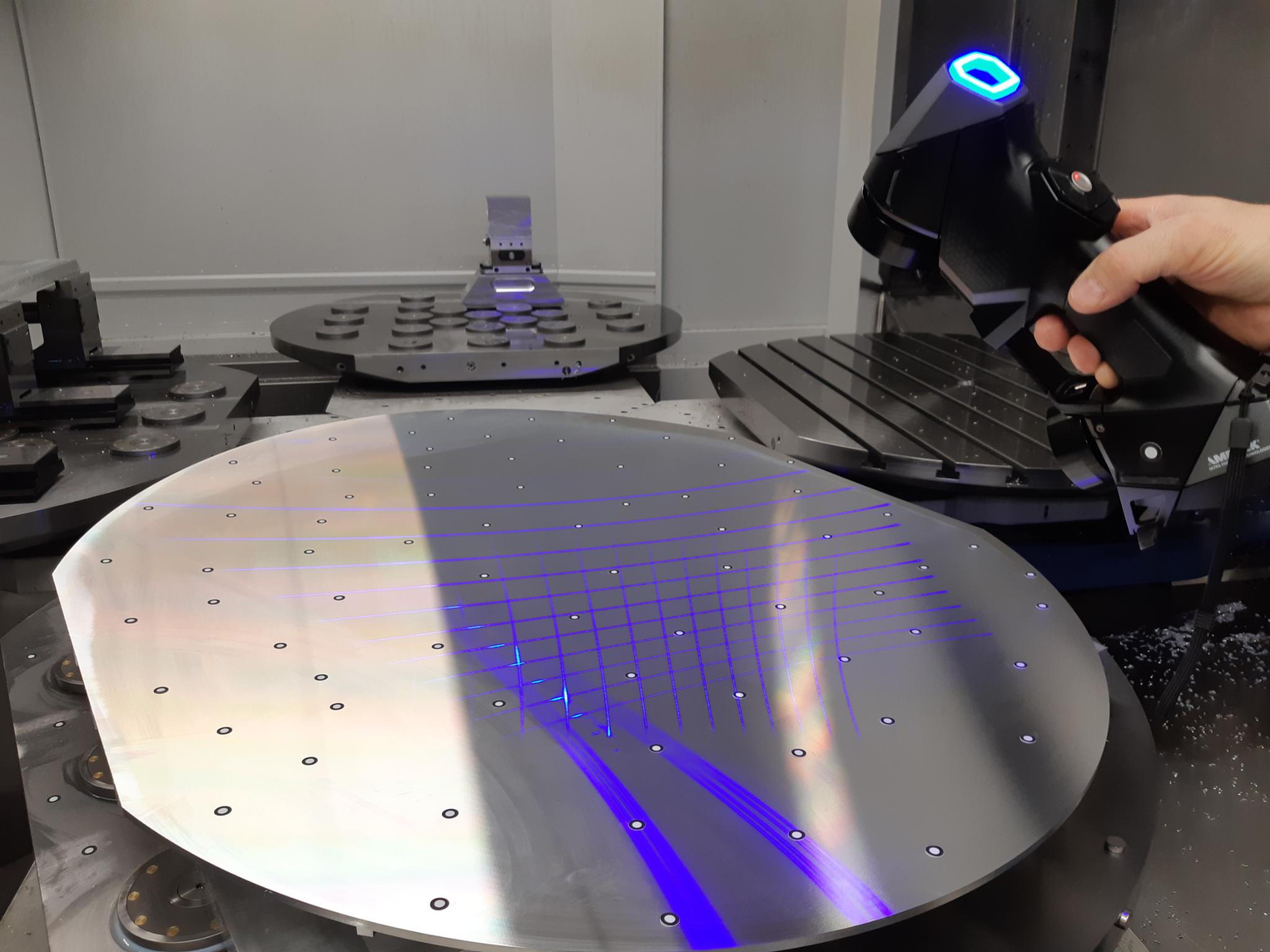
Escaneo 3D de un reflector con HandySCAN BLACK Elite (Imagen: Supracon AG)

summary

The HandySCAN 3D is regularly used in the Teisnach plant. Operators carry out 3D measurements in the dedicated measuring room, directly in the workshop for component inspections, and at customer sites.

Due to the portability and high level of accuracy of the HandySCAN BLACK | Elite, we create added value for our customers that would not have been possible with our existing equipment. The Creaform system is extremely versatile and represents a great improvement for us, especially for the construction of special-purpose vehicles. For example, we can now accurately and quickly measure vehicle interiors for adaptive designs. In addition, we can efficiently check free-form surfaces with the scanner. The excellent service and support provided by Creaform should also be underscored. Overall, we are very satisfied,” said Josef König, Head of Quality Assurance/Testing Technology at the Rohde & Schwarz plant in Teisnach.

TOP QUALITY AND STRIKING DESIGN

Product: HandySCAN 3D
Industry: Automotive and Transportation

Aftermarket: 3D scanning as a preliminary step in the production of prototypes and samples of accessories for custom bikes

ABM Fahrzeugtechnik GmbH has been developing high-quality accessories for motorcycles of all the established brands with passion for over 30 years. Their focus is on ergonomics, modern technology and German safety standards. At ABM, unsurpassed quality meets striking design for ergonomic driving fun. Under the umbrella of ABM Fahrzeugtechnik GmbH, the WUNDERKIND custom brand develops premium accessories for custom bikes – such as motorcycles by Harley-Davidson, Triumph, Indian, Victory and others.

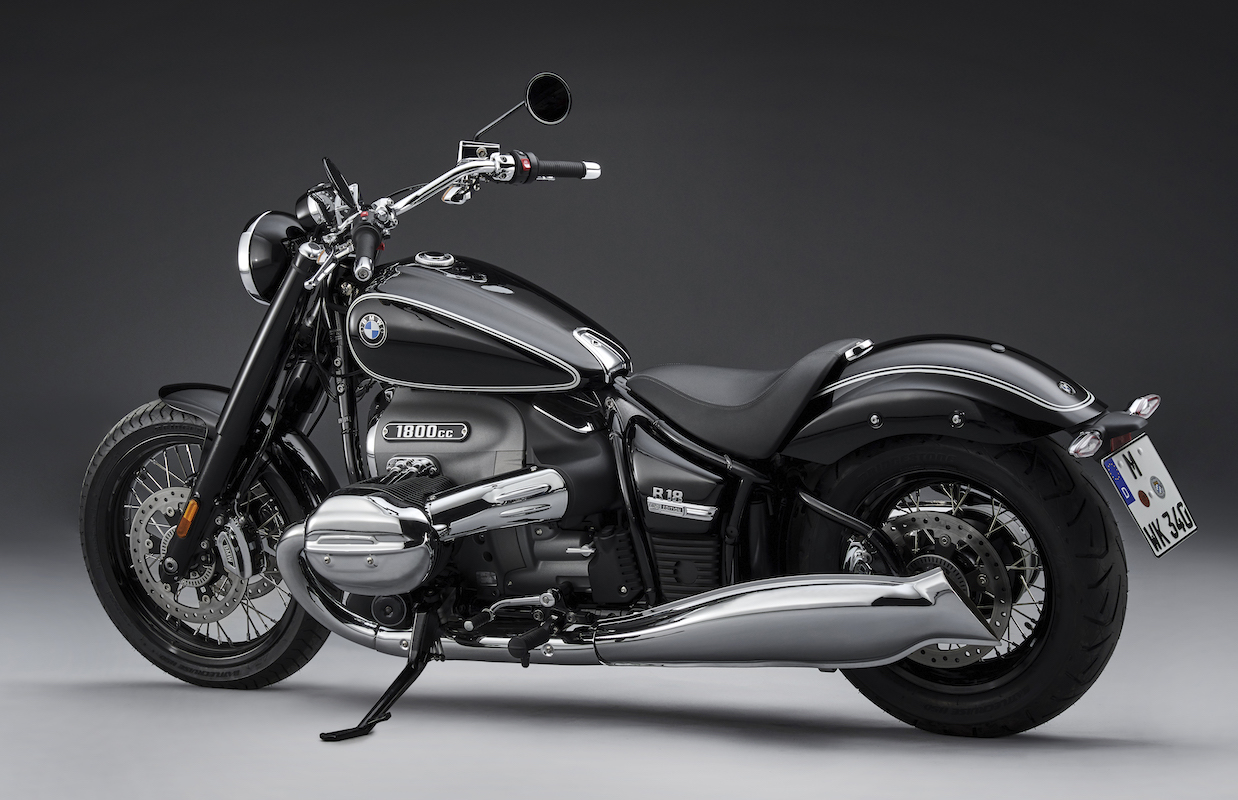
Motocicleta negra BMW R18 de 1800 cc

Rear fender conversion of a BMW R18

A complete conversion was required for the rear of the newly launched BMW R18. Instead of the original rear fender, a narrow, tight-fitting fender, which can be mounted on the rear wheel swing arm using retaining struts, was required. The original seat was removed and replaced by a free-standing seat.

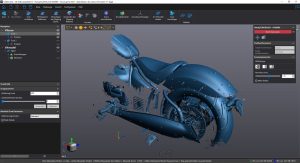
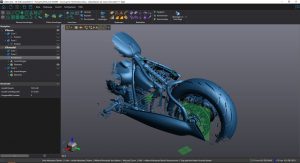
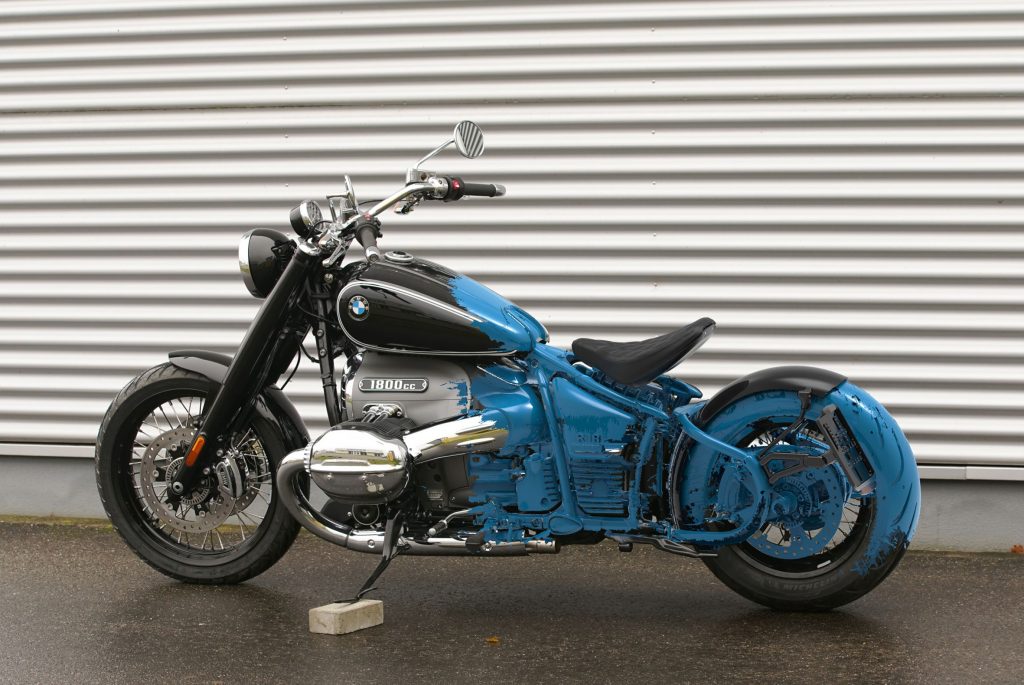
In order to attach the license plate, an adapter also had to be designed to make it possible for a license plate holder frame to be mounted on the side of the swing arm. To this end, the motorcycle was first scanned completely and then without the original parts with the Creaform HandySCAN 3D scanner. Particular attention was paid to the exact position of the attachment points on the frame and the swing arm where the parts developed by ABM would later be mounted. Thread positions (M6 –M10) and hole spacing had to be captured with the utmost precision.

Escaneo 3D de malla azul de motocicleta en VXScan
Modelo CAD 3D azul de motocicleta en VXmodel

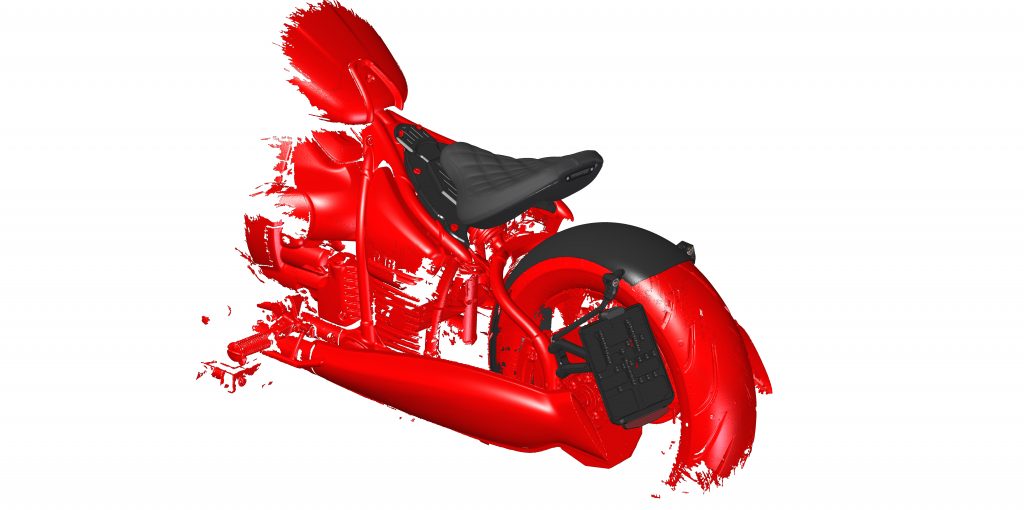
The scanned data could then be exported to the Solid Edge design program and used there as a basis for the design. The prefabricated fender was also scanned and placed in the assembly, concentric to the wheel. The struts and adapters could be designed directly on the model and then printed to be checked.

The position of the free-standing seat could be moved in the model and optimally aligned without the need for multiple mounting and dismounting of the individual parts. After the printed parts had been checked, production of the prototype and sample could begin immediately.

Modelo CAD negro y rojo del asiento de motocicleta de BMW R18
Scan imported into Solid Edge (red) and new rear fender including license plate holder (black)
Below: Motorcycle with scan data

Process improvement

Before scanners were used, it often took a long time to record all the data and to measure and document components, which meant the customer’s vehicle had to stay on site for a long time. With the Creaform scanning system, data is quickly recorded and documented. Components can often be prepared and printed digitally. All that is required is to have the vehicle in-house again for assembly and testing of the printed or manufactured parts. There are no unnecessary journeys between the workshop and the design office. By and large, the development process up to the finished product is significantly shortened, which saves time and money.

Another advantage is that the archived data can be used for further developments at any time without the vehicle having to be physically present.

Before the HandySCAN 3D scanner was acquired, measurements were made manually at ABM using calipers, measuring rods and measuring tapes. The procedure was extremely lengthy and the measurement results inaccurate, so that subsequent work on the model had to be performed repeatedly and 3D printing had to be carried out several times.

With this initial yet common measurement method, the project described above could have been implemented, but it would have been very cumbersome and several time-consuming and costly printouts would have been necessary due to trial & error. In addition, customer vehicles would have had to be available for a long time to implement the development.

ABM fully appreciates the advantages of HandySCAN 3D: highly accurate and reliable measurement results, small measurement distance (helpful in tight spaces), hardly any scan spray required (there is no need for laborious removal after scanning), easy handling of the scanner and software.

Escaneo superpuesto sobre una motocicleta BMW R18 de 1800 cc

AT LOFTY HEIGHTS: 3D SCAN OF A WIND TURBINE BLADE

Product: HandySCAN
Industry: Energy

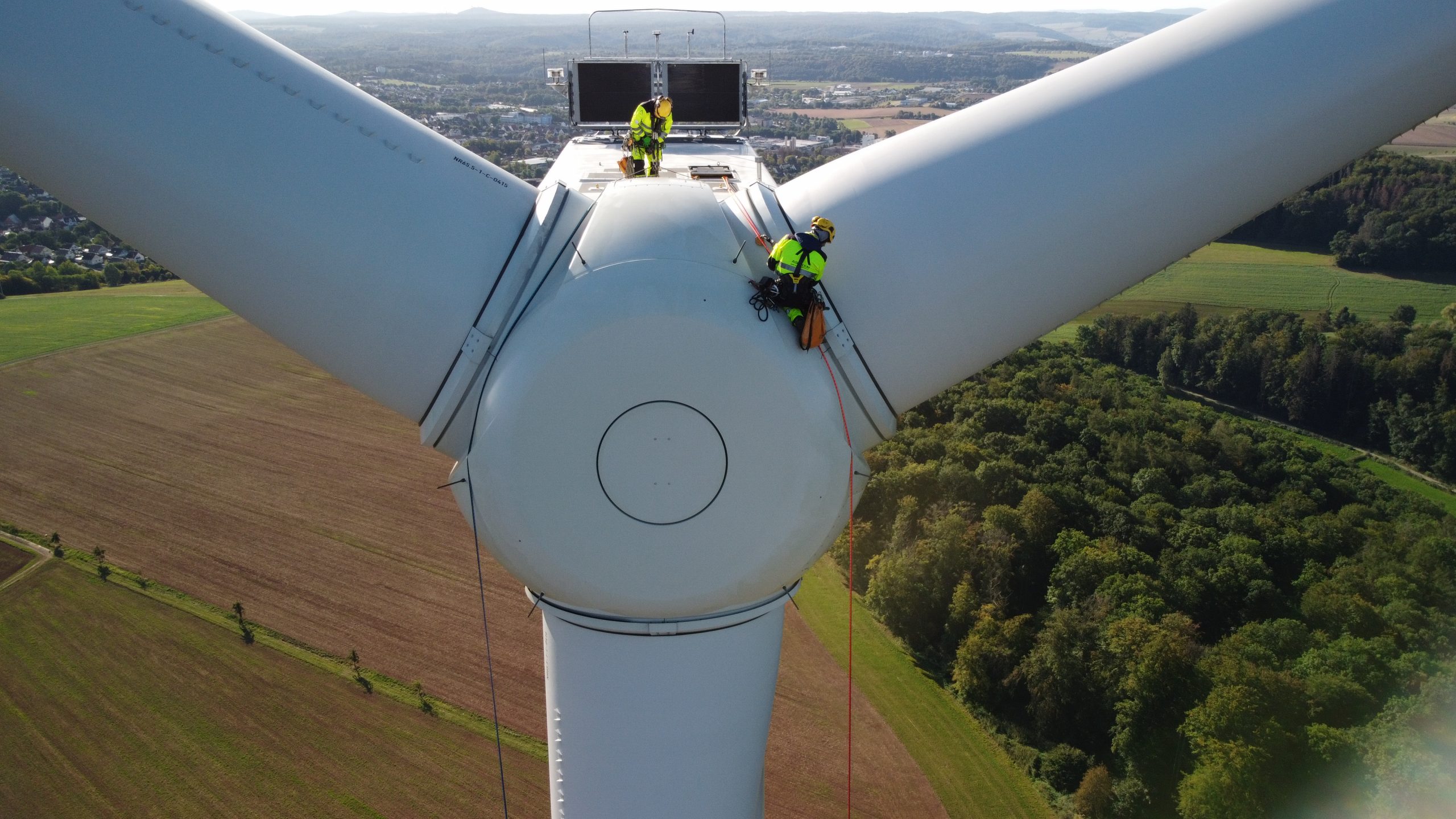
Dos empleados que trabajan encima del rotor de una turbina eólica

The maintenance of wind turbines, and whole wind farms, is a challenge. Normally wind turbines are designed to operate for 20 years. During these 20 years they are subjected to all kinds of weather conditions and heavy loads, but thanks to modern acquisition technology and advanced numerical models, such conditions can be addressed and even turned into increased annual energy production.

To optimize the production throughout their lifetime, their operating conditions must be understood in detail and then regularly maintained on this basis. The goal is to keep wear and tear under control and prevent the generation of unexpected vibrations and/or weak points that could compromise the integrity of the turbine structure and components, all while maximizing the power production.

The Spanish company Nabla Wind Power is part of the Nabla Wind Hub group, an independent service provider that offers unique and multitechnology solutions for wind farms life extension, performance improvement and maintenance optimization.

Digitalization under harsh conditions

In 2020 Nabla Wind Power was asked to extend the rotor blades of a wind turbine to increase the performance of the existing installation by 10%. To do this, the last meters of one rotor blade had to be digitalized so that the blade extension could be subsequently designed. In a first attempt, terrestrial laser scanners were used for the digitalization. But Nabla needed a considerably lower uncertainty in the measurements and therefore started to look for an alternative solution and finally asked Creaform Services to support them.

Preparación de escaneado: Escalador industrial pegando los objetivos en el álabe
Scan preparation: Industrial climber sticking the targets on the blad

The best portable 3D scanner suited for this task was the HandySCAN 3D | BLACK. Thanks to its dynamic referencing feature, it can digitalize precisely in harsh conditions. Vibrations do not affect the results and the uncertainty of the measurements is far less than a millimeter. As the task had to be realized directly on the wind turbine, a Creaform Application Engineer trained two industrial climbers from the company Asaken and taught them how to use the HandySCAN 3D. Then the climbers went up to the top of the wind turbine at 130 meters, had to get out of the hub and rappel down to 65 meters above the ground.

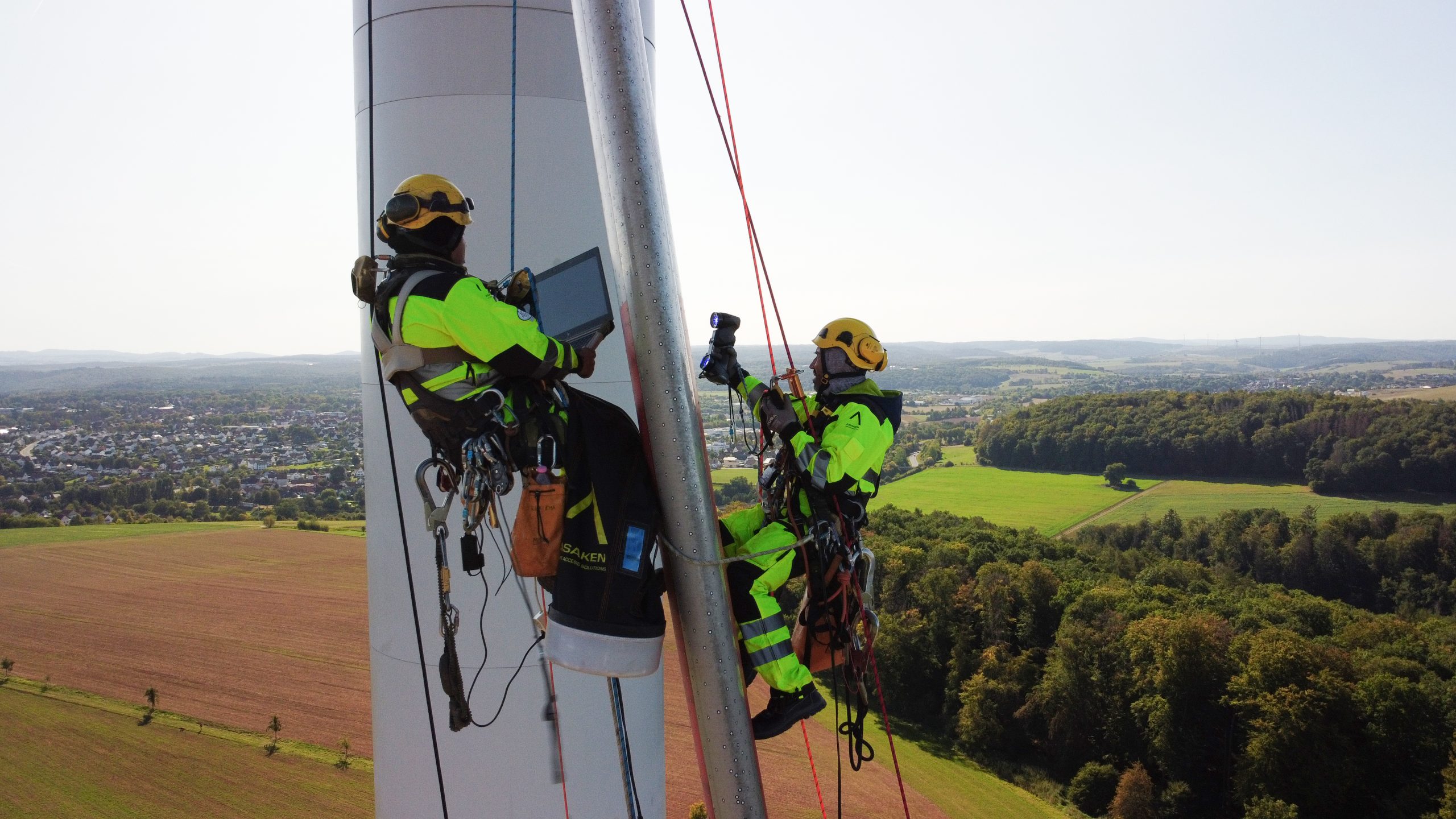
The first thing to do was to stick targets on one of the rotor blades on the last 7 meters. These targets are used as reference points by the HandySCAN 3D. Then they started the scan. While one of the industrial climbers was wearing the laptop, the other was handling the scanner. Meanwhile, the Creaform Application Engineer was overviewing the scan from the ground via Teamviewer. At this height, wind conditions are always an issue and several times, it became so windy that the works had to be stopped due to the strong winds. Also, some technical issues of the wind turbine itself disturbed the scan process: for example, the rotor blocked and couldn’t be brought into a vertical position. But finally, the scan was performed successfully.

Dos empleados anclados a un álabe de turbina eólica con una cuerda utilizando un escáner HandySCAN BLACK y una computadora portátil para escanear piezas a gran altura

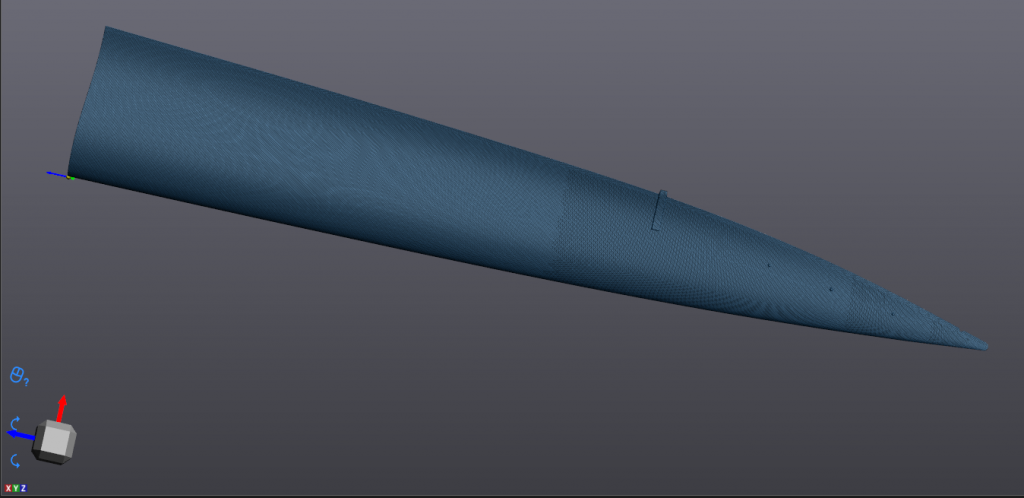
The acquisition software used was VXmodel, a module of VXelements. The generated .stl file was then transferred into CATIA for reverse engineering.

Escaneado del álabe del rotor en VXelements
Scan in VXelements with mesh visualization
CAD del álabe del rotor de ingeniería inversa en CATIA
CAD of the reversed engineered rotor blade in CATIA

Nabla’s Head of Operation, Eder Murga, was really pleased with results: “The handling of the provided service was professional, both from Creaform and Asaken. Despite the harsh conditions and many interruptions due to strong winds, everyone involved faced the change in conditions with great flexibility and, in the end, we managed to get the perfect results. A hand-held, self-referencing measuring system such as the HandySCAN 3D is the only way to carry out such a measurement in a harsh environment.”

How 3D scanning improves quality control for heavy equipment

Product: HandySCAN Industry: Automotive and Transportation

  Initial Sampling of Components and Checking Serial Parts with the Handyscan 3D As well as being innovative in developing and building its wheel loaders, the long-established company Atlas Weyhausen GmbH is also innovative in its quality assurance: Since the start of 2011, the company has used the Handyscan 3D three-dimensional scanner from Creaform with Geomagic software to measure components and equipment, but also for data feedback from prototype parts. Atlas Weyhausen has produced wheel loaders for the construction industry, garden and landscaping works, agriculture, materials handling and recycling for more than 40 years, with an emphasis on quality and innovation. This means that the Quality Assurance department plays a crucial role in the medium-sized company.

The Old and the New Measuring System

Although traditional measuring systems such as coordinate measuring arms were used for quality assurance in the past, the decision was taken in 2011 to move with the times and the search began for a more innovative and flexible measuring system. The measuring arm could only record individual measuring points, not complete surfaces. The arm was not suitable for use in changing working environments either, as it constantly had to be recalibrated and installed in stable working environments; vibrations or instabilities in the working environment produced inaccurate measuring results. Even a potential additional scanning attachment for the measuring arm failed to convince. During the search for a new, more flexible system, Creaform was one of the companies invited to present their portable 3D measuring system. The Handyscan 3D Scanner impressed people almost from the start. The portable self-positioning Handyscan 3D Scanner generates precise and reproducible high-resolution 3D data. The integrated TRUaccuracy technology allows dynamic referencing, so that the part to be measured can be moved during the 3D scanning process. There is no rigid setup, as was the case with measuring arms. Mr. Ralf Vosteen, Quality Assurance employee, explains: “The major benefit of the scanner is clear to see: Freeform surfaces are easy to align, along with 3D data. A further benefit is also the data feedback into our CAD system.” Atlas Weyhausen is now using the Handyscan 3D with Geomagic Quality and Studio software for initial sampling of new components and to check serial parts in particular. The enterprise is increasingly encountering situations, however, where several installed components have to be inspected in their installed location, or where some equipment has to be recorded abroad at the supplier’s location itself. The scanner is also used to feed back data for prototype parts that are manufactured in-house for prototype production.

Scanning and Reverse Engineering a Display Shell

One project where the Handyscan 3D with Geomagic software was used was the series production of the display shell for wheel loaders. The benefits of the handy 3D scanner were clear here: The first prototype parts were scanned in for measuring, aligned on the 3D model in the Geomagic Qualify software, and a color comparison was carried out to identify deviations. A section was placed in the scan to check individual dimensions. This allows all the relevant dimensions to be checked so that the tool can then be released for production. A number of features are also checked directly in the scan. The project could also have been carried out without the 3D scanner from Creaform, but that would have entailed great effort as it would only have been possible to record individual measuring points with the old measuring arm and the complete display shell could not have been digitized.
Using the Handyscan saves Atlas Weyhausen time and money, because the handy Handyscan 3D is easy to use in any location and can digitize even complex items in a very short time. It also means that production equipment and the parts manufactured with this equipment can be checked on site at supplier’s premises, and results can be evaluated immediately. Even air travel is no obstacle here, as the device can be carried in hand luggage. Having digital files for a component is a further benefit for the company. When a complete scan is created during initial sampling, for example, measurements can be taken later at any time, as the initial sample exists digitally. This has already been useful to Atlas Weyhausen a number of times. The steel construction of a new driver’s cab and various paneling sections have been digitized, for example, and the CAD files that are created are now available at any time for comparisons. Mr. Vosteen, Quality Assurance employee at Atlas Weyhausen, is enthusiastic: “Handling the scanner is child’s play: You don’t have to secure the component to be tested and you only have to set a few positioning points on the part to be measured so that the laser scanner aligns itself with the surface to be scanned. Then you can start scanning. I think it is important that Creaform don’t just make promises; they also keep them, and I only have good reports from that perspective. If problems arise, you can always contact an employee by phone who can give advice or put you in touch with someone else. It is also commendable that Creaform frequently offer workshops where you can make contact with other users as well.”
 
×