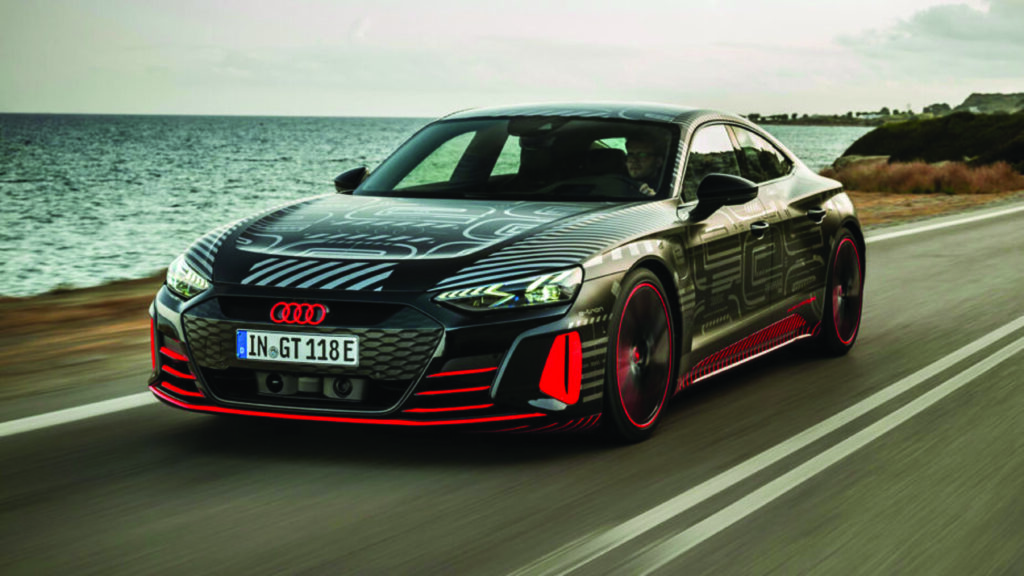
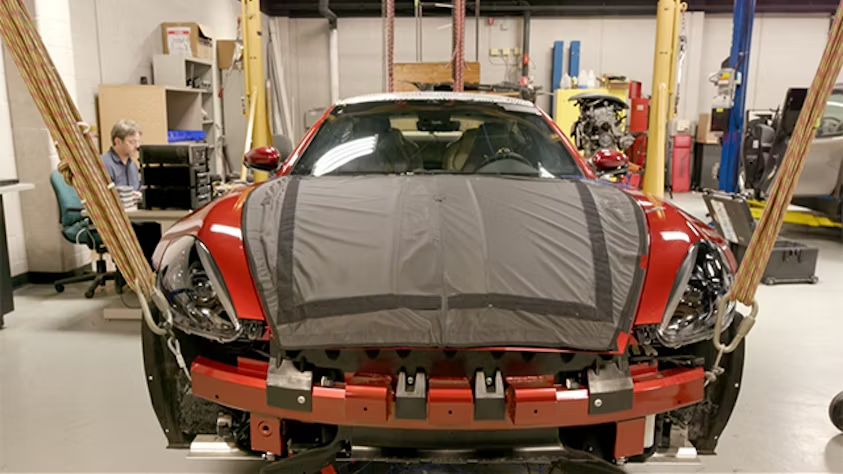
Karma Automotive, a luxury electric vehicle manufacturer, has successfully resurrected an iconic electric hybrid sedan using Siemens solutions to optimize its development process. Based in Irvine, California, and owned by Wanxiang Group, Karma faced the challenge of developing a luxury hybrid sedan, improving NVH (noise, vibration, and harshness) performance, and reducing the number of design iterations.
To overcome these challenges, the company digitized its development processes and received expert assistance from Simcenter engineering services. They used a combination of simulation and testing in the vehicle’s development and adopted Polarion ALM to manage the software lifecycle.
Results:
Surpassed NVH optimization, improving the overall development process.
Enhanced NVH performance with a minimum number of design iterations.
Integrated testing and simulation into a single platform.
Facilitated team and division collaboration through streamlined data exchange.
Bob Kruse, Chief Technical Officer of Karma Automotive, emphasized that Siemens’ consulting services and software tools helped them optimize the process with minimal iterations, ensuring precision and efficiency from the early stages of development.
The rise of electric sports cars: Electrification has revolutionized the automotive industry, with over 12 million hybrid or electric vehicles sold globally. While electric cars haven’t yet dominated the roads, they have reshaped perceptions, and luxury brands like Tesla, BMW, Jaguar, and Porsche have launched high-performance electric and hybrid models.
Karma Automotive, a California-based startup, emerged from the assets of Fisker Automotive in 2014. While maintaining Fisker’s attractive Italian design, Karma significantly upgraded the technology, creating a luxury hybrid sedan that combines the best of the original design with modern technological advances.
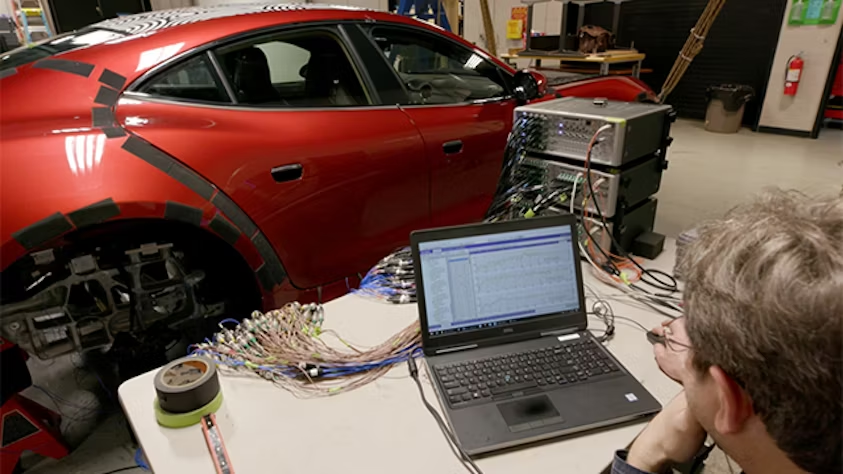
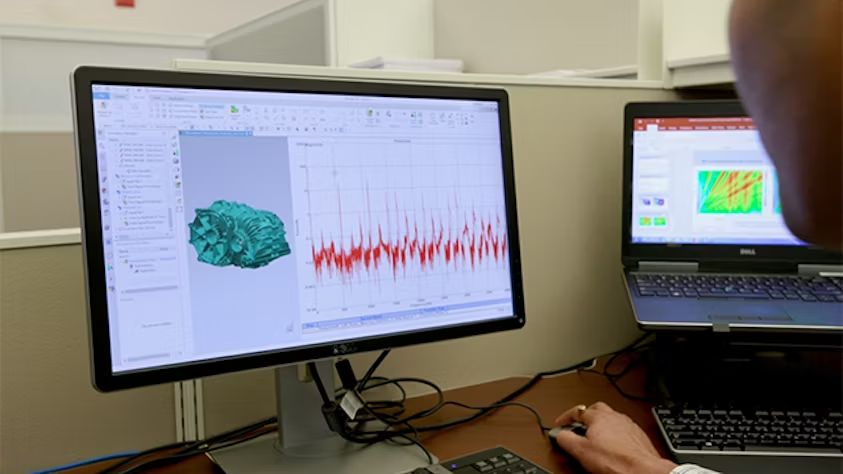
NVH optimization in a hybrid-electric sports car: One of the major challenges in hybrid cars is managing engine noise, as the lack of combustion engine noise makes other sounds, like road and HVAC noise, more noticeable. Karma used Simcenter 3D and Simcenter Testlab to balance noise reduction without negatively impacting other attributes, such as weight or durability.
By using simulation and testing simultaneously, Karma efficiently optimized NVH performance, combining hybrid modeling and physical testing. Simcenter 3D helped simulate components under development, while Simcenter Testlab validated these models using physical test data.
Simcenter engineering and consulting services: In addition to software tools, Simcenter’s engineering and consulting services were crucial to the project’s success. These services helped Karma optimize both the product and process development, minimizing last-minute corrections during the validation phase.
The added value of Polarion: To manage multiple software capabilities and facilitate collaboration between teams and divisions, Karma adopted Polarion ALM. This tool allowed them to track objectives from the vehicle level down to the component level, ensuring full control over the application lifecycle and improving agility throughout the development process.
Conclusion: With Siemens’ services, Karma Automotive not only met but exceeded its technical targets. The combination of simulation, testing, and an optimized process allowed them to successfully launch their luxury hybrid sedan to the market. With this process firmly in place, Karma is ready to take on new challenges and expand its electric vehicle lineup in the future.
Space exploration is one of engineering’s most demanding arenas. The unforgiving conditions and the necessity for precise, reliable technology present formidable challenges. Recently, on the Engineer Innovation podcast, Tom Stoumbos, Director of Engineering at Northrop Grumman, shared his insights on why space exploration is both difficult and exhilarating. He delved into the critical roles played by simulation, testing, AI, and data management.
From the home office in the cosmos, where the stars align and rockets soar, we have the top 10 quotes from Tom. Buckle up because we’re about to launch into some stellar insights.
10 “Operating in the virtual world is much easier than the prototypes in the real world with all the constraints about volume, space, mass that that takes. “
9 “Lunar exploration was a success of the ’60s. We worked hard together with a lot less resources to accomplish something inconceivable and now 50 years later it’s still difficult.”
8 “The models are complex, which means…there’s a lot of fidelity. For example, a space vehicle, it comprises of a lot of subsystems. So, it’s just not the structure. We have motors, we have mechanisms, we have complex joints that we need to simulate or operate. We have software that controls robotic arms. So, we need to make sure we understand how these things are controlled from the control system of that space vehicle. “
7 “In the virtual world, you can do design updates quickly…you can engage AI through custom algorithms that search for optimum solutions based on design constraints.”
6 “It’s difficult to establish a launch site here on Earth, furthermore in the moon that has no infrastructure.”
5 Simulation is critical to space exploration “Simulation is critical to making mission operations and design decisions better.”
4 “We’re basing a lot of the work we do on HEEDS. We think it’s an invaluable tool to do that first step of tying all the solvers that we’re using together and allowing us to do these design of experiments or Monte Carlo simulations for our missions quickly and efficiently.”
3 “With computing power exponential increase…we need to make sure the algorithms are properly conceived, and they help us reach that optimum solution, but [AI and Machine Learning] definitely make it much faster”
2 “AI is definitely much faster…we can save 50% of the time to market time by engaging as soon as we can with AI and ML.”
And finally, the number 1 quote from Tom Stoumbos: “Teamcenter Simulation allows you to track what tools you use, what requirements you tied those to, and all the data that has been generated…it’s easily searchable.”
Pioneering new frontiers in space exploration Space exploration is a challenging but rewarding field that pushes the boundaries of human knowledge and capability. Tom Stoumbos’s insights underscore the importance of robust simulation and testing processes and the transformative potential of AI and data management. As we continue to explore the cosmos, these technologies will play an increasingly vital role in ensuring the success of our missions.
Millions of people are confined to wheelchairs due to illness or injury. Despite some advancements in wheelchair technology, the lack of significant progress since its invention still falls short in providing individuals with the ability to stand and walk. First, there is the social aspect of being at a different height from those around you. Second, the prolonged sitting position associated with wheelchair use can lead to health issues, such as reduced bone density, osteoporosis, muscle atrophy, pressure sores, spasms, changes in blood pressure, joint problems and even cardiovascular conditions.
Nicolas Simon has several family members who suffer from Charcot-Marie-Tooth, a degenerative condition that in its advanced stages often requires patients to use a wheelchair.
With no known cure, Simon wanted to provide an alternative. So in 2012 he founded Wandercraft with the aim of developing an exoskeleton that would allow people disabled below the waist to walk again.
The company has built and implemented the Atalante X in rehabilitation settings in hospitals, but it wants to expand that vision beyond a healthcare setting. “We want to give people more autonomy and to be able to use these exoskeletons in the real world, not only in a controlled environment with a doctor or physiotherapist,” says Fabien Expert, chief technology officer (CTO) of Wandercraft. “In the United States alone, we estimate there are 300,000 people with spinal cord injuries that could benefit from the exoskeleton in its current form. As we adapt the design in future versions, we hope to make it suitable for even more people by extending it to other pathologies, stroke rehabilitation and multiple sclerosis.”
To achieve this goal, Wandercraft adopted Siemens Digital Industries Software’s Simcenter™ Madymo™ software. Simcenter Madymo, which was developed primarily for the automotive industry, is used to develop better occupant and pedestrian safety solutions faster. Simcenter Madymo is part of the Siemens Xcelerator business platform of software, hardware and services.
Mitigating the risk of further injury
Taking the device to the streets is a big step. “Safety is absolutely critical,” explains Expert. “The people we are helping can get around by themselves in a wheelchair. The exoskeleton allows them to stand and walk, but we need to mitigate the risk of further injury. For instance, if they were to fall and suffer fractures or head injuries, this would put them in an even worse position than before.”
With the exoskeleton already proving functional, Wandercraft needed to adapt it to protect users so that they didn’t fear the possibility of an accident that would cause additional long-term injuries.
Personal airbag system
Wandercraft was inspired by airbags used in vehicles as they are designed to cushion impact on humans and minimize injuries. The exoskeleton is designed so the center of mass of the system is on the back, so if there is a power failure an imbalance occurs, the person using it would naturally fall backwards. This means they could install the airbag on the back to protect the user.
However, ensuring the effectiveness of the airbag required considerable analysis and assessment. It needed to be easy to add to the exoskeleton without incumbering the user, but also provide enough protection to significantly reduce the risk of injury in the event of a fall.
“We first had to understand if it was even feasible,” says Expert. “We must be able to detect that a fall is happening and then deploy the airbag within a half second. It was important to determine whether multiple airbags or just one would be better, and to get the sizing correct so that it provided enough protection without adding too much weight to the exoskeleton.”
Building physical prototypes to test this would have been a very time-consuming process because each airbag had to be made by hand. Using physical dummies would also not give full data on potential injuries to users. Wandercraft needed a faster solution that could fully replicate the human body and predict how well the airbag protected it during a fall.
Combining FEA with multibody simulation
Initially, Wandercraft used a finite element analysis (FEA) simulation tool, but this wasn’t sufficient to give them the data they needed. “We had no way of accurately modeling the patient to understand what injuries might be incurred,” explains Maxime Beck, head of mechanical engineering. “We had a separate multibody simulation tool, but we needed a solution that would combine both.”
To help them, Wandercraft reached out to the University of Strasbourg. “The university introduced us to Simcenter Madymo,” says Beck. “We could measure acceleration and angular speed, but we didn’t know how to use that to predict the impact on the patient. The University of Strasbourg showed us how to create the simulation with Simcenter Madymo and use its human body models to measure the effect on the user.
“The fact that Simcenter Madymo has been used for safety simulations in vehicles really helped as it has lots of models for how an airbag should perform. With Simcenter Madymo, we were able to match up the simulation results with physical test results, which gave us confidence to continue with it. Then we could optimize with each iteration without having to create a new prototype every time we changed the design.”
Simplified design and shorter development time
One of the most important outcomes from the simulation was to determine how many airbags should be used – primarily to maximize safety but also to make the device as cost-effective as possible. “Simulation allowed us to experiment with multiple airbags, but we found this didn’t add any more protection for the user,” says Beck “Each airbag needs its own gas and trigger mechanism, so the more you have, the more complex the setup is. Knowing that one large airbag gave as much protection as two or three smaller ones meant that we could reduce the complexity, making the whole unit easier and cheaper to manufacture.”
In fact, having just one airbag is not only more cost-effective but safer too. A multi-airbag system relies on each airbag to trigger at exactly the right moment. If one fails, then it’s the same as having no protection at all. The more complex a system is, the more chance there is of failure. So, by having just one airbag and one trigger the system immediately became more reliable.
Expert says that using Simcenter Madymo saved significant engineering development time, too: “The physical prototypes took one engineer three days to make each time. And it’s such a unique process that we only had one person with the necessary skill set. Without simulation, we would have had to wait this long between each iteration to test our theories. It would have taken so much time to reach the optimal design that it simply wouldn’t have been practical.
“Once the prototype is built it takes another full day to set up the test, but we can configure a simulation with any parameters we want in just a couple of hours.”
Regulations, improvements and new features
Now that Wandercraft is confident in the safety of its exoskeleton, the company is carrying out further testing to pass the necessary regulations. “We hope to achieve full regulatory clearance before the end of 2025,” says Expert. “Then we’ll be able to get it to market and we’ll see people using our exoskeleton in everyday life.”
But that is only the start. Thanks to simulation that made the first device possible, Wandercraft will continue to make use of it as they improve future products. “We’ve achieved the first target of getting patients out of wheelchairs,” says Expert. “But the aim is to give them more. We know they will demand more once they begin to experience their new freedom, whether it’s freedom they haven’t had since an injury or freedom they’ve never had due to being born with a certain condition. We intend to work on additional features to meet that demand. “Thanks to Simcenter Madymo, we’ll always be able to ensure that devices with these new features will be safe for the users.”
The estimated volume of international freight movement for 2020 was around 4 million tons per day. Or an average of 1.3 million containers handled daily. To optimize their logistics at major ports and terminals, FREIT uses high-performance and reliable container handling equipment. Hyster-Yale is one of the biggest suppliers of handling equipment. It offers its customers a broad line of products and power options.
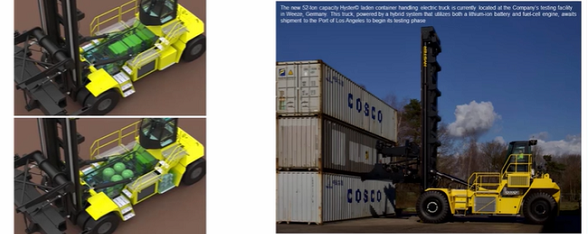
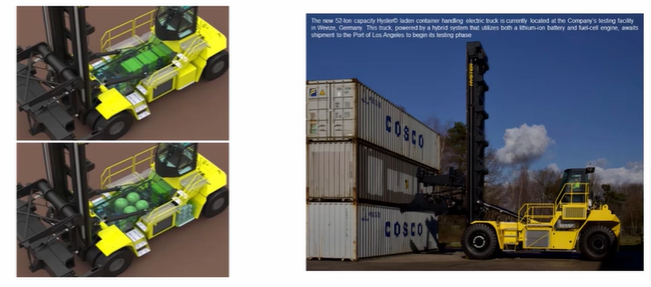
As a responsible global operation, the company has begun to address climate and environmental concerns. In doing so, has focused on the emissions of their handling equipment. To maintain its position as the market leader in heavy forklift machinery, Hyster-Yale has to consider the conversion of its machines from fuel-powered to fully electric versions. Converting a 120 tons gross weight machine (80 for the machine and 40 tons for the lifted load) into an electric vehicle is not a straightforward process. Indeed it should offer similar or better operational performance as a conventional machine over duty cycles.
Rob Damen is a project engineer at Hyster Yale, based in the Netherlands. He is part of the Innovation & projects team at Hyster Yale Big Truck development center. He has a focus on testing and simulation of the equipment. During the last Siemens Realize Live event, Rob explained how, with his team, they succeeded in converting a Laden Container Handler into an electrified machine. That vehicle is now in a testing phase. The team used simulation to virtually explore all the possibilities. They came up with one design to fit all the market expectations and regulations without compromising development time or cost.
Know your kilowatt
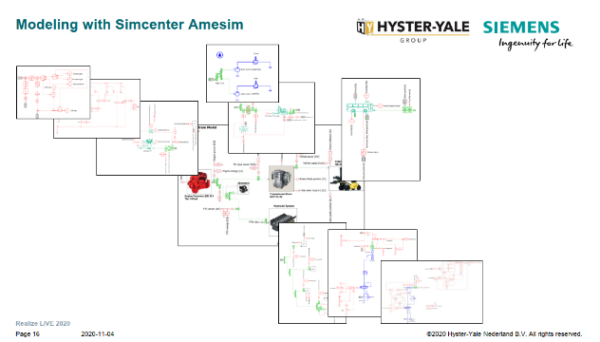
Before exploring what the power options for electrification were, the engineering team virtually modeled the current truck. Using Simcenter Amesim, the Simcenter system simulation solution, the team captured the machine behavior into a virtual environment. They analyzed the energy flows through different areas of the machine. To proceed, they divided the machine model into different systems and sub-systems. They also identified all the parameters of the machine components that they could virtually capture in the model.
From that model of the truck, Rob’s group was able to identify where they could simplify and make some assumptions but still keep a model that would deliver accurate results. “We were able to develop our model thanks to pre-defined components on Simcenter Amesim”, said Rob.
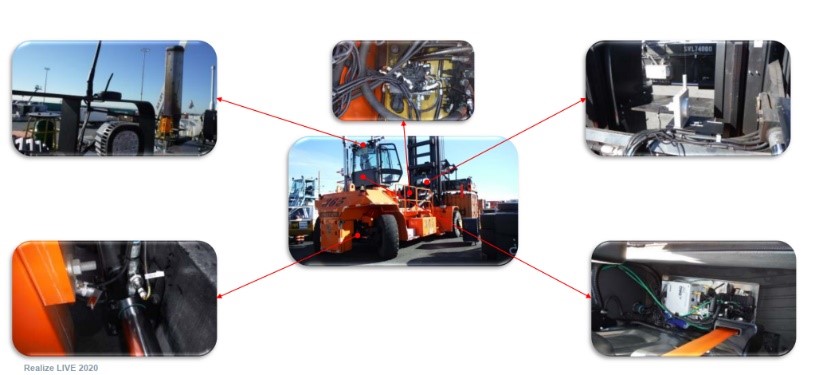
To make the model even more representative of a real-life system, the team instrumented one truck at their premises. There they captured data over predefined cycle steps. That analysis allowed them to compare the test-data results (vehicle speed, lift height, engine speed/power/torque, fuel consumption, etc.) with the Simcenter Amesim model results to refine and validate the model.
Modeling the conventional truck systems using system simulation
Collecting real-life data to refine model complexity
However, in real life, machines are subject to so many different duty constraints and usage. Consequently, the team went to various customers to capture multiple types of data (GPS, lift, hydraulic pressures, etc.). They measured the performance of their machines with sensors over long durations. Those measurement campaigns enabled the team to define various duty cycles, depending on the nature of the application, with different patterns of energy distribution.
Capturing real life data on different duty constraints and usage to optimize the energy recovery system
One major finding identified during this benchmark test was the need to improve energy recovery. Over the measurement campaigns, Rob’s team identified an opportunity to recover up to 15 percent potential energy especially during load lowering and braking phases. This energy can be recovered using electric storage.
Virtually explore and validate the Hyster Yale’s electric machine concept
“Once we got our benchmark model and our truck duty cycle, we were finally set to come up with an electric powertrain concept that fits the truck needs”, explains Rob. The group made the selection based on ranking categories and drivetrain concepts to determine the best-ranked concept.
The team chose a hybrid approach combining fuel cell and battery. In this case, the battery can store and benefit from energy recovery from load lowering and breaking. Such a system enables the recharge of the battery and improves systems’ lifetime.
At that stage, Rob converted the conventional benchmark model into the electrified version. From that defined concept, the group was able to precisely virtually assess where energy recovery could happen during braking and load lowering. This next step in virtual benchmarking using Simcenter Amesim helped to define 3 main things. The battery state of charge, how to size the battery, as well as hydrogen consumption.
The model analysis for the opted strategy opened the discussion to a new set of questions about thermal management of the battery, related to a dissipated heat and battery cooling strategy definition. Rob explains that “the list of topics that we can cover with simulation is so wide. This is definitely a good thing for us. Indeed, it can help on reducing a large number of physical testing. That is a win in terms of development cost and time for our company”.
Develop an energy recovery system on load lowering
A highlight of the project is the development of the energy recovery system on load lowering, which Rob and the team collaborated on closely with Hyster-Yale’s supplier. “In that collaboration, the use of Simcenter Amesim made it easier to answer questions that require specific data with our suppliers”. The system uses one electric motor on load-lifting but split the flow over two motors during lowering as it is almost twice as fast and with that, the power is also twice high.
“From our initial simulation model, we continued further detailed work of the truck systems”. The team worked on 3D simulations based on an advanced electric model design. Then they performed tests on a machine to compare simulation and real-life results of the electrified version of the vehicle. “The test bench results and the Simcenter Amesim models results matched really well” concludes Rob.
Comparing simulation and real-life results of the truck electrified version
Next step: going faster and deeper into details for future electrification project
“With that laden container handler experience, we are now ready to initiate a new project on one of our other big machines”. For that new project, Rob and his team will use a similar approach. With their learning of the previous project, they are able to go faster and deeper into details through the overall process. “We clearly benefit from Simcenter Amesim into our innovation project. It gave us the ability to simulate, analyze and adjust the truck systems in a very short time frame”.
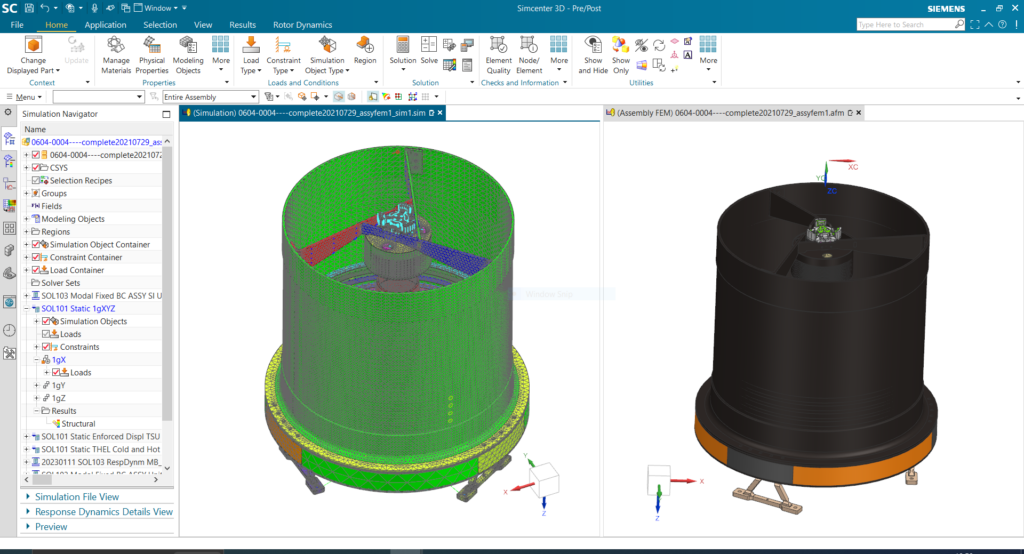
All structures have natural frequencies, and it is often the most important feature of the structure, especially when it comes to dynamic response. Very often the vibrations must be investigated to quantify the structural response in some way, so that its implication on factors such as performance and fatigue can be evaluated.
Modal testing is a very useful and widely used technique to verify and investigate this behavior. It looks at the natural frequencies, mode shapes and damping of a structure and helps engineers understand how a design will respond to different dynamic loads.
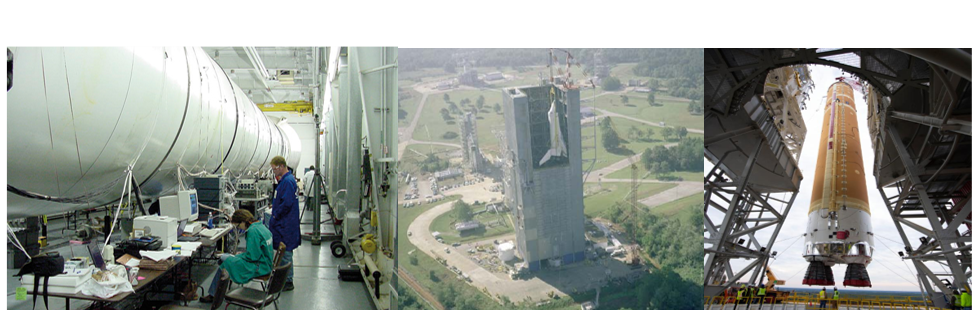
In the space industry, this technique is also referred to as modal survey testing and is intended to calibrate and increase the accuracy of finite element (FE) structural dynamics model of spacecraft and space launchers. The validated models are important, among other things, for the prediction of the launcher vibrational characteristics, the aeroelastic stability and the dynamic environments to which payloads and on-board equipment are submitted to during the launch.
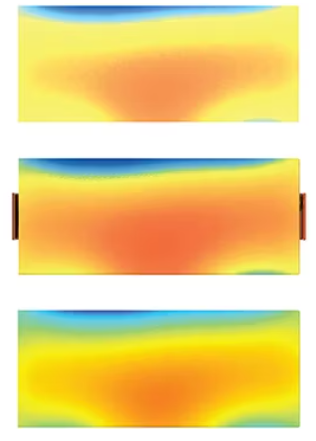
Courtesy NASA: Modal survey testing on Ares launch vehicle (left), Space Shuttle Challenger (middle) and SLS core stage (right)
A modal survey test consists of injecting forces, using electrodynamic shakers or in some cases also a modal impact hammer at a number of carefully chosen inputs. In the case of shaker excitation, burst random excitation is usually used because it is fast and efficient. When higher excitation levels are required, or for the assessment of nonlinear characteristics, stepped sine techniques are used. The forces are measured during the test, along with the response accelerations at many locations throughout the structure. During this test, the spacecraft is mounted in well-known boundary conditions, clamped or free-free, or a combination thereof. During the excitation, FRFs are measured.
After the test, modal curve-fitting technology is applied to extract modal information: resonance frequencies, damping values and mode shapes. The test results are used for the purpose of validating the entire FE model and correlating frequencies, mode shapes and damping assumptions. The significant mode shapes and frequencies are those that are primary contributors to launcher/spacecraft interface loads and internal loads.
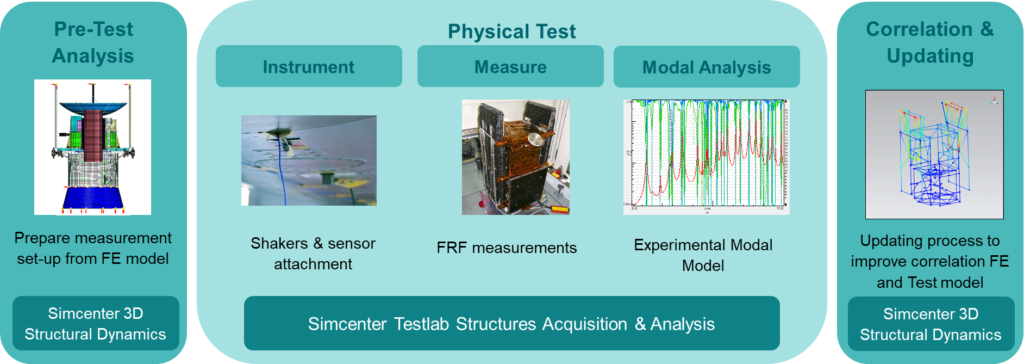
This process is illustrated schematically below. It shows how early FE models of the spacecraft can be used in Simcenter 3D Structural Dynamics to perform pre-test analysis and optimally design the test campaign. Simcenter Testlab and Simcenter SCADAS are then used to efficiently and reliably measure FRFs and accurately determine the best experimental modal model. Finally, the experimental results are further exploited to correlate the preliminary model with experimental results and to update the FE model to better reflect reality.
Different stages of the modal survey process: from test preparation, to the test execution, analysis and reporting.
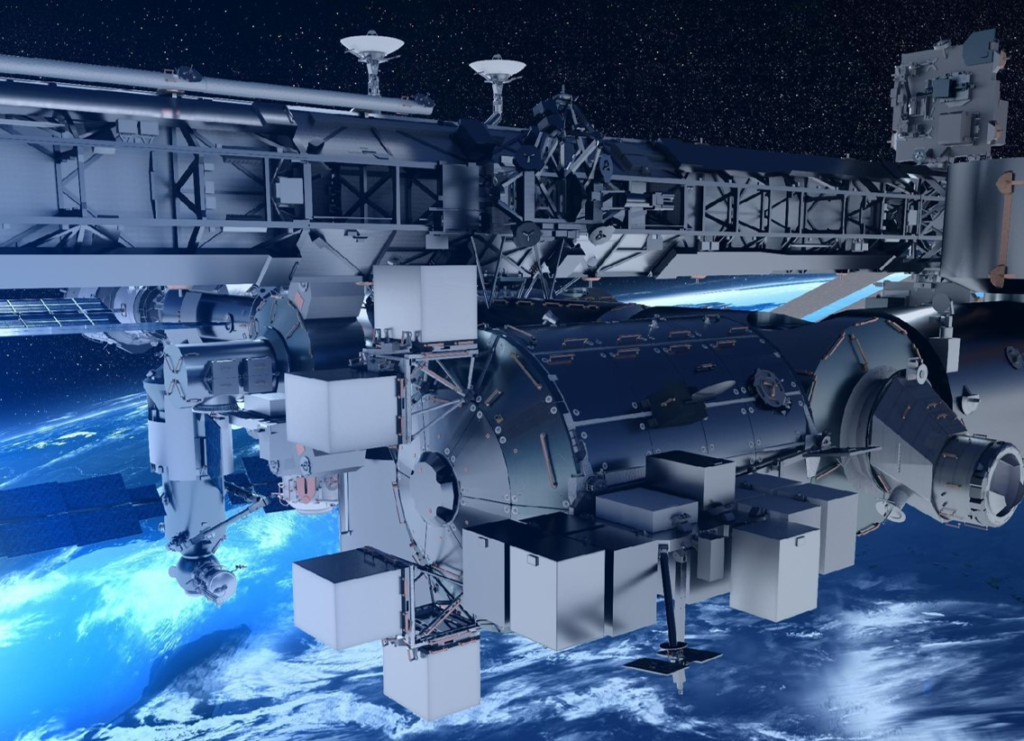
A good example of a program where a modal survey test was conducted is the Bartolomeo project from Airbus Defense & Space, carried out by Deutsches Zentrum für Luft- und Raumfahrt (DLR). Simcenter SCADAS Mobile hardware has been used as the critical measurement equipment for the modal survey test that was meant to update the FE simulation model of the Bartolomeo platform. This enabled the team to simulate and predict aspects that could only be done using simulation and analysis, such as how the platform would couple with the launcher.
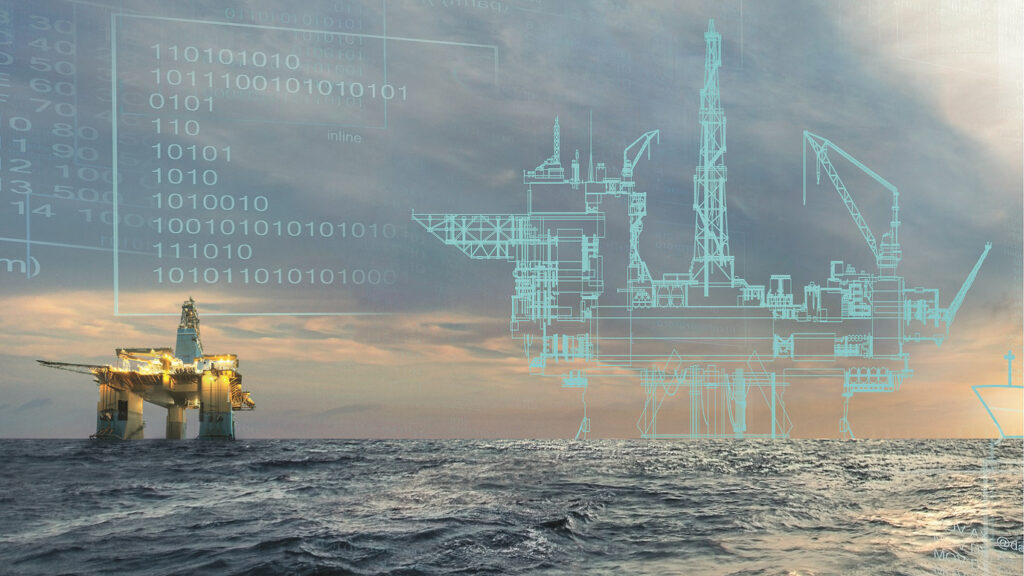
How does simulation support the oil and gas industry safety standards and procedures?
Discover some innovative safety initiatives supported by advanced engineering simulation and the digital twin.
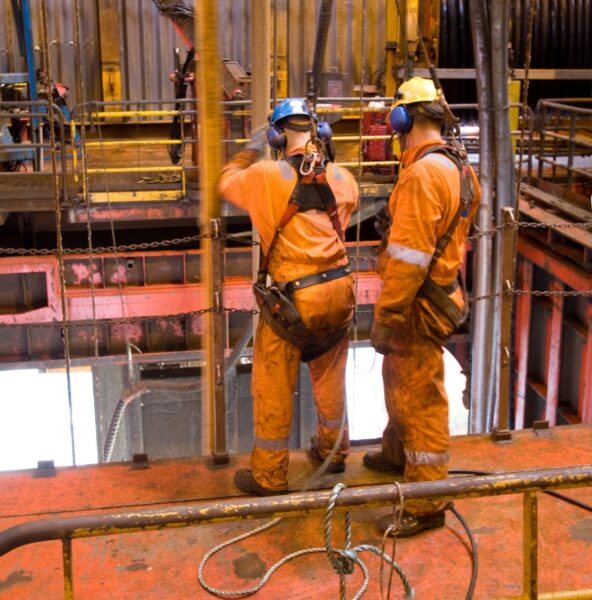
Is an offshore oil rig a dangerous workplace? Sure, it is. Exposed to the elements, handling complex, heavy machinery, dealing with flammable hydrocarbons: workers on the platform cannot take their tasks lightly.
The setting of an oil rig and the one of refineries, transportation sites are all accident-prone environments.
Falls, spills, crashes, burns… How can industry players bring the number of safety incidents down to zero?
In this article, we share some facts about the status of safety in the oil and gas industry and explore some initiatives that can help bring the numbers further down.
Status of health and safety in the industry – better than expected
We’ve all seen images of tragic accidents. Oil wells on fire, rigs wrecking into the sea. Scenarios for an amazing Hollywood blockbuster movie. But not the reality that we want to face. Accidents belong to the history books or should only live in the imagination of fiction writers. And oil and gas companies must aim for a zero-incident report.
Luckily, the outlook is better than we feared. Let us look at the numbers.
According to UK Oil & Gas’ annual 2019 report, between 1996 and 2007, there were 21 fatalities in the UK oil sector. Between 2007 and 2018, however, there were only five. Additionally, according to the International Association of Oil & Gas Producers’ 2019 safety report, industry fatalities worldwide had dropped from 30 in 2017 to 27 in 2018. (source: OHS online)
Looking at the chart below, we see an overall positive trend in the US, particularly a reduction in non-fatal incidents.
The three objectives of oil and gas industry safety standards and procedures
Why should companies operating in the oil and industry care about safety?
Safety is crucial for three main reasons:
Firstly, safety measures help protect the workers. As we already pointed out, workers evolve in a hazardous environment. Safety measures help preserve their lives and minimize the risks of non-fatal incidents. Equally, companies should not ignore the possible indirect consequences of a difficult working environment, such as cardio-vascular diseases resulting from excessive stress.
Secondly, they help protect the assets. The oil and gas industry is a capital-intensive industry. One way of avoiding eroding profit is to safeguard existing assets and even extend their operational lifetime. Ensuring that equipment operates safely both in normal and extreme operating conditions throughout its planned or extended lifetime is critical.
Last, they help protect the environment. More than ever, a company’s good governance policy should address ecological concerns. Spills, for example, are not uncommon. Appropriate measures help prevent fires, falls, or gas emanation that is health-threatening for workers and damaging to the environment. And if such a damaging event occurs, the right actions will help contain the damage.
So, what is the key to a zero-incident goal? Safety measures, accident prevention and innovative technologies are all elements of success.
The role of safety standards and procedures in the oil and gas industry
But safety measures do not always have a positive connotation. Companies also perceive them as a source of concern, either because they are difficult to implement, too constraining, or not yielding the expected results.
At Simcenter, we believe that simulation and the digital twin form part of the solution. In fact, these technologies effectively support companies to implement adequate safety procedures and execute preventive and corrective actions.
How can simulation and the digital twin help?
Simulation and digital twin technologies were mentioned earlier in this article as being safety-enhancing technologies. Herewith, we develop a bit more and explain why these technologies can prove really effective in improving safety in the oil and gas industry.
Ensuring process safety
Process safety is critical to all oil and gas production and processing facilities. Using digital twins, it is possible to simulate safety-related events. Then, the results and accompanying data can be used to design and operate assets with maximum insight to minimize process safety risks.
Therefore, Simcenter offers a range of solutions to simulate the unique behavior of systems and processes.
Those solutions provide opportunities to:
Create digital twins to visualize and understand real-world behaviors
Assess the impact of layout on safety-related events and consequences
Simulate real-world behaviors involving flow, heat transfer, structural response and control systems
Model planned and predicted unplanned events, such as gas releases and dispersion
Manage interactions between the facility and the environment
Apply design space exploration to identify new methods of increasing process safety
Manage all of simulation and analysis data in one place
When incidents occur, simulation can help minimize the associated risks. Examples and case studies illustrate our point better.
Control well blowout events
Wild Well Control is the world’s leading provider of onshore and offshore well control emergency response, pressure control, relief well planning, engineering, and training services. The company relies on modern simulation techniques as an effective way to inform well control decisions, response operations, prevent further incidents and minimize risk. The applications include:
well control engineering (such as blow out rate, kick tolerance and dynamic kill simulation)
subsea plume and gas dispersion modeling to understand where hydrocarbons go in the event of a blowout
Atkins Engineering and Consulting uses digital twin models to explore new designs. With these models, the company helps reduce cryogenic fluid propagation and structure fracture risks. The models are also used to validate the efficiency of the fluid collection strategy.
Scrolling through LinkedIn one evening, Ilie Ciobanu saw a post fly by for the Siemens Startup Program, part of the Siemens Xcelerator solution portfolio. He and his partner, Alex Bugnar had recently created their space startup, a design and simulation analysis consultancy, OX Origin, located in the heart of Transylvania in Cluj-Napoca, Romania. As experienced space experts and digital natives, OX Origin designs complex space systems and components that are high-tech one-offs, engineered to space environment performance standards.
“When we started own consultancy in 2019, we wanted to offer our space customers that same seamlessness between NX and Simcenter that a lot of space specialists count on, and also the ability to work with all the Siemens solvers and pre-post processors, like Simcenter Nastran and Simcenter Femap.” Co-founder Ilie Ciobanu, OX Origin adds, “I knew that Simcenter offered — by far — more and better connectivity between the design and analysis processes. It was much more integrated compared to other tools.”
Ilie Ciobanu had worked extensively with Simcenter and NX early in his career for Thales Alenia and as a digital native knew the power and excellence of the NX/Simcenter combo when it came to space design and qualification.
“Thanks to its accuracy and built-in simulation validation tools, you find Simcenter and NX all over the space landscape, whether you are working on the first preliminary design review of a complex electro-mechanical components for solar arrays or preparing for final qualification testing on an opto-mechanical system for an observation telescope,” explains Ciobanu. “So naturally, when we started, we invested in two licenses for Simcenter 3D, which were tailored according to our work requirements — typical space engineering projects in the mechanical and systems engineering field.”
“We wanted a couple of full licenses, and we were curious about integrating some of the other Siemens tools into our internal and customer processes, but as a startup, the budget was just out-of-reach at the time,” explains co-founder Alex Bugnar, OX Origin.
A startup program tailored to advanced engineering
You could imagine their enthusiasm when they discovered that Siemens offers several startup program options tailored to various product development needs – and budgets. One that caught Ilie’s eye was Siemens Xcelerator for Design that included NX for Design, an advanced engineering package of Simcenter simulation tools as well as Teamcenter software.
Ilie Ciobanu dropped an email saying he was interested in the Siemens Xcelerator startup programs and especially the digital tools that he knew were frequently found in the space industry including Simcenter simulation and testing solutions, NX and newer tools like Teamcenter Share (formerly Xcelerator Share).
A Siemens partner ready to help space startups
He shortly heard back from the Siemens Xcelerator Startup Program via a Siemens partner based in Bucharest, Romania, Digital Twin.
Together, they consolidated an affordable package of dedicated space solutions from NX, Simcenter and Teamcenter and adapted them to the OX Origin workflow.
“Digital Twin really helped us regarding the start-up program and software support. Simcenter is a very advanced tool and there are always new things coming up that the team at Digital Twin were happy to help with,” explains Ciobanu.
“From my time at Thales Alenia Space, I experienced the power of the Simcenter/NX combination and the excellent connectivity and integration between NX for the design aspect and Simcenter for more advanced analysis like finite element and system work. The baked-in, step-by-step workflow in the software is very intuitive, but we needed help getting up to speed on the new advances, like space thermal analysis, cost calculations and cloud-based collaboration tools.”
A quest for a better process
As the guys know at OX Origin, the space industry is an exacting place to engineer: everything, every step and every minute detail is scrutinized, double and triple-checked, verified and quality controlled. The rules do not bend. Everyone involved in the process follows strict and specific step-by-step development processes, which can be time-consuming.
Being a small company, OX Origin was surprised to discover that they could save significant time using Teamcenter as well. They had been under the impression that Teamcenter worked well at the bigger aerospace companies to trace data and processes, so they were happy to discover Teamcenter Share, a scalable, secure, cloud-based collaboration version.
“Teamcenter Share was a nice surprise. It is a good solution for the space industry because you can easily add external partners and sync files with extra security and data integrity; I had an excellent hands-on experience with that tool and we tried it out right away with our major customer projects,” says Ciobanu.
“As consultants, it is so difficult to find time. Anything that helps save us time, like Teamcenter Share, is highly valuable.” He adds, “Less admin-hassle in our process frees up engineering time for other customers and projects as well,” adds Bugnar.
Safe and secure in the cloud
OX Origin appreciated the fact that the Siemens Xcelerator platform is securely in the cloud. Not only did this make life easier for customer collaboration and vital security guarantees, it also made working internally a snap.
“We aren’t always in the same place or country and our subcontractors and customers are spread around Europe,” explains Bugnar. “With the Siemens tools, you can have two guys working on the project almost simultaneously from practically any location without affecting each other’s work or crossing wires. We can look at 2 problems or more at the same time,” concludes Bugnar, “It’s like a 2-for-1 engineering coupon for our customers. It not only saves 50% percent of our time, it also saves money.”
Accurately predicting the thermal performance of EV batteries is perhaps the most critical challenge facing automotive original equipment manufacturers (OEMs). Batteries have a temperature zone they can operate in to avoid failure. If the battery goes outside this zone, it can reduce the battery’s lifetime or even jeopardize occupant safety.
It is therefore no surprise that Audi, a brand known worldwide for its superior premium vehicles, has formed a highly specialized team dedicated to high voltage battery system concept development. Located in Germany, this team’s contributions are crucial to Audi’s vision of designing the mobility of tomorrow and ensuring an exceptional driving experience that is digital, electric and sustainable.
Increasing thermal model accuracy
Joohwa Sarah Lee, concept development engineer, is part of this team and specializes in battery thermal performance.
“Building accurate thermal simulation models is a critical aspect of my team’s work,” says Lee. “The models themselves are very important, as they directly contribute to our goal of optimizing thermal performance of the batteries.”
In 2021, Lee and her team discovered that, for certain cases and conditions, the simulation output did not match the test measurements. As a result, Lee set out to improve the quality of these simulation models. Lee and her team selected Siemens Digital Industries Software’s Simcenter™ Engineering and Consulting services as a development partner.
“We selected Simcenter because their tools enabled a seamless connection between not only 1D and 3D models, but also connectivity to third-party tools,” says Lee. “Simcenter Engineering Services provided the technical knowledge and support to help us set up these integrations and ensure the highest possible accuracy.”
Combining 1D and 3D simulations
Traditionally, module and pack geometry have been modeled using 3D computational fluid dynamics (CFD) thermal simulation. This method has significant computational costs and can take days or weeks to complete. Additionally, extensive knowledge of parameters and 3D simulation experience is required to produce an accurate 3D model. Performing 1D system simulation is much faster, but it is often challenging to generate 1D models from a 3D model without compromising accuracy.
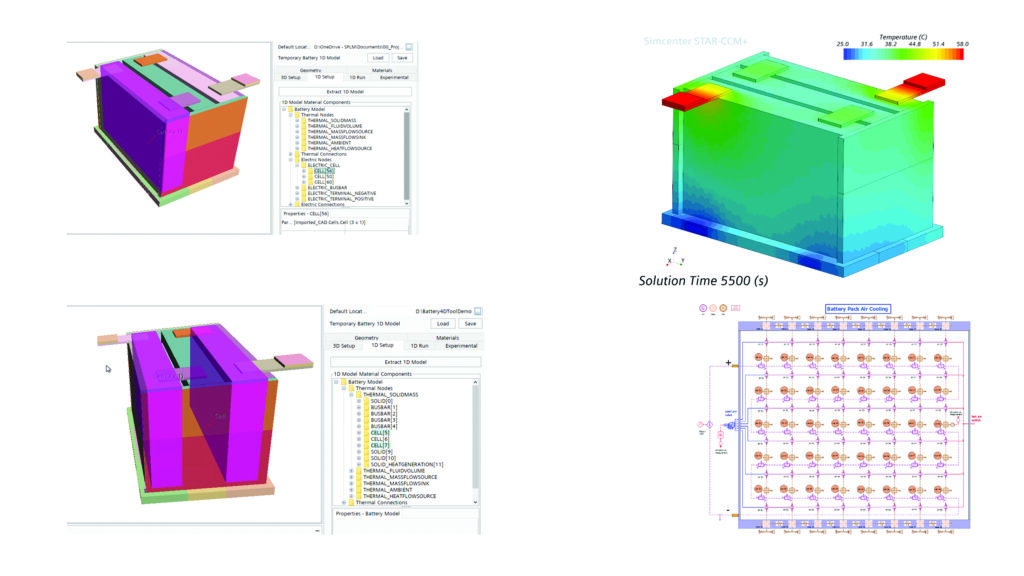
Simcenter Engineering Services set out to create a faster, more accurate battery stack thermal model to support Audi’s battery management systems, from the initial strategy development to validation with the rest of the vehicle’s subsystems. These models needed to consider several parameters, including current, coolant temperature variations, connectivity with 1D electrical models and integration with MATLAB/Simulink. Lee and her team provided the Simcenter team with test cases and boundary conditions for a variety of scenarios.
A customized workflow
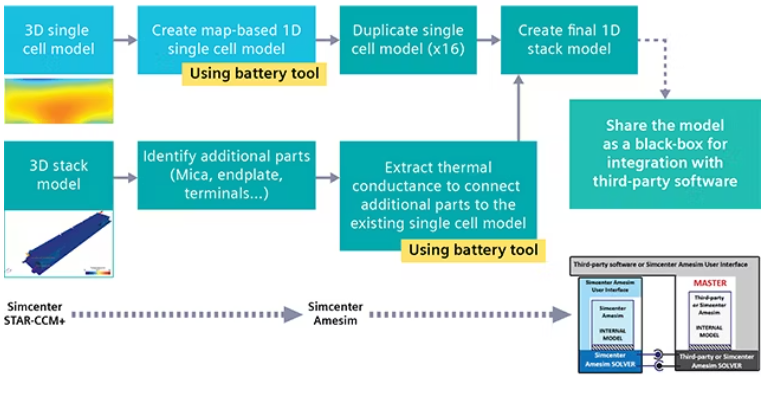
By combining Simcenter STAR-CCM+™ software and Simcenter Amesim™ software, which are part of the Siemens Xcelerator business platform of software, hardware and service, Simcenter Engineering Services experts developed a semiautomated workflow to generate a 1D system-level model in Simcenter Amesim from a 3D Simcenter STAR-CCM+ model. The purpose of this workflow was to make sure Audi’s 1D simulation users could benefit from the high level of detail provided by 3D models while also maintaining the speed of 1D simulation.
Using specified inputs, Simcenter STAR-CCM+ was used to calculate several steady state conditions covering the chosen design space, such as inlet coolant temperature, flow rate and current. The data can then be used to derive a 1D electro-thermal model for investigating transient scenarios for the complete stack.
Reducing time, increasing accuracy
The workflow developed by Simcenter Engineering Services experts has reduced the computational time of battery thermal simulations to just minutes. One of the most vivid examples is simulating an EV battery charging scenario from 10 percent battery capacity to 80 percent.
“As a result of our project with Simcenter Engineering Services, we were able to reduce the simulation time of the charging scenario from almost an entire day to less than a minute,” Lee says. “This is a huge difference in calculation time. We have also seen a significant improvement in the simulation results, especially for thermal behavior studies.
“We explored other solutions for this problem, but no other company offered the level of connectivity between tools that Siemens did. Combining a detailed 3D model in Simcenter STAR-CCM+ with the speed and efficiency of Simcenter Amesim and third-party tools supported by the Simcenter Engineering Services team provided a crucial advantage. We are also excited to explore other aspects of the Simcenter portfolio, including Simcenter Battery Design Studio.”
Lee and her team are optimistic about the future of their partnership with Simcenter Engineering Services.
“We will continue to apply our new tools and methodologies to future challenges,” says Lee. “We are thankful for the support provided by the Simcenter Engineering Services team and their willingness and ability to help us solve difficult problems.”
In the vehicle development process, it is advantageous for companies to shift left in the V-cycle as much as possible. By avoiding late-stage design changes, engineering teams can achieve significant time and cost savings and help drive products to market faster.
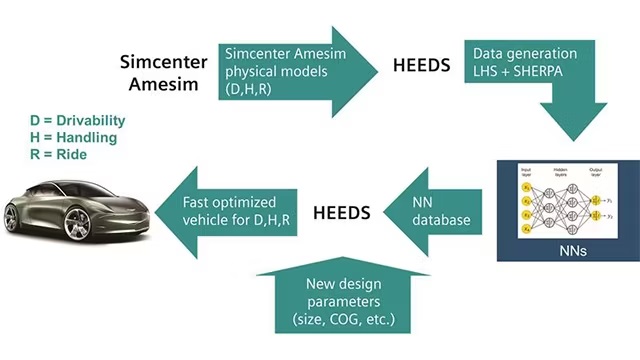
Artificial intelligence (AI) is an increasingly popular tool to enable engineering teams to shift left. For example, engineers can train neural networks to search through enormous amounts of simulation models and data and help identify the ideal vehicle or component configuration.
Powered by AI, the effort to shift left is more urgent than ever as the world transitions to a more sustainable future with electrification. Many original equipment manufacturers (OEMs) are in the process of transitioning from producing internal combustion engines (ICEs) to battery-powered vehicles. Each of these vehicles has years of development data and simulation models that now need to be adapted for electrification.
Neural networks for vehicle target setting
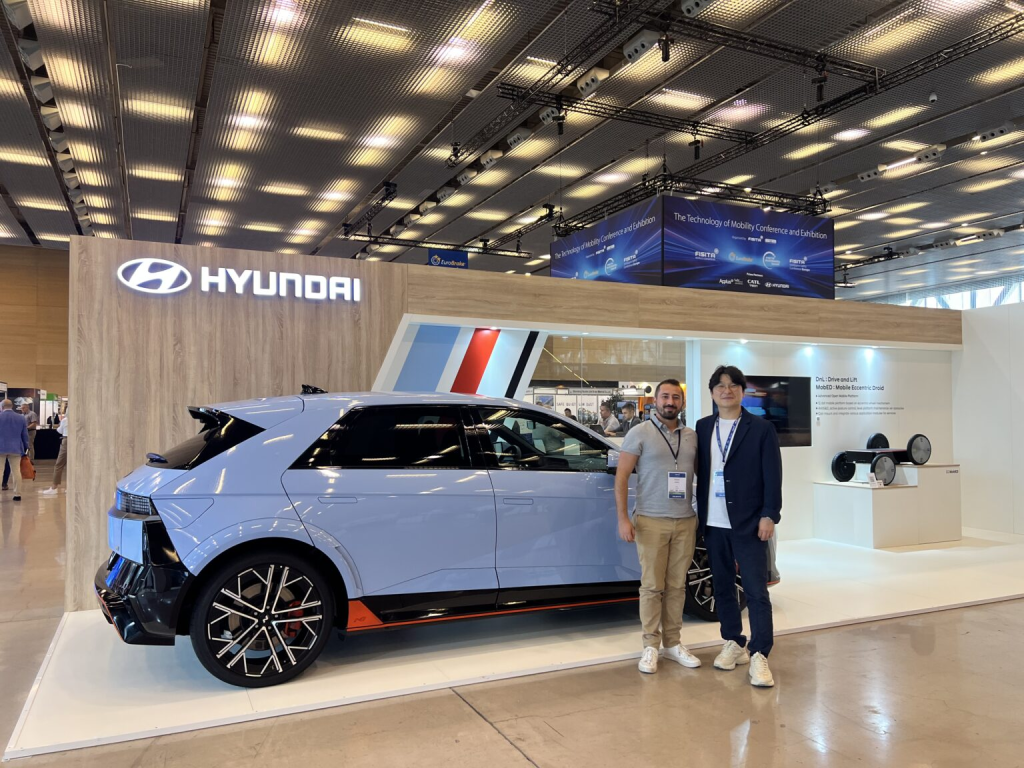
At the start of their electrification journey, Hyundai Motor Group (HMG) recognized the need to implement AI to enable a seamless shift left in the electric vehicle development process. In 2023, they partnered with Simcenter Engineering and Consulting services to build the neural networks that will enable them to define architecture-driven requirements at the concept stage of vehicle development.
Early in the design process (at the left of the V-cycle), engineering teams typically have an estimate of what they would like to see from their next generation of vehicle, including mass, size, suspension technology, etc. These early ideas need to be explored and analyzed in the most efficient way possible to define the ideal design and configuration. Target setting for attributes such as optimal mass, kinematics, drivability, ride and handling gives engineering teams subjective key performance indicators (KPIs) to meet. The earlier these targets can be met, the more time and cost savings a company can reap.
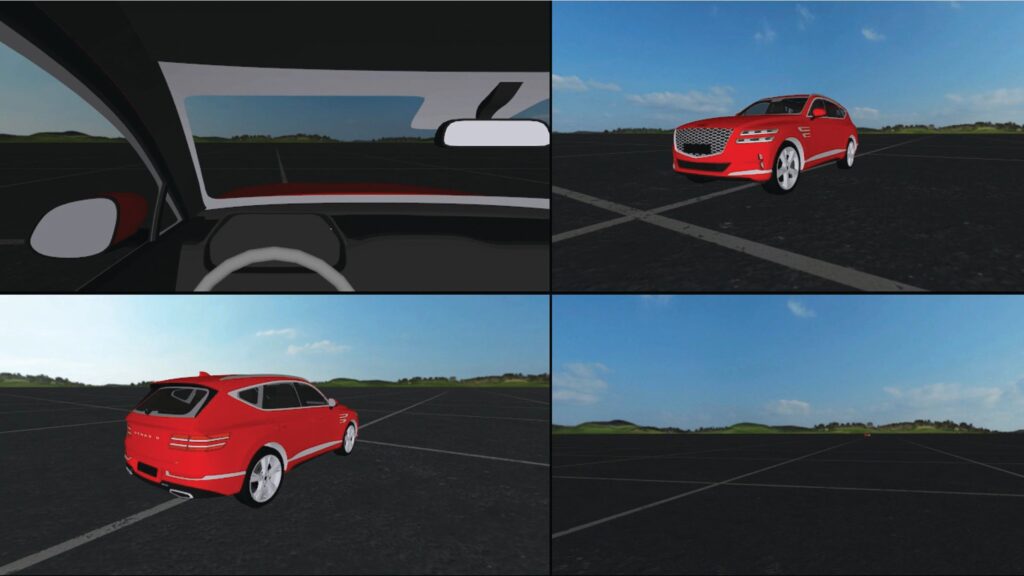
Ilsoo Jeong, comfort engineer, is part of the driving comfort virtual development team at Hyundai Motor Group. His team was tasked with target setting for chassis development of the Genesis GV 80, which will be released in a future generation as an electric vehicle (EV).
“Our goal was to achieve the best possible comfort and handling performance, so we had to consider hundreds of chassis parameters, such as mass distribution, suspension kinematics, the mounting system,” says Jeong. “We also needed to consider how these designs and configurations would need to be changed considering the ICE will be replaced with a battery.
“Additionally, we wanted the ability to perform sensitivity analyses to quickly understand how changes to the design of one component may impact the performance of others. We realized that taking advantage of AI could help us accomplish this quickly and efficiently. We partnered with Simcenter Engineering and Consulting Services to build these neural networks because they had the most expertise in Simcenter Amesim, our preferred tool, and because of their vast expertise in the vehicle development process.”
EV architecture optimization
In a separate project, the Simcenter Engineering Services team had collaborated with HMG engineers to develop an architecture in Simcenter Amesim software that could be used to evaluate a variety of vehicle maneuvers and provide automatic postprocessing.
This architecture allowed criteria to be weighed separately – including 52 individual KPIs for each requirement – to achieve an overall score, and it could handle over 350 parameters as input.
In this project, Simcenter Engineering Services expanded on this work to apply it to the chassis. Using the targets provided by HMG, Simcenter engineers generated over 200,000 simulation models in Simcenter Amesim and validated them against real vehicles. They saved the simulation results in a high-performance computing (HPC) to make them run faster in the future.
“Simcenter Amesim was the driving force behind our decision to select Siemens for this project,” explains Jeong. “Only Simcenter Amesim had the capabilities to perform the number of simulations we needed, as well as the flexibility for attributes such as NVH frequency. Simcenter Amesim was also advantageous because it enabled us to work with our own templates rather than a prepackaged one. When it came to flexibility and simulation time, Simcenter Amesim was the best choice.”
Using Simcenter Reduced Order Modeling software, Simcenter Engineering Services created and trained a neural network to deliver simulation results that enables direct optimization of models later in the process. This neural network integrates with HEEDS software to assist HMG engineers in identifying the ideal vehicle configuration.
“If our targets or parameters change, we will no longer need to start the entire process from scratch,” says Jeong. “We can now find the optimal parameter set very quickly by searching through the neural network built by Simcenter Engineering Services. The ability to easily retrieve these simulation results means we can give very quick feedback to each subsystem team on the ideal configuration. Later in development, we will also be able to efficiently compare the vehicle’s driving performance to our targets by using the benchmarking data retrieved by the neural network.”
AI-enabled time savings
The collaboration with Simcenter Engineering Services and use of Simcenter software has led to significant engineering process benefits for Jeong’s team.
“Before this project, one requirement evaluation took two minutes to run in simulation,” says Jeong. “Using the neural network developed by Simcenter Engineering Services, this was reduced to one-tenth of a second. Similarly, our subsystem parameter optimization process used to take a week. With the help of Simcenter Engineering Services, this has been reduced to 15 minutes.”
Together, Jeong and the Simcenter Engineering Services team are working to reap even more efficiency benefits from this neural network. They will soon integrate with Teamcenter software to fully link to and provide traceability for parameters and requirements. This will enable a program manager with no knowledge of simulation to directly input their requirements and use parameters from a previous project to run simulations directly on the web. They can then predict system performance or optimize parameter sets for subsystems, bringing the power of system simulation to nonexperts.
“Siemens’ Simcenter portfolio and Simcenter Engineering Services will continue to be a special development partner for HMG,” says Jeong. “Our companies have a strong relationship and I look forward to collaborating on future projects.”
CETIM is a research and study center that supports many industries (aerospace, automotive, agriculture, construction, energy, oil & gas, process) in their current and future technological challenges.
Collective studies (link between academia and industry)
Study common problems for a large set of industry players to share/capitalize on knowledge/know-how
Commercial studies (service offering)
Specific engineering services for companies who do not necessarily have the tools or expertise in-house
CETIM aims at improving the competitiveness of the companies that benefit from its services/studies thanks to mechanical engineering, innovation transfer and advanced manufacturing solutions.
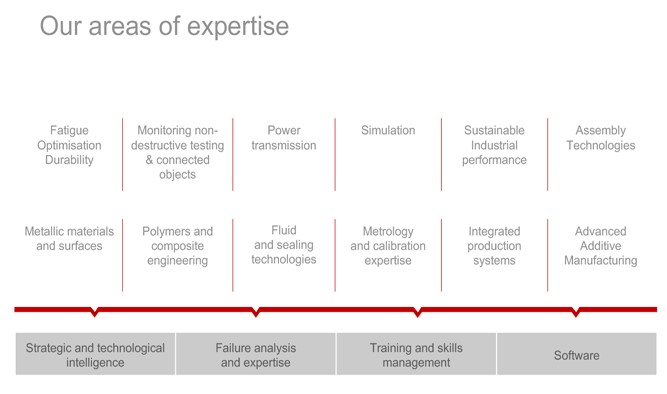
The range of skills and expertise offered by CETIM is very wide (see image below + “metallic and composite materials, surface treatments, manufacturing processes, assembly, sealing, fluid and flows, NDT, …”).
A simulation poll bringing together about thirty simulation engineers was created in 2017 under the direction of Thierry Raphenne to meet the needs of analysis in the product development phase, which are more and more prevalent in the industry.
Part 1 – Simulation team: Experts to support industry engineering challenges
Thierry Raphenne and his team ran a simulation poll on a community of experts. Thierry supervises that team of 30 people who work full time on simulation analysis projects (mechanics, finite element, CFD, DEM…). He has worked in this field since his engineering study. At CEA, his thesis established a material behavior model with finite element method. Expectations from the industry on requesting expert support from CETIM:
Validate product sizing
Understand the source of a failure. (Failure analysis, simulation helps to understand and explain the phenomena)
“What simulation brings is a better understanding of what’s going on and an acceleration of the implementation / release of products. For example, the design of a car today is done in less than 18 months versus 5 years ago. The use of simulation accelerates the process of validation and design of industrial products. Without simulation > more recurrent breakage because many fatigue situations are not considered, which are at the origin of part breakage.” – Thierry Raphenne
Simulation allows us to analyze more use-case and consequently, therefore can reduce development costs.
Without simulation, the work was done more on simplified hypotheses. This led to the oversizing of certain parts of the machine to ensure that they fitted and did not break.
Part 2: A strong link between academia and industry to meet common needs – with a particular focus on co-simulation
Collaboration among academia and industry worlds
CETIM offers the opportunity to bridge the gap between the industry players and academics, based on real-world cases coming from the industry. Those work groups allow the development of strong skill sets for the company benefiting from CETIM simulation expertise. Those transversal projects assemble up to 80 industry representatives who are then split into subgroups to work on given topics. One of the projects co-led among CETIM, the industry and the academic world is to focus on simulation and coupling.
Focus on co-simulation
For industrial players involved in that collaborative working group, it’s key to focus simulation and coupling among various types of simulation (from 1D to 3D, to couple Multiphysics with multibody type of simulation..). The aim is to verify and validate the design of a complete (and complex) system using simulation.
After this working group, the idea is to establish what are the know-how that can be easily transferred to the industrial players, based on a real demonstrator built by the team.
Part 3: The strength of Simcenter simulation solutions
The CETIM simulation team opted for Simcenter
The team chose simulation software from the Simcenter portfolio because these solutions “provide a wide range of physics, mechanical, fluidic, thermal, which allows multi-physics simulations to be performed with a single environment. Simcenter solutions are open to input/output from/to other simulation solutions.” – Thierry Raphenne
The development of a methodology to spread the use of software
“we have developed templates on the way to use Simcenter software to save time for post-processing of results, for combining constraint values. Available to all users of the software.” “There is still a lot of work to do to internally to create a strong/solid simulation community. We still need to convince non-users of the simulation of the usefulness and create a dynamic team.”
“People are more eager to trust simulation analysis when it cannot be visualized by tests (in the case of CFD for example). Highlighting of very complex, very coupled phenomena, which cannot be done in tests / allows us to popularize more the utility of simulation tools” – Thierry Raphenne
Part 4: Application cases – simulation to answer very complex engineering challenges application cases – almost impossible to test.
The industry needs is to get things done right the first time, to reduce time to market delivery with a reliable and durable product.
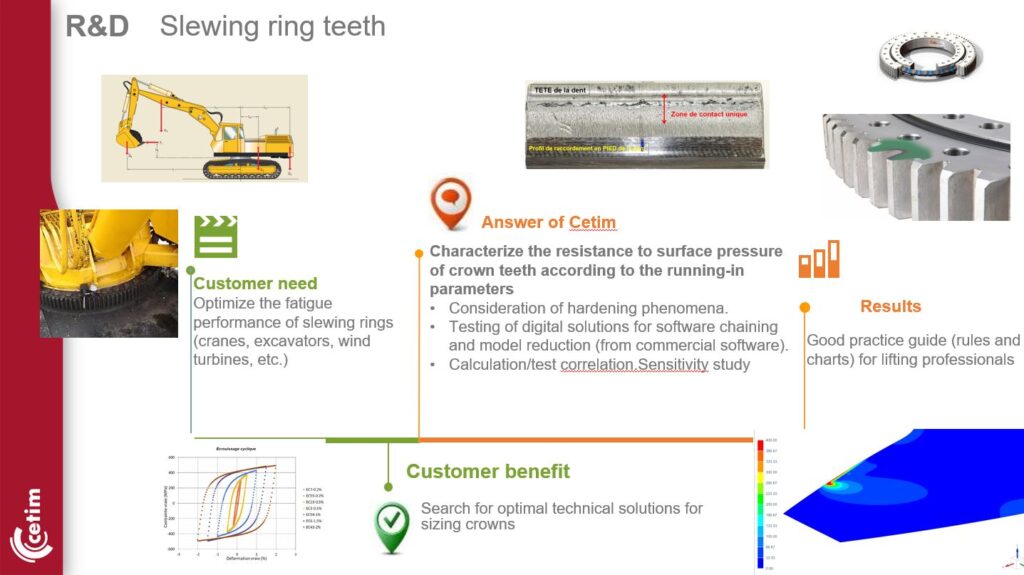
Application case 1 :
Increase the lifespan of machine parts. In the context of energy transition, being able to predict lifespan of machine parts and increase the durability of equipment.
Application case – Heavy construction machine
Application case – Heavy construction machine
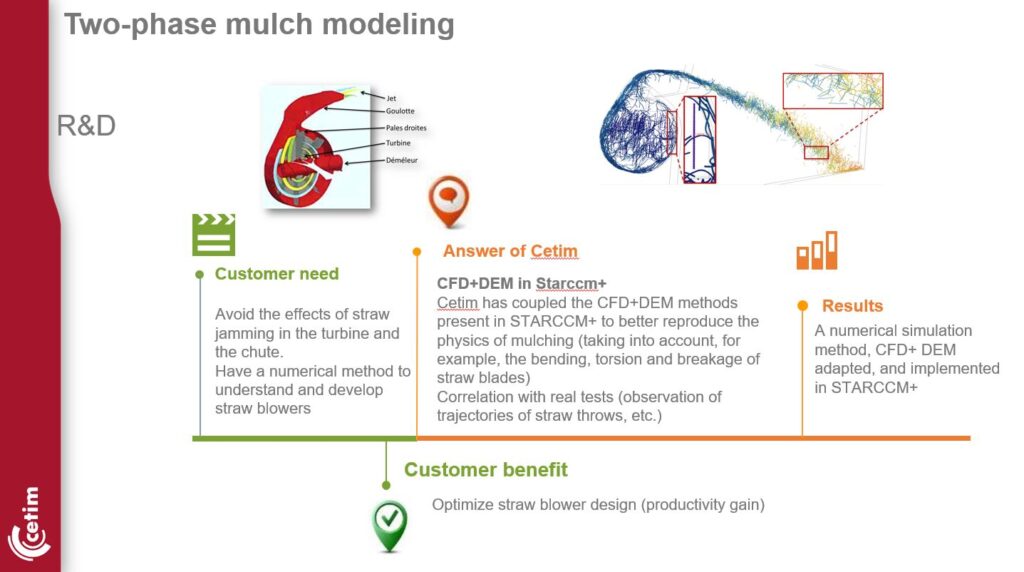
Application case 2:
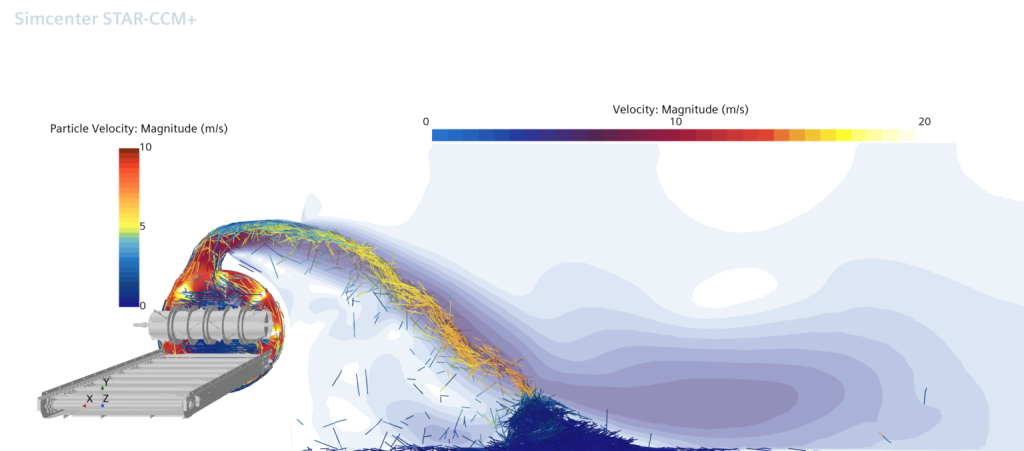
“Thanks to Simcenter STAR-CCM+ technical feature, especially on DEM application we could win new projects to support the agricultural industry”
Part 5 : Machine learning and artificial intelligence – future of simulation
The future of simulation involves the use of AI with the implementation of machine learning methods. This will be increasingly used by industry and will boost the use of simulation. Simulation will help refine and develop models in complex contexts. Benefits from studies and related results achieved on previous projects will be used to nurture new projects (part of the transverse project simulation and coupling.)
Coupling data from testing and simulations campaign will naturally follow thanks to an increasingly important use of machine learning > integration of data coming from the test bench.



-640x360.jpg?w=900&fit=max&q=60&dpr=1&auto=format)
-640x360.jpg?w=900&fit=max&q=60&dpr=1&auto=format)
-640x360.jpg?w=900&fit=max&q=60&dpr=1&auto=format)
-640x360.jpg?w=900&fit=max&q=60&dpr=1&auto=format)
-640x360.jpg?w=900&fit=max&q=60&dpr=1&auto=format)