

Industry: Medicine

Dexcom is an emerging medical technology leader headquartered in San Diego, California, specializing in the development and production of continuous glucose monitoring (CGM) systems. These devices are essential in helping patients monitor their glucose levels in real-time, offering a less invasive alternative to traditional blood glucose meters.
Dexcom’s latest device, the Dexcom G7, allows users to effortlessly track their glucose levels, helping them make smarter decisions about food and activity in the moment to take better control of their diabetes. With the launch of this new device, Dexcom continues to push the boundaries of innovation, ensuring smaller, more effective, and user-friendly products.
Challenges in scaling operations
Faced with increasing demand for its CGM devices, Dexcom needed to scale its operations without compromising efficiency, safety, or cost-effectiveness. It was also crucial to maintain a focus on customer experience to ensure broader accessibility while continually improving the product.
To overcome these challenges, Dexcom adopted Siemens’ Plant Simulation technology. As Mohamed Elsayed, Industrial Engineering Manager – Modeling & Simulation at Dexcom, explains:
“We’re making Plant Simulation part of Dexcom’s DNA. It supports our decision-making process, allowing us to continuously advance our product while optimizing operations and boosting productivity at a lower cost.”

Simulation driving productivity and innovation
Dexcom implemented Plant Simulation to digitally replicate its factory sites and optimize production processes. This technology enables them to model, analyze, and optimize their operations in a virtual environment before making physical changes, resulting in enhanced safety, increased productivity, and better resource utilization, ultimately reducing costs and increasing product accessibility.
Notable use cases of Plant Simulation at Dexcom
- Enhancing production line efficiency
Dexcom used Plant Simulation to optimize production lines, modeling different scenarios and workflows. This allowed them to identify bottlenecks and allocate resources efficiently, increasing production throughput and ensuring smooth transitions when introducing new products. - Improving facility layout and safety
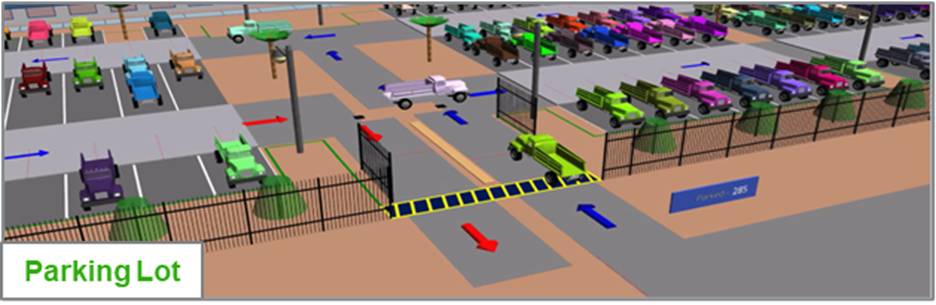
The company used simulation to improve safety and layout configurations, including parking lots. By modeling various scenarios, they optimized traffic flows and minimized congestion, improving safety and employee convenience. - Designing new manufacturing sites
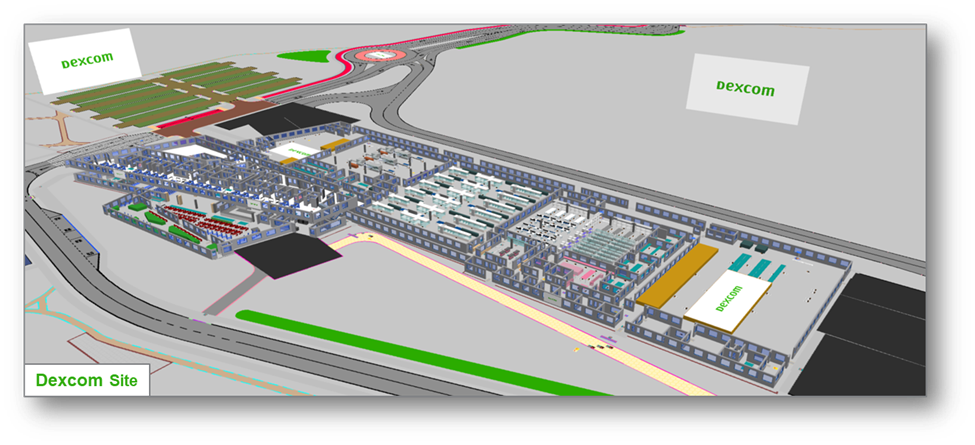
As Dexcom expands globally, they use Plant Simulation to design new manufacturing sites before construction begins. The software helps model emergency scenarios, like fire drills, ensuring safe and efficient evacuation routes and compliance with safety regulations.
The future of simulation at Dexcom
Looking ahead, Dexcom plans to democratize factory simulation, making it accessible to more employees, including those on the shop floor. The goal is to integrate this technology into everyday decision-making, enabling real-time adjustments based on resource availability and production demands.
By leveraging Siemens Plant Simulation, Dexcom has embedded a culture of continuous improvement and innovation in its operations. This technology not only optimizes processes but also supports Dexcom’s mission to improve the lives of people with diabetes worldwide.