

Industry: Consumer products & retail
Leveraging an Established and Trusted Reputation
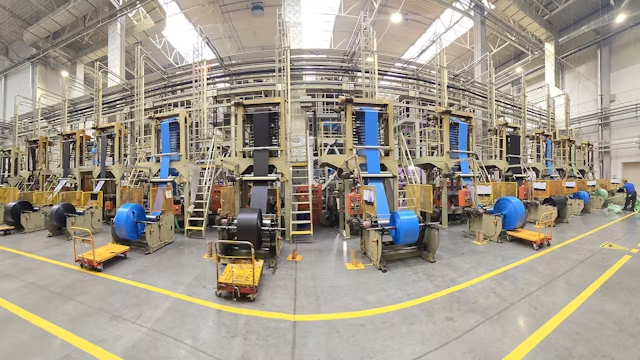
Bags, including garbage bags, plastic films, and tube covers, are essential products in daily life. They are used in most households and many industries, such as food, beverages, retail, and construction. Based in Środa Wielkopolska, Poland, Polipak Sp. z o.o. is a leading manufacturer in Central and Eastern Europe and is part of the Sarantis Group, which has built a reliable and recognized brand trusted by millions of consumers. Known for its wide range of products, including both standard and customized solutions, the company plays a key role in the market, specializing in the production of various plastic film products.
Digitalization for Dynamic Growth
The Sarantis Group places great importance on sustainability as a key element of its business strategy. As a result, Polipak is continuously striving to improve production efficiency, reduce costs, and minimize its environmental impact, all while maintaining the highest quality of its products, which is its main differentiator in the market.
To continue improving its processes and strengthen its position in the market, Polipak needed systems that could comprehensively manage production processes, automate report generation, and optimize resource usage. They also needed to implement and integrate systems to ensure seamless compatibility between existing systems and the divisions of the Sarantis Group, which operates across various regions worldwide.
With the rapid growth in production volume and the increasing number of machines, Polipak had to adopt more advanced planning and management tools. Traditional methods, such as manually completed data sheets, proved inefficient in addressing the challenges of production efficiency and resource optimization.
To achieve this, Polipak partnered with ASKOM, a Siemens Digital Industries Software partner, to implement Opcenter™ for advanced planning and scheduling (APS) and as a manufacturing execution system (MES). Additionally, Opcenter is part of the Siemens Xcelerator platform, which integrates software, hardware, and services.
“We needed a solution that would provide traceability and control at every stage of production,” says Andrzej Migda, IT systems consultant at Polipak. “Our goal was to integrate modern digital solutions to better manage the complex production process across multiple stages. So, we later integrated Siemens APS and MES, which became crucial for the company’s growth.”
Optimizing Processes and Minimizing Waste
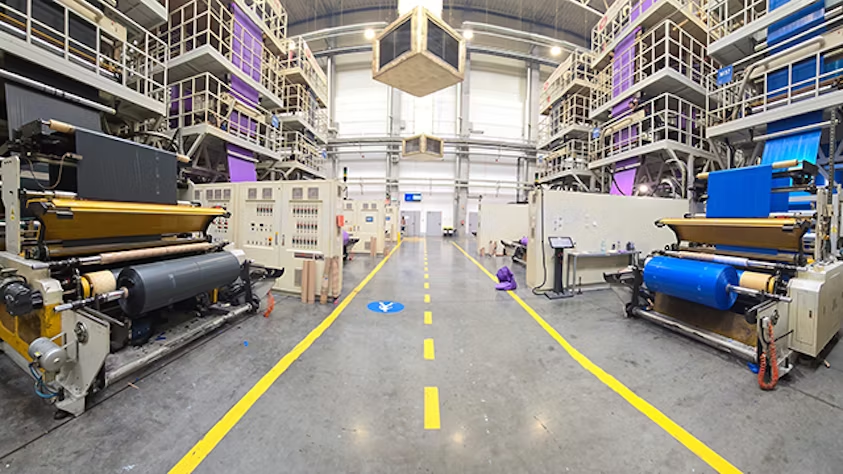
The three key areas of the company—Film Department, Roller Department, and Regranulation Department—as well as the central dosing system, are closely interconnected as part of a multi-stage production process. It starts with a fully automated process for preparing batches of raw material mixtures, which include a dozen raw materials, additives, and dyes for each extruder separately, including three-layer machines for each screw in the central dosing system.
Once the raw material feeding process begins, the film is produced on extrusion machines, rolled into rolls, and then transported to the film warehouse. When film is needed to produce bags, it is transported to the Roller Department, where finished products are made. These film and bag production processes generate waste. Although Polipak has significantly reduced waste, at current production levels, they generate around 5,000 metric tons annually. Such a large quantity requires efficient recycling to be reused in the production process.
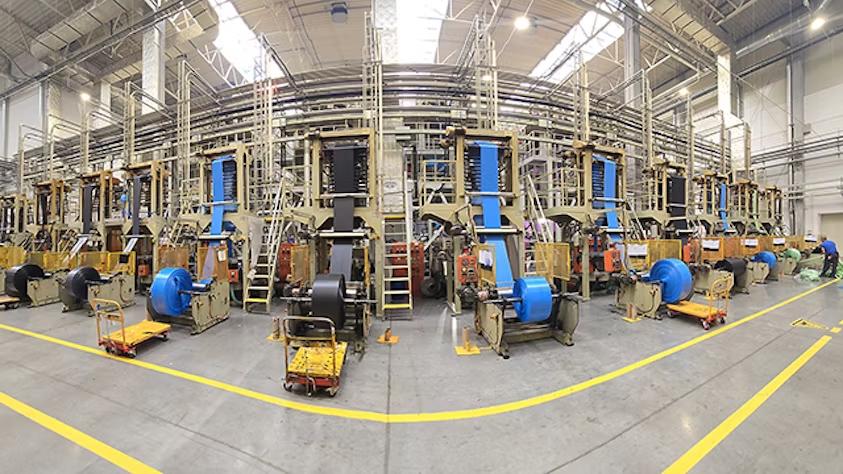
When it began implementing customized digital solutions from Siemens, Polipak was already operating with a production facility equipped, among other things, with 67 extruders (including three and two-layer extruders, totaling 95 screws) in the Film Department, 32 machines in the Roller Department, automated packaging lines, machines to produce regranulate (a type of plastic made from recycled materials) from waste, and a central automated dosing system to supply raw materials to the extruders.
Advanced production planning and management tools, suitable for their large and growing scale of operations, were essential to ensure the smooth running of the system. With Siemens solutions, Polipak can effectively manage its complex infrastructure and optimize production processes, purchasing, and sales, as well as minimize raw material waste.
Supporting Strategic Decision-Making
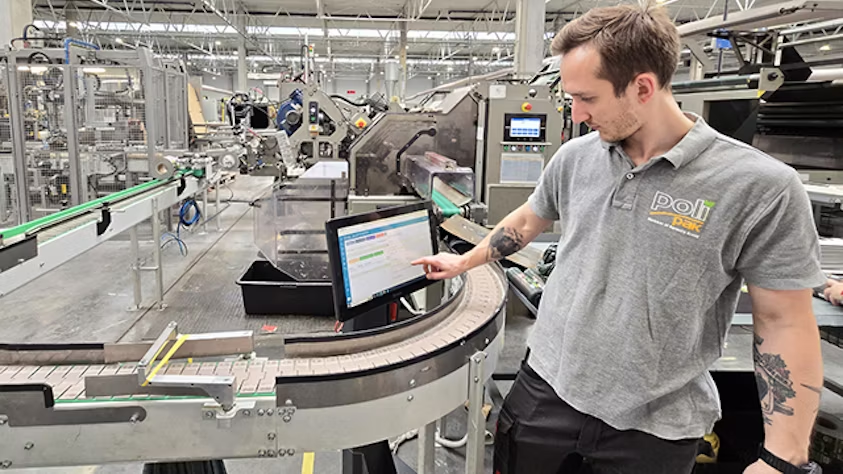
With Opcenter APS, Polipak automated production scheduling, optimizing resource usage and accelerating order fulfillment. The company replaced its previous production planning process, which was slow and error-prone, with a flexible scheduling process. This process takes into account the multi-stage nature of production, production constraints, and the availability of resources and materials, considering the lead time for raw material deliveries.
By leveraging this APS system, Polipak also accelerated the planning process and improved capacity utilization. As a result, the company is able to fulfill orders more quickly and efficiently. At the same time, the system implemented allows for flexible adjustments to changes in production, including a rapid response to machine failures or potential raw material shortages. Integration with other systems, such as ERP, MES, or the central dosing system, enables a seamless flow of information, improving planning accuracy and creating realistic production scenarios.
“Using Opcenter supports strategic decision-making, allowing us to quickly respond to changing customer needs or circumstances,” says Migda. “By monitoring production in real time, we can evaluate the progress of the plan, which is key to maintaining high productivity and minimizing downtime.”
Using Opcenter for Production Quality Management
The implementation of Opcenter Execution Process, a MES solution from Siemens, was a key step in utilizing computer systems for managing the production process. Opcenter Execution Process serves as the main system for managing production, along with other systems such as APS, ERP, the warehouse management system (WMS), the central dosing system, and a computerized maintenance management system (CMMS). By maintaining interfaces, sharing data, and conducting bidirectional real-time communications, it creates an integrated production management environment.
Before implementing the MES, production monitoring and data management were fragmented and required a lot of manual work. With the system, Polipak can accurately track the production process in real time, significantly improving transparency and control over plant operations. The system collects and analyzes machine data, allowing the company to identify potential issues before they affect production efficiency.
The use of Opcenter also enables better synchronization of operational activities, from raw material receipt to production, final packaging, and product distribution. Integrating production data with the MES system provides full visibility across the production chain, resulting in higher product quality and minimal waste. At the same time, seamless procedures for receiving products, semi-finished products, and waste into the MES system allow Polipak to track performance and quality parameters in real time and respond to issues as they arise, affecting observed performance indicators.
Additionally, the use of Opcenter Execution Process plays a key role in quality management by allowing for the monitoring of production parameters and early detection of deviations from quality standards. This reduces waste and complaints and supports continuous improvement of production processes.
Driving Corporate Sustainability
The implementation of Siemens solutions at Polipak has had a positive impact on the company’s operations, efficiency, and sustainable growth. “Thanks to Siemens’ advanced APS and MES systems, we can accurately manage our resources and production processes, which strengthens our competitiveness,” says Migda.
By continually improving resource management, Polipak increased the proportion of regranulate in production from 30% to 90% over the past few years. This increase is the result of a strategic approach to raw materials, which includes not only purchasing regranulate and processing their own production waste but also buying clean post-production waste from the market. Thus, waste that was once sent to landfills is now used as a valuable raw material, supporting the company’s environmental performance.
The strategy to increase the proportion of regranulates in production requires ensuring the appropriate quality of raw materials. In response, Polipak plans to implement an automated waste washing plant by the end of this year, which will enable the company to produce regranulate even from lower-quality waste. Furthermore, by using Opcenter, Polipak has better traceability to ensure that all recycled waste and materials are properly assessed and used in production.