

Industry: Food processing and packaging
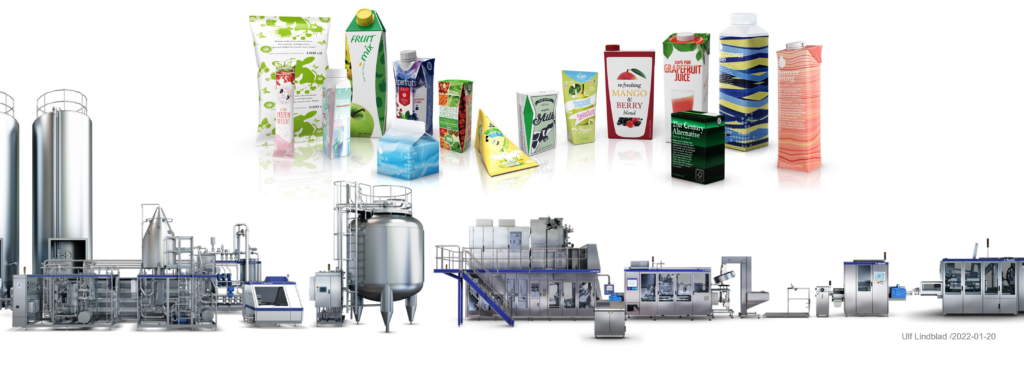
Safe and Sustainable Food Packaging
Tetra Pak, a global leader in food processing and packaging solutions, is transforming the way food is packaged and consumed. In a world facing increasing challenges like climate change, resource uncertainty, food waste, and growing demand for healthy, sustainable options, the company has found in digital simulation the key to staying ahead.
With over 70 years of experience, Tetra Pak continues to evolve its paper-based aseptic cartons — packaging that allows food to remain safe and flavorful for up to a year without refrigeration or preservatives. This not only extends shelf life and reduces waste, but also improves logistics and raw material use while enabling access to nutritious products in remote locations.
A Challenge at 10 Packages per Second
The scale of Tetra Pak’s operations is impressive: in 2023 alone, more than 179 billion packages were produced using thousands of machines operating around the world. One of their fastest machines, the Tetra Pak E3/Speed Hyper, produces 10 packages per second — an enormous engineering challenge where speed, hygiene, efficiency, and sustainability must coexist in perfect balance.
To achieve this, Tetra Pak turned to Siemens Digital Industries Software and integrated Simcenter solutions from the Siemens Xcelerator platform. These multiphysics simulation tools allow them to optimize equipment design and production processes from a digital environment, reducing physical prototypes and anticipating failures.
Engineering Excellence with Digital Twin Technology
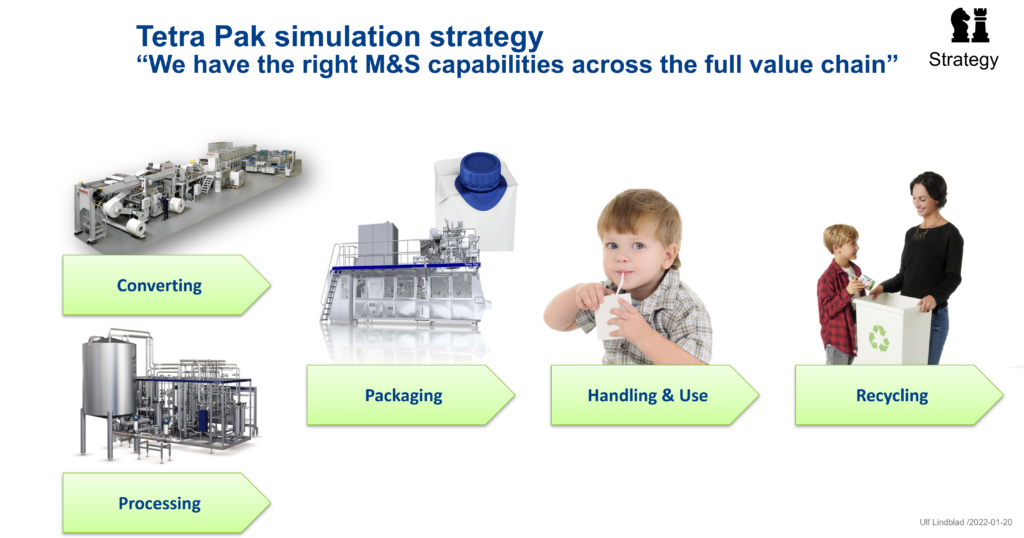
Using Simcenter Amesim and Simcenter STAR-CCM+, Tetra Pak created sophisticated digital twins of their systems — from milk processing to package sealing. This enables simulations of complex fluid-structure interactions, essential to ensure each package is formed and filled correctly, even with the huge variety of products and machine types.
With this level of detail, engineers can simulate everything from the pressure on fast-moving rollers to airflow patterns that could affect package integrity, and even confetti buildup during hole-cutting operations. All of this translates into fewer production stops, better food safety, and a smaller environmental footprint.
Sustainability from Start to Finish
Simulation also plays a crucial role in reducing emissions, optimizing energy use, and improving recyclability. For example, Tetra Pak is replacing the aluminum foil barrier in aseptic cartons with paper-based alternatives and must ensure the new designs meet both performance and regulatory standards. Thanks to multiphysics models, they can study these innovations in depth before launching them into the market.
In food safety processes like spray drying of milk, Tetra Pak uses Simcenter to track temperature histories and prevent protein breakdown, ensuring nutritional quality. In mixing processes, simulation helps calculate optimal mixing times, cutting energy costs and minimizing environmental impact.
Conclusion: Engineering for a Better Future
Thanks to Siemens technology, Tetra Pak has turned engineering complexity into competitive advantage. With the power of simulation, they not only ensure product safety and quality — they also support a global transition to safer, more sustainable food systems.
As Ulf Lindblad, Technology Specialist at Tetra Pak, puts it:
“Simulation gives us the insights we need to protect what matters most: food, people, and the planet.”